The Riverside at Aymestrey

A 16th-century half-timbered inn on the banks of the River Lugg in rural Herefordshire, The Riverside at Aymestrey earns its reputation through a kitchen that takes local sourcing with uncommon seriousness. Rare-breed Herefordshire beef, river trout, garden-grown herbs, and their own hens anchor a menu that shifts with the seasons. The beamed rooms, open fires, and terraced garden complete the picture.
Pearl is the En Primeur Club membership app — saves, bookings, and concierge access live there. Same editors, same standards.
- Address
- The Riverside Inn, Aymestrey, Leominster HR6 9ST, United Kingdom
- Phone
- +44 1568 708440
- Website
- riversideaymestrey.co.uk
- Directions
- Get directions
 Saves & bookings on Pearl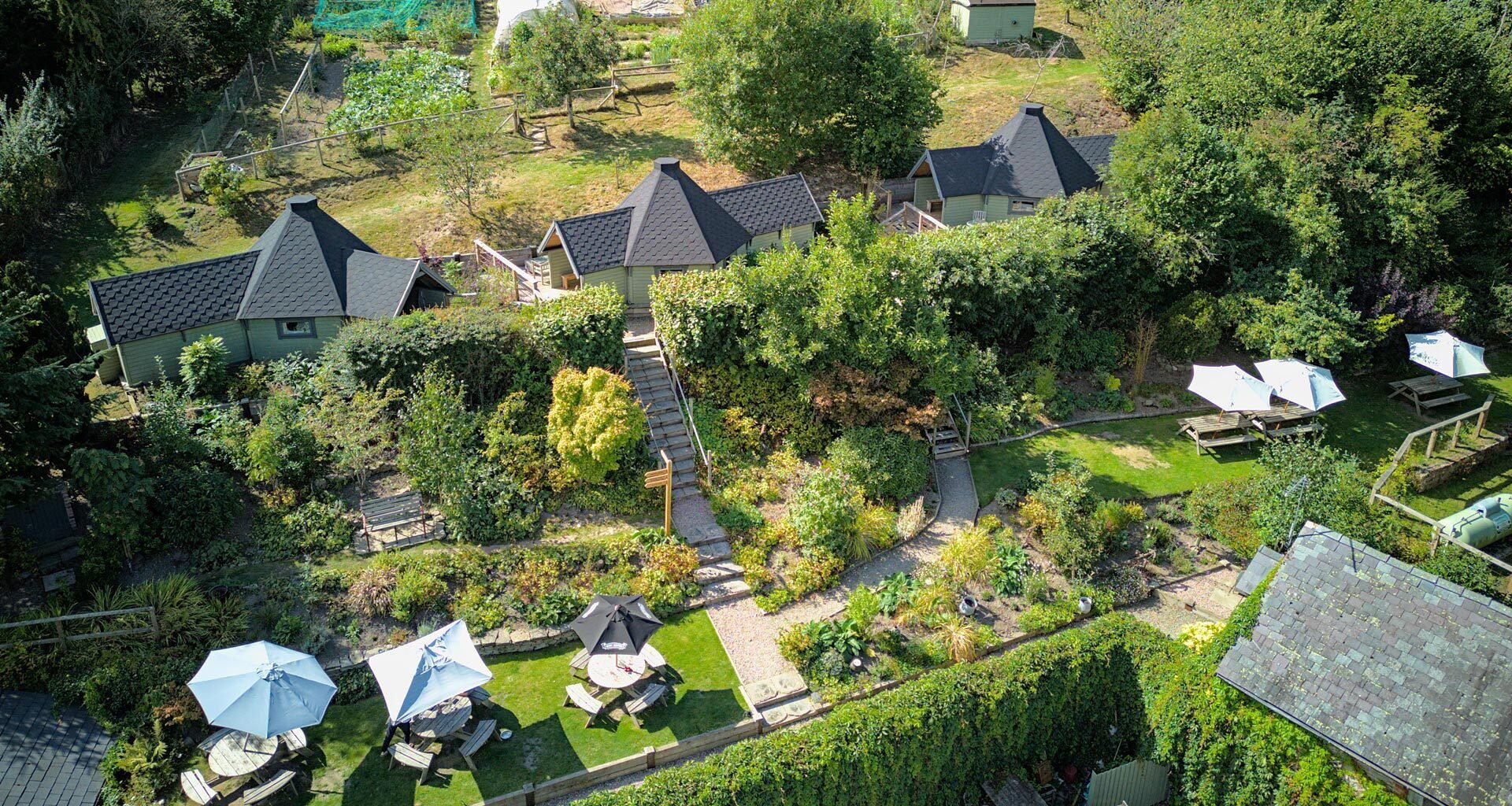
Where the Mortimer Trail Meets the Table
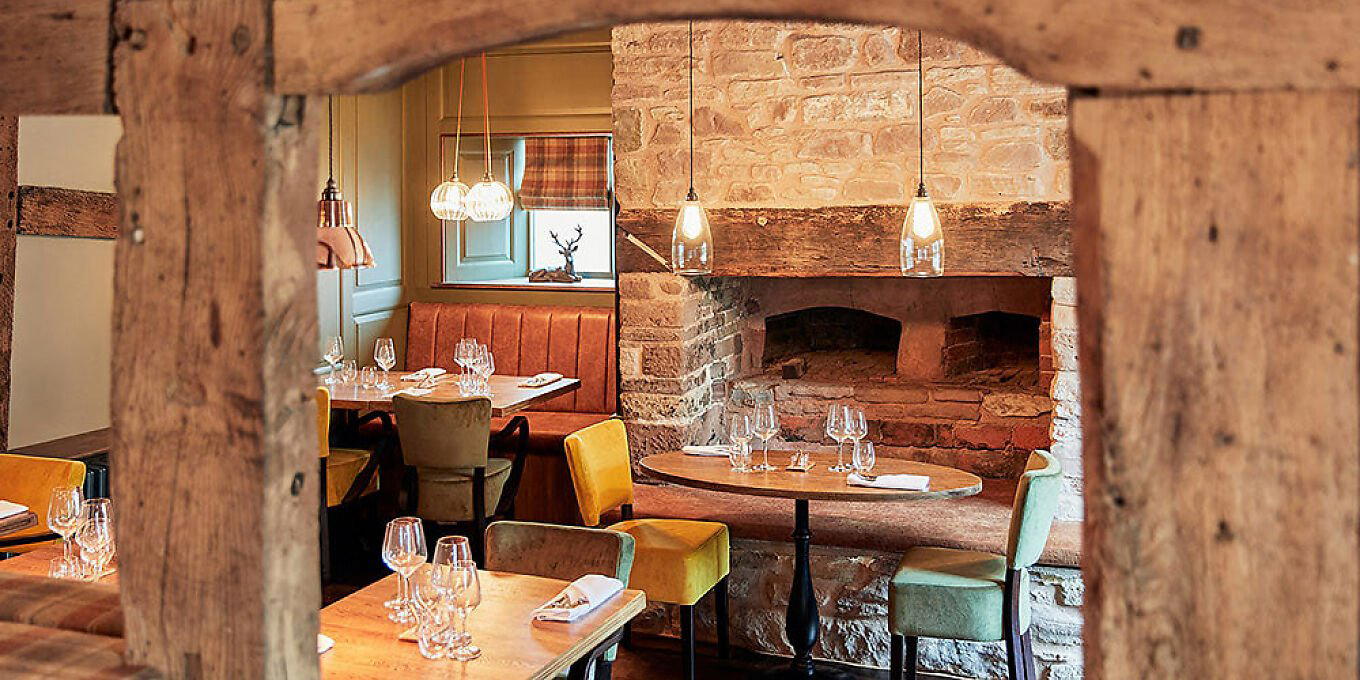
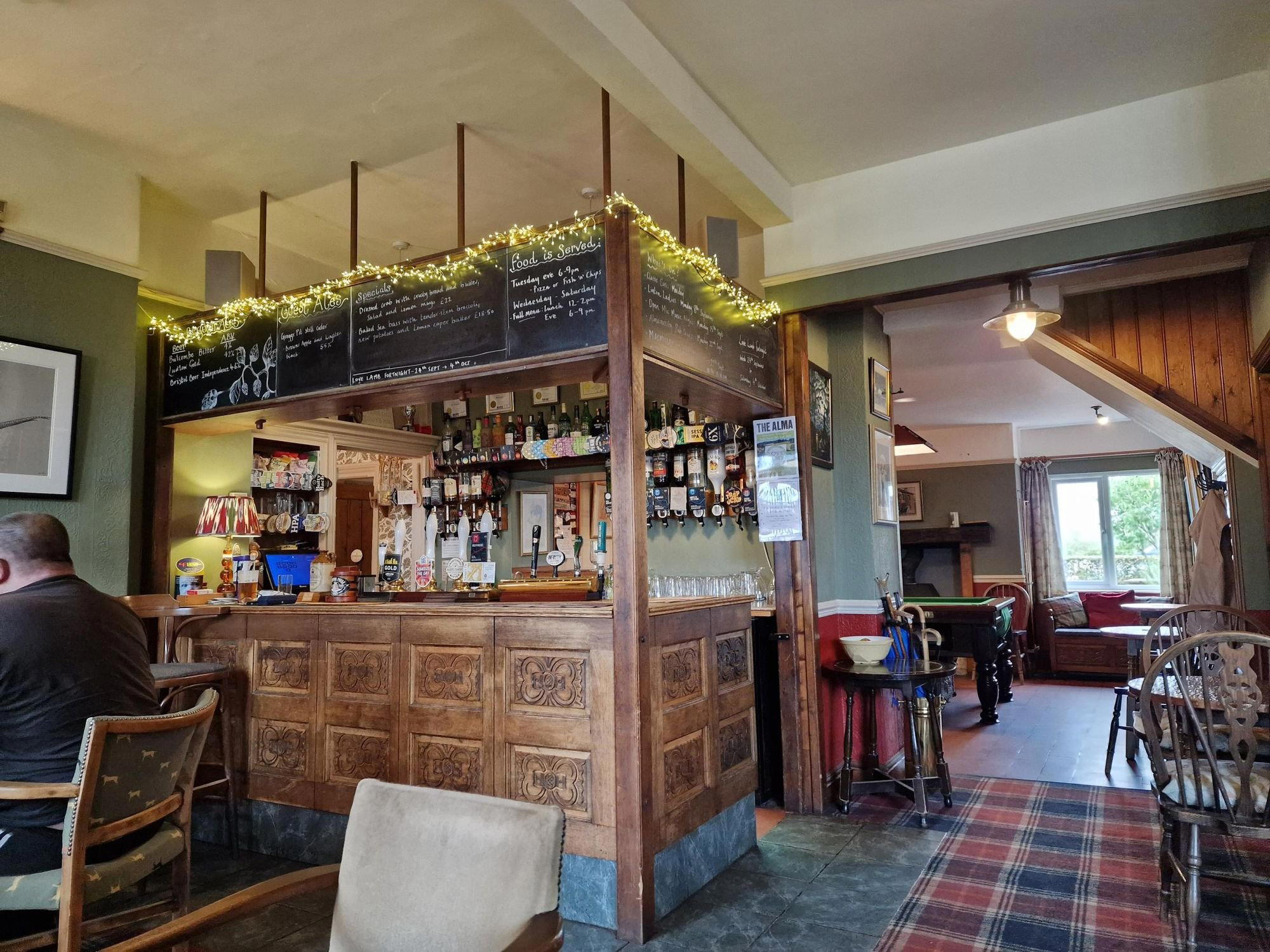
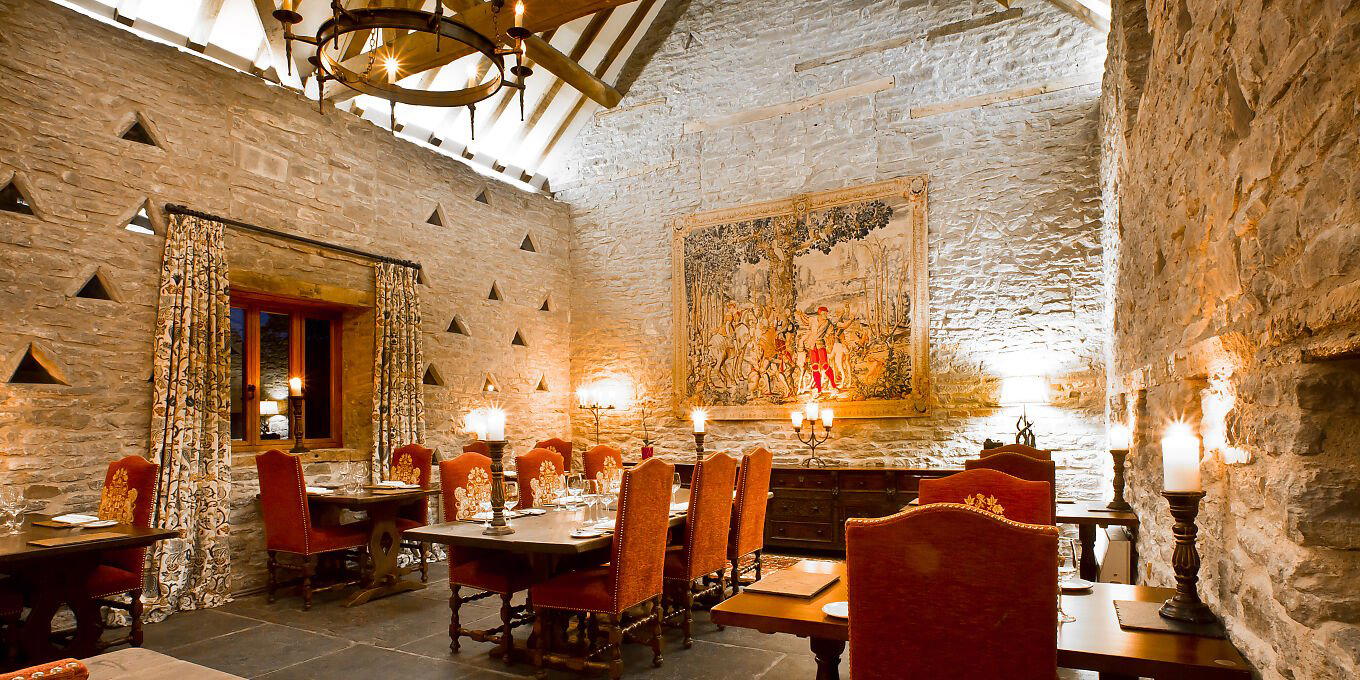
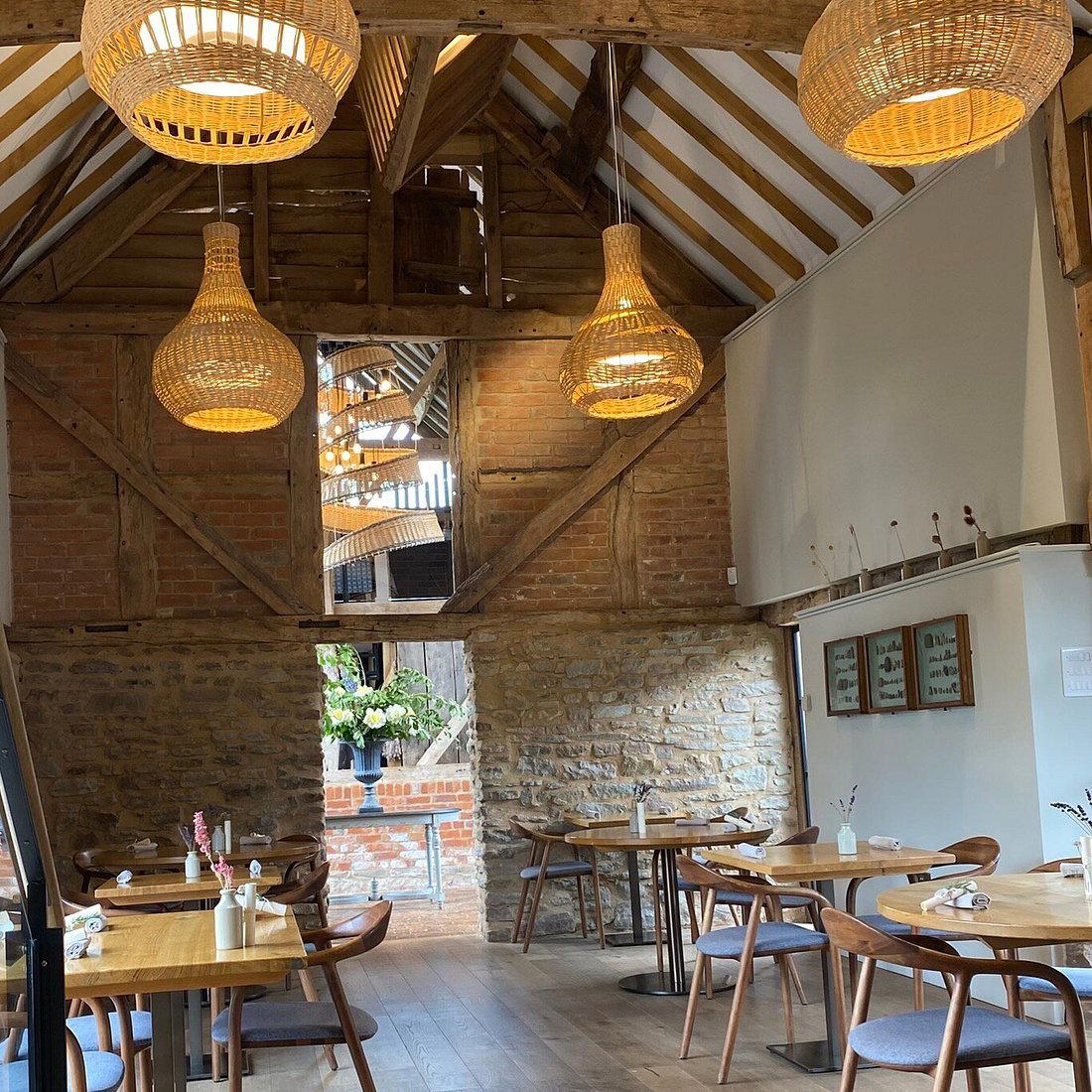
The approach to Aymestrey sets expectations clearly. The village sits in the Lugg Valley, deep in the Herefordshire countryside between Ludlow and Kington, on a stretch of the 30-mile Mortimer Trail that sees serious walkers but few casual visitors. The Riverside Inn itself occupies a position beside an old stone bridge, its 16th-century half-timbered facade reflecting in the river below. By the time you step inside and register the warren of heavily beamed rooms, the wonky floors worn smooth over centuries, and the smell of open fires, it is evident that this is not a country pub that has been styled to look historic. The history here is structural.
That physical setting does something important: it filters the audience. The Riverside at Aymestrey is not on the way to anywhere else. You come here with purpose, whether on foot along the trail, by car through lanes that require concentration, or by a combination of both. For those who make the effort, the reward is a dining room that operates at a level of culinary seriousness that sits at odds with its apparent remoteness. See our full Aymestrey restaurants guide for the broader picture of what this corner of Herefordshire offers.
The Kitchen's Sourcing Logic
Rural British pubs with good food tend to make gestures toward local sourcing. The kitchen at the Riverside makes it a structural commitment. Andy Link and his team maintain a kitchen garden and keep their own hens, reducing the distance between growing and cooking to a matter of metres for certain ingredients. Beyond that immediate supply, the sourcing extends to local farms and artisan producers across the region, with food miles treated as a genuine operational constraint rather than a marketing point.
The results show up in the specificity of the menu. Herefordshire snails, crisped in garlic, appear alongside rare-breed Herefordshire beef. River trout from local waters arrives cured in beetroot and Chase gin, the latter itself a product of the region's growing artisan spirits scene. A dish of chicken with courgettes, garden chard, and wild herb pesto draws almost entirely from the kitchen's own growing operation. This is the kind of cooking that requires a supplier network built over years rather than one assembled quickly, and the menu reflects that accumulated local knowledge.
Lunchtime regulars have established a clear preference for the rare-breed Herefordshire steak sandwich served with truffle chips, a combination that has earned its status through repetition and consistent execution. Among lighter options, the beetroot-cured river trout and the grilled cod served on peas and mangetout with a lovage sauce have drawn repeated praise from readers. Puddings tend toward the inventive end of the British canon: nettle cake, rhubarb with custard mousse, and a poached pear with blue-cheese ice cream that manages to be assertive without becoming a novelty.
The Drinks Programme in Context
The bar programmes that have shaped UK drinking culture over the past decade tend to cluster in cities. 69 Colebrooke Row in London helped define the clarified and precisely measured school of cocktail-making. Bramble in Edinburgh established a template for serious neighbourhood drinking away from the obvious hotel bars. The Merchant Hotel in Belfast demonstrated that a rigorous cocktail list could anchor a broader luxury proposition. What is notable about the Riverside's approach is that it does not attempt to compete with that urban register. The drinks here serve the room and the setting rather than asserting a separate creative identity.
The wine list is described as decently priced, with a good proportion of vegan and vegetarian options, which aligns with the kitchen's ethical sourcing position. What is worth noting, however, is a gap that the venue's own editorial documentation acknowledges directly: given the strength of the local ethos throughout the food operation, English wine representation on the list is surprisingly limited. Herefordshire and the wider Welsh Marches have a growing number of producers working with cool-climate varieties, and the omission is a genuine curiosity for a kitchen that otherwise presses its regional credentials hard. By contrast, venues like Schofield's in Manchester and Mojo Leeds have built their identities around a clearly articulated programme philosophy. The Riverside's drinks offer is pleasant and well-chosen but has not yet achieved that same editorial clarity.
Cider case, by contrast, practically writes itself. This is Herefordshire. The absence of a well-developed local cider list would be the more pointed omission, and the apple orchards of the region produce some of the most characterful traditional ciders in England. Whether the current list reflects those producers is not confirmed in available documentation, but it is the category where an ethically sourced, regionally focused programme would find its most natural expression.
The Room, the Garden, and the Dogs
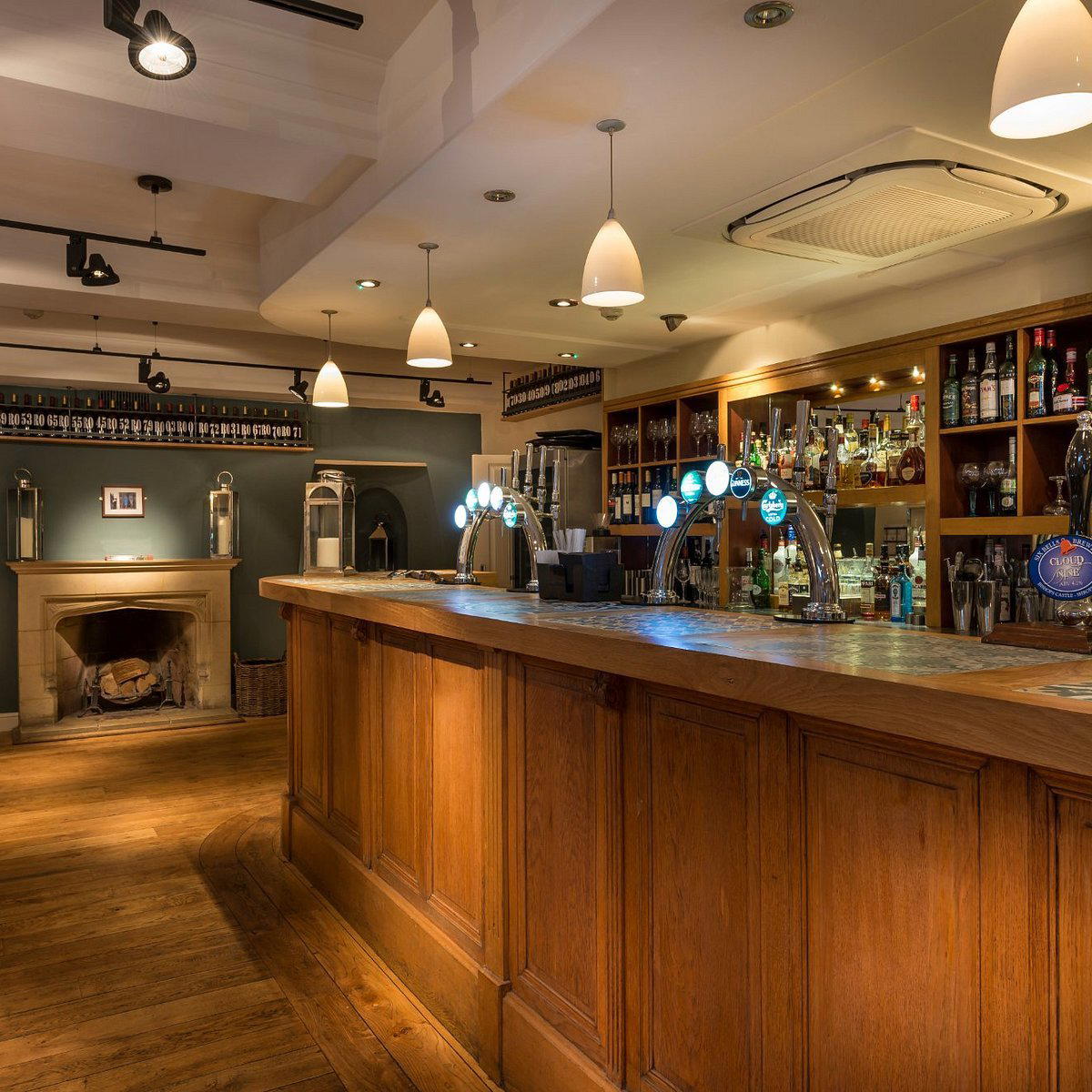
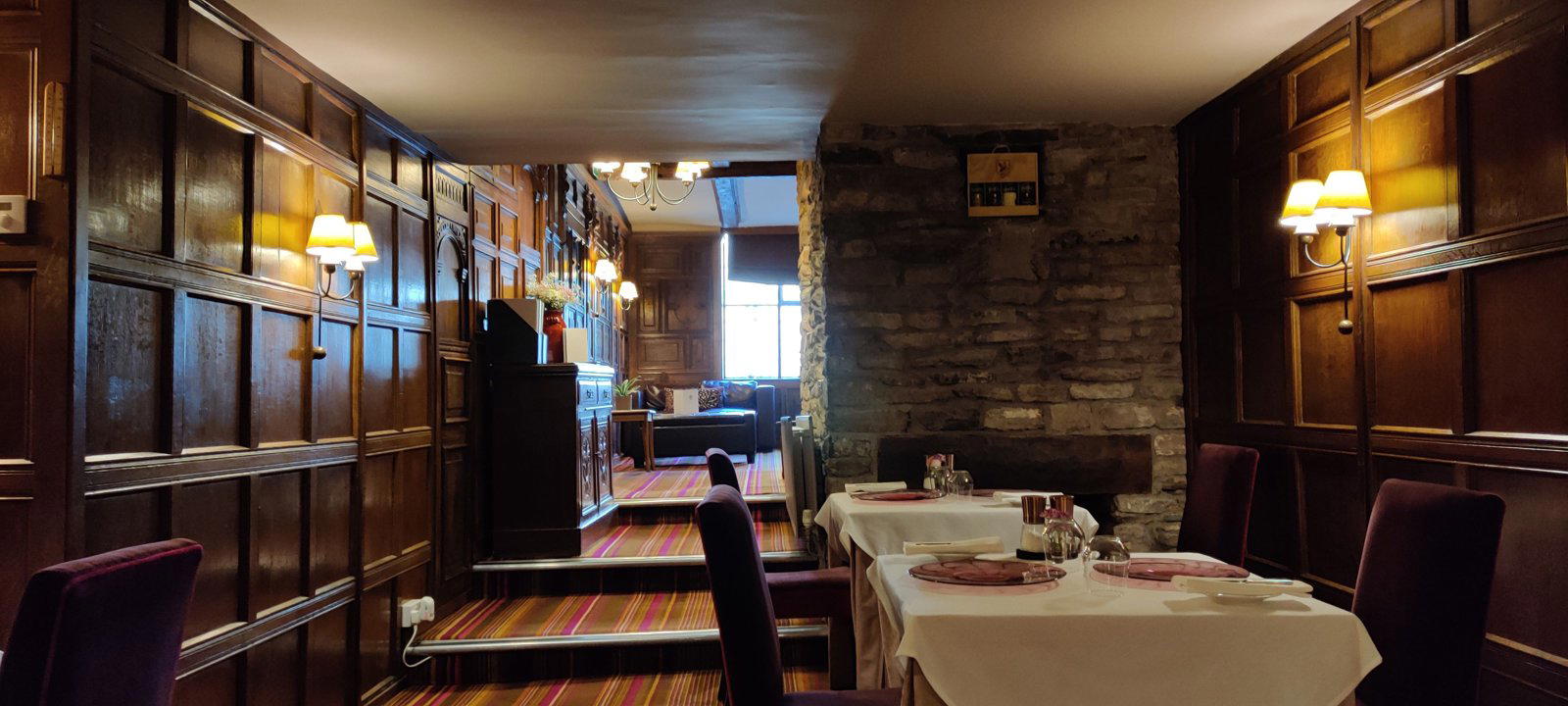
British pub dining rooms rarely solve the problem of competing atmospheres well. The Riverside handles it by using the building's own architecture to create genuinely separate spaces: quieter nooks for two, areas that absorb larger and louder groups, and a section where dogs are welcome without disrupting the main dining flow. On fine days, the terraced garden extends the options further, with river views that require no enhancement. Service has been consistently described as friendly and welcoming rather than formal, which suits both the building and the kind of visit it attracts. Urban bar programmes like Avon Gorge by Hotel du Vin in Bristol or the Horseshoe Bar in Glasgow operate in a fundamentally different register of hospitality. Remote venues like Digby Chick in the Western Isles or Harbour View on Bryher share something of the Riverside's logic: destination drinking and eating, where the journey is part of the proposition. Even internationally, venues like Bar Leather Apron in Honolulu demonstrate how a location's particular character can anchor a hospitality identity. The Riverside's character is irreducibly Herefordshire, and that specificity is its most durable asset.
Planning a Visit
The Riverside at Aymestrey is located at The Riverside Inn, Aymestrey, Leominster HR6 9ST. The address alone signals the planning required: the nearest significant town is Leominster, and the lanes approaching Aymestrey are narrow enough to require a reliable map rather than optimistic reliance on mobile signal. Walkers on the Mortimer Trail reach the inn naturally between Ludlow and Kington, making it a logical stop on a multi-day route. For those driving, pairing a visit with a wider Herefordshire itinerary that takes in Ludlow's food scene or the Wye Valley makes geographic sense. Booking in advance is advisable, particularly for weekends and the warmer months when the garden comes into use. Specific hours, pricing, and reservation details are best confirmed directly with the venue before travelling.
Recognition history
Dated appearances from independent guides and award organizations, with the underlying list record or original source where available.
The Good Food Guide GFG Good
The Good Food Guide
Continue exploring
More in Aymestrey
Bars in Aymestrey
Browse all →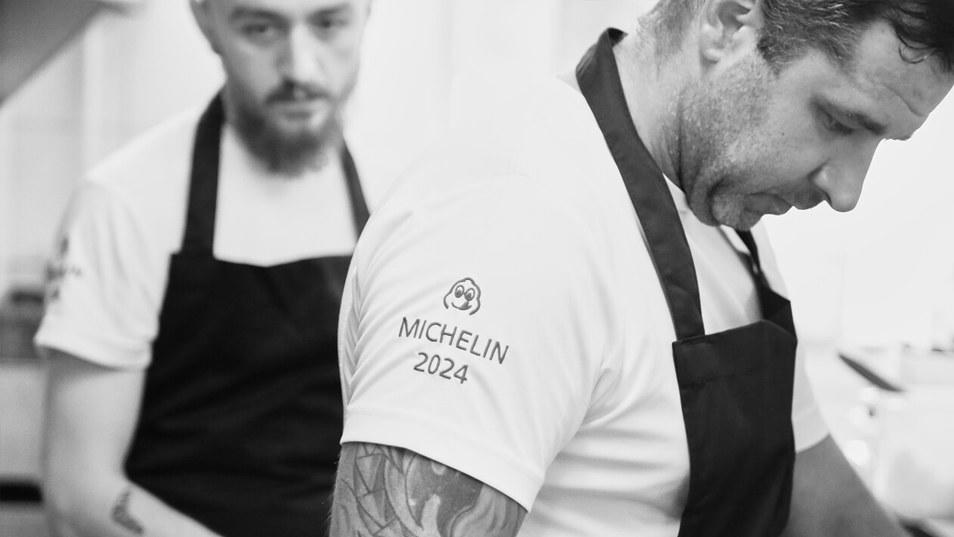
At a Glance
- Cozy
- Rustic
- Scenic
- Intimate
- Historic
- Date Night
- Casual Hangout
- Special Occasion
- Waterfront
- Garden
- Historic Building
- Lounge Seating
- Outdoor Terrace
- Classic Cocktails
- Waterfront
- Garden
Cosy bar with burning log burners, heavily beamed rooms, low ceilings, wood burners, candlelit tables, and warm welcoming atmosphere.
Know Before You Go
- Getting there
- The Riverside Inn, Aymestrey, Leominster HR6 9ST, United Kingdom