Our verdict
San-Zhak occupies a quiet lane in central Smolensk, one of Russia's oldest cities and a place where regional cooking traditions run deeper than most outsiders expect. With limited documentation available through major review platforms, it sits in the tier of local institutions that reward direct inquiry over algorithmic discovery. A visit fits naturally alongside exploring Smolensk's historic core.

Pearl is the En Primeur Club membership app — saves, bookings, and concierge access live there. Same editors, same standards.
A Lane in One of Russia's Oldest Cities
Smolensk sits roughly 400 kilometres west of Moscow on the upper Dnieper, a city that has changed hands more times than its residents care to count and whose culinary identity carries the weight of that border-region history. The food here has never been purely Russian in the Moscow-centric sense: centuries of proximity to Belarus and Poland, periods of occupation, and trade routes running west toward Lithuania have all left traces in what appears on local tables. Buckwheat, cured pork, rye-based preparations, and preserved vegetables form the structural backbone of the regional kitchen, and the leading local restaurants tend to work from that foundation rather than away from it.
San-Zhak is located at Churilovskiy Pereulok 19, a side street in the city's central district. Side streets in Russian provincial cities often tell you more about a place than its main boulevards: less tourist pressure, more habitual patronage, and kitchens that answer to regulars rather than to passing trade. That address is the first practical signal worth noting for anyone planning a visit.
Where Smolensk Fits in Russia's Regional Dining Picture
Russia's restaurant conversation tends to collapse into Moscow and Saint Petersburg. Venues like Twins Garden in Moscow and 1913 in Saint Petersburg attract the international press attention and the award citations, which creates a distorted impression that serious dining only happens in the two capitals. The reality in cities like Smolensk, Tomsk, or Omsk is more interesting and considerably less documented. Venues such as Kukhterin in Tomsk and Grisha in Omsk have built reputations rooted in specific regional supply chains and local ingredient traditions, operating largely outside the orbit of national critics.
Smolensk's position as a border city gives its local kitchens access to a different procurement geography than inland Russian cities. Agricultural land around the oblast produces grains, root vegetables, and dairy at a scale that supports farm-direct sourcing, and the western trade corridor historically brought curing and fermentation techniques that remain embedded in regional cooking. Whether individual restaurants in Smolensk actively frame their sourcing in these terms varies; what matters is that the raw material tradition exists and the leading local operators tend to work with it, consciously or not.
Across provincial Russia more broadly, there is a pattern worth tracking: the restaurants that sustain local relevance over time are not the ones chasing capital-city trends but the ones that have developed a reliable relationship with nearby producers. You see this in the Caucasus-influenced kitchens of Krasnodar, where Alanskaya Kukhnya draws on Ossetian traditions, and in the Volga-region dining rooms like Dzhani Restorani in Nizhny Novgorod that anchor their menus in local river and agricultural produce. San-Zhak sits within that provincial-restaurant tradition, where the address, not the award citation, is the primary signal.
The Question of Sourcing in a Border-Region Kitchen
The editorial angle most relevant to understanding a restaurant in Smolensk is ingredient provenance. Russian western-border cuisine has always been shaped by what could be grown, preserved, or obtained locally across a harsh seasonal cycle. Rye bread, smoked meats, pickled mushrooms, cured fish from the Dnieper, and dairy preparations tied to specific seasonal windows define the pantry that regional cooks have worked from for centuries. A restaurant operating in this context has a choice: source from that local tradition, import from distribution networks serving the capitals, or blend both approaches depending on the menu category.
For comparison, the modern Russian fine-dining conversation at places like White Rabbit and Selfie in Moscow has been defined precisely by the decision to treat regional Russian ingredients as worthy of serious kitchen attention, a position that was far from obvious a decade ago. That shift in the capital trickles into the provinces unevenly. In Smolensk, the argument for local sourcing is less about culinary ideology and more about practical geography: the produce is close, the supply chains are shorter, and the flavour case for local dairy or forest-foraged ingredients in a region with genuine seasonal variation is direct.
For visitors arriving from outside Russia, the contrast with international reference points is useful. The precision-sourcing conversations that define restaurants like Le Bernardin in New York or the ingredient-first approach at Atomix exist at a different scale and with different institutional support than what operates in a Russian provincial city. That does not make the provincial version less interesting; it makes it differently interesting, shaped by different constraints and different relationships between kitchen and land.
Smolensk's Broader Dining Context
Arriving in Smolensk, visitors find a city that has invested seriously in its historic infrastructure, with a well-preserved kremlin wall and a cathedral district that draws domestic tourism. The restaurant scene around that core has developed accordingly, with establishments ranging from quick-service formats to more considered dining rooms. San-Zhak's address on Churilovskiy Pereulok places it within walking distance of the central historic zone, which means it catches both local regulars and visitors using the city as a stop on a westward route toward Bryansk or the Belarusian border.
See our full Smolensk restaurants guide for a broader map of the city's dining options across price tiers and neighbourhood locations.
Planning a Visit
San-Zhak's address at Churilovskiy Pereulok 19 is the confirmed starting point for any visit. Arriving in person and asking directly is the practical approach. Smolensk is served by rail connections from Moscow (roughly four to five hours on standard services) and has a domestic airport, though train remains the more reliable option for most visitors. The central location of the address means the restaurant is accessible on foot from the main hotel zone near the kremlin.
Frequently asked questions
Is San-Zhak suitable for children?
Nothing in the available record for San-Zhak at Churilovskiy Pereulok 19 indicates a children's menu or family-specific facilities. Smolensk's restaurant scene trends toward relaxed, neighbourhood-scale venues, so the setting is unlikely to be formal to a degree that excludes younger guests, but parents should confirm directly before visiting.
What's the overall feel of San-Zhak?
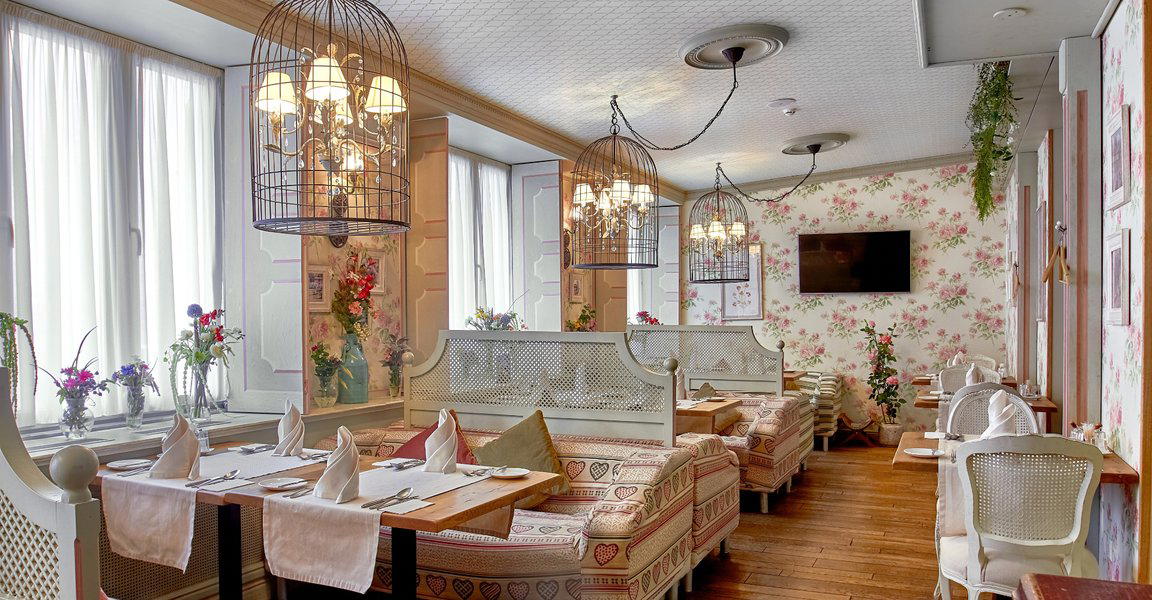
San-Zhak occupies a lane address — Churilovskiy Pereulok 19 — in a city whose historic core is defined by a well-preserved kremlin wall and centuries of layered occupation. That urban register tends to produce dining rooms that lean into local character rather than metropolitan polish.
Is San-Zhak the kind of restaurant worth visiting specifically when travelling to Smolensk?
Smolensk draws visitors primarily for its historical infrastructure — the kremlin wall and cathedral district — rather than its restaurant scene, and San-Zhak at Churilovskiy Pereulok 19 is one of the addresses that gives the city dining credibility beyond its tourism monuments. Cuisine type and chef are not documented, but its lane address places it away from the main tourist circuit, which in Smolensk's context suggests a venue oriented toward local regulars. Travellers making the 400-kilometre journey west from Moscow should treat it as a genuine regional stop rather than an afterthought.
What should I order at San-Zhak?
Smolensk's position on Russia's western border has historically shaped kitchens toward produce from both the Russian interior and the broader Belarusian-adjacent agricultural belt — context worth bearing in mind when reading any menu on-site.
Where is San-Zhak located?
San-Zhak is located at Churilovskiy Pereulok, 19, Smolensk Oblast, Russia, 214000, Smolensk.
Do I need a reservation for San-Zhak?
The confirmed address is Churilovskiy Pereulok 19, Smolensk, 214000. Visiting in person or sourcing a local contact number on arrival is the most reliable approach until direct booking channels are established publicly.
What do critics highlight about San-Zhak?
No awards, ratings, or named critical coverage are recorded for San-Zhak in current documentation. Russia's editorial restaurant conversation is concentrated in Moscow and Saint Petersburg, which means well-regarded regional venues in cities like Smolensk often operate outside the publications that drive national recognition — a structural gap in coverage rather than a reflection of quality.
Comparable Spots, Quickly
Comparable venues nearby, for context on price, style, and recognition.
| Venue | Cuisine | Price | Awards | Notes |
|---|---|---|---|---|
| San-ZhakThis venue — the venue you are viewing | Russian-European Fusion | Not listed | Not listed | Not listed |
| Китайская грамота | Authentic Cantonese Chinese | $20–30 | Not listed | Бульварное кольцо |
| Birch | Modern European Fusion | $50–100 | La Liste Top Restaurants | Tsentralny District |
| Palmenya | Mediterranean Seafood | $30–50 | Not listed | City Center |
| Magnum Wine Bar | European Wine Bar Cuisine | Not listed | Wine Spectator Award of Excellence · World's Best Wine Lists Awards WBWL 2-Star | District Central (TsAO) |
| Cafe Pushkin (Кафе Пушкинъ) | Classic Russian Noble Cuisine | Not listed | Not listed | Tverskoy |
Details
- Cozy
- Elegant
- Date Night
- Special Occasion
- A La Carte
Current opening hours
- Monday
- 12 PM–12 AM
- Tuesday
- 12 PM–12 AM
- Wednesday
- 12 PM–12 AM
- Thursday
- 12 PM–12 AM
- Friday
- 12 PM–12 AM
- Saturday
- 12 PM–12 AM
- Sunday
- 12 PM–12 AM
Hours can change for holidays and private events. Last verified .
Cozy and polished atmosphere in the quiet city center.