Santa Monica Brew Works
Our verdict
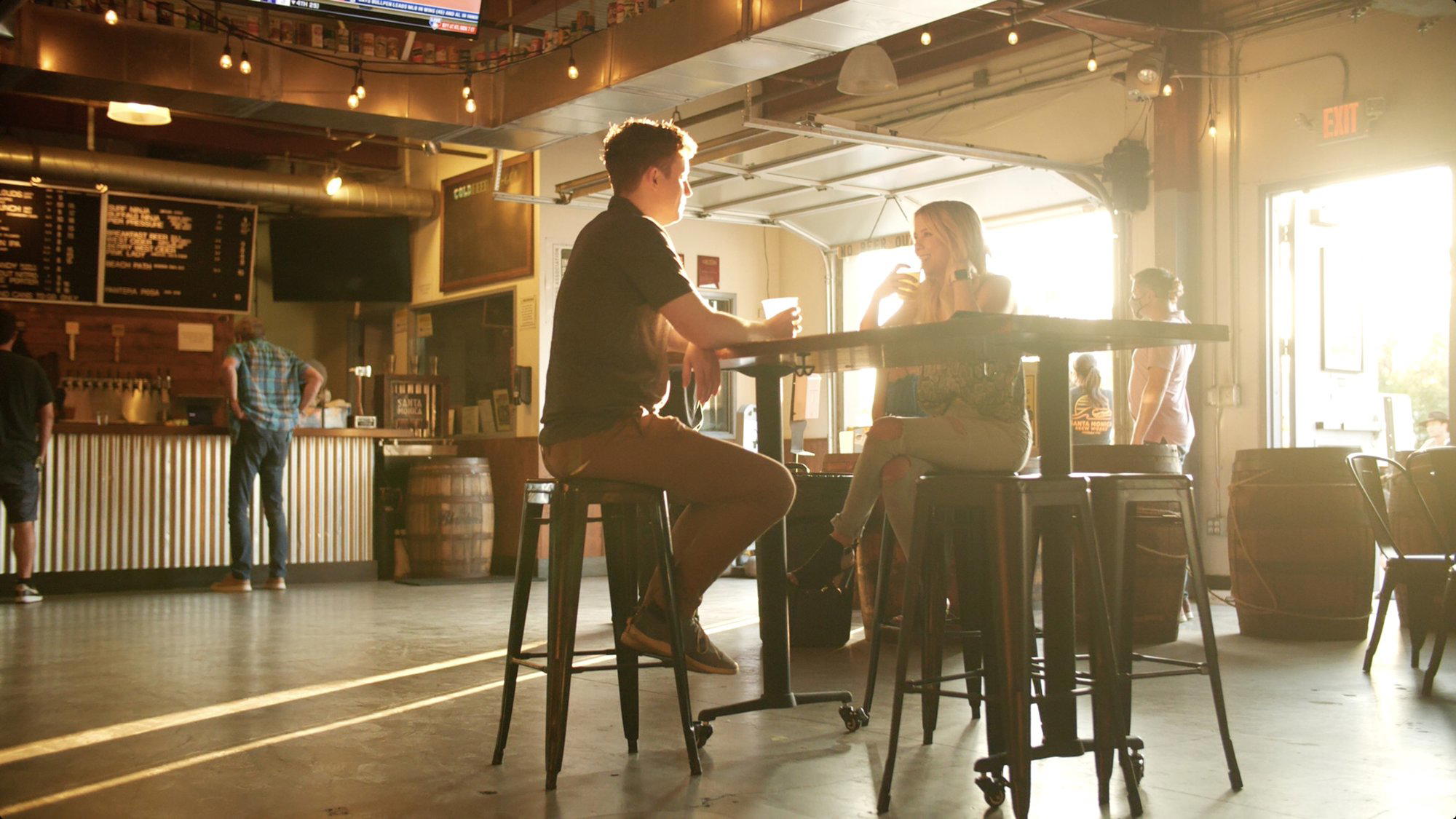
Santa Monica Brew Works occupies a Colorado Avenue industrial suite that has quietly become one of the Westside's more serious craft beer destinations. The taproom sits at the intersection of California's hop-growing tradition and small-batch precision brewing, drawing a neighborhood crowd that ranges from post-session cyclists to beer-curious locals. Its Colorado Ave address makes it a natural stop within the broader Santa Monica dining and drinking corridor.

Pearl is the En Primeur Club membership app — saves, bookings, and concierge access live there. Same editors, same standards.
The menu
What to order
- Detroit-style pizza
- Craft burgers
Colorado Ave and the Craft Beer Belt Running Through Santa Monica
The stretch of Colorado Avenue between Lincoln and Cloverfield has developed a character distinct from the tourist-facing Ocean Avenue strip or the restaurant density of Main Street. This is working Santa Monica: warehouse bays converted to production spaces, suites housing food-and-drink makers who sell direct to the neighborhood rather than to hotels. Santa Monica Brew Works, operating out of Suite C at 1920 Colorado, fits that pattern precisely. Arriving on foot or by bike along the Expo Line path, the transition from residential street to light-industrial block signals something purposeful rather than polished. The taproom functions as a retail window for an active brewing operation, which gives it a different register from the curated hospitality of venues like Azure or the polished bistro model you find at Amici Brentwood. This is production-first, with the drinking space built around the brewery rather than the reverse.
California Ingredients, Precision Technique: How West Coast Craft Brewing Actually Works
The editorial angle that most honestly describes American craft brewing in 2024 is one borrowed from the fine dining conversation: local ingredients, global technique. Brewing science developed across Germany, Belgium, the Czech Republic, and Britain over centuries, and the American craft movement absorbed those traditions wholesale before beginning to interrogate what was actually available at home. California sits at an unusual intersection in this story. The state grows hops in the Sacramento Valley, malted barley comes from the Central Valley, and the water chemistry in coastal cities like Santa Monica presents its own variables that serious brewers treat as a design constraint rather than a problem to be corrected.
Production breweries that operate taprooms on the Westside are working within a regional tradition that has moved well past novelty. Southern California craft brewing is now old enough to have a second generation of producers, and the conversations happening in taprooms like this one involve yeast management, hop timing, and water mineral profiles in ways that would be familiar to a brewer in Bamberg or Brussels. The through-line to fine dining is more direct than it might seem: Single Thread Farm in Healdsburg built its reputation on the discipline of matching agricultural inputs to technique, and Blue Hill at Stone Barns in Tarrytown has been making the same argument about terroir-led cooking for over two decades. Craft brewing is making an analogous case with fermented grain.
Placing the Taproom in Its Competitive Tier
Santa Monica's drinking options cover a wide range. On the higher-production end, venues with full kitchens and curated wine programs like Wally's compete on cellar depth and hospitality scale. On the neighborhood end, spots like Augie's On Main hold ground through familiarity and consistency. A production taproom occupies a third category entirely: the experience is inseparable from the physical fact of the brewery, and what you're drinking was made in the building you're standing in. That proximity is the proposition. It is the same logic that drives visitors to Lazy Bear in San Francisco or Smyth in Chicago, where the production and the service happen in such close quarters that the gap between maker and consumer essentially collapses.
The comparison set for Santa Monica Brew Works is not the cocktail bars or wine programs found elsewhere on the Westside. Within that group, location matters considerably. Being accessible via the Expo Line at the 17th Street/SMC station, rather than requiring a car trip to an industrial suburb, shifts the demographic significantly. That accessibility makes this a viable stop on a broader Santa Monica evening that might include dinner at 800 Degrees Woodfired Kitchen or a late screening at ArcLight Cinemas Santa Monica.
Seasonality in the Taproom Format
Craft brewing follows a seasonal logic that most casual drinkers underestimate. The winter months bring the heavier grain-forward styles: stouts, porters, and barleywines that require longer conditioning times and reward drinking in lower volumes. Spring marks the transition to hop-forward formats as the first fresh hop harvests become available from Northern California growers. Summer in Santa Monica, where afternoon temperatures stay moderate thanks to the marine layer, suits session-strength formats that hold up across multiple pints without the alcohol accumulation of stronger styles. Autumn is the most interesting window for a production taproom: this is when fresh-hop beers, brewed within hours of harvest, appear briefly on tap before the window closes. These beers do not travel, cannot be canned for distribution, and exist only in the few weeks when hops move from farm to kettle with minimal drying. Visiting a working taproom during fresh-hop season is the brewing equivalent of eating at a restaurant during peak truffle season: the timing is the whole point.
For the broader Santa Monica dining picture, the brewery fits into a neighborhood that has developed genuine culinary seriousness over the past decade. The conversation about California cooking now includes venues at very different price tiers and formats, from the sourcing discipline of Providence in Los Angeles and Addison in San Diego at the top of the formal dining register, down through casual neighborhood formats that take ingredients and technique equally seriously. Cassia and Holy Basil Santa Monica both represent that middle register on the food side. A taproom like this occupies the equivalent position in the drinks category.
Planning a Visit
The Colorado Avenue address sits within reasonable walking distance of the 17th Street/SMC Expo Line stop, making it one of the few Westside brewery destinations that does not require driving. Because this is a production taproom rather than a bar, the format is self-guided: you approach the bar, read the draft list, and order by the glass or flight. No booking infrastructure exists for standard visits, which means walk-in access is the norm. Weekend afternoons tend to draw the largest crowds, and the industrial suite setting means capacity is finite. Arriving on a weekday evening or early on a weekend morning gives more room to engage with the pour list deliberately. Our full Santa Monica restaurants guide provides broader context for building an itinerary around the Colorado Ave corridor.
Frequently asked questions
What's the address for Santa Monica Brew Works?
Santa Monica Brew Works is located at 1920 Colorado Ave suite c, Santa Monica, CA 90404, Santa Monica.
Is Santa Monica Brew Works easy to reach without a car?
The 1920 Colorado Ave address in Santa Monica sits within walking distance of the 17th Street/SMC stop on the Metro Expo Line, making it one of the more accessible Westside brewery destinations for visitors staying in Downtown LA or along the rail corridor. Street parking on Colorado Ave is also available for those driving in from elsewhere in Los Angeles.
What's the best thing to order at Santa Monica Brew Works?
The draft list rotates around the brewery's own production schedule rather than a fixed menu, so the honest answer is: ask the bar staff what came off the tanks most recently. Production taprooms at this scale typically lead with whatever style is at peak condition that week. At a Colorado Ave address focused on West Coast brewing, that often means a hop-forward ale or a lager during warmer months.
Do they take walk-ins at Santa Monica Brew Works?
Walk-in access is the standard format for a production taproom like Santa Monica Brew Works at 1920 Colorado Ave. There are no tasting menus or reserved seatings of the kind you'd find at California's higher-end dining venues. Show up, find a seat at the bar, and order from whatever is currently on draft.
Peers You’d Cross-Shop
Comparable venues nearby, for context on price, style, and recognition.
| Venue | Cuisine | Price | Awards | Notes |
|---|---|---|---|---|
| Santa Monica Brew WorksThis venue — the venue you are viewing | Craft Brewery Gastropub | $20–30 | Not listed | Not listed |
| Chez Jay | Classic American Steak & Seafood | $30–50 | Not listed | Pico Neighborhood Association |
| Rori's Artisanal Creamery | Artisanal Ice Cream | $1–10 | Not listed | Wilshire |
| Perry's Café | Beachside American Cafe | $10–20 | Not listed | Ocean Park Association |
| HOLY COW BBQ | California-Style Slow-Smoked BBQ | $30–50 | Not listed | Brentwood |
| Birdie G's | Eastern European | Not listed | Michelin Plate · LA Times 101 Best Restaurants #52 | Pico Neighborhood Association |
Continue exploring
More in Santa Monica
Restaurants in Santa Monica
All restaurants in Santa Monica →
Bars in Santa Monica
All bars in Santa Monica →
Hotels in Santa Monica
All hotels in Santa Monica →
Wineries in Santa Monica
Browse all →
Details
- Lively
- Industrial
- Rustic
- Casual Hangout
- Group Dining
- After Work
- Open Kitchen
- Beer Program
- Local Sourcing
- A La Carte
- Craft Beer
- Gluten Free Options
Current opening hours
- Monday
- 12–11 PM
- Tuesday
- 12–11 PM
- Wednesday
- 12–11 PM
- Thursday
- 12–11 PM
- Friday
- 12 PM–12 AM
- Saturday
- 12 PM–12 AM
- Sunday
- 12–9 PM
Hours can change for holidays and private events. Last verified .
Rustic warehouse brewhouse vibe with brewing smells, relaxed European-style atmosphere for chatting over craft beers.