Sandy’s

Our verdict
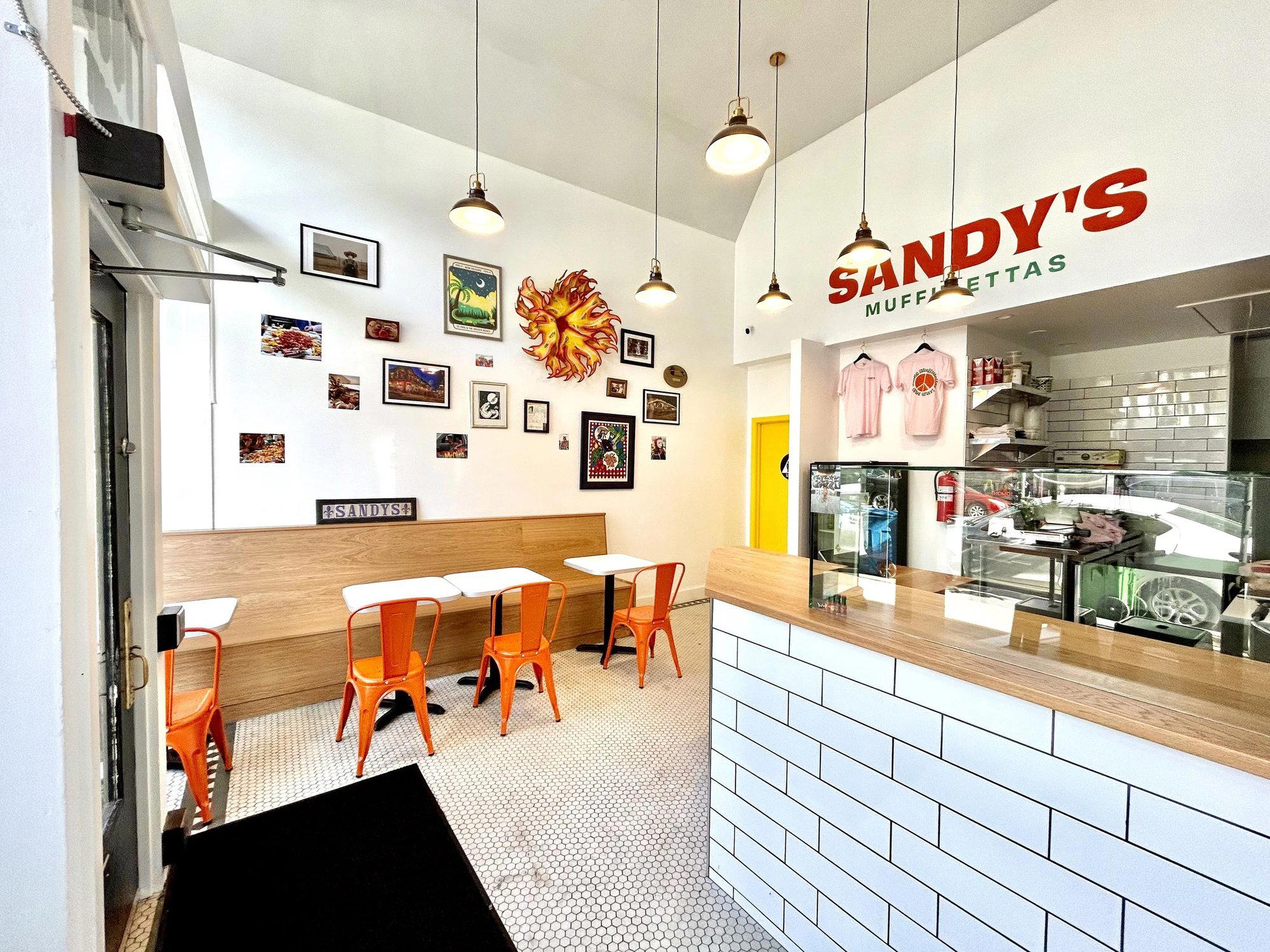
On Haight Street, Sandy's has earned a place in San Francisco's food conversation through the muffuletta, a New Orleans-rooted sandwich built from cured meats, provolone, and olive spread that the San Francisco Chronicle's Food + Wine team singled out as a celebration centerpiece. Available whole for a crowd or by the slice, it represents a specific, confident point of view in a city more often associated with tasting menus and farm-to-table fine dining.

Pearl is the En Primeur Club membership app, where members save venues, book tables and use the concierge.
The menu
What to order
- Muffuletta
- Pickled Egg Salad Sandy
- Brown Butter Chocolate Chip Cookie
- Roasted Mushroom Muffuletta
A New Orleans Sandwich Takes Root on Haight Street
Haight Street has always operated on its own logic. While San Francisco's dining conversation tilts toward the tasting-menu tier, where restaurants like Lazy Bear, Atelier Crenn, and Benu anchor the upper end of American fine dining, the Haight corridor has historically attracted a different kind of institution: places with a point of view that doesn't require a reservation three months out or a dress code conversation. Sandy's fits that pattern. The address is 1457 Haight Street, and what it offers is specific enough that the San Francisco Chronicle's Food + Wine team reached for it when they needed a celebration centerpiece, not a tasting menu or a prix-fixe.
That specificity matters. In a city with this many serious dining options, the restaurants that earn editorial notice without Michelin stars or James Beard nominations tend to do so by being genuinely irreplaceable within a narrow category. Sandy's occupies that position through the muffuletta, a sandwich form that originated in New Orleans and has rarely translated well outside Louisiana. The fact that it works here, well enough to anchor a celebration for a guest who doesn't eat dessert, tells you something about the seriousness of the sourcing and assembly behind it.
The Muffuletta and Where It Comes From
The muffuletta is a New Orleans original, developed in the early twentieth century among the Italian immigrant community centered around the French Quarter's Central Grocery. The construction is direct in theory: a large round Sicilian sesame loaf, split and layered with Italian cured meats, provolone, and a marinated olive salad that functions as both condiment and structural element. The olive spread, in particular, is what separates a muffuletta from a generic Italian cold-cut sandwich. It needs acidity, brine, and enough oil to soak into the bread without making it structurally unsound. Getting that balance right requires attention to the olives themselves, the ratio of giardiniera or pickled vegetables in the mix, and the resting time after assembly.
The cured meat selection matters equally. Traditional versions draw from the Italian-American pantry: salami, mortadella, capicola, ham. The quality of each component is visible before the first bite, which makes sourcing decisions legible to anyone paying attention. In New Orleans, places like Emeril's have built reputations on ingredient provenance and regional authenticity. Sandy's is operating in that same tradition of taking a regional American form seriously on its own terms, rather than reinterpreting it for a California audience.
This is worth noting in a city where California ingredients often become the story regardless of what dish they're in. The muffuletta at Sandy's doesn't appear to chase local provenance as its primary identity. The dish's integrity comes from fidelity to its source tradition, which is a less common editorial choice on the West Coast and probably a harder one to sustain.
Whole or by the Slice: A Format That Works
The Chronicle's Food + Wine team reached for a whole muffuletta as the centerpiece of a celebration, and the format logic is clear. A whole muffuletta is a shareable object with a visual presence that justifies the occasion. It doesn't require plating or serving infrastructure beyond a cutting board. It improves with a brief rest after assembly, which means it travels and holds in ways that most restaurant food doesn't.
Sandy's makes it available by the slice as well, which is the sensible move for individual diners. This dual format, whole for groups and sliced for solo visits, places it in a category of sandwich shops and specialty delis where portion flexibility is part of the operational intelligence. It's a different model from the tasting-menu format at Quince or the fire-driven kitchen at Saison, but it requires its own discipline: consistency at scale, bread quality that holds across varying portion sizes, and an olive spread that doesn't degrade between morning prep and afternoon service.
In the broader American sandwich conversation, the muffuletta sits alongside the po'boy and the Italian beef as a regional form with a defined geography and a set of quality signals that educated eaters recognize immediately. Restaurants that take these forms seriously, from Smyth in Chicago's commitment to regional Midwestern ingredients to Blue Hill at Stone Barns's agricultural sourcing model, share a common thread: the food is legible as a specific thing from a specific place, and that specificity is the point.
Sandy's in the San Francisco Dining Context
San Francisco's dining scene has a well-documented concentration of fine-dining ambition. The city holds multiple Michelin-starred restaurants and has produced chefs who have influenced American cooking at a national level. That environment creates a secondary effect: the places operating below the tasting-menu tier have to be genuinely good to earn editorial attention in a market where the critical conversation defaults upward. The Chronicle's Food + Wine team covering Sandy's in the context of celebration food is a meaningful signal. It means the sandwich competes on quality terms, not just on accessibility or price.
That positions Sandy's alongside a specific type of American specialist, closer in spirit to Frasca Food & Wine's regional Italian focus or Providence's commitment to sustainable seafood sourcing than to casual sandwich shops that prioritize speed and volume. The through-line is conviction: knowing what you're doing, doing it well, and not diluting the offer to capture a broader audience.
For visitors building a San Francisco itinerary around serious eating, the Haight Street location fits logically into a day that moves between neighborhoods. The city's geography means that a lunch at Sandy's pairs well with an afternoon in the surrounding area before evening reservations elsewhere. Our full San Francisco restaurants guide maps the broader dining context across neighborhoods and price points.
Planning a Visit
Sandy's is at 1457 Haight Street in the Haight-Ashbury neighborhood. The muffuletta is available whole or by the slice; a whole sandwich is the format to order if you're feeding a group or want the full visual impact of the thing. Given that the Chronicle's Food + Wine team treated a whole muffuletta as a celebration centerpiece, it's a reasonable read that the whole sandwich is where the format makes its strongest argument.
For diners whose San Francisco visit is centered on the fine-dining tier, Sandy's represents a different kind of stop. The restaurants at the top end of the city's scene, including the French Laundry in nearby Napa, Single Thread Farm in Healdsburg, and Addison in San Diego, operate in a register defined by multi-course progressions and wine programs. Sandy's operates in a register defined by a single, well-executed regional American sandwich form. Both represent serious food. They just make different arguments about what serious food can be.
Internationally, the commitment to regional specificity at Sandy's echoes what places like Atelier Moessmer Norbert Niederkofler in Brunico or Atomix in New York are doing in their own registers: cooking that is legible as a specific tradition from a specific place, executed with enough discipline that it earns notice beyond its immediate neighborhood. The San Francisco Chronicle's recognition is the trust signal here. It confirms that Sandy's is doing something worth the detour.
Frequently asked questions
Has Sandy’s won any awards?
Sandy’s has received recognition including: What festive ooh-and-ahh item do you serve at a celebration where the guest of honor isn’t a fan of cake or dessert? The Chronicle’s Food + Wine team briefly puzzled over this conundrum last year before alighting on the perfect party center….
What's Sandy’s's location?
Sandy’s is located at 1457 Haight Street, San Francisco, CA 94117, San Francisco.
How far ahead should I plan for Sandy’s?
Reservations are recommended for Sandy’s in San Francisco. Confirm current policy via the venue's official channels.
Can I bring kids to Sandy's?
Nothing in Sandy's format suggests otherwise. A counter serving whole and sliced muffulettas at 1457 Haight Street is the kind of low-ceremony setup that travels well with families. The sandwich itself, cured meats, provolone, olive spread, is a crowd format, not a finicky tasting experience.
Side-by-Side Snapshot
Comparable venues nearby, for context on price, style, and recognition.
| Venue | Cuisine | Price | Awards | Notes |
|---|---|---|---|---|
| Sandy’sThis venue (the venue you are viewing) | New Orleans-Style Muffulettas | $10–20 | Not listed | Not listed |
| The Richmond | Seasonal American Tasting Menu | $50–100 | Not listed | Inner Richmond |
| Mission Cheese | American Cheese Bar | Not listed | Not listed | Mission |
| Rye | American Bar | Not listed | Not listed | Nob Hill |
| Palm City | Neighborhood Hoagies & Natural Wine | $20–30 | Star Wine List | Sunset/Parkside |
| Boxing Room | New Orleans Cajun/Creole | Not listed | Not listed | Hayes Valley |
Recognition history
Dated appearances from independent guides and award organizations, with the underlying list record or original source where available.
San Francisco Chronicle Top 100 Bay Area Restaurants #23
San Francisco Chronicle
Continue exploring
More in San Francisco
Restaurants in San Francisco
All restaurants in San Francisco →
Bars in San Francisco
All bars in San Francisco →


Details
- Casual
- Cozy
- Casual Hangout
- Standalone
- A La Carte
- Counter Dining
- Vegetarian Friendly
Current opening hours
- Monday
- 11 AM–4 PM
- Tuesday
- 11 AM–4 PM
- Wednesday
- 11 AM–4 PM
- Thursday
- 11 AM–4 PM
- Friday
- 11 AM–5 PM
- Saturday
- 10 AM–5 PM
- Sunday
- 10 AM–5 PM
Hours can change for holidays and private events. Hours as of .
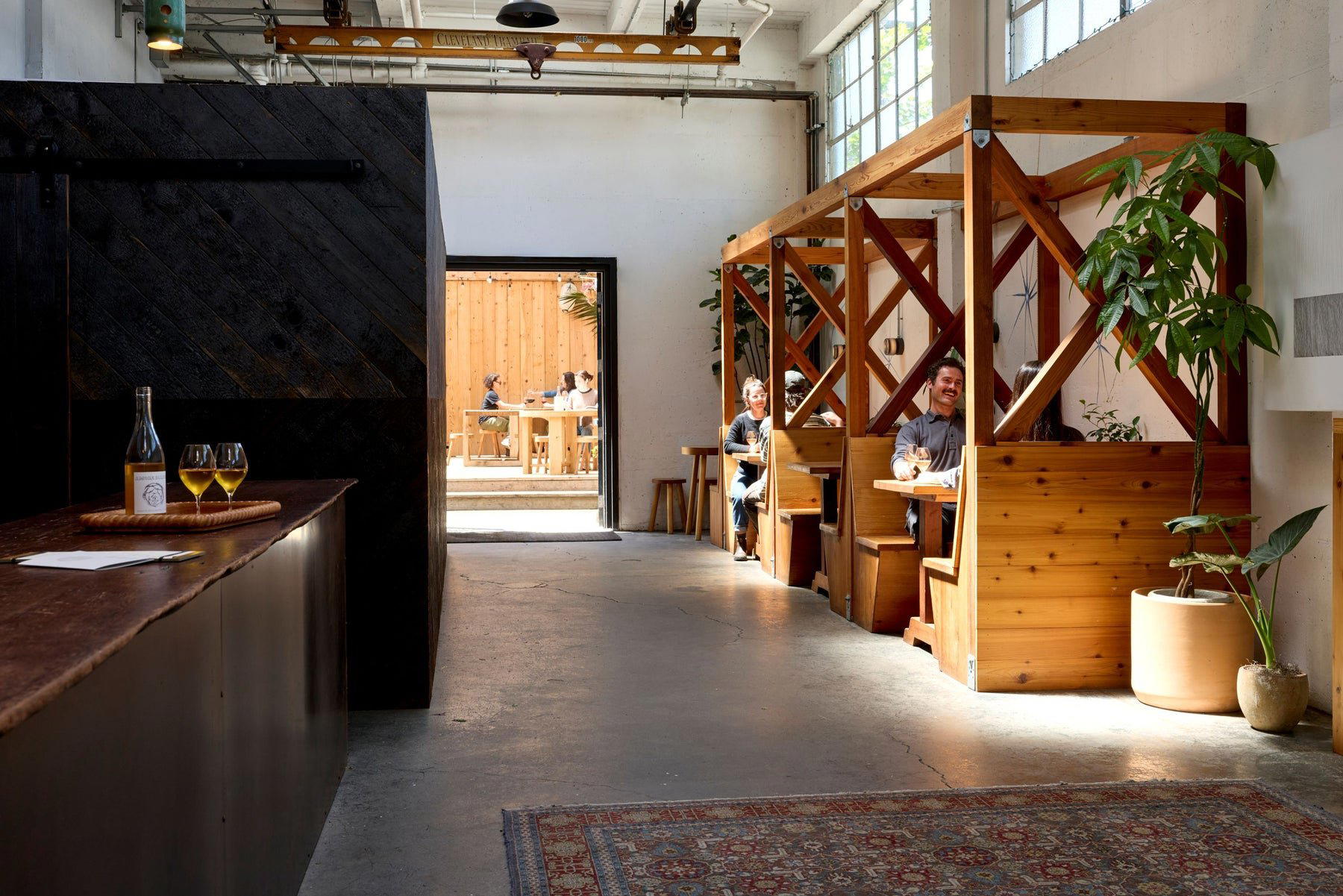
Intimate counter-service lunch spot with a neighborhood feel, housed in a small deli space in the back of a bottle shop on Haight Street.