Samudra
This listing is retired after a June 2026 status audit found the place inactive at its stored address.
- Address
- 75-18 37th Ave, Jackson Heights, NY 11372
- Phone
- +1 718 255 1757
- Directions
- Get directions
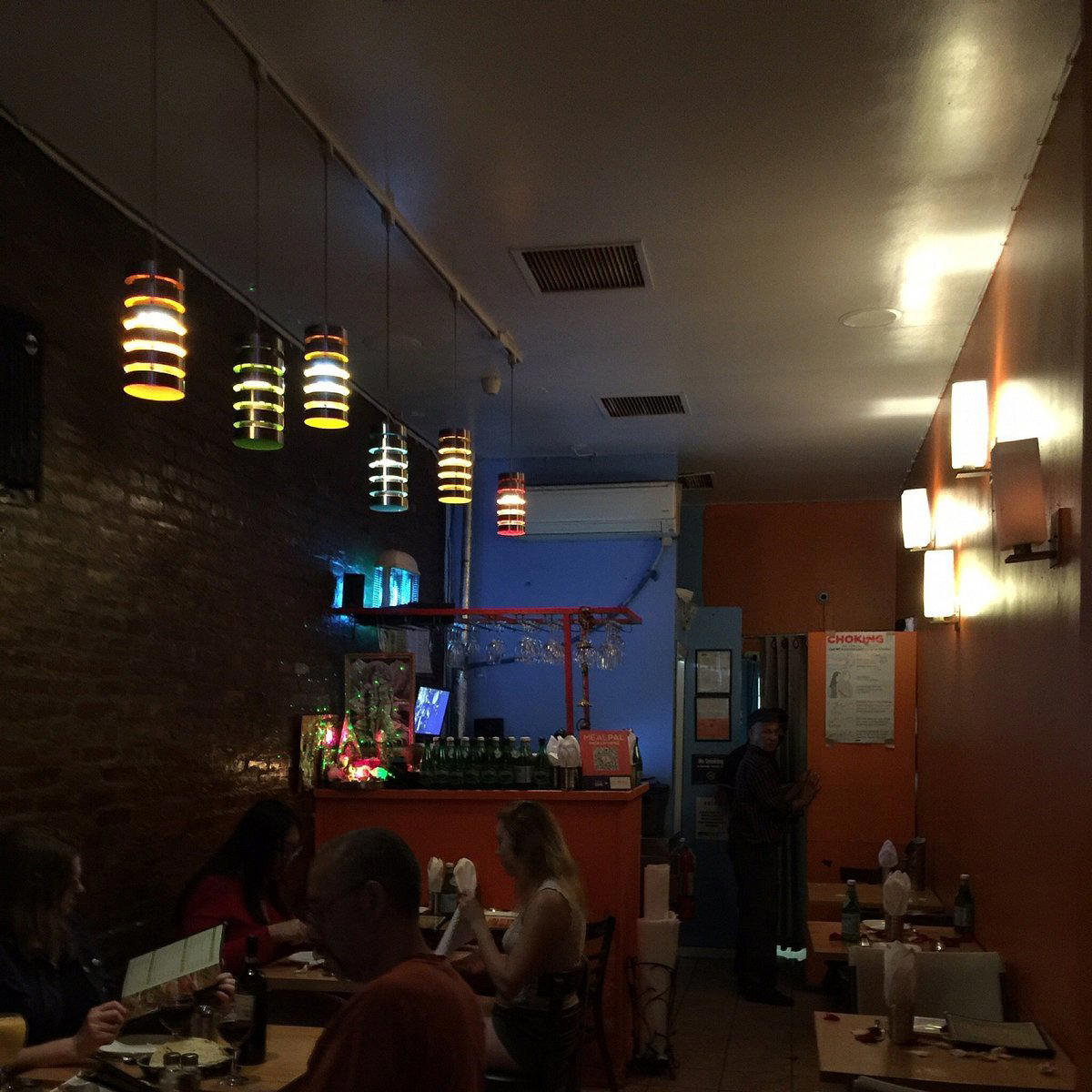
Jackson Heights and the Coastal Indian Diaspora Table
Samudra is a restaurant in Jackson Heights, New York City, with a casual dress code, walk-in-friendly service, and an average spend of about $20 per person. By the 1980s, 37th Avenue had established itself as the commercial spine of one of New York's most concentrated South Asian communities, and the restaurants that followed were shaped by the logic of diaspora cooking: faithfulness to regional originals, ingredient substitution where necessary, and gradual refinement as the community's economic range widened. Coastal Indian cooking, in particular, found a home here that Manhattan's more publicised Indian dining corridor never quite managed to replicate. The seafood-forward traditions of Kerala, Goa, coastal Karnataka, and Bengal require specific produce logic and an audience that understands the cuisine at a granular level. Jackson Heights provides both.
Samudra, at 75-18 37th Avenue, sits inside this tradition. The name itself signals orientation: samudra is Sanskrit for ocean, and the kitchen's declared focus on seafood places it within a specific and underrepresented niche in New York dining. While the city's marquee seafood rooms, Le Bernardin and Providence in Los Angeles operate at the French-technique end of the spectrum, Samudra works from a different inheritance entirely, one rooted in spice-driven coastal preparations.
The Technique Intersection: Where Regional Tradition Meets Broader Kitchen Fluency
Interesting cooking happening in diaspora neighbourhoods across American cities tends to sit at precisely this intersection: a tradition deep enough to set real parameters, and a kitchen that has absorbed broader technique without abandoning its source. This is not fusion in the diluted commercial sense. It is what happens when a cook trained in regional specificity encounters a wider set of tools and applies them without losing the essential flavour logic of the original. You see versions of this at Atomix, where Korean culinary grammar is maintained even as the format and presentation language draw from European fine dining. At Samudra, the equivalent tension plays out in the context of coastal South Asian cooking.
Coastal Indian cuisine already carries considerable technical complexity. Coconut-based curries from Kerala involve layered tempering, toasted spice sequences, and precise fat management. Goan vindaloo descends from Portuguese-influenced pickling traditions that produce acidity through fermentation rather than citrus. Bengali fish preparations depend on mustard oil's particular sharpness and the balance it creates with fresh green chilli. These are not simple dishes. They require a cook who understands the chemistry of each step, not merely the sequence. When that foundation is present, additional technique absorbed from other traditions tends to sharpen rather than blur the final result.
This is the category of cooking that makes restaurants like Samudra worth tracking alongside the city's notable addresses. The Michelin-starred rooms on the west side of Manhattan, Eleven Madison Park, Per Se, Masa, represent one model of culinary ambition: high investment, controlled scarcity, tasting-menu formats. Jackson Heights represents a different model, where the cooking's ambition is expressed through depth of tradition and community knowledge rather than through price or format.
The Neighbourhood as Context
Understanding Samudra requires understanding 37th Avenue. This is not a restaurant district that exists to serve tourists or to be photographed for social media. It exists because a large, economically active South Asian community lives within walking distance and demands cooking that meets a specific and exacting standard. That dynamic produces something that is difficult to replicate in more commercially driven neighbourhoods: a restaurant that is accountable to an audience that knows exactly what the food should taste like.
The same logic applies to regionally honest cooking elsewhere. Blue Hill at Stone Barns is accountable to a different kind of audience, one focused on agricultural provenance, and that accountability shapes every decision on the plate. In Jackson Heights, the accountability is to diaspora memory and regional specificity. Both are forms of constraint that produce better cooking than an absence of constraint tends to allow.
Jackson Heights sits on the 7 train, which makes it accessible from Midtown Manhattan. The neighbourhood itself rewards time beyond a single meal: the produce markets on Roosevelt Avenue carry ingredients that Manhattan's grocery infrastructure largely ignores, and the density of South Asian food businesses within a few blocks of Samudra provides useful context for understanding the cuisine's full range.
Where Samudra Sits in the Wider Coastal Indian Category
New York's South Asian restaurant scene has become more stratified over the past decade. At one end, a cluster of higher-investment Indian restaurants has moved toward tasting menus and wine programs, targeting the same audience that books Smyth in Chicago or Addison in San Diego. At the other, the Jackson Heights corridor maintains a format and price register closer to its original community-service function. Samudra occupies the second category, which is not a lesser category. It is a different one, with different metrics of success.
The coastal seafood focus places Samudra in a comparable set that is genuinely small in New York. Bengali fish curry, Kerala prawn preparations, and Goan seafood traditions are all represented across the city, but rarely with the specificity of a kitchen that has made this its central editorial point. For comparison: the farm-to-table commitment that defines Single Thread Farm in Healdsburg or Lazy Bear in San Francisco is legible to diners because it is declared and maintained consistently. A kitchen that commits to coastal Indian seafood with similar consistency signals the same kind of focused intent, even if the format and price register differ considerably.
Readers interested in how regional culinary traditions translate across different American cities can also find useful comparative reference in Emeril's in New Orleans, Frasca Food and Wine in Boulder, and The Inn at Little Washington, each of which navigates a distinct regional identity within the American dining context. For European analogues in regional seafood tradition, Dal Pescatore in Runate and Atelier Moessmer Norbert Niederkofler in Brunico offer instructive parallels in how deep regional roots produce cooking that resists easy categorisation. The French Laundry in Napa provides a further point of contrast: a kitchen where classical French technique was applied to California product to produce something that eventually became its own tradition, which is, at a structural level, precisely what the leading diaspora cooking attempts.
Planning Your Visit
Samudra is located at 75-18 37th Avenue in Jackson Heights, Queens, accessible via the 7 train to the 74th Street-Broadway station. The neighbourhood is most active on weekends, when the full range of South Asian food businesses on 37th Avenue and Roosevelt Avenue is in operation.
Cuisine Lens
Comparable venues nearby, for context on price, style, and recognition.
| Venue | Cuisine | Price | Notes |
|---|---|---|---|
| SamudraThis venue — the venue you are viewing | Indian Vegetarian & Non-Vegetarian | $$ | Not listed |
| Bukhara Grill | North Indian Tandoori & Curry | $$ | East Midtown-Turtle Bay |
| Fonty’s Deli + Dukaan | Indian-ish Sandwiches | $$ | West Village |
| Ahimsa | Authentic Indian Vegetarian | $$ | Murray Hill-Kips Bay |
| Karahi Indian Cuisine | Indian Curry House | $$ | Hell's Kitchen |
| Spice Symphony Times Square | Authentic Indian with Indo-Chinese Fusion | $$ | Hell's Kitchen |
Continue exploring
More in New York City
Restaurants in New York City
Browse all →
Bars in New York City
Browse all →

Hotels in New York City
Browse all →






At a Glance
- Cozy
- Casual Hangout
- Farm To Table
Cozy and welcoming in a narrow space with less than a dozen tables, featuring a shrine with Ganesha images and candles.