
Sakae Pan belongs to Japan’s everyday bakery ritual rather than the long tasting-menu circuit often associated with destination dining. Its Tabelog Bread EAST 100 selection in 2020 and 2022 places it in a documented bread category, while the take-out format keeps the experience closer to a morning provisions stop than a seated restaurant meal.
Pearl is the En Primeur Club membership app — saves, bookings, and concierge access live there. Same editors, same standards.
- Address
- 1 Chome-9 Kanosakaemachidori, Gifu, 500-8455, Japan
- Phone
- +81 58-271-0290
- Website
- tabelog.com
 Saves & bookings on Pearl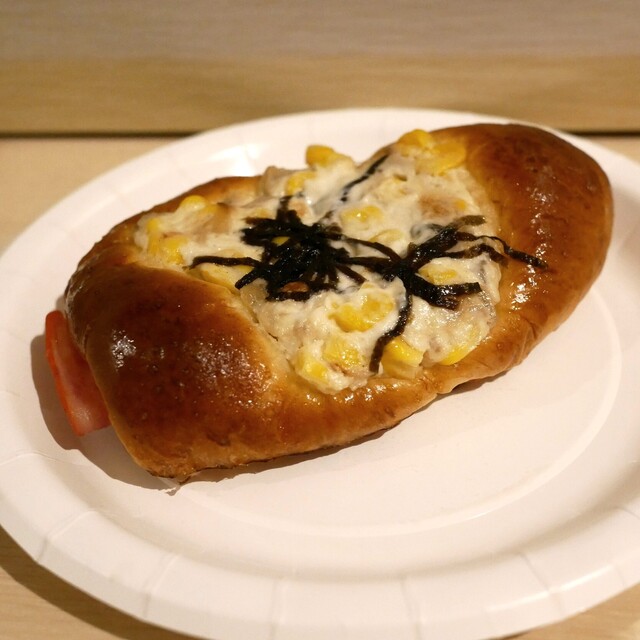
The ritual begins before the table, because there is no table to claim. Japanese bakery culture often works at street pace: trays, tongs, a short decision window, and the quiet pressure of choosing bread that will be eaten elsewhere. Sakae Pan fits that rhythm. It is a take-out bakery, and that matters more than any dining-room language. The point is not lingering service or a chef-led counter; it is selection, timing, and the small domestic act of carrying breakfast, lunch, or a family snack back into the day.
That makes it a useful counterweight to the way many travellers read Japan’s food scene. Osaka is often framed through takoyaki, okonomiyaki, kappo counters, and late-night drinking rooms, but the broader Kansai and Chubu food map also runs on bakeries that serve commuters, households, and station-area routines. Sakae Pan sits in that everyday category while carrying a measurable credential: selection for Tabelog Bread EAST 100 in 2020 and 2022. In a country where bread culture has absorbed French, German, British, and Japanese convenience-store logic into its own grammar, that recognition signals more than local affection.
A take-out bakery ritual, not a restaurant performance
The practical grammar is simple: choose, pay, leave. That format strips away many of the cues used to judge destination restaurants, such as wine pairing, room design, pacing, or the theatre of a tasting menu. A bakery like this asks a different question: how well does it serve repeat use? The answer is usually found in turnover, range, and the confidence of a place that does not need a long explanatory arc.
Japan’s bakery tradition rewards small increments of precision. The category covers shokupan, sweet buns, filled breads, savoury snacks, sandwiches, and European-derived pastry, but the strongest shops are rarely about imitation alone. They translate bread into the Japanese meal structure: breakfast on the move, a school snack, a quick lunch, something to take home for children, something soft enough for older relatives. Sakae Pan’s family-friendly listing and take-out-only setup place it squarely in that social use, closer to provisions than occasion dining.
That distinction is useful for EP Club readers because it changes expectations. This is not a long meal to plan a day around. It is the kind of stop that makes sense when the itinerary has room for a short food detour, especially for travellers who care about how Japanese cities eat between formal meals. The Tabelog Bread EAST 100 inclusion gives the stop a reason beyond convenience, but the bakery format keeps the experience deliberately low ceremony.
How the recognition reads in Japan's bread category
Tabelog’s Hyakumeiten lists are category-specific, and bread is one of the more revealing categories because it captures shops that rarely fit the export image of Japanese fine dining. A bakery selected for the Bread EAST 100 list is being judged inside a field of daily-use specialists, not against sushi counters or kaiseki rooms. That matters. It places the restaurant within a competitive bread culture where consistency and local repeat traffic carry more weight than spectacle.
The comparison with nearby dining forms is instructive. Tonkatsu Keisui in Osaka sits in a higher meal-price bracket and belongs to a sit-down fried-pork tradition. Tejaku Kappou Terada, outside the metro, points toward a more formal Japanese meal structure. Mikazuki Bar and Yakiniku Shun Yasai Fanbogi represent drinking and grilled-meat formats with different spending patterns and time commitments. The restaurant occupies another lane entirely: low-cost, portable, daytime-friendly, and built around bread rather than service sequence.
For travellers building a food map, that lane should not be treated as secondary. Japan’s serious eating culture is not confined to reservations. Some of its clearest habits appear in bakeries, department-store food halls, train-station counters, and take-away specialists. A place such as this helps fill in the space between headline meals, the hours when a city’s regular customers are not performing food tourism but simply feeding themselves well.
Where it fits in a wider Japan itinerary
Readers using Osaka as a base should place this kind of bakery stop beside other casual and specialist addresses rather than beside long-form restaurants. For a broader Osaka spread, EP Club’s city pages cover restaurants, hotels, bars, wineries, and experiences through separate lenses: Our full Osaka restaurants guide, Our full Osaka hotels guide, Our full Osaka bars guide, Our full Osaka wineries guide, and Our full Osaka experiences guide.
Within the Osaka dining set, the casual end has its own internal range..cafe and 52CHO-ME BAKERY sit naturally beside bakery and café planning, while 551 Horai (551蓬莱) speaks to the city’s portable comfort-food economy. 99 Pizza Napoletana Gourmet and a canto (Italian) show how imported European forms become serious local categories in Japan, bread included.
Looking beyond Osaka, the same logic extends across the country and overseas Japanese food culture. -Grilled beef Sukiyaki- KAMAKURA TANUKIAN 鎌倉 たぬき庵 in Kamakura. 鮪と炭火焼き うお炭 秋葉原店 in Tokyo.know in Kumamoto, (Shoku) Vietnam in Kawasaki, [Curry Senmon Ten] Maruyama Kyoju. in Sapporo, and [ki:] in Kyoto each occupy different parts of the Japanese dining map. Abroad, Jōdo Saké Bar in Los Angeles and Onigiri Time in Pasadena show how portable Japanese formats travel without requiring a formal meal frame.
The editorial case for the restaurant is therefore not that it replaces a major Osaka dinner. It does something smaller and, in its way, more revealing: it shows how bread functions inside Japanese daily life, backed by a category award rather than a glossy dining-room narrative. Treat it as a provisions stop with a documented reputation, and the experience makes sense.
Cuisine Context
Comparable venues at similar price and category levels.
| Venue | Cuisine | Price | Notes |
|---|---|---|---|
| Sakae PanThis venue — the venue you are viewing | Retro Japanese neighborhood bakery | $ | Not listed |
| JouEt BoIte | Bakery / Bread Shop | $ | Takatsuki |
| Mori no Rakuda | Japanese-style tea room & cake café | $ | Chūō |
| Kyu Yamu Tetsudo | Osaka spice curry house | $ | Kita |
| PARIS-h | Artisan bakery & Western-style sweets | $ | Kita |
| LAFCA | Cake Shop / Patisserie | $ | Kita |
Recognition history
Dated appearances from independent guides and award organizations, with the underlying list record or original source where available.
Tabelog 100 #24 · No. 24
Tabelog · Tabelog 100 - Bread - EAST - 2022
Continue exploring
More in Osaka
Restaurants in Osaka
Browse all →
At a Glance
- Classic
- Lively
- Well Known
- Solo
- Family
- Casual Hangout
- Standalone
- Street Scene
Current opening hours
- Monday
- 6:50 AM–7 PM
- Tuesday
- 6:50 AM–7 PM
- Wednesday
- 6:50 AM–7 PM
- Thursday
- 6:50 AM–7 PM
- Friday
- 6:50 AM–7 PM
- Saturday
- 6:50 AM–7 PM
- Sunday
- 6:50 AM–7 PM
Hours can change for holidays and private events. Last verified .