Sagami
Sagami has held its place on Collingswood's compact restaurant row for decades, anchoring a block where serious Japanese cooking sits alongside Italian and Mexican tables that attract diners from across South Jersey and Philadelphia. The menu structure here follows the logic of a traditional Japanese kitchen rather than an Americanized hybrid, making it a useful reference point for anyone mapping the town's dining range.
Pearl is the En Primeur Club membership app — saves, bookings, and concierge access live there. Same editors, same standards.
- Address
- 37 W Crescent Blvd, Collingswood, NJ 08108
- Phone
- +18568549773
- Website
- sagamijapaneserestaurant.com
- Directions
- Get directions
 Saves & bookings on Pearl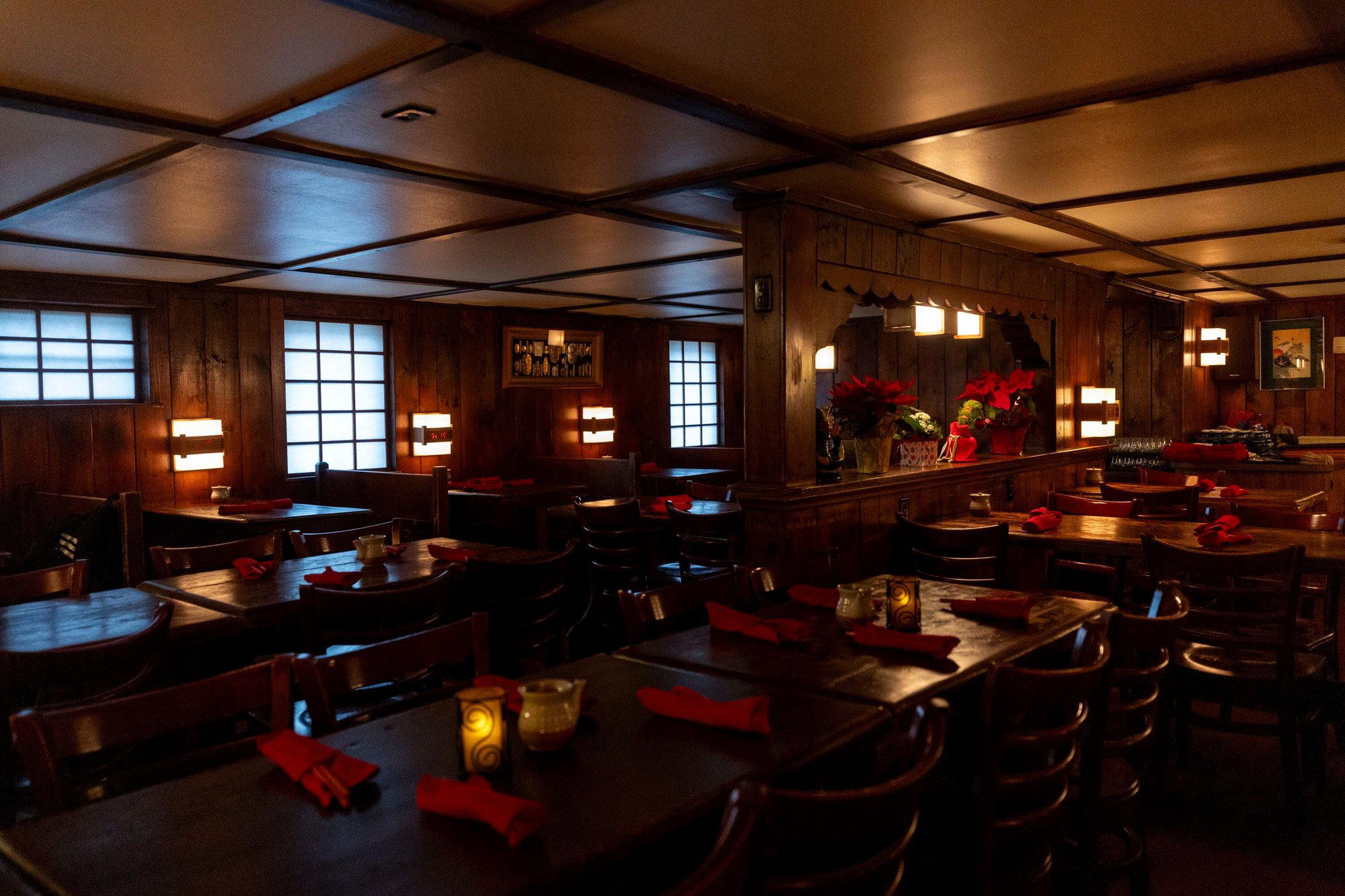
Where Collingswood's Restaurant Row Meets Japanese Discipline
Collingswood's Haddon Avenue corridor has built a reputation disproportionate to the borough's size. On a stretch of West Crescent Boulevard and the surrounding blocks, independent restaurants have accumulated over several decades into something that functions less like a suburban dining district and more like a working editorial argument: that serious cooking does not require a Philadelphia zip code. Sagami, at 37 W Crescent Blvd, has been part of that argument for longer than most of its neighbours have existed. Its longevity in a town that cycles restaurants with some regularity is itself a data point worth reading carefully.
The neighbourhood context matters for understanding what Sagami represents. Collingswood's restaurant concentration includes Italian-focused rooms like Bistro di Marino, Il Fiore, and nunzio, alongside Latin tables such as Oasis Mexican Grill and Paloma Restaurante. Within that mix, Sagami occupies a distinct position: a Japanese restaurant that has operated long enough to predate the American sushi boom's second wave, which means its identity was formed before omakase became shorthand for premium and before ramen shops colonised every city block.
Reading the Menu as Architecture
The way a Japanese restaurant structures its menu tells you almost everything about how the kitchen thinks. At the broadest level, Japanese dining formats in America sort themselves into three categories: the sushi-forward model built for Western familiarity, the izakaya format that emphasises shared small plates and drinking, and the more disciplined traditional format that sequences food the way a Japanese household or formal restaurant would. Sagami's long tenure in Collingswood and its consistent reputation among South Jersey diners suggests a menu architecture closer to the third category than the first.
Traditional Japanese menu logic moves from lighter to heavier, from raw to cooked, with distinct sections that signal kitchen range: sashimi and sushi as one register, cooked preparations such as yakitori, teriyaki, or nimono as another, and often a selection of noodle or rice dishes that mark the end of a meal rather than the middle. A menu built this way does not prioritise novelty; it prioritises coherence. The reader of such a menu understands that the kitchen is not trying to be ten things at once. That discipline, sustained over time, is what builds the kind of local loyalty that keeps a restaurant operating for decades in a competitive small borough.
This contrasts with the format you find at destination-tier American Japanese restaurants further up the price and fame ladder. Venues like Atomix in New York City operate on a card-based omakase format where the menu itself is a designed object. At the other extreme, the kaiseki lineage represented by places like The French Laundry in Napa or the produce-first philosophy of Blue Hill at Stone Barns in Tarrytown treats seasonal sourcing as the primary structural principle. Sagami is not competing in those tiers. Its frame of reference is the dependable, technically honest neighbourhood Japanese restaurant — a format that is, if anything, harder to sustain than the destination model, because the bar is set by daily consistency rather than by single-visit spectacle.
The Collingswood Dining Register
Collingswood rewards repeat visits rather than single-occasion pilgrimages. The borough's dining culture has developed around residents who eat out frequently and locals who cross the river from Philadelphia for a more relaxed evening at a lower price point. Within that pattern, Sagami functions as a fixture rather than a discovery. It is the kind of restaurant you bring out-of-town guests to when you want to make the argument that your suburb has real dining depth, not just chains and pizza.
For comparison, consider what draws serious eaters to restaurant corridors outside major cities in the first place. Single Thread Farm in Healdsburg and Addison in San Diego represent the destination-driven model: you travel to the restaurant specifically. The Collingswood model is different. Here, the accumulation of independently operated, medium-term restaurants creates a dining district that functions as a whole. Sagami contributes to that accumulation. Its presence on the block validates the block.
Seafood-focused precision, which is central to Japanese cooking at any price tier, has a reference point in the American fine dining canon at places like Le Bernardin in New York City and Providence in Los Angeles. Those rooms have shaped what American diners expect from fish-forward menus. A traditional Japanese kitchen at the neighbourhood level operates with different constraints but the same core technical requirement: fish handled correctly, sourced consistently, and served without disguise. That standard is what the Collingswood dining community holds Sagami to, and sustained operation over many years suggests it meets it.
Planning a Visit
Sagami sits at 37 W Crescent Blvd in Collingswood, NJ 08108, reachable by PATCO Speedline from Philadelphia's 8th and Market station to the Collingswood stop, a journey of roughly fifteen minutes. The walk from the station to the restaurant takes under five minutes along Haddon Avenue. Booking ahead is advisable on weekends, when the borough's restaurant strip draws its largest crowds from across Camden County and the Philadelphia suburbs. For current hours, reservation availability, and menu details, contacting the restaurant directly or checking current listings is one reliable approach, as this information varies seasonally.
For a broader picture of where Sagami sits within the borough's full dining range, the full Collingswood restaurants guide maps the competitive set across cuisines and price points. Collingswood also draws occasional comparison to dining corridors associated with mid-sized American city restaurant scenes: the kind of place food writers at venues covering Emeril's in New Orleans or the high-concept rooms like Alinea in Chicago and Lazy Bear in San Francisco occasionally reference when making the case that serious cooking is not geographically confined to a handful of major urban centres. The Inn at Little Washington in Washington and 8 1/2 Otto e Mezzo Bombana in Hong Kong are examples of how destination-tier reputation can form outside the obvious metropolitan centres. Collingswood operates at a different scale, but the logic is the same.
Accolades, Compared
| Venue | Awards |
|---|---|
| SagamiThis venue — the venue you are viewing | This venue |
Continue exploring
More in Collingswood
Restaurants in Collingswood
Browse all →
Bars in Collingswood
Browse all →
At a Glance
- Classic
- Well Known
- Date Night
- Family
- Casual Hangout
- Standalone
- Byob
- Sustainable Seafood
Current opening hours
- Monday
- Closed
- Tuesday
- 4–9:30 PM
- Wednesday
- 4–9:30 PM
- Thursday
- 4–9:30 PM
- Friday
- 4–10:30 PM
- Saturday
- 4–10:30 PM
- Sunday
- 4–9:30 PM
Hours can change for holidays and private events. Last verified .
Traditional Japanese restaurant atmosphere with a classic, established feel.