Rocket Store

A Michelin Plate-recognised seafood shed on the harbour at Boscastle, Cornwall, where the catch arrives daily from a family fishing operation and supplementary ingredients come from a farm in the hills above the village. The blackboard menu changes with what the boats bring in, keeping dishes tightly tied to place and season. At ££, it sits in a price tier that makes the sourcing credentials genuinely surprising.
Pearl is the En Primeur Club membership app — saves, bookings, and concierge access live there. Same editors, same standards.
- Address
- Rocket Store, Boscastle, CON, ENG, United Kingdom
- Phone
- +44 1840 250310
- Website
- therocketstore.co.uk
- Directions
- Get directions
 Saves & bookings on Pearl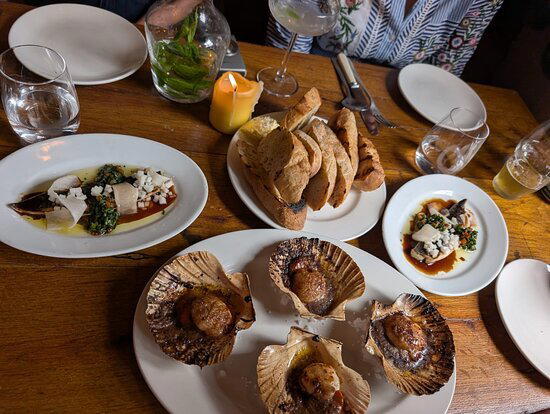
A Shed With a Supply Chain
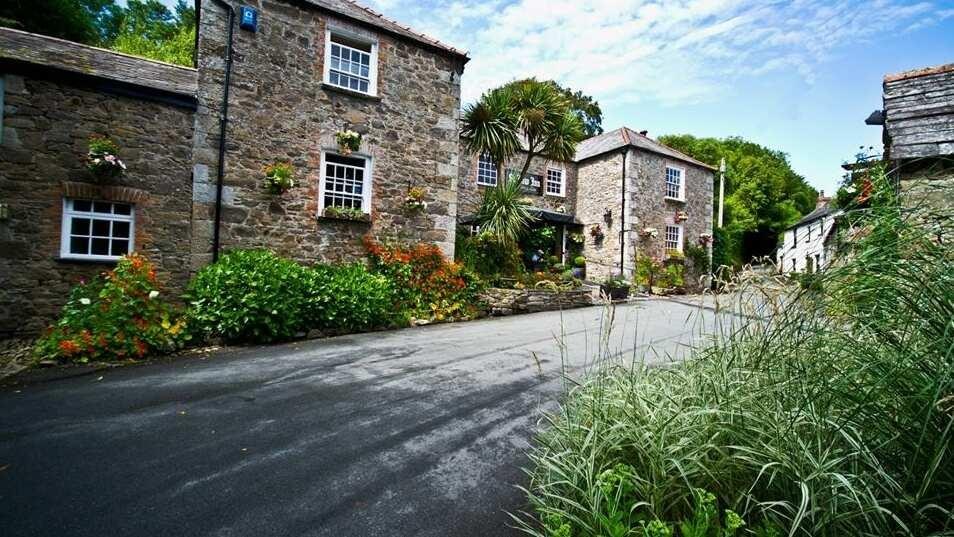
Boscastle's harbour is the kind of place where the geography does the work before you even step inside a restaurant. The village sits at the end of a steep, wooded valley where the River Valency meets the Atlantic, and the working harbour, one of the few natural harbours on Cornwall's north coast, gives the whole settlement an orientation toward the sea that shapes everything from the architecture to what ends up on the plate. The Rocket Store sits within that context physically and conceptually: a compact, painted building that once held the coastguard's rocket-firing apparatus and now functions as a seafood restaurant in Boscastle.
Cornwall's coastal seafood restaurant scene divides, broadly, into two types. There are the larger, destination-format dining rooms that have built national reputations on set menus and reservation queues, and there are the smaller, harbour-adjacent places where proximity to the catch is the point rather than the performance. The Rocket Store belongs clearly to the second category, and has earned Michelin recognition in 2024 and 2025.
Where the Sourcing Starts
Port-to-plate claims are common along the Cornish coast. What distinguishes some operations from others is the degree to which the supply chain is actually closed rather than aspirationally described. At the Rocket Store, the fisherman whose catch arrives at the restaurant each day helps supply the kitchen, creating a loop that most coastal restaurants can only approximate. That kind of relationship between the boat and the kitchen removes a significant layer of supply chain friction: the fish comes from a known source, on a known schedule, without passing through a distributor. The blackboard menu format is the correct operational response to that dynamic, since a printed menu would fix the offer at a point removed from what the harbour actually produces on any given morning.
Supplementary ingredients come from a family farm in the hills above the village. That dual sourcing structure, sea and land from within a tight geographic radius, is less common than the single-source narrative that most small coastal restaurants rely on. It means the kitchen can build complete dishes from a local base rather than drawing on local protein and importing everything around it. The broader implications for dish composition show up in preparations like the butterflied mackerel with nahm jim, where the fish is the anchor and the accompaniment is sharp and acidic enough to hold its own without needing imported or off-season ingredients to do the structural work.
What the Blackboard Tells You
The blackboard format at a harbour-side operation reflects what the boats brought in, not a marketing device. Restaurants that operate genuine daily menus in this format tend to produce a tighter, more coherent offer than those running fixed seasonal menus, because every component has to earn its place against whatever happens to be available that day. Mackerel, when it appears, arrives as a central element rather than a supporting act, which reflects a kitchen that is building around its primary material rather than fitting fish into a pre-determined structure.
For comparison, the sourcing ambition here sits in a different conversation from the grand British dining rooms, the Michelin two- and three-star operations like The Fat Duck in Bray, L'Enclume in Cartmel, or Moor Hall in Aughton, where sourcing is part of a technically elaborate fine dining architecture. The restaurant's sourcing operates at a different register: direct, familial, without ceremony. Closer analogues internationally are the small harbour restaurants of southern Italy where the catch is personal rather than commercial in character, a comparison worth making given how that model produces dishes at Gambero Rosso in Marina di Gioiosa Ionica or at Alici Restaurant on the Amalfi Coast. The underlying logic is consistent: tight geography, direct relationships, and menus that follow the water rather than the calendar.
Among UK coastal seafood operations with Michelin recognition, the comparison set is small. Hide and Fox in Saltwood operates in a different part of the country with a different sourcing structure, and the broader field of Michelin Plate holders along the Cornish and Devon coastline, including operations near Gidleigh Park in Chagford's region, tend toward more formal formats. The restaurant's combination of informal physical setting, direct-boat sourcing, and consistent Michelin recognition gives it an unusual position in that comparable set.
The Room and the Service
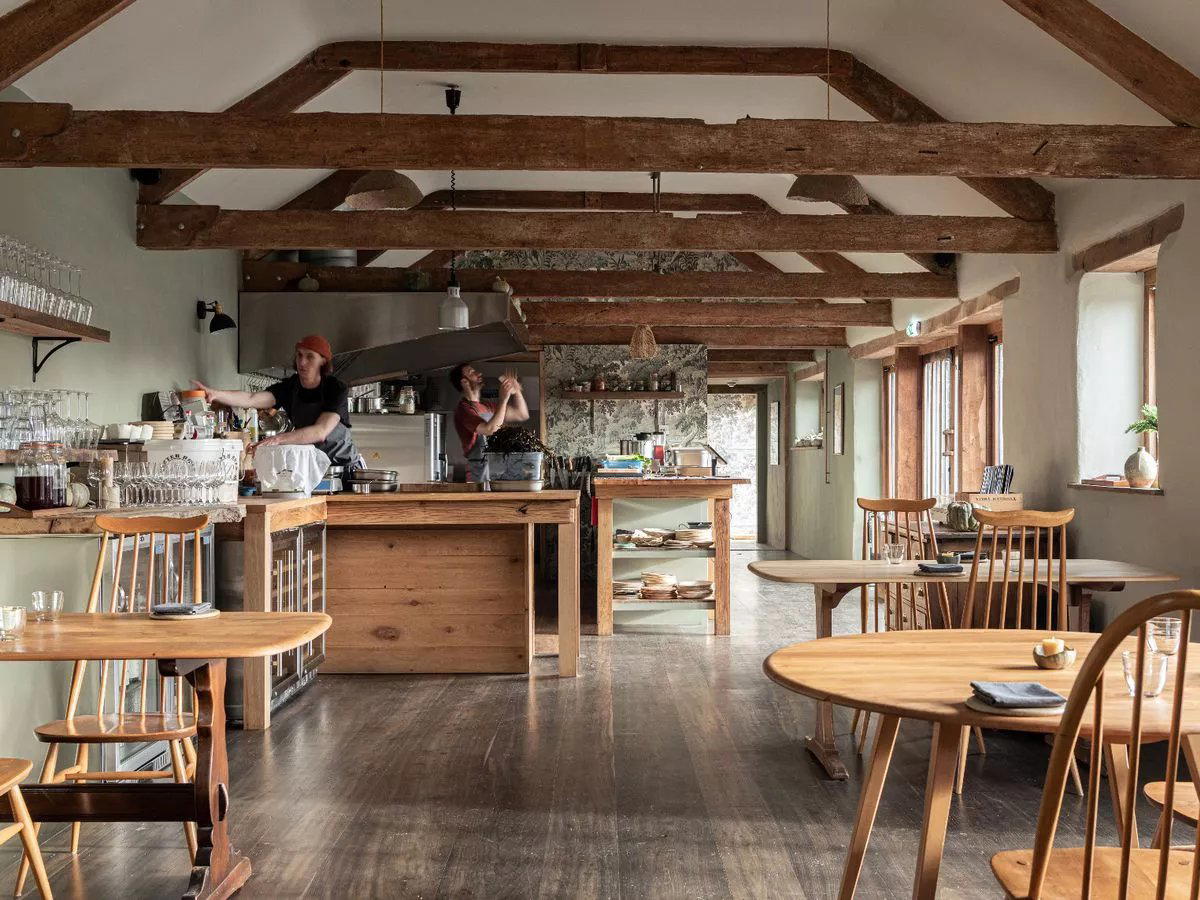
The physical space retains its shed character, which is a compositional choice as much as a practical one. Small harbour buildings that have been converted into restaurants in Cornwall frequently face a design decision between preserving their industrial or utilitarian origins and refitting to a more expected hospitality standard. The compact format here aligns the room with the sourcing story: nothing about the space suggests ambition detached from its location. The service has been described as friendly and enthusiastic.
Planning Your Visit
Boscastle sits on the B3266 off the A39 Atlantic Highway, roughly equidistant between Bude and Wadebridge, and is most straightforwardly reached by car. The village itself is compact, and the harbour area where the restaurant operates is walkable from any of the local parking. At roughly $70 per person, the restaurant is accessible, though the daily-catch format means the menu will shift with availability. Given the compact size of the room and the reservation recommendation, arriving without a booking during peak Cornish summer months carries a real risk of missing the sitting. Visiting outside of peak season brings both quieter conditions and, a more honest read on the harbour's working character.
At-a-Glance Comparison
Comparable venues nearby, for context on price, style, and recognition.
| Venue | Cuisine | Price | Awards | Notes |
|---|---|---|---|---|
| Rocket StoreThis venue — the venue you are viewing | Modern Coastal Seafood Small Plates | $$$ | Michelin Plate | Not listed |
| Harbour House | Modern Seafood Gastropub | $$$ | Michelin Plate | Flushing |
| Salutation Inn | Modern British Seafood | $$$ | Michelin Plate | Topsham |
| North Street Kitchen | Seasonal British Seafood | $$$ | Bib Gourmand | Fowey |
| Atlantic Gate | Seafood & Grill | $$$ | Not listed | Herbert Walker Avenue / Dock Gate 8 |
| Twenty Seven | Modern British Fine Dining | $$$ | Michelin Plate | Kingsbridge |
Recognition history
Dated appearances from independent guides and award organizations, with the underlying list record or original source where available.
Michelin Plate
Michelin
Michelin Plate
Michelin
Michelin Plate
Michelin
Continue exploring
More in Boscastle
Restaurants in Boscastle
Browse all →
Bars in Boscastle
Browse all →
At a Glance
- Rustic
- Cozy
- Lively
- Special Occasion
- Date Night
- Casual Hangout
- Open Kitchen
- Historic Building
- Courtyard
- Extensive Wine List
- Local Sourcing
Lively and relaxed with rustic trestle tables, open kitchen, good music, and informal seating; some find it loud.