Riva

Riva has held its ground on Barnes's Church Road for decades, drawing a quietly loyal southwest London crowd to its northern Italian kitchen. The cooking follows the seasonal logic of the Italian regions rather than London trend cycles, placing it in a different register from the city's ££££ dining circuit. Serious enough to warrant planning, relaxed enough that the food remains the point.
Pearl is the En Primeur Club membership app — saves, bookings, and concierge access live there. Same editors, same standards.
- Address
- 169 Church Rd, London SW13 9HR, United Kingdom
- Phone
- +44 20 8748 0434
- Website
- riva.restaurant
- Directions
- Get directions
 Saves & bookings on Pearl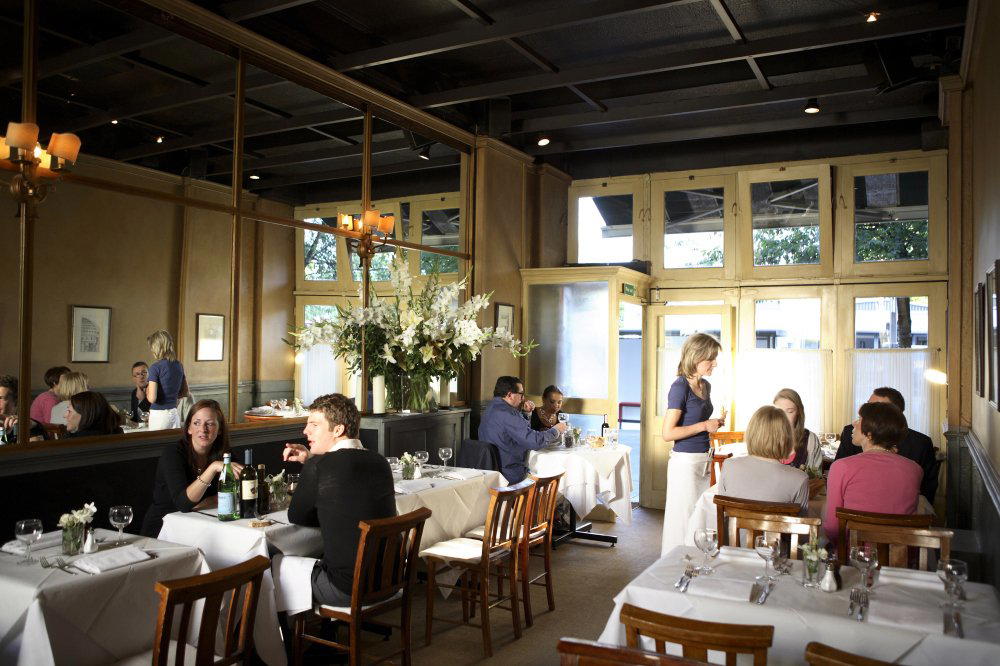
Southwest London and the Long Game of Regional Italian
London's Italian restaurant map divides along a familiar fault line. On one side sit the high-gloss operations in Mayfair and Knightsbridge, where imported marble and Barolo lists signal seriousness through expense. On the other, a smaller cohort of neighbourhood-anchored trattorie that have survived long enough in one place to become part of the local fabric. Riva is an Authentic North Italian restaurant at 169 Church Rd, London SW13 9HR, United Kingdom. Its cooking is rooted in the northern Italian tradition rather than a London interpretation of it.
Barnes itself occupies an unusual position in the southwest London dining scene. It sits between Richmond's more tourist-facing restaurant strip and the denser residential pockets of Putney and Fulham, yet it functions as a self-contained village rather than a corridor. A restaurant that survives here does so by earning repeat custom from the same households over years, not by capturing passing traffic. That dynamic shapes what Riva is: a place for repeat visits rather than a one-off occasion.
How a Meal at Riva Moves
The grammar of northern Italian cooking, rooted in Lombardy and Veneto, runs on restraint and sequence. A meal does not build toward spectacle; it builds toward satisfaction, with each course calibrated to leave room for the next. Riva operates within that logic, and understanding the progression is the key to reading the menu correctly.
The opening courses at a kitchen like this function as orientation: lighter preparations, cured or dressed, that establish the kitchen's approach to acidity and seasoning before anything heavier arrives. In the northern Italian tradition, antipasti are not a formality; they set a register that the rest of the meal is expected to hold. A kitchen that pitches them too aggressively disrupts the arc. One that treats them as afterthoughts signals that the main courses will arrive without proper context.
Pasta courses, and in a kitchen rooted in the north, there will be pasta courses that matter, sit at the structural centre of the meal. This is where technique becomes visible and where the kitchen's relationship with its ingredients is most legible. Fresh egg pasta, hand-rolled and cut to the day's specification, behaves differently from dried, and a kitchen that knows the difference handles them accordingly. The saucing should extend the flavour of the pasta itself, not compete with it. Richness at this stage needs to be measured; the second courses are still to come.
Secondi in the northern Italian tradition lean toward slow-cooked meat, river fish, and preparations that reward patience in the kitchen. The tempo of the meal slows here. This is where a well-run Italian room separates itself from the merely competent: the ability to hold a diner's attention at the point when the meal's energy might otherwise flag. The wine list's function shifts accordingly, from the lighter work of the early courses toward something with more structural grip.
Dessert in this tradition rarely surprises. It closes rather than punctuates, which is the correct instinct. A tiramisu or pannacotta that arrives composed and properly chilled does more for a meal than an architectural sugar construction that takes three minutes to explain.
Where Riva Sits in London's Italian Conversation
The city's Italian restaurant market has become more stratified over the past decade. At the upper end, tasting-menu formats from Italian-rooted kitchens now compete in the same bracket as the Michelin-holding Modern European operations: CORE by Clare Smyth, The Ledbury, Sketch, The Lecture Room and Library, Restaurant Gordon Ramsay, and Dinner by Heston Blumenthal all sit in the ££££ tier where the format is as much the product as the food. Riva does not compete in that register. Its pricing and its format belong to a different conversation: serious cooking in a neighbourhood setting, where the work of the kitchen is visible without the scaffolding of a formal tasting progression and a wine pairing script.
Diners looking for regional Italian cooking that has held a consistent line for long enough to have accumulated genuine character are in the right place with Riva.
Regionally anchored Italian restaurants of this kind are also worth comparing to the UK's broader serious-dining circuit. Properties like Le Manoir aux Quat' Saisons in Great Milton and The Fat Duck in Bray represent the destination-restaurant model, where the journey is part of the proposition. L'Enclume in Cartmel, Moor Hall in Aughton, Gidleigh Park in Chagford, and Hand and Flowers in Marlow operate on similar destination logic. Riva is emphatically not a destination restaurant in that sense. Its frame of reference is local and longitudinal. The question it answers is different: not where to go for a landmark occasion, but where to eat well in southwest London across many years.
Internationally, the model it approximates sits closer to the long-running neighbourhood trattorie that operate at serious culinary level in Milan or Venice without seeking tasting-menu attention. In a New York context, the comparison is less to the ambitious tasting-menu rooms like Le Bernardin or Atomix and more to the quietly respected neighbourhood Italian that survives on repeat custom and cooking quality alone.
Planning Your Visit
Barnes is accessible from central London via rail from Waterloo to Barnes Bridge, which places the restaurant a short walk from the platform. For those driving from the centre, Church Road sits just off the south end of Hammersmith Bridge on the Barnes side.
Reservations are recommended, particularly for weekend evenings and weekend lunch.
Quick reference: Riva, 169 Church Road, Barnes, London SW13 9HR.
Reputation First
Comparable venues nearby, for context on price, style, and recognition.
| Venue | Cuisine | Price | Notes |
|---|---|---|---|
| RivaThis venue — the venue you are viewing | Authentic North Italian | $$$ | Not listed |
| Caffè Concerto Knightsbridge | Italian Patisserie & Cafe | $$$ | Knightsbridge |
| Berberè Pizzeria - Marylebone | Artisan Neapolitan Pizza | $$$ | Marylebone |
| Piccolino Tower Bridge | Authentic Regional Italian | $$$ | Borough |
| Assaggi | Sardinian-Influenced Italian | $$$ | Bayswater |
| A Cena | Fine Italian | $$$ | St. Margaret's |
Recognition history
Dated appearances from independent guides and award organizations, with the underlying list record or original source where available.
Opinionated About Dining Casual in Europe Recommended
Opinionated About Dining
Continue exploring
More in London
Restaurants in London
Browse all →
Bars in London
Browse all →
Hotels in London
Browse all →
Wineries in London
Browse all →
At a Glance
- Cozy
- Intimate
- Classic
- Date Night
- Special Occasion
- Family
- Standalone
- Extensive Wine List
Current opening hours
- Monday
- Closed
- Tuesday
- 12–2:30 PM, 6:15–10 PM
- Wednesday
- 12–2:30 PM, 6:15–10 PM
- Thursday
- 12–2:30 PM, 6:15–10 PM
- Friday
- 12–2:30 PM, 6:15–10 PM
- Saturday
- 12–2:30 PM, 6:15–10 PM
- Sunday
- 12–3 PM, 6:15–10 PM
Hours can change for holidays and private events. Last verified .
Cozy with understated elegance, crisp white tablecloths, and a warm, welcoming atmosphere like dining at a friend's house.