
Tabelog 100 #49
Our verdict
Rikidou puts Gifu’s ramen culture into a compact, counter-only format, with ramen and tsukemen priced in the JPY 1,000–1,999 bracket. Its repeated selection for Tabelog Ramen EAST “Tabelog 100” from 2022 through 2025 places it in a narrow group of regional ramen shops that draw attention beyond local regulars.

Pearl is the En Primeur Club membership app, where members save venues, book tables and use the concierge.
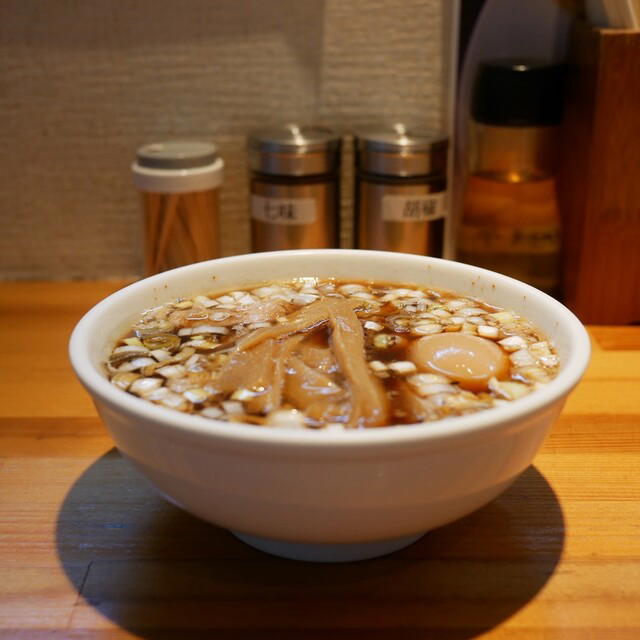
The menu
What to order
- Tsukemen
- Ultra-flat noodles
- House-made noodles trio
The experience is built for noodles rather than ceremony: a focused ramen and tsukemen meal, a compact service rhythm, and bowls that keep attention on the food rather than the room. In Gifu, where serious eating can be discussed through many regional formats, a noodle shop with Tabelog Hyakumeiten recognition gives the city’s casual dining another reference point. Rikidou belongs to that category of Japanese noodle shop where the format is plain, the spending bracket stays accessible, and the scrutiny comes from repeat diners rather than linen-tablecloth theatrics.
Gifu ramen judged by stock, noodles, and restraint
Ramen in Japan is rarely a single cuisine; it is a set of decisions about stock concentration, noodle texture, fat, seasoning, and serving temperature. Gifu sits between larger food capitals and regional supply lines, which makes ingredient logic matter. A ramen or tsukemen shop here competes not by importing spectacle from larger cities, but by making a compact bowl read clearly: broth with enough structure, noodles that hold their line, and toppings that do not drown the base. That is the useful way to read Rikidou’s recognition. Its 2025 Tabelog Hyakumeiten listing and 3.74 score signal that the shop has earned attention on a major dining platform.
The menu category matters. Ramen and tsukemen ask different things of a kitchen. Ramen depends on balance in the bowl from the first lift of noodles; tsukemen, with noodles served separately for dipping, exposes noodle texture and dipping-broth concentration more directly. In regional ramen culture, that split often separates casual slurping from a more analytical meal, because the diner can assess the noodle on its own before the broth takes over. Rikidou’s place in the conversation is therefore not just “a ramen shop in Gifu,” but a noodle-focused stop where both formats sit under the same accessible price ceiling and recognition pressure.
That price tier is part of the point. With lunch and dinner budgets listed at JPY 1,000–1,999, the shop operates in the everyday ramen economy, not in the premium tasting-menu bracket that has pulled some Japanese noodle counters toward destination dining. Nearby comparison helps frame that decision: Kochouan Semba, Soba Kura Tomi, Chuka Dining Hanabi, Sakana, and たか田 八祥 show how varied Gifu dining can be across formats and occasions. The competitive set for Rikidou is therefore not luxury dining; it is the harder arena of repeatable value, where small differences in stock, noodle handling, and pacing decide whether diners return.
A focused format that rewards timing more than planning
A compact ramen meal has a different social contract from a restaurant built around lingering. The meal is focused, the visit is usually brief, and the rhythm of the room is part of the operating model. For a shop with this kind of recognition, timing becomes the practical variable that matters. The smarter reading is to treat popular meal periods as meaningful rather than assuming every arrival will feel equally relaxed.
The location also shapes the visit. Rikidou is in Gifu, which keeps it part of the city’s broader casual-dining map rather than a detached destination with no local context. That matters for a ramen and tsukemen shop: the best visit is often folded into a wider day of eating, errands, or travel, not treated as a long formal reservation. In that sense, the shop’s appeal is direct. It gives Gifu diners and visitors a noodle-focused stop whose reputation is larger than its format.
Practical details reinforce the everyday ramen-shop logic. This is not a room to read as a luxury dining stage, and the experience should be approached as a compact meal built around the bowl. None of that is incidental. A focused noodle shop keeps the experience closer to everyday Japanese ramen culture than to the internationalized version of ramen packaged for destination dining. The discipline is logistical as much as culinary: arrive prepared, expect a compact meal, and treat the visit as a place for focus rather than a long evening.
How it fits into a broader Gifu eating itinerary
Gifu rewards diners who mix formats. A city meal plan can move from ramen to soba, local casual rooms, and other Gifu dining without forcing everything into the same price or occasion. For readers mapping the city, Our full Gifu restaurants guide gives the broader dining frame, while Our full Gifu bars guide, Our full Gifu hotels guide, Our full Gifu wineries guide, and Our full Gifu experiences guide help separate a quick noodle stop from a wider trip.
Within Gifu, the useful contrast is not only cuisine type but pace. Other Gifu dining rooms point to a city where eating and drinking can stretch into the evening. Rikidou sits at the opposite end of that spectrum: short format, accessible spend, and a 2025 recognition record that asks diners to take a casual bowl seriously.
That distinction also clarifies why regional ramen deserves editorial attention beyond Tokyo and Osaka. Japan’s noodle culture is sustained by shops whose budgets look modest but whose reputations are built through repetition. The comparison can stay close to Gifu: Kochouan Semba, Soba Kura Tomi, Chuka Dining Hanabi, Sakana, and たか田 八祥 all help show how varied a city’s dining map can be without forcing every venue into luxury coding.
The editorial read is clear: this is a Gifu ramen and tsukemen stop for diners who care about craft but do not need ceremony around it. The 2025 Tabelog Hyakumeiten recognition supplies the external signal, the price bracket keeps expectations grounded, and the compact format keeps attention on execution. In a city where regional food identity often gets framed through ingredients and tradition, Rikidou argues for the bowl as a compact measure of both.
Frequently asked questions
Is Rikidou okay with children?
Rikidou is best read as a focused ramen and tsukemen stop in Gifu, so it suits children who can handle a compact noodle-focused meal.
Is Rikidou better for a quiet night or a lively one?
Rikidou is a focused ramen and tsukemen shop in Gifu, so the experience is best approached as a concentrated meal rather than a long dinner.
What's the pricing like at Rikidou?
Pricing at Rikidou is listed as JPY 1,000 - JPY 1,999 JPY 1,000 - JPY 1,999 View spending breakdown.
What's the address for Rikidou?
Gifu.
Is Rikidou reservation-only?
Rikidou is best approached as a focused ramen and tsukemen stop in Gifu, where timing matters more than treating the meal like a long formal dinner.
What's the signature at Rikidou?
The listed categories are ramen and tsukemen, and that is the clearest way to read the menu here. Rikidou’s 2025 Tabelog Hyakumeiten recognition underlines that noodle focus.
In Context: Similar Options
Comparable venues by cuisine and price in the same metro.
| Venue | Cuisine | Price | Awards | Notes |
|---|---|---|---|---|
| RikidouThis venue (the venue you are viewing) | Ramen & tsukemen shop | Not listed | Tabelog 100 #49 | Not listed |
| Sake no Tori | Traditional Yakitori & Sake Bar | $10–20 | Tabelog 100 #32 | Jūnoecho / central Gifu |
| Tejaku Kappou Terada | Seasonal Japanese Kappo & Izakaya | $30–50 | Tabelog 100 #38 | Gifu Station area |
| Prelude Fukumitsu ten | French-style cake shop & cafe | $10–20 | Tabelog 100 #35 | Fukumitsu Minamimachi |
| Setsu Gekka Nagara | Yakiniku (Japanese BBQ) | $50–100 | Tabelog 100 #82 | Gifu City |
| Takumi Hirano | Traditional Japanese Kaiseki | $100–150 | Tabelog 100 #99 | Yanagase / Onamicho |
Recognition history
Dated appearances from independent guides and award organizations, with the underlying list record or original source where available.
Tabelog 100 #49 · No. 49
Tabelog · Tabelog 100 - Ramen - EAST - 2025
Continue exploring
More in Gifu
Restaurants in Gifu
All restaurants in Gifu →




Details
- Solo
- Casual Hangout
- Late Night
- Standalone
- A La Carte
- Counter Dining