Rico's Lechon
Rico's Lechon sits along the Mactan Promenade in Lapu-Lapu City, serving Cebu's most celebrated whole-roasted pig in the tradition that has made the island a reference point for Philippine lechon. The setting is casual, the portions generous, and the proximity to Mactan-Cebu International Airport makes it a logical first or last stop on any Visayas itinerary.
Pearl is the En Primeur Club membership app — saves, bookings, and concierge access live there. Same editors, same standards.
- Address
- Unit 3 & 4, 8XFH+F59 Mactan Promenade, Lapu-Lapu Airport Rd, Lapu-Lapu, Cebu, Philippines
- Phone
- +63 961 621 6726
- Website
- ricoslechon.com
- Directions
- Get directions
 Saves & bookings on Pearl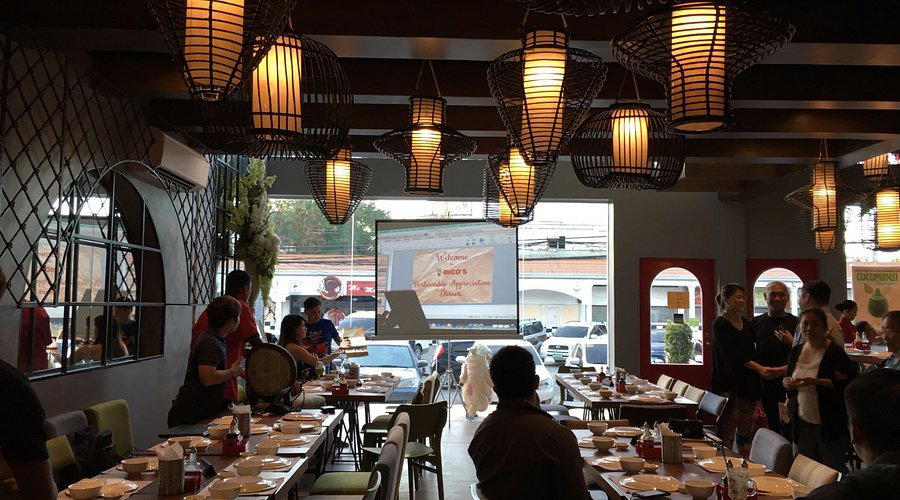
Where Cebu's Lechon Tradition Has a Fixed Address
The Mactan Promenade strip along Lapu-Lapu Airport Road serves arriving and departing travellers alongside residents who have driven across the bridge from Cebu City specifically to eat. Within that context, Rico's Lechon occupies Units 3 and 4 at the 8XFH+F59 address, a location that positions it squarely at the intersection of convenience and culinary pilgrimage. The approach is low-key: no theatrical entrance, no tasting-menu ceremony. What you arrive for is whole-roasted suckling pig, prepared in a regional style that has given Cebu a distinct identity within Philippine roasting traditions.
Cebuano lechon differs from its Luzon counterpart in ways that matter to anyone who has eaten both. Where Manila-area preparations often rely on a liver-based sarsa dipping sauce, Cebuano lechon is typically seasoned from within, the cavity packed with lemongrass, garlic, spring onion, and native herbs before slow-roasting over live coals. The result is skin that cracks without supplementary sauce and meat with an aromatic depth that the dipping version cannot replicate. Rico's operates inside that tradition, which is the more relevant frame for understanding what it offers than any individual restaurant profile.
The Sourcing Logic Behind Cebuano Lechon
Philippine lechon quality is almost entirely a function of the pig, the fuel, and the time spent over the coals. In Cebu, the regional preference runs toward native or native-crossbred pigs, smaller-framed animals with a higher fat-to-muscle ratio than commercial breeds. The fat renders more completely during the roasting process, which is why Cebuano skin achieves its characteristic glassine crispness without relying on basting agents or scored preparation techniques common elsewhere in Southeast Asia.
The fuel matters too. Cebu's lechon culture has historically favoured charcoal from local hardwoods, which burns at a sustained temperature and imparts a subtle smokiness that gas-roasted alternatives cannot produce. The aromatics packed inside the cavity, particularly lemongrass from the Visayas region, are grown in the lowland areas of Cebu and neighbouring islands, meaning the flavour profile of a well-executed Cebuano lechon reflects the island's agricultural character as directly as any ingredient-driven fine-dining preparation at venues like Hapag in Makati or Gallery by Chele in Manila, both of which work within modern Filipino frameworks that trace their sourcing logic back to exactly these regional traditions.
This is the editorial point worth sitting with: the ingredient philosophy at the summit of the Philippine fine-dining tier and the ingredient philosophy at a well-regarded lechon house in Lapu-Lapu City are not as far apart as their price points suggest. Both rest on the argument that Philippine produce, prepared with attention to regional method, does not require international augmentation. The difference is format and formality, not underlying principle. For a sense of how that principle manifests in creative cuisine contexts elsewhere in the country, Linamnam in Parañaque and Asador Alfonso in Cavite both offer useful comparison points.
The Setting and Format
The Mactan Promenade location is functional rather than atmospheric. Tables are direct, service is counter-style or table-service depending on volume, and the clientele runs from airport-transit travellers with luggage to extended family groups marking celebrations with a whole pig ordered in advance. The format rewards planning: lechon at this level of demand is a pre-order category, and arriving without a reservation or advance order during weekend lunch hours is a risk not worth taking. Groups travelling through Mactan-Cebu International Airport, which is a short drive from the promenade, would do well to treat Rico's as a structured meal stop rather than a spontaneous detour.
The broader Filipino casual dining landscape operates on a standardised, accessible model. Rico's sits outside that chain logic. It is a specialist operation with a specific product, and its reputation is local and regional rather than nationally distributed. That positioning is actually a point in its favour for travellers seeking a Cebu-specific eating experience rather than a consistent national format.
Placing Rico's Within the Visayas Dining Context
Lapu-Lapu City occupies Mactan Island, separated from Cebu City by the Mactan Channel and connected by two bridges. The island's dining identity has historically been shaped by resort-adjacent seafood and airport-proximity convenience dining, but lechon houses form a distinct third category. The Cebu lechon circuit, which draws visitors from Manila and from international Filipino diaspora communities returning for holidays, gives operations like Rico's a customer base with genuine expectations and product knowledge.
That informed customer base is what keeps Cebuano lechon producers technically honest in a way that generic tourist-facing restaurants are not. Repeat visitors from Manila who grew up eating Cebuano lechon on visits to relatives are a harder audience to satisfy than first-time tourists, and Rico's location on a high-traffic corridor means it serves both. The comparison with international whole-animal roasting traditions, whether the cochinillo of Castilla or the spit-roasted formats across Southeast Asia, consistently positions the Cebuano version as technically demanding and ingredient-specific, not a simplified crowd-pleaser.
Planning Your Visit
Rico's Lechon is located at the Mactan Promenade on Lapu-Lapu Airport Road, accessible directly from Mactan-Cebu International Airport without crossing into Cebu City proper. For travellers with layovers or early-morning departures, the proximity makes it an efficient choice in a city where getting in and out of the airport corridor can otherwise absorb significant time. Confirm hours and pre-ordering whole pigs in person on arrival. Weekend and holiday demand is higher than weekday patterns, and the product's roasting lead time means same-day whole-pig orders may not always be available during peak periods.
Comparable Venues
Comparable venues nearby, for context on price, style, and recognition.
| Venue | Cuisine | Price | Notes |
|---|---|---|---|
| Rico's LechonThis venue — the venue you are viewing | Authentic Cebuano Lechon | $$ | Not listed |
| COCO | Filipino-Thai Fusion Grill | $$ | Mactan Seaport Village, Lapu-Lapu |
| Dip | Nikkei Peruvian-Japanese Fusion | $$$$ | Punta Engaño |
| Zubuchon | Cebu Lechon | $$ | Cebu City |
| Maisen | Japanese Tonkatsu | $$ | BGC |
| Gerry's SM Bacolod | Filipino Grill | $$ | SM City Bacolod |
Continue exploring
More in Lapu Lapu
Restaurants in Lapu Lapu
Browse all →
Bars in Lapu Lapu
Browse all →


At a Glance
- Well Known
- Rustic
- Lively
- Group Dining
- Family
- Casual Hangout
- Standalone
Current opening hours
- Monday
- 10 AM–9:30 PM
- Tuesday
- 10 AM–9:30 PM
- Wednesday
- 10 AM–9:30 PM
- Thursday
- 10 AM–9:30 PM
- Friday
- 10 AM–9:30 PM
- Saturday
- 10 AM–9:30 PM
- Sunday
- 10 AM–9:30 PM
Hours can change for holidays and private events. Last verified .
Clean, air-conditioned casual dining environment with a convenient airport-adjacent location; second floor seating can feel cramped during peak hours.