Situated in Povoação on São Miguel's southeastern coast, Restaurantes Banhos Quentes sits in a village where the Atlantic and the island's volcanic interior define what ends up on the plate. The restaurant draws from a tradition of Azorean cooking rooted in proximity: to the sea, to the land, and to thermal geography that shapes both agriculture and culture in this part of the archipelago.

Pearl is the En Primeur Club membership app — saves, bookings, and concierge access live there. Same editors, same standards.
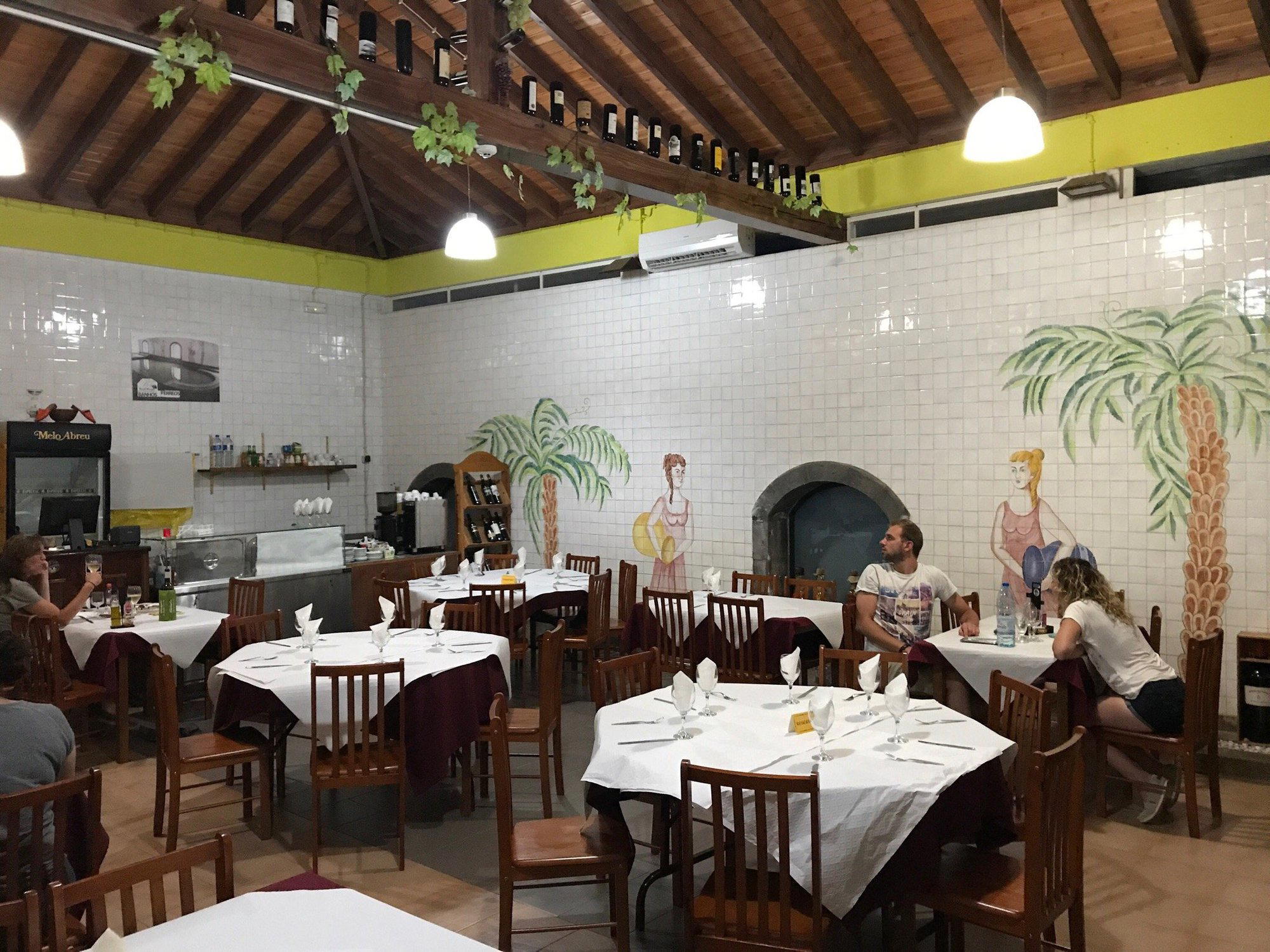
Where the Azores' Volcanic Interior Meets the Table
Povoação sits at the southeastern tip of São Miguel, the largest island in the Azores archipelago, in a bowl of green hills that descend sharply to the Atlantic. This is one of the oldest settled parts of the island, and the surrounding countryside has been shaped as much by geothermal activity as by conventional farming. Pastures here are unusually lush, fed by mineral-rich soil and a climate that rarely dips below temperate. The name Banhos Quentes, meaning "hot baths," refers directly to the thermal springs that define the area's identity, and that connection between geological character and what the land produces is the thread running through Azorean cooking at its most grounded.
Across the Azores, the restaurants that carry particularly credibility with local eaters are those working closest to source. The islands sit far enough from mainland Portugal that supply chains for imported product are expensive and slow, which has historically pushed cooks toward hyper-local ingredient use out of necessity as much as philosophy. São Miguel's dairy is among the more prized in Portugal, its beef cattle graze on pastures that turn a particular shade of green after rainfall, and the Atlantic surrounding the island supplies fish that rarely travels more than a few hours before it reaches the kitchen. Restaurantes Banhos Quentes operates inside this tradition, in a village where those supply relationships are not a marketing narrative but a practical reality of daily cooking.
The Sourcing Logic of São Miguel's Southeast Coast
Understanding what makes Azorean ingredient sourcing distinctive requires stepping back from the archipelago's tourist-facing image. São Miguel is not primarily a food-tourism destination in the way that parts of the Alentejo or the Douro Valley have become. Its food culture is quieter and less codified by external recognition.
The volcanic soil around Povoação produces dairy of particular depth. Azorean cattle, particularly on São Miguel, graze year-round on grass rather than supplementary feed, which affects the fat profile and flavour of both milk and meat in ways that are measurable and not subtle. The island's cheeses, particularly the soft fresh queijo fresco and the aged São Jorge variety produced further along the island chain, appear regularly in local cooking as foundational rather than decorative elements. For context on how Portugal's leading tables approach the same regional ingredient logic at a different price register, Belcanto in Lisbon and Antiqvvm in Porto both build tasting menus around the country's agricultural and coastal specificity, albeit with Michelin-starred infrastructure behind them.
The Atlantic off São Miguel's south coast produces a catch that shifts with season. Espada, wreckfish, and various species of atum (tuna) move through local menus according to what's running rather than what's been pre-programmed into a menu cycle. This seasonality is not curated in Povoação the way it might be at Casa de Chá da Boa Nova in Leça da Palmeira or Ocean in Porches, it's simply how supply works when you're a small restaurant in a coastal village at the edge of the Atlantic.
Povoação in the Broader Map of Portuguese Dining
Portugal's restaurant conversation is concentrated on Lisbon, Porto, and the Algarve. The Azores enter the frame occasionally, usually via São Miguel's more developed north coast or the capital Ponta Delgada, where tourism infrastructure has grown substantially over the past decade. Povoação represents a quieter layer of the island's food culture, the kind of village restaurant that survives on local custom and passing visitors rather than curated reservation lists.
This places Restaurantes Banhos Quentes in a different competitive context from the starred restaurants in mainland Portugal. It is not operating against Vila Joya in Albufeira or The Yeatman in Vila Nova de Gaia, its comparable set is the handful of honest village tables across São Miguel where the cooking is direct, the sourcing is local by default, and the price point reflects Azorean rather than continental Portuguese dining costs. Further afield, G Pousada in Bragança and Herdade do Esporão in Reguengos de Monsaraz offer points of comparison for how regional Portuguese restaurants anchor their menus in local produce without reaching for fine-dining format.
Planning Your Visit
Povoação is accessible from Ponta Delgada by road along São Miguel's south coast, a drive that takes roughly 45 minutes to an hour depending on route and conditions. The village is not heavily served by tourist infrastructure, which means visitors arriving without a local contact or advance knowledge of opening days may find the restaurant closed. In smaller Azorean villages, hours and seasonal schedules are rarely updated on third-party platforms. Visiting mid-week during the summer months, when São Miguel sees its highest visitor numbers, offers a stronger chance of reliable service. Those travelling during the shoulder season should verify opening days directly before building an itinerary around a meal here. Booking in advance, if the restaurant accepts reservations at all, is worth attempting; at this scale and in this kind of village context, a phone call or in-person check is more reliable than online channels. Il Gallo d'Oro in Funchal, A Cozinha in Guimaraes, and Fortaleza do Guincho in Cascais for a wider picture of where Portuguese cooking sits at different price and format tiers.
In Context: Similar Options
Comparable venues nearby, for context on price, style, and recognition.
| Venue | Cuisine | Price | Notes |
|---|---|---|---|
| restaurantes Banhos QuentesThis venue — the venue you are viewing | Portuguese | $$ | Not listed |
| Time Out Market | Portuguese Food Hall | $$ | Chiado |
| Antunes | Traditional Portuguese | $$ | Santo Ildefonso |
| Josephine Bistro | Portuguese Bistro | $$ | Estefania |
| R de S. Bento 81 | Modern Portuguese Taberna | $$ | Bairro Alto |
| Zeca | Traditional Portuguese Seafood | $$ | Downtown |
At a Glance
- Casual Hangout