Herdade do Esporão



Set on a working wine estate in the Alentejo, Herdade do Esporão holds a Michelin star and a La Liste 2026 recognition for cooking that draws almost entirely from the farm itself. Chef Carlos De Albuquerque Teixeira presents a five- or seven-course Carta Branca menu built around seasonal produce from the estate's organic market garden, with wine pairings chosen by the majority of guests.
 Discover on Pearl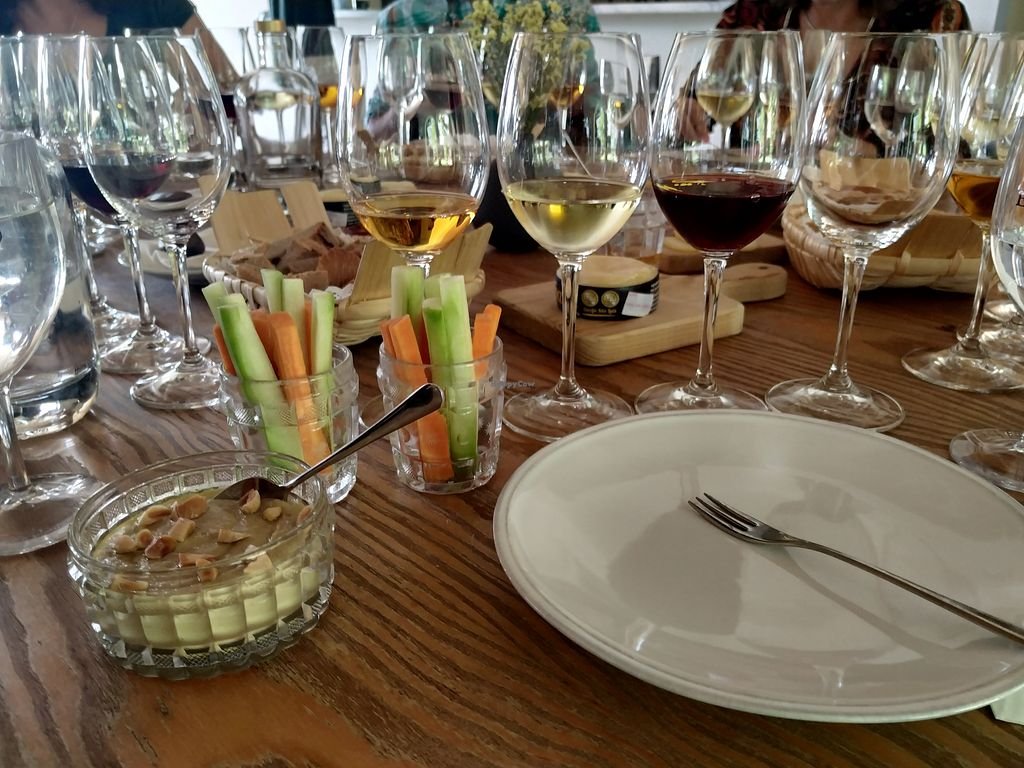
A Working Estate, Not a Destination Restaurant
The approach to Herdade do Esporão sets the terms of what follows. You pass through vineyards and olive groves before reaching the building, and a reservoir sits within the estate's perimeter. This is agricultural land first, with a restaurant occupying one corner of it. That sequence matters: the kitchen's relationship to the surrounding land is not a marketing posture but a structural fact of how the place operates. The estate grows its own vegetables in an organic market garden, and those ingredients supply the restaurant directly. What arrives on the table has, in many cases, been in the ground within walking distance that morning.
Across Portugal's Michelin-starred tier, farm-to-table language has become widespread enough to be treated with some scepticism. Esporão earns it differently. The self-sufficiency here is documentable rather than aspirational: the market garden provides the organic produce, the estate's vineyards supply the wine list's spine, and the menu changes in direct response to what the land yields seasonally. That operational loop is what places this restaurant in a distinct sub-category within Alentejo dining.
Where Esporão Sits in the Portuguese Starred Tier
Portugal's Michelin-starred restaurants cluster in Lisbon, Porto, and the Algarve. The inland Alentejo holds far fewer starred addresses, which places Esporão in a narrow peer set by geography alone. Where Belcanto in Lisbon holds two stars in a dense urban context, and Casa de Chá da Boa Nova in Leça da Palmeira draws on Atlantic seafood traditions, Esporão's single star (2024) reflects a different kind of ambition: one rooted in agricultural completeness rather than urban access or coastal abundance.
The La Liste 2026 recognition, scoring 75 points, places the restaurant within a broader international frame that includes contemporary European dining rooms operating at a comparable price tier. Portuguese starred restaurants at the €€€€ level, such as Ocean in Porches or Vila Joya in Albufeira, occupy a different competitive context despite sharing formal tasting-menu formats. Esporão's €€€ positioning makes it accessible relative to those peers while maintaining the structural discipline of a serious tasting menu program.
For readers mapping Portugal's broader starred landscape, Antiqvvm in Porto, A Cozinha in Guimaraes, A Ver Tavira in Tavira, Al Sud in Lagos, Bon Bon in Lagoa, The Yeatman in Vila Nova de Gaia, and Il Gallo d'Oro in Funchal each represent different regional expressions of contemporary Portuguese cooking. Esporão sits apart from all of them by virtue of its estate-integrated model, a format closer in logic to wine-estate dining in Burgundy or the Douro than to standalone city restaurants.
The Carta Branca Format and What It Signals
Tasting menus in Europe now operate across a wide spectrum, from rigidly prescribed sequences to formats that give guests some degree of agency. The Carta Branca (White Card) approach at Esporão falls toward the latter: diners choose between five or seven courses, and the kitchen builds from there. This structural flexibility is not uncommon at the starred level, but the pairing option here carries particular weight given the context. Most guests opt for the wine pairing, which is unsurprising on an estate that produces its own wines. The pairing is, in effect, the natural companion to the menu rather than an optional supplement.
The menu moves through Alentejo ingredients with some specificity. Corn appears in textural preparations that move beyond the grain's conventional role in regional cooking. The dish documented as "Lucio perca alentejana" reworks the classic pork and clams combination, a preparation deeply embedded in Alentejo culinary tradition, with potatoes as a structural element. Local lamb with rice and vegetable salad represents the estate's direct supply chain made visible on the plate. These are not dishes designed to import techniques from elsewhere and apply them to local produce; they read as an attempt to find what contemporary cooking can do with ingredients that have defined this region's table for centuries.
Internationally, contemporary restaurant formats operating at a similar structural level include César in New York City and Jungsik in Seoul, where the tasting menu format is used to argue for a specific culinary identity. Esporão's argument is geographic and agricultural rather than biographical.
Chef Carlos De Albuquerque Teixeira and the Sustainability Framework
Within the editorial angle of a chef's culinary evolution, what matters at Esporão is less the biographical arc and more what Chef Carlos De Albuquerque Teixeira has built into the kitchen's operating logic. The sustainability framework here is systemic: the organic market garden supplies the restaurant directly, seasonal menus shift in response to what the garden yields, and the broader estate provides the wine and, implicitly, the visual and agricultural context within which every meal takes place.
That framework places Teixeira's cooking in a lineage of estate-driven European gastronomy where the chef's primary creative constraint is the land itself. The Michelin recognition in 2024 is, in this reading, a validation of that constraint as a positive creative force rather than a limitation. The cuisine is described as modern, with seasonal and regional ingredients as its foundation, but the design influence on the space offers a useful contrast: a Scandinavian aesthetic sensibility in a deeply southern European agricultural setting. That tension between Nordic formal restraint and Alentejo warmth is one of the more interesting design choices in the region's dining rooms.
Planning a Visit: Logistics and Timing
Reguengos de Monsaraz sits in the Alentejo interior, a region that rewards slower travel. The estate is accessible from Évora, the region's principal city, and from the Spanish border crossing at Badajoz for visitors combining Alentejo with Extremadura. The address is listed as Edifício Enoturismo, Herdade do Esporão, 7200-999, placing it clearly within the estate's tourism infrastructure rather than in the town of Reguengos itself.
Wine tourism activities are available alongside the restaurant, including cellar visits. For visitors spending more than a day in the area, the combination of a cellar tour and a Carta Branca dinner is the logical sequence. The restaurant's Google rating of 4.6 across 1,377 reviews points to consistent execution rather than occasional brilliance, which matters for advance planning. At the €€€ price tier, this is a dinner that requires a reservation and, for most international visitors, a deliberate detour.
The leading period for Alentejo travel is spring and autumn. Summer temperatures in the region frequently exceed 35°C, which affects both the comfort of travel and the character of the estate landscape. The harvest season in autumn brings the vineyards into their most active phase, which adds a layer of context to the wine pairing for anyone with an interest in the production side.
For those building an itinerary around the region, our full Reguengos de Monsaraz restaurants guide, hotels guide, bars guide, wineries guide, and experiences guide cover the wider area in detail.
Frequently Asked Questions
In Context: Similar Options
These are the closest comparables we have in our database for quick context.
| Venue | Cuisine | Price | Awards | Notes |
|---|---|---|---|---|
| Herdade do Esporão | Contemporary | €€€ | Michelin 1 Star | This venue |
| Belcanto | Modern Portugese, Creative | €€€€ | Michelin 2 Star | Modern Portugese, Creative, €€€€ |
| Casa de Chá da Boa Nova | Portugese, Seafood | €€€€ | Michelin 2 Star | Portugese, Seafood, €€€€ |
| Ocean | Contemporary European, Creative | €€€€ | Michelin 2 Star | Contemporary European, Creative, €€€€ |
| 50 seconds from Martin Berasategui | Progressive Spanish | €€€€ | Michelin 1 Star | Progressive Spanish, €€€€ |
| Eleven | Portugese, Creative | €€€€ | Michelin 1 Star | Portugese, Creative, €€€€ |
Need a table?
Our members enjoy priority alerts and concierge-led booking support for the world's most difficult tables.
Get Exclusive Access