Restaurant FIR

A four-table tasting menu restaurant inside a boldly painted former coaching inn in Llangattock, Restaurant FIR operates at a scale where the sourcing conversation happens face to face. Chef Matt Sampson presents the day's produce at the start of each sitting, then cooks, plates and explains every course in full view. At this size, ingredient provenance is not a marketing footnote, it is the structure of the meal.
Pearl is the En Primeur Club membership app — saves, bookings, and concierge access live there. Same editors, same standards.
- Address
- The Vine Tree, Legar Road
- Phone
- +44 1873 379190
- Website
- restaurantfir.com
- Directions
- Get directions
 Saves & bookings on Pearl
A Former Coaching Inn, Four Tables, and a Chef Who Shows You What He Bought That Morning
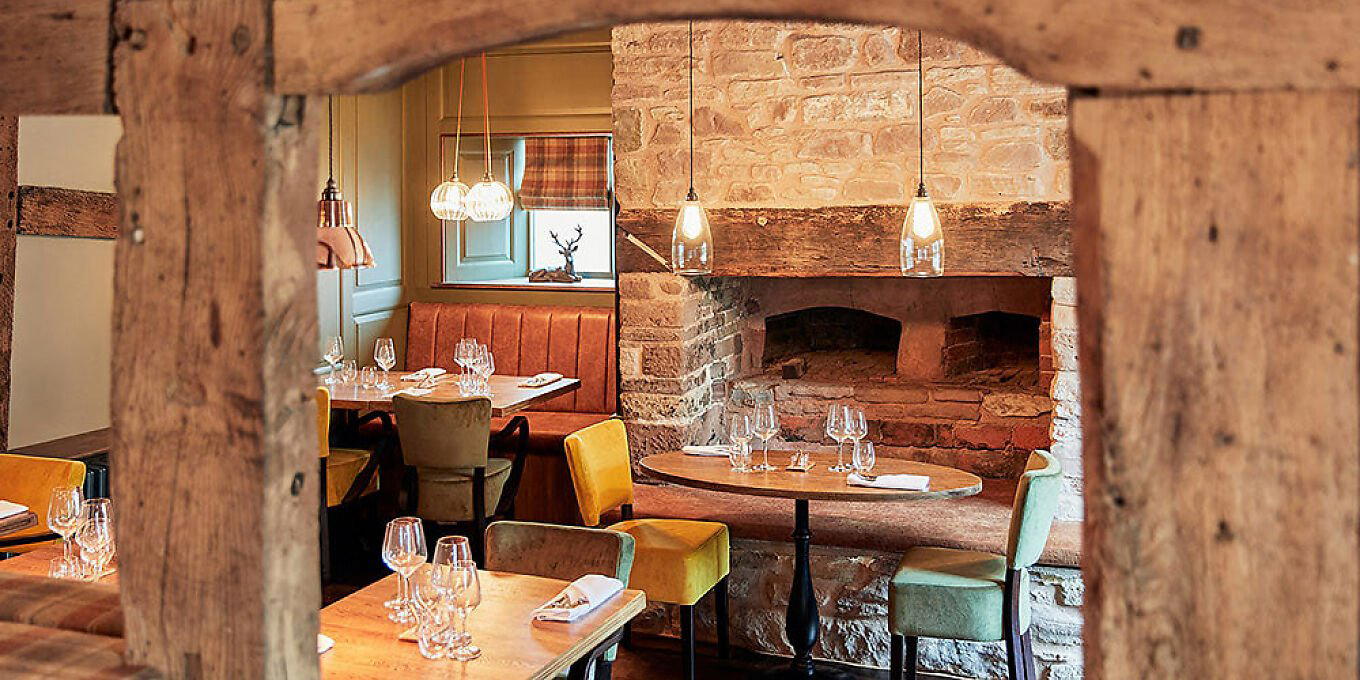
The former coaching inn on Legar Road is painted in a shade bold enough to signal intent before you reach the door. Inside, the room contracts further: four tables, an open kitchen, and a format that collapses the distance between the person sourcing the food and the people eating it. This is the operating condition at Restaurant FIR, and it shapes everything from the menu structure to the conversational register of the meal.
The Sourcing Logic Behind the Format
In Britain's more celebrated small-plate and tasting-menu restaurants, ingredient provenance is often communicated through menu text: a farm name in italics, a county in parentheses. At four-table scale, that conversation happens differently. At Restaurant FIR, Chef Matt Sampson opens each sitting by presenting the day's produce to the room, the actual ingredients, before they become dishes. That single gesture reconfigures the meal's relationship to sourcing. You are not reading about where something came from; you are being shown it.
The small-room tasting menu format has spread across rural Britain partly because it allows a single chef to maintain direct relationships with suppliers, often farmers, fishmongers, and growers operating at the same scale as the restaurant itself. Chalk Stream trout, cited as a source for one of FIR's noted dishes, is a Hampshire-based producer whose fish appear at tables across the UK's more ingredient-focused kitchens, from casual to highly decorated. Its presence here connects FIR to a broader current in British cooking: the preference for named, traceable freshwater fish over commodity alternatives, and the culinary logic that comes with it, clean flavour, specific texture, a product that rewards technique rather than masking it.
The dish described in FIR's awards record, Chalk Stream trout loin with chilli-infused langoustine bisque and caviar, illustrates Sampson's approach to balance. The bisque brings shellfish sweetness; the caviar introduces salinity to pull it back. Citrus appears as a recurring structural device throughout the tasting menu, used to cut richness and lift acidity rather than as decoration. These are technique decisions that reflect a kitchen working within tight ingredient logic rather than assembling contrasts for spectacle.
Where FIR Sits in the Rural British Tasting Menu Tier
Britain's countryside now holds a recognisable category of small, chef-led tasting menu restaurants that draw destination diners to locations outside the major cities. Some operate out of converted farm buildings; others occupy village pubs or, as here, coaching inns. What they share is a low seat count, a single-chef or small kitchen, and a format that depends on the chef's direct involvement from sourcing to service. Venues like L'Enclume in Cartmel and Moor Hall in Aughton sit at the decorated end of this category, drawing international attention and Michelin recognition. hide and fox in Saltwood and Hand and Flowers in Marlow represent a comparable tier of deeply considered, chef-driven cooking outside the capital. FIR operates in this tradition, rural, intimate, tasting-menu led, though in a village setting that places it further from established food tourism circuits than most of its peers.
That positioning matters for the reader making a decision. London's highly decorated rooms, such as The Ledbury or Midsummer House in Cambridge, offer formal fine dining infrastructure: sommelier teams, front-of-house depth, multi-page wine lists. FIR offers something structurally different: a single chef operating across cooking, serving, and narrating, at a table count where every guest receives direct attention. Neither format is superior; they answer different questions. The relevant one here is whether you are seeking the depth of a full fine dining production or the specificity of a small room where the person who sourced the fish that morning is also explaining what it is and why it is on your plate.
Techniques, Citrus, and What to Expect on the Menu
FIR's tasting menu draws on multiple techniques, and Sampson's documented affinity for citrus suggests a kitchen oriented toward brightness and acidity as structural tools rather than richness as the default register. This positions the cooking differently from, say, the butter-and-sauce traditions of French-influenced fine dining represented by rooms like Le Manoir aux Quat' Saisons or Waterside Inn in Bray. The langoustine bisque and caviar dish points to a kitchen comfortable working with shellfish in technical, flavour-layered ways, and the bisque's chilli infusion suggests a willingness to introduce heat as a flavour variable rather than staying within classical European constraints.
Because the menu is built around what has been sourced that day, expectations around dish consistency across visits are calibrated differently than in larger, more static-menu operations. The produce presentation at the start of the meal is one direct signal of what each sitting will be: you see the ingredients, and what follows is Sampson's response to them.
Planning a Visit
Restaurant FIR occupies a former coaching inn on Legar Road in Llangattock, a village in the Brecon Beacons area of south Wales. At four tables, the room books out quickly, and sittings are limited by design. Reservations are essential.
For those whose tasting menu itinerary extends beyond Wales, comparable small-room destination dining in England includes Gidleigh Park in Chagford and Restaurant Sat Bains in Nottingham. For reference points in a different register entirely, Opheem in Birmingham shows how a small, chef-led kitchen can operate at high recognition levels with a distinct culinary identity. Further afield, the precision-led seafood cooking at Le Bernardin in New York City and the regional American tradition at Emeril's in New Orleans offer useful contrast points for understanding how different kitchen cultures approach ingredient-first cooking at opposite ends of the scale spectrum.
A Quick Peer Check
Comparable venues nearby, for context on price, style, and recognition.
| Venue | Cuisine | Price | Awards | Notes |
|---|---|---|---|---|
| Restaurant FIRThis venue — the venue you are viewing | Modern British Tasting Menu | $$$$ | Michelin Plate | Not listed |
| Winslade Manor | Modern British Fine Dining | $$$$ | Michelin Plate | Clyst St Mary |
| Restaurant Sow | Modern British Farm-to-Table | $$$$ | Michelin Plate | Tenbury Wells |
| The Avenue | Modern British Fine Dining | $$$$ | Michelin Plate | Sparsholt |
| Emberwood | Modern British Brasserie | $$$ | Michelin Plate | Queen Square |
| Puro by Tommy Thorn | Modern British Fine Dining | $$$ | Michelin Plate | Clevedon |
Recognition history
Dated appearances from independent guides and award organizations, with the underlying list record or original source where available.
Michelin Plate
Michelin · 2026 Michelin Plate
Continue exploring
More in Llangattock
Restaurants in Llangattock
Browse all →

Bars in Llangattock
Browse all →
Hotels in Llangattock
Browse all →
At a Glance
- Intimate
- Elegant
- Sophisticated
- Date Night
- Special Occasion
- Celebration
- Open Kitchen
- Standalone
- Historic Building
- Sommelier Led
- Local Sourcing
- Farm To Table
Relaxed yet refined fine dining atmosphere housed in a boldly painted former coaching inn, offering an immersive and personal dining experience without pretension or stuffiness.