Restaurant de l'Hôtel de Ville

In the centre of Ollon, beneath vaulted ceilings that stay cool through the alpine summer, Restaurant de l'Hôtel de Ville runs a seasonal French menu shaped by what the calendar allows rather than what a standing order demands. Chef Grégory Halgand works with produce that shows its origins — Brittany lobster, stone-fruit harvests, spring asparagus — while pastry chef Audrey Feutren-Halgand handles desserts and house bread with the same seasonal discipline.
Pearl is the En Primeur Club membership app — saves, bookings, and concierge access live there. Same editors, same standards.
- Address
- Place de l'Hôtel-de-Ville 3
- Phone
- +41 24 499 19 22
- Website
- hotel-restaurant-ollon.ch
- Directions
- Get directions
 Saves & bookings on Pearl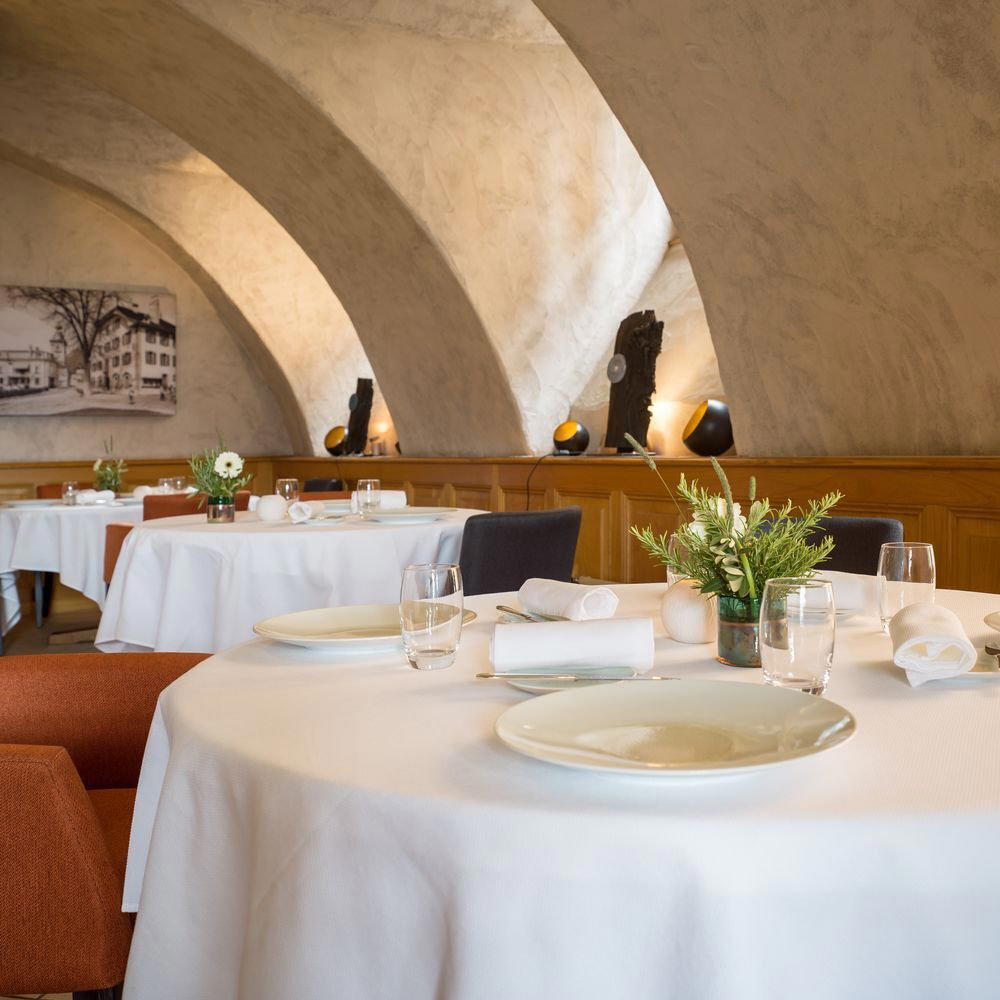
A Village Square Address with a Seasonal Argument to Make
The bell tower beside Place de l'Hôtel-de-Ville has marked time in Ollon for centuries, and the restaurant that shares its square operates with a similar sense of quiet continuity. Walking in from the village centre, the transition is abrupt in the leading way: stone walls, a vaulted ceiling that traps the cool mountain air, and an interior hung with paintings and punctuated by sculpture. In summer, when the Chablais valley pushes temperatures into the mid-thirties, that vaulted room offers something no air-conditioning unit can replicate — mass and stillness. The architecture does real work here.
This is a particular kind of Swiss-French restaurant: neither a destination table built around a single chef's celebrity, nor a hotel dining room coasting on a captive audience. It occupies the category that France calls maison de village — an establishment whose identity is tied to its place rather than its press file. In the wider Swiss fine dining circuit, where properties like Schloss Schauenstein in Fürstenau or Memories in Bad Ragaz command international attention and four-figure price points, a village-square address in the Vaud pre-Alps occupies a different register entirely. The comparison set here is not those rooms. It is the category of thoughtful, produce-driven French-leaning restaurants that Switzerland does quietly well and that rarely make lists compiled from Zürich or Geneva.
Where the Food Comes From and Why That Shapes the Menu
The editorial angle that makes most sense at a restaurant like this is not technique, nor reputation, nor room design. It is sourcing, specifically, what a kitchen committed to genuine seasonality actually looks like on the plate, and what constraints and freedoms that commitment creates.
The asparagus, grapefruit and pistachio dish that appears in the spring lineup is a useful case study. Those three ingredients peak at different latitudes and in different weeks, which means composing them into a coherent plate requires either buying asparagus from a grower close enough to guarantee a short harvest window, or accepting the kind of supply-chain compromise that makes seasonal cooking a marketing claim rather than a practice. The fact that this dish appears on the menu at all, framed as a seasonal offering, signals an intent to cook around the calendar rather than despite it.
Brittany lobster with red beetroot, blackberries and fish bisque tells a slightly different story. Brittany is not the Vaud. Sourcing shellfish from the Atlantic coast to a village kitchen in the Swiss pre-Alps involves a supply chain that covers roughly 900 kilometres. What that combination of local produce and premium imported protein says about the kitchen's philosophy is that seasonality here does not mean strict locavorism, it means knowing when each ingredient is at its most expressive and building the menu around those windows, wherever the leading source happens to sit.
This is a common and defensible position in serious French-lineage cooking across Switzerland. The country's geography makes absolute localism impractical for much of the year; the tradition of drawing from French Atlantic and Mediterranean producers while treating Swiss vegetables, dairy and stone fruit as primary seasonal anchors is well established. Restaurants like L'Atelier Robuchon in Geneva operate within the same broad logic at a considerably higher price tier.
The Pastry Counter as a Separate Editorial Point
Swiss restaurant culture has long taken bread and pastry seriously as distinct disciplines, and the division of labour at Restaurant de l'Hôtel de Ville reflects that. Audrey Feutren-Halgand handles both desserts and the house bread, and the seasonal discipline applied to the savoury menu carries through to her section. The apricot dessert, stewed, jellied and grilled fruit with coconut mousse, makes a structural argument about the same ingredient at different temperatures and textures, which is a pastry approach more commonly associated with urban fine dining rooms than village restaurants.
The house-made bread is worth noting as a separate signal. In a period when many restaurants have quietly returned to bought-in bread programmes, maintaining an in-house bakery operation requires both commitment and skill. It also sets a register for the meal before the first course arrives.
The Full Picture: Café, Patio, and Cigars
The restaurant operates across several distinct modes, which matters for planning. The main dining room is where the seasonal French menu runs, with a choice of menus and courses that allows different levels of commitment. A separate café section offers a brasserie-style menu at a more casual register, useful for a weekday lunch or a visit with younger guests who would find the formal room restrictive. A patio extends the experience outdoors for those who want to finish the evening in the square, and a lounge with a cigar selection provides a closing note that is increasingly rare in Swiss restaurants of this category.
For context on what to expect across different price tiers and formats in the region, our full Ollon restaurants guide maps the broader picture. Those travelling further into the canton or beyond may also find useful reference points in Hotel de Ville Crissier in Crissier and Cheval Blanc by Peter Knogl in Basel, both operating at the upper end of Swiss French-leaning fine dining. For those planning a wider Swiss itinerary, 7132 Silver in Vals, Colonnade in Lucerne, focus ATELIER in Vitznau, IGNIV Zürich by Andreas Caminada in Zurich, Da Vittorio - St. Moritz in St. Moritz, and La Brezza in Ascona provide a range of formats and price points worth considering. For those curious about French-lineage fine dining in a different geography entirely, Le Bernardin in New York City and Emeril's in New Orleans offer a transatlantic comparison.
Planning Your Visit
The restaurant sits at Place de l'Hôtel-de-Ville 3, in the centre of Ollon village, identifiable by the bell tower adjacent to the square. Booking ahead is advisable for the main dining room, particularly in summer when the cool vaulted interior becomes an asset that fills tables. The café section is more flexible. Ollon is accessible from Aigle by road and sits within reasonable reach of the Lake Geneva basin for those combining a visit with broader Chablais or Vaud wine country itineraries. For accommodation options nearby, our Ollon hotels guide covers the area. Those wanting to explore further can consult our Ollon bars guide, our Ollon wineries guide, and our Ollon experiences guide for a fuller picture of what the village and surrounding area offer.
Quick Comparison
| Venue | Cuisine | Price | Awards |
|---|---|---|---|
| Restaurant de l'Hôtel de VilleThis venue — the venue you are viewing | In the centre of the village, near the bell tower, this quintessential rural establishment celebrates tradition quietly and simply. Beneath the vaulted ceiling of the dining room (refreshingly cool in summertime), you will taste a seasonal Gallic lineup with a choice of menus and courses. Grégory Halgand conjures up creative dishes such as asparagus, grapefruit and pistachio or Brittany lobster, red beetroot, blackberries and fish bisque. The desserts are the work of Audrey Feutren-Halgand, who also respects the seasons, with delicacies such as a medley of apricots (stewed, jellied and grilled), flanked by a frothy coconut mousse. Audrey is also responsible for the house-made bread. Artwork (paintings and sculptures) graces the interior, and there is a pleasant outdoor patio for a final alfresco flourish. The ‘café’ section offers a brasserie-style menu and a more casual vibe and there is a cosy lounge with a fine selection of cigars. | This venue | Not listed |
| Schloss Schauenstein | Modern European, Creative | €€€€ | Michelin 3 Star |
| Memories | Modern Swiss | €€€€ | Michelin 3 Star |
| focus ATELIER | Modern Swiss, Creative | €€€€ | Michelin 2 Star |
| IGNIV Zürich by Andreas Caminada | Sharing | €€€€ | Michelin 2 Star |
| La Table du Lausanne Palace | Modern French | €€€€ | Michelin 2 Star |
Recognition history
Dated appearances from independent guides and award organizations, with the underlying list record or original source where available.
Michelin 1 Star
Michelin
Continue exploring
More in Ollon
Restaurants in Ollon
Browse all →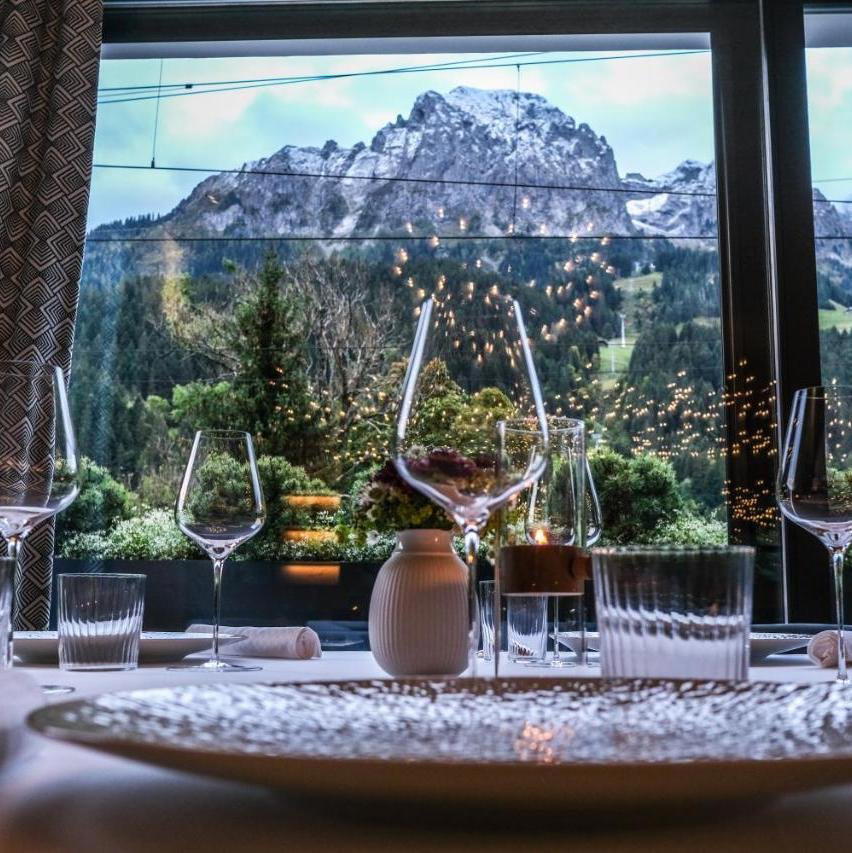
Bars in Ollon
Browse all →
Hotels in Ollon
Browse all →

At a Glance
- Elegant
- Romantic
- Quiet
- Classic
- Sophisticated
- Date Night
- Special Occasion
- Celebration
- Business Dinner
- Open Kitchen
- Historic Building
- Terrace
- Hotel Restaurant
- Sommelier Led
- Farm To Table
- Local Sourcing
- Mountain
Welcoming vaulted dining room with refreshingly cool stone ceilings, well-soundproofed and decorated with artwork; subdued, sophisticated atmosphere with a pleasant outdoor patio overlooking Dents de Midi mountains.