Restaurant 1812

Michelin Plate
Our verdict
A converted warehouse and former pub dating to 1812, this Stalham restaurant sits directly opposite the Norfolk Broads waterfront and runs a set menu built almost entirely from local produce, the owner's garden, and on-site grown mushrooms. Subtle Japanese technique threads through Norfolk-rooted seasonal cooking, with a flint-kiln interior that reads as honest as the sourcing behind the food.

Pearl is the En Primeur Club membership app — saves, bookings, and concierge access live there. Same editors, same standards.
- Address
- 1 Staithe Road
- Phone
- +44 1692 434012
- Hours
- Mon–Tue ClosedWed–Thu 6:30–11 PMFri–Sat 12:30–3:30 PM, 6:30–11 PMSun Closed
- Website
- restaurant1812.co.uk
- Directions
- Get directions
- Booking
- Book on OpenTable
The menu
What to order
- Roasted Hen of the Wood Risotto
- Mussels with Aubergine and Citrus Kimchi
- North Norfolk Venison
Where the Broads Meet the Kitchen Garden
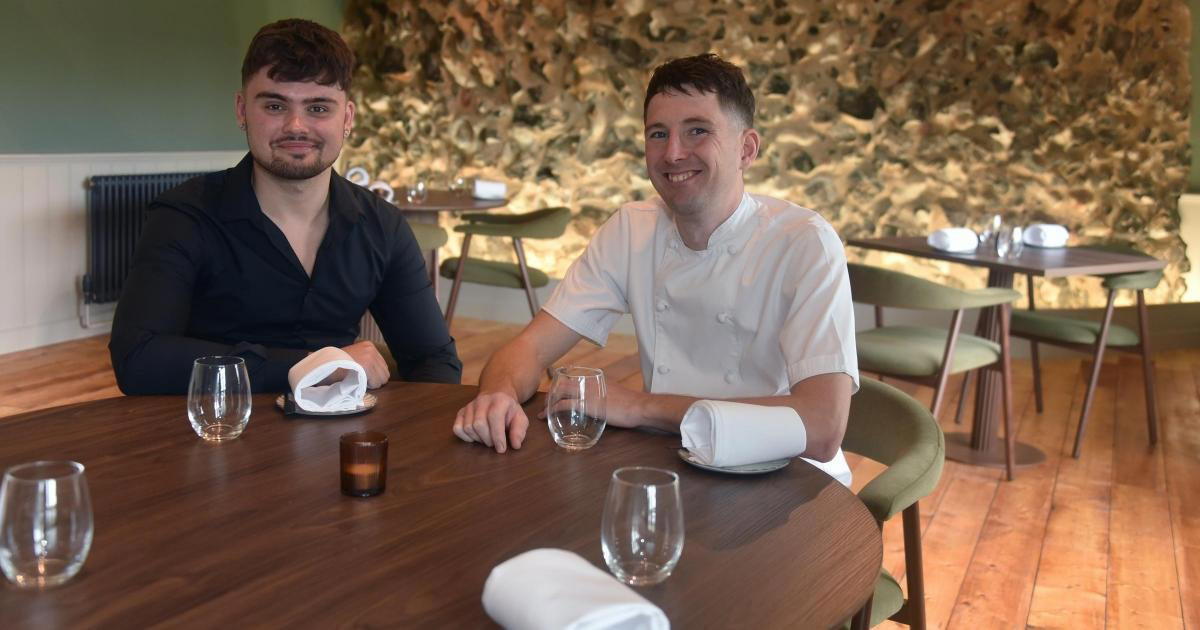
Approach Restaurant 1812 from Staithe Road and the Broads are already visible across the road, the flat grey water sitting low under a Norfolk sky. The building itself is older than the county's tourism trade, a structure from 1812 that spent much of its life as a warehouse and later a pub before the current iteration. During restoration, the team uncovered the remains of a flint-clad kiln, which now sits exposed inside the dining room as a structural fact rather than a designed feature. That tension between bare utility and considered cooking is the clearest way to understand what this restaurant is doing.
The Norfolk Broads is not a region that typically generates serious restaurant conversation. The dining map for destination cooking in rural England tends to run through the Cotswolds, the Lake District, or the Yorkshire coast. Restaurants such as L'Enclume in Cartmel and Moor Hall in Aughton have drawn a travelling dining public to landscapes that are similarly remote, but the eastern flatlands of Norfolk have remained largely outside that circuit. Restaurant 1812 operates in that relative quietness, and the cooking reflects the geography rather than fighting it.
A Menu Built Around What the Land Produces
The sourcing model here is worth taking seriously. The set menu draws on Norfolk produce from local artisans, a kitchen garden maintained by the owner, and mushrooms grown on site. These are not decorative claims about provenance. In practice, what it means is that the menu follows the season and the garden rather than the other way around, which produces a different kind of constraint than sourcing from a premium supplier list. Ingredients carry a specific geographic address, and the cooking has to account for that specificity.
On-site mushroom cultivation sits at one end of the sourcing spectrum where the kitchen has direct control over the product from growth through to plate. Kitchen garden ingredients occupy a similar position. Local artisans represent the wider network beyond the property itself. Together, these three inputs create a menu architecture that is common in format at the upper end of British cooking but genuinely varied in execution. Restaurants like Gidleigh Park in Chagford and hide and fox in Saltwood also work within tight regional sourcing frameworks, and the pattern across those kitchens consistently produces menus where the seasonal variation is structural rather than cosmetic.
The sourdough bread is specifically noted as a strong opener to the meal. Bread as a signal of kitchen discipline is a useful indicator: a well-maintained sourdough requires consistent environmental management and attention to fermentation timing that tracks directly to the kitchen's general standards. It is also the first thing a guest tastes, which makes it a considered choice as the entry point to the set menu rather than an afterthought.
Japanese Influence in a Norfolk Register
The Japanese influence in the cooking is described as subtle and well-judged, two qualifiers that matter in this context. Japanese technique applied to British regional produce has become a recognisable strand in contemporary UK cooking over the past decade. Done poorly, the result is a tonal mismatch: the precision and restraint of Japanese method applied to ingredients that need a different kind of handling. Done with calibration, it tends to draw out qualities in local produce that more conventional European approaches leave underdeveloped.
Broads and the surrounding coast produce shellfish, freshwater fish, and a range of foraged and grown ingredients that have textural properties well suited to techniques drawing on Japanese influences. Norfolk's food geography also includes salt marsh lamb and a variety of cured and smoked products from small producers. A kitchen drawing on both local artisan supply and Japanese-influenced technique has a coherent logic available to it if it chooses the applications carefully. The description of the influence as subtle suggests the kitchen is using it selectively rather than as an organising principle across every dish.
For context within the broader field of UK restaurants applying similar cross-cultural approaches, it is worth noting that Opheem in Birmingham and Midsummer House in Cambridge both operate within frameworks where non-European technique intersects with British sourcing, though through different culinary traditions. The pattern is consistent: the most coherent examples of this approach use international technique as a precision tool applied to local ingredients rather than as a style in its own right.
The Format and the Practical Realities
Restaurant 1812 operates a set menu format, which narrows the distance between kitchen and guest in ways that an à la carte structure does not. The kitchen can control the whole arc of the meal, sequence dishes for cumulative effect, and calibrate the balance of the menu to what the garden and local suppliers are producing at a given time. Set menu formats are now standard across the tier of British restaurants that take sourcing seriously, from The Ledbury in London to Hand and Flowers in Marlow, and the reasons are consistent: it is simply a more coherent way to deliver cooking that depends on a seasonal supply chain rather than a permanent menu.
Stalham sits in the northern Norfolk Broads, accessible by car from Norwich in approximately forty minutes and from the Norfolk coast at Cromer or North Walsham within a similar range. For those travelling from London, the train route to Norwich is regular and fast, with onward connections or hire cars available for the final stretch. The town itself is a small market town rather than a tourist destination in the conventional sense, which means the restaurant does not sit in an area designed around visitor infrastructure. Planning ahead is sensible: the set menu format and the ingredient-led approach both suggest a kitchen operating with specific numbers in mind, and arriving without a reservation carries the usual risks associated with any small restaurant running at close to capacity on a seasonal basis.
For further options in the area, our full Stalham restaurants guide covers the broader dining picture, while our Stalham hotels guide, bars guide, and experiences guide cover accommodation, drinking, and activities across the Broads region.
How It Sits in the Rural UK Restaurant Field
The current appetite for rural destination restaurants in the UK is well documented. Guests are prepared to travel considerable distances for cooking that is rooted in a specific landscape and offers something the city cannot replicate by definition. Restaurant 1812's combination of a historically significant building, a waterfront position on the Broads, on-site growing, and Japanese-inflected seasonal cooking positions it within that demand pattern. It is not making the same argument as Le Manoir aux Quat' Saisons in Great Milton or Restaurant Sat Bains in Nottingham, both of which operate at different scales and with different infrastructures. It is making a smaller, more specific argument: that this building, this water, and this garden together produce a meal that cannot be replicated elsewhere. In a field where that claim is made frequently and delivered inconsistently, the evidence available here is enough to take it seriously.
Frequently asked questions
Is Restaurant 1812 good for families?
The set menu format at Restaurant 1812 means the kitchen runs a single, fixed progression rather than a broad à la carte selection. Families with young children who prefer flexible ordering may find that structure limiting. Those with older children open to a tasting-style experience are better placed to get the most from a meal here.
What is the atmosphere like at Restaurant 1812?
The dining room occupies a building that dates to 1812, with previous lives as a warehouse and a pub. The restoration uncovered a flint-clad kiln, which remains exposed in the interior alongside a simple, unfussy fit-out. Staithe Road sits directly across from the water's edge of the Norfolk Broads, which shapes the setting considerably before you step inside.
What awards or recognition does Restaurant 1812 have?
Restaurant 1812 has received recognition including: Right across the road from the water’s edge in the Norfolk Broads, you’ll find this building dating back to 1812 which has had previous lives as a warehouse and a pub; the simple yet stylish interior features the remains of a flint-clad kil….
What dish is Restaurant 1812 famous for?
No single dish has been documented as a signature, but the sourdough bread is singled out as a notable beginning to the meal. The broader cooking draws on Norfolk produce from local artisans, the owner's kitchen garden, and mushrooms grown on site, with subtle Japanese influences running through the seasonal set menu.
What part of town is Restaurant 1812 in?
Restaurant 1812 is located at 1 Staithe Road, Stalham.
Do they take walk-ins at Restaurant 1812?
No walk-in policy is publicly documented for Restaurant 1812. Given the set menu format and the kitchen's reliance on produce sourced from the owner's garden and on-site growing, advance booking is the sensible approach for anyone travelling to Stalham specifically for a meal here.
What's the defining dish or idea at Restaurant 1812?
The defining idea is a sourcing model that runs from the owner's kitchen garden and on-site mushroom cultivation through to Norfolk artisan producers, all filtered through a set menu with measured Japanese technique. That combination of hyperlocal supply and understated Japanese influence in a rural Norfolk context is what separates the kitchen's output from the broader regional field.
Side-by-Side Snapshot
Comparable venues nearby, for context on price, style, and recognition.
| Venue | Cuisine | Price | Awards | Notes |
|---|---|---|---|---|
| Restaurant 1812This venue — the venue you are viewing | Modern British | $50–100 | Michelin Plate | Not listed |
| Kintsu | Modern British Tasting Menu | $50–100 | Michelin Plate | city centre |
| Crown | Modern British Gastropub | $30–50 | Michelin Plate · The Good Food Guide GFG Good | Bray on Thames |
| Davies and Brook | Modern British Fine Dining | $200–300 | World's Best Wine Lists Awards WBWL 2-Star | Mayfair |
| Leaping Hare | Modern British Farm-to-Table | $50–100 | Michelin Plate · The Good Food Guide GFG Very Good | Stanton |
| Island | Modern British Surf & Turf | $50–100 | Michelin Plate | King's Cross |
Recognition history
Dated appearances from independent guides and award organizations, with the underlying list record or original source where available.
Michelin Plate
Michelin
Continue exploring
More in Stalham
Restaurants in Stalham
Browse all →
Bars in Stalham
Browse all →
Hotels in Stalham
Browse all →
Details
- Elegant
- Cozy
- Intimate
- Sophisticated
- Date Night
- Special Occasion
- Historic Building
- Extensive Wine List
- Farm To Table
- Local Sourcing
- Waterfront
- Tasting Menu
- Allergy Accommodating
Current opening hours
- Monday
- Closed
- Tuesday
- Closed
- Wednesday
- 6:30–11 PM
- Thursday
- 6:30–11 PM
- Friday
- 12:30–3:30 PM, 6:30–11 PM
- Saturday
- 12:30–3:30 PM, 6:30–11 PM
- Sunday
- Closed
Hours can change for holidays and private events. Last verified .
Relaxed and quietly sophisticated with well-spaced tables in a stylish, simple interior featuring historic flint-clad kiln remnants.