Crown



A 16th-century inn on Bray's High Street, Crown sits in one of Britain's most competitive dining villages without trying to compete on the same terms as its Michelin-starred neighbours. Chef Simon Bonwick runs a classical British kitchen that draws on named seasonal sourcing, Salcombe crab, Highland beef, and delivers the kind of wholesome, unfussy cooking that the village's grander tables rarely attempt.
Pearl is the En Primeur Club membership app — saves, bookings, and concierge access live there. Same editors, same standards.
- Address
- High St, Bray, Maidenhead SL6 2AH, United Kingdom
- Phone
- +44 1628 621936
- Website
- thecrownatbray.com
- Directions
- Get directions
 Saves & bookings on Pearl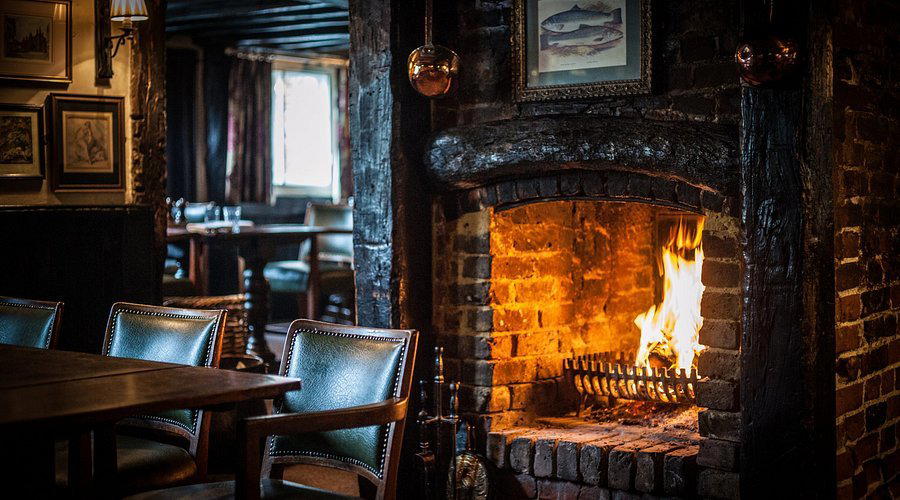
Bray's Other Register
Bray has built an outsized reputation on the strength of two three-Michelin-star restaurants operating within a few hundred metres of each other. The Fat Duck and the Waterside Inn pull the village into an international dining conversation, and the Hinds Head adds a polished gastropub tier just below. What that concentration of ambition tends to obscure is a quieter register of dining that has existed in the village far longer than any of its starred neighbours: the British country inn, grounded in local sourcing and seasonal habit rather than kitchen theatre. Crown operates in that register, and does so from a building that predates the modern restaurant concept by several centuries.
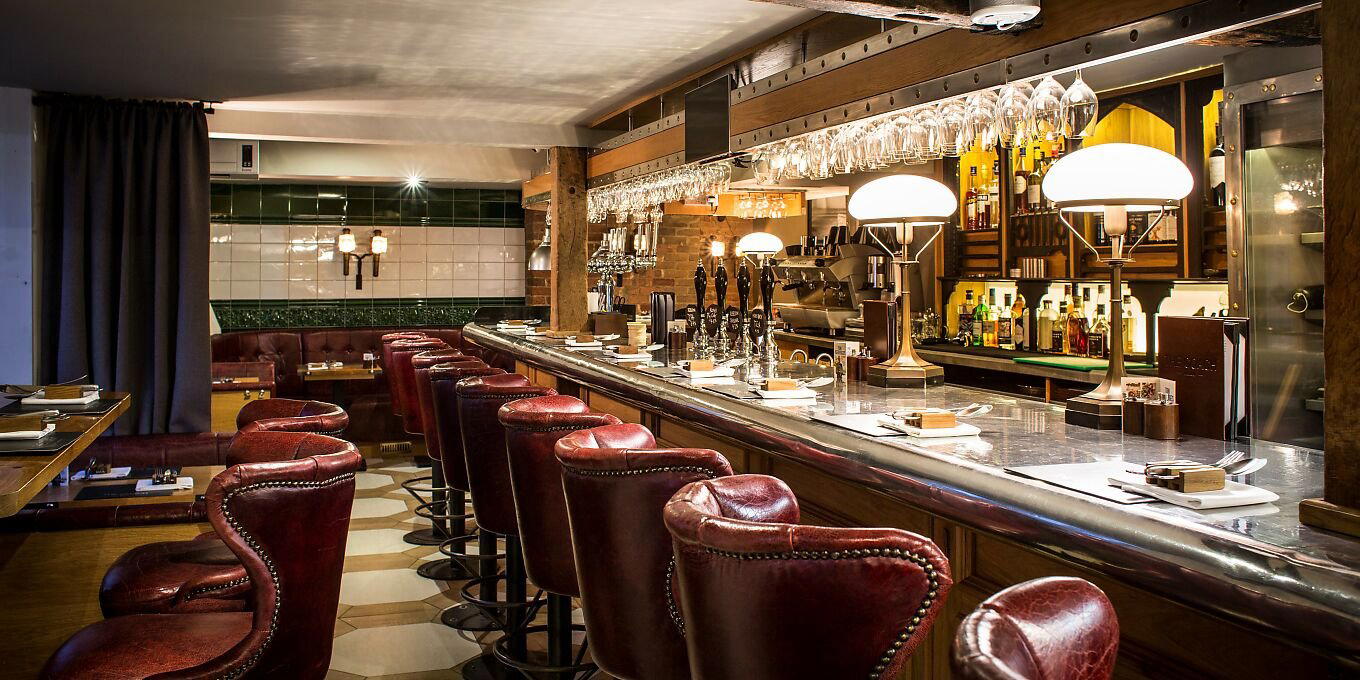
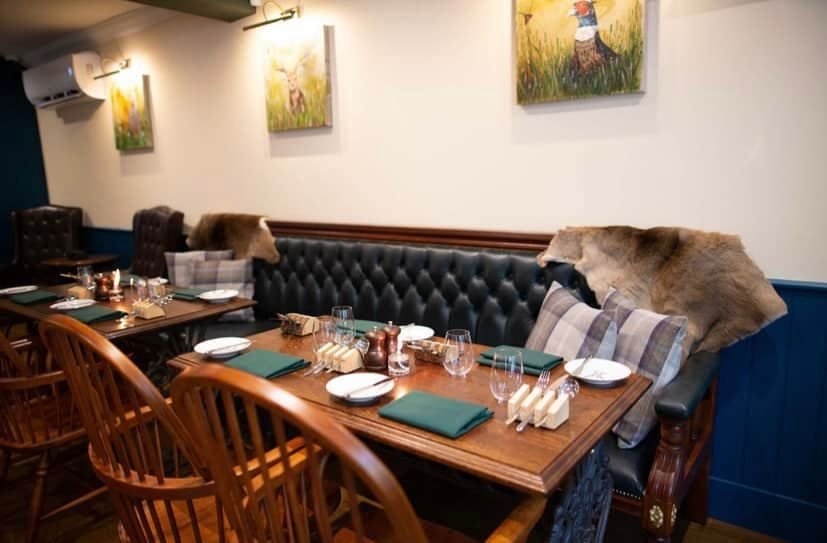
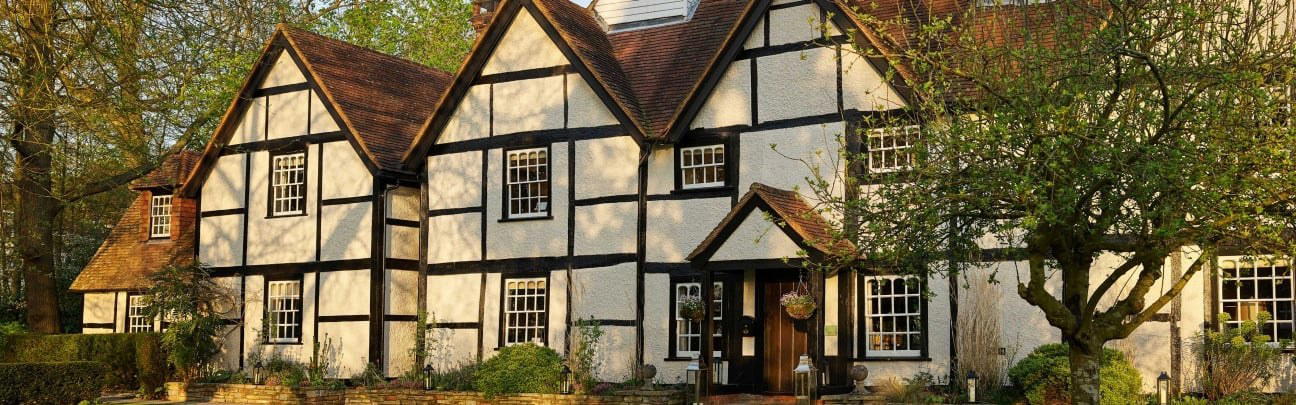
The inn dates to the 16th century. Low ceilings, thick walls, and the physical compression of a genuinely old structure set the atmosphere before a menu is opened. This is not a pub that has been designed to feel old; it is old, and the effect on the room's character is considerable. Where The Braywood offers a modern British sensibility, Crown's physical fabric pulls the experience in an older direction, toward something closer to the traditional village inn that once formed the backbone of rural English hospitality.
Where the Produce Comes From
The classical British kitchen has always made its case through sourcing rather than technique, and the menu at Crown reflects that logic. Salcombe crab appears as a named provenance signal: Salcombe, on Devon's south coast, has long supplied premium shellfish to kitchens across the south of England, with the cold, clean tidal waters of the estuary producing crab with a clean, sweet flavour profile that holds up well against competing ingredients. Pairing it with cashew and apple, both acidic and textural elements, places the dish in a classical tradition of shellfish preparation that uses contrast rather than richness to carry the main ingredient.
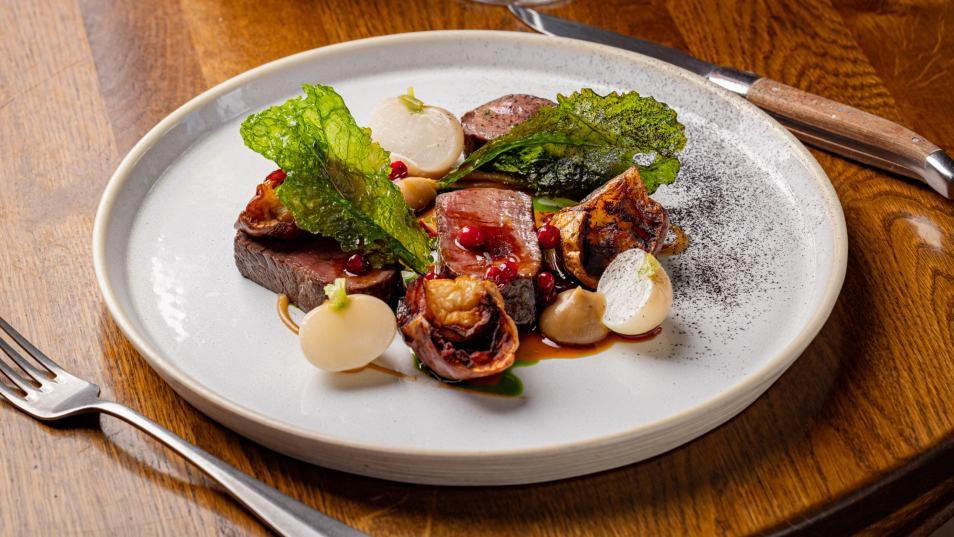
Highland beef carries a comparable weight of provenance. Scotland's Highland cattle are a slow-growing native breed, raised primarily on grass in high-altitude conditions that produce beef with a distinctive fat distribution and depth of flavour. Named provenance of this kind has become a standard signal in the upper tiers of British pub dining, where sourcing specificity functions as the equivalent of a wine's appellation: it tells the kitchen's story before a fork is lifted. At Crown, these sourcing choices are not incidental details but the structural argument of the menu itself.
Chef Simon Bonwick's kitchen sits within a broader pattern visible across British country pub dining over the past decade. Well-regarded inns in this category, properties like Hand and Flowers in Marlow, a short drive west along the Thames valley, have built their reputations on the credibility of their sourcing combined with classical technique applied without excess. Crown belongs to this tradition, without the awards infrastructure of its immediate neighbour. For comparison, the starred destination restaurants of rural England, from L'Enclume in Cartmel to Moor Hall in Aughton, tend to centre sourcing as part of a more elaborate tasting architecture. Crown applies similar sourcing rigour to a shorter, more direct format.
Classical Cooking, Honest Execution
Bonwick's approach to the menu is framed around what the awards copy describes as classical dishes with honest, hearty flavours. That phrasing matters. In a village where the dominant culinary conversation involves multi-course tasting menus and complex technique, cooking described as honest and hearty represents a deliberate positioning rather than a limitation. The so-called 'rather nice sauce' attached to the Highland beef, a detail specific enough to suggest a house signature that regulars request by name, is the kind of quietly confident kitchen gesture that defines a good local restaurant: not trying to impress, but consistent enough to have acquired its own shorthand.
The balance that classical British inn cooking requires is between flavour weight and accessibility, and Crown appears to pitch that balance toward warmth and welcome rather than precision and formality. This is a different proposition from the controlled restraint of a Gidleigh Park or the technical ambition of CORE by Clare Smyth in London, and it is meant to be. The Crown's comparable set is not those rooms; it is the well-run British inn that understands its place in a dining ecosystem and executes within it with confidence.
The Snug and Private Dining
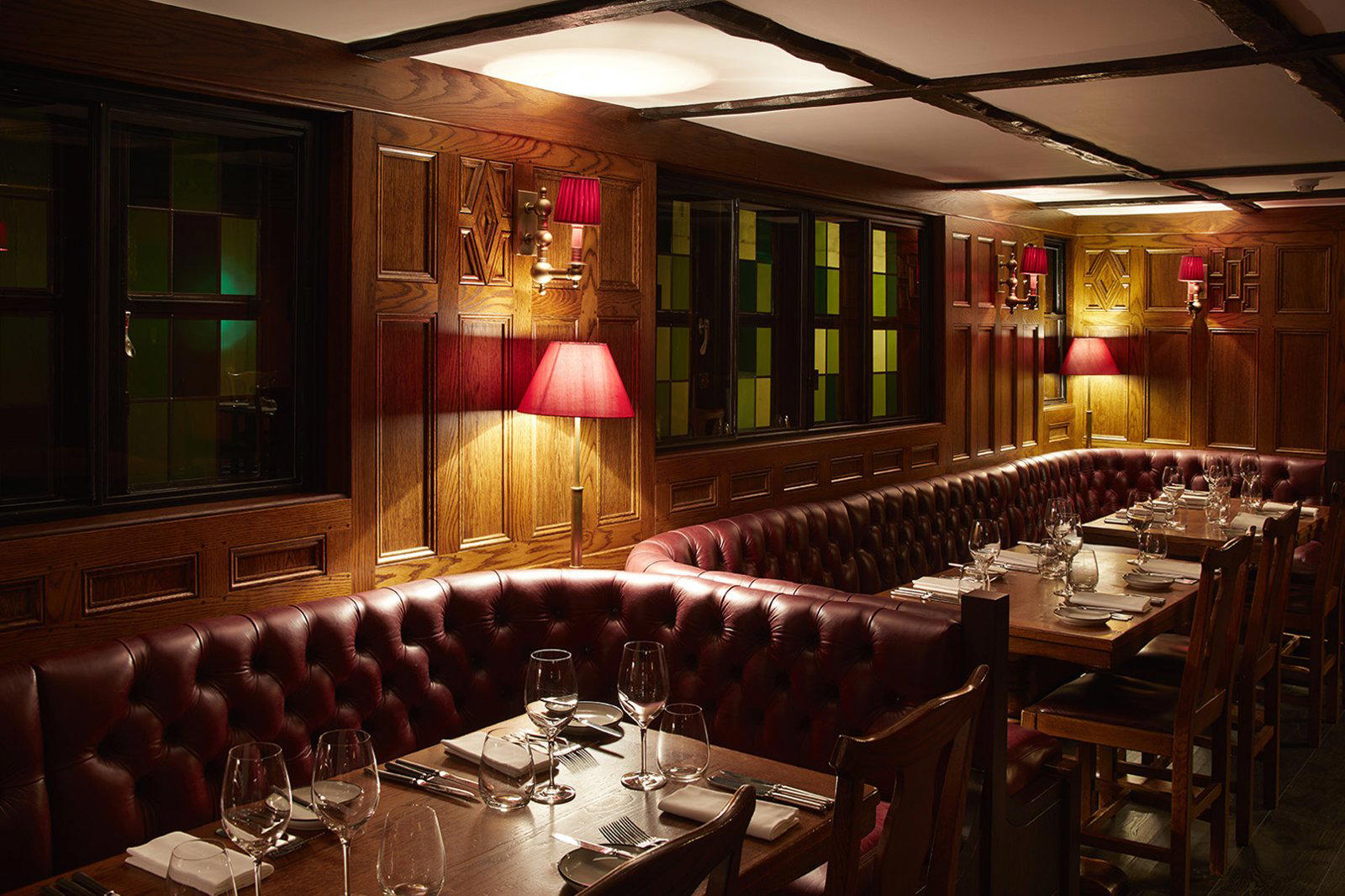
Private dining at British inns has evolved considerably over the past two decades, moving from bolt-on function rooms toward smaller, more considered formats. Crown's Troublesome Lodger experience in The Snug occupies this newer category. The room is decorated with Bonwick's own artwork, which does something practically useful: it gives the space a character specific to this kitchen rather than the generic private-room aesthetic that many venues default to. For groups looking for a contained, characterful dining environment in a Berkshire village setting, the format offers something distinct from the larger private dining operations at restaurants like Le Manoir aux Quat' Saisons in Great Milton.
Planning a Visit
Crown sits on Bray's High Street at SL6 2AH, within walking distance of the village's other dining addresses. Bray is accessible from London Paddington via Maidenhead, with the village roughly a ten-minute taxi or ride-share from Maidenhead station. For visitors building a broader Berkshire itinerary, the EP Club's full Bray restaurants guide covers the village's full dining range, from Crown's inn cooking through to the starred rooms. Separate guides cover Bray hotels, bars, wineries, and experiences in the area. For those travelling further into Britain's country dining circuit, comparable classical approaches can be found at hide and fox in Saltwood in Kent. The Troublesome Lodger private dining format in The Snug requires a separate booking from the main restaurant; given the room's size and specificity, advance reservation is the practical approach for any group visit.
Comparable Venues
Comparable venues nearby, for context on price, style, and recognition.
| Venue | Cuisine | Price | Awards | Notes |
|---|---|---|---|---|
| CrownThis venue — the venue you are viewing | Modern British Gastropub | $$$ | Michelin Plate | Not listed |
| The Braywood | Modern British Fine Dining | $$$ | Michelin Plate | Paley Street, Bray |
| Hinds Head | Modern British Gastropub | $$$ | Michelin 1 Star | Bray |
| Waterside Inn | Classic French Fine Dining | $$$$ | Michelin 3 Star | Bray |
| The Fat Duck | Modern British Molecular Gastronomy | $$$$ | Michelin 3 Star | Bray |
| The Crown at Bray | pub | $$$ | Not listed | Bray on Thames |
Recognition history
Dated appearances from independent guides and award organizations, with the underlying list record or original source where available.
Michelin Plate
Michelin
Top 50 Gastropubs 2026 Estrella Damm Top 100 Gastropubs #89
Top 50 Gastropubs
The Good Food Guide GFG Good
The Good Food Guide
Continue exploring
More in Bray
Restaurants in Bray
Browse all →
Bars in Bray
Browse all →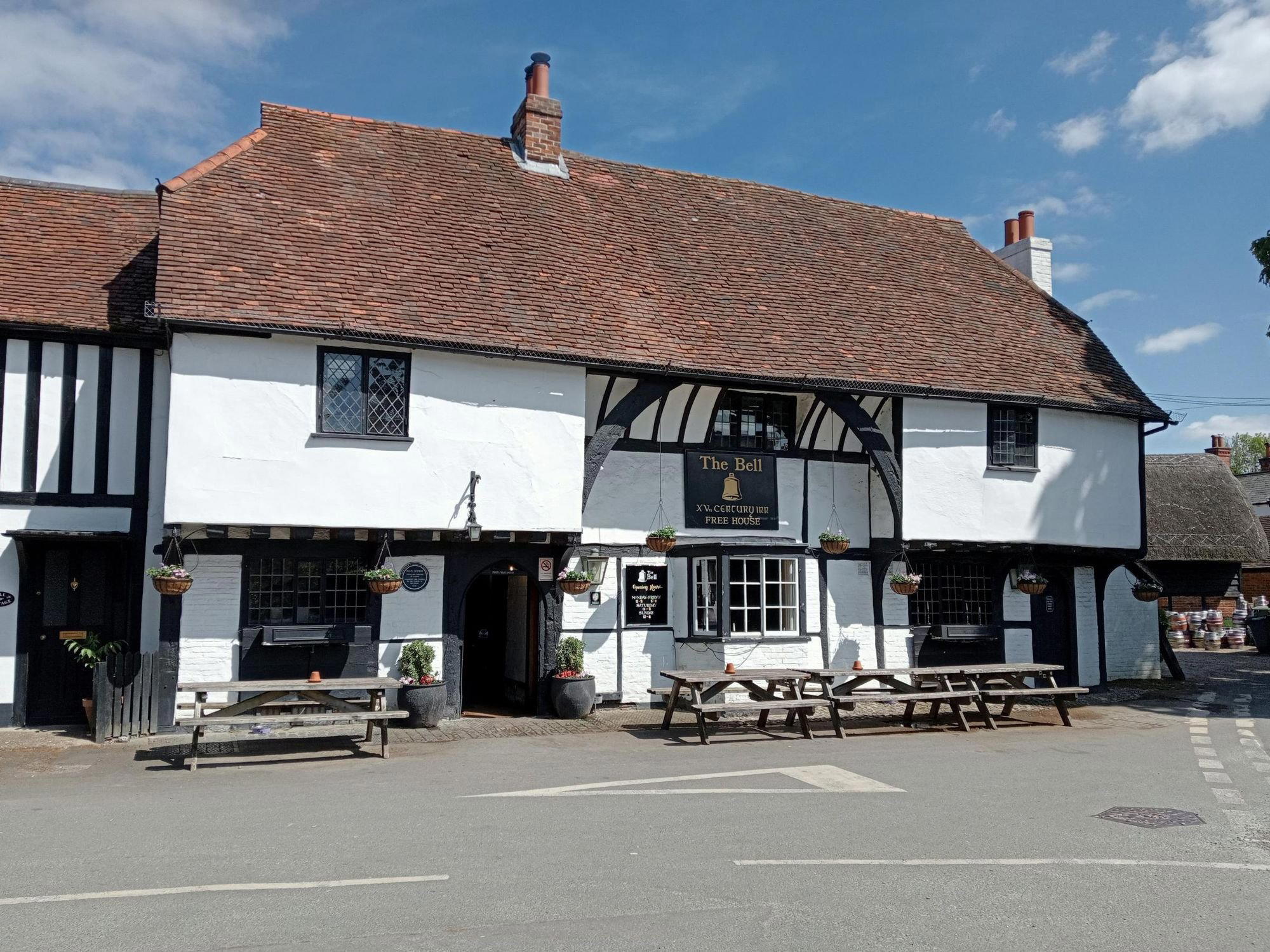
Hotels in Bray
Browse all →

At a Glance
- Cozy
- Classic
- Intimate
- Date Night
- Group Dining
- Special Occasion
- Historic Building
- Private Dining
- Open Kitchen
- Extensive Wine List
Current opening hours
- Monday
- 4–8 p.m.
- Tuesday
- Closed
- Wednesday
- 12–11 p.m.
- Thursday
- 12–11 p.m.
- Friday
- 12–11 p.m.
- Saturday
- 12–11 p.m.
- Sunday
- 12–7 p.m.
Hours can change for holidays and private events. Last verified .
Cosy atmosphere with beautiful furniture, open fires, ancient beams, low ceilings, and wood-burning stoves creating a warm, traditional pub feel.