Rasa
On Stoke Newington Church Street, Rasa has anchored North London's Kerala dining scene for decades, drawing a loyal following with South Indian vegetarian cooking that sits apart from the city's broader Indian restaurant spectrum. The address, N16, not Mayfair, is part of the point: this is neighbourhood dining with a regional specificity that most London Indian restaurants don't attempt.
Pearl is the En Primeur Club membership app — saves, bookings, and concierge access live there. Same editors, same standards.
- Address
- 55 Stoke Newington Church St, London N16 0AR, UK
- Phone
- 0207 249 0344
- Website
- rasarestaurants.com
- Directions
- Get directions
 Saves & bookings on Pearl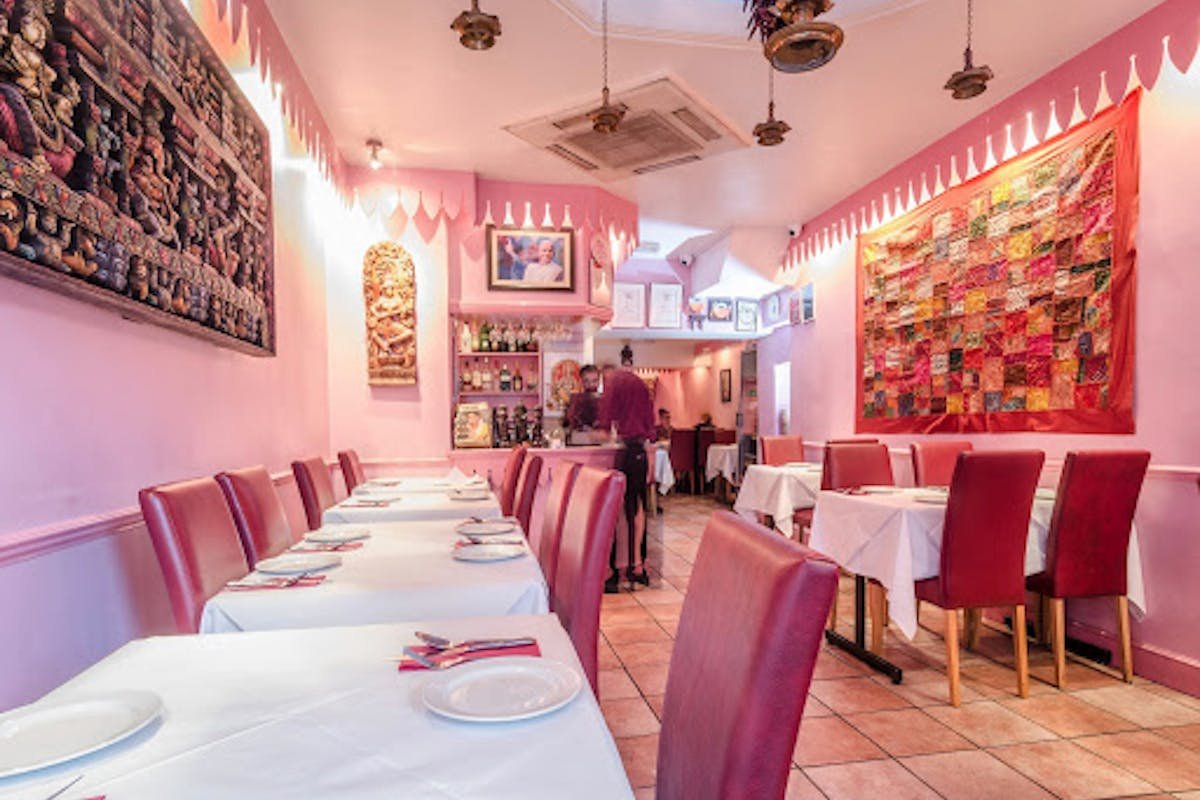
Stoke Newington and the Case for Regional Indian Cooking
London's Indian restaurant scene has long been weighted toward North Indian and Bangladeshi-derived cooking: the butter chicken, the tandoor, the curry house grammar that shaped British dining culture across the twentieth century. South Indian food, and Keralan cuisine in particular, occupies a narrower but increasingly respected niche within that broader picture. Rasa, at 55 Stoke Newington Church St in N16, is a South Indian vegetarian restaurant serving a focused regional menu in London, with prices around $20 per person.
Stoke Newington itself shapes the context. The neighbourhood sits north of Dalston, outside the usual circuit of destination dining, and its Church Street strip has historically supported independent restaurants that survive on local loyalty rather than tourist footfall. That geography is not incidental. It filters the clientele toward people who are coming specifically for the food rather than for the postcode, and it creates a different register of experience than you'd find at a comparable restaurant in, say, Soho or Fitzrovia. For anyone mapping London's Indian food geography, the Stoke Newington cluster, with Rasa as its most established node, represents a distinct tradition.
The Physical Space and What It Signals
The interior uses pinks, warm wood tones, brass detailing, and textile patterns drawn from the state's craft traditions. Rasa's interior deploys this palette in a way that reads as considered rather than decorative. The dining room is compact, the kind of space where tables are close enough that you're aware of neighbouring conversations, and where the physical container does not try to disappear behind neutral modernism. This is a deliberate positioning: the room declares its cultural reference immediately rather than softening it for a perceived mainstream audience.
That directness in design mirrors the approach to the menu. Keralan vegetarian cooking is not a simplified or compromise version of South Indian food, it draws on coconut, curry leaf, mustard seed, tamarind, and raw mango in combinations that produce layered, acidic, aromatic results quite different from the cream-based sauces that still dominate much of London's Indian dining. The physical space and the food make the same argument: this is specific, not generic.
Rasa's scale places it in the neighbourhood-restaurant category, where the dining room is compact and close to the street. Those rooms are built to signal occasion. Rasa's room is built to signal belonging to a place and a tradition.
Keralan Vegetarian Cooking in the London Context
The vegetarian focus is worth examining as a structural choice rather than a restriction. Kerala has among the more sophisticated vegetarian culinary traditions in India, shaped by temple cuisine, the Syrian Christian and Nair communities' approach to sadhya (feast) meals, and the region's extraordinary ingredient diversity: coconut in multiple forms, an array of gourds and tubers, banana flower, drumstick, and fresh-ground spice pastes that bear no resemblance to the pre-blended powder shortcuts that characterise lower-end Indian cooking elsewhere in London.
In a city where Indian fine dining has moved toward tasting-menu formats and wine pairing, partly to compete with the European fine-dining tier occupied by venues like The Ledbury and Dinner by Heston Blumenthal, Rasa represents a different logic: depth through regionality rather than through format elaboration. The comparison set here is the handful of UK restaurants that prioritise one Indian state's cooking with fidelity. That is a smaller, more specific competitive bracket, and within it, the Church Street address carries real weight.
For visitors planning a broader UK itinerary, the contrast in register is clear. Establishments like L'Enclume in Cartmel, Moor Hall in Aughton, Gidleigh Park in Chagford, and Le Manoir aux Quat' Saisons in Great Milton operate in the multi-course, weekend-destination format. Rasa operates in a completely different register, the neighbourhood restaurant where the point is the food's cultural specificity, not its theatrical presentation. Both are valid. They answer different questions.
North London's Place in London's Dining Geography
The N16 postcode sits outside the zones where most international visitors eat. The concentration of press attention and high-end spending in London dining tends to land in the West End, Mayfair, and the immediate City fringe, the same geography that supports Restaurant Gordon Ramsay in Chelsea and similar addresses. North London's independent restaurant culture, running through Islington, Highbury, and out to Stoke Newington, functions on a different economic model and serves a different purpose in the city's food map.
Church Street in particular has accumulated a density of independent operators over decades, and Rasa is among the addresses that give the strip its identity. For visitors staying in Central London and considering a trip north, the journey is direct on the Overground network. It is the kind of neighbourhood that rewards an afternoon of exploration, the London experiences guide covers the broader area, and pairing dinner at Rasa with time spent on Church Street and the surrounding streets makes a coherent evening out of the trip.
Internationally, the tradition of neighbourhood restaurants that function as regional cooking specialists has parallels at venues like Atomix in New York City, which uses Korean culinary depth to similar effect, and contrasts with the grand-format European model at places like Le Bernardin.
Planning Your Visit
Rasa is located at 55 Stoke Newington Church Street, London N16 0AR. Reservations are recommended, especially for weekend evenings, and the dress code is casual. Expect about $20 per person.
Accolades, Compared
Comparable venues nearby, for context on price, style, and recognition.
| Venue | Cuisine | Price | Notes |
|---|---|---|---|
| RasaThis venue — the venue you are viewing | South Indian Vegetarian | $$ | Not listed |
| Dishoom Shoreditch | Bombay Comfort Food | $$ | Shoreditch |
| Rooburoo | North Indian | $$ | Angel |
| Arya Bhavan Leicester Square | Authentic South Indian Vegetarian | $$ | Leicester Square |
| Biryani Centre | Authentic Indian Biryani House | $$ | New Malden |
| Breakspear Arms | North Indian Pub Curry | $$ | Ickenham |
Continue exploring
More in London
Restaurants in London
Browse all →
Bars in London
Browse all →
Hotels in London
Browse all →

At a Glance
- Well Known
- Classic
- Casual Hangout
- Date Night
- Standalone
Traditional, casual neighborhood restaurant atmosphere centered on comforting South Indian vegetarian food.