Queen of Sheeba
Our verdict
Queen of Sheeba on North Sapodilla Avenue brings an East African dining tradition to West Palm Beach's increasingly varied restaurant scene. Set in a neighbourhood that has absorbed successive waves of culinary reinvention, the restaurant occupies a city block where independent operators have gradually displaced chain dining. Details on current format, pricing, and booking are best confirmed directly with the restaurant at 716 N Sapodilla Ave.

Pearl is the En Primeur Club membership app, where members save venues, book tables and use the concierge.

North Sapodilla's Quiet Shift Toward Independent Dining
West Palm Beach's dining identity has been redrawn several times over the past decade. The corridor along North Sapodilla Avenue, once a secondary thoroughfare with limited culinary pull, has absorbed a wave of independently operated restaurants that now give the area a character distinct from the waterfront or Clematis Street scenes. That shift mirrors a national pattern: mid-sized American cities have increasingly seen their most interesting restaurants settle into residential-adjacent streets rather than tourist-facing zones, where lower overhead and neighbourhood regulars sustain a different kind of operator. Queen of Sheeba, at 716 N Sapodilla Ave, is part of that pattern, an independent with an East African identity in a city whose dining options have historically leaned toward American and pan-Latin formats.
What East African Cuisine Looks Like in a Florida Context
Ethiopian and broader East African restaurants have expanded steadily across American cities over the past two decades, and the format carries a set of recognisable conventions: communal platters, injera as both vessel and bread, and a spice architecture built around berbere and niter kibbeh that differs substantially from the chili-forward heat more familiar to Florida diners. In cities with established East African populations, Washington D.C. Minneapolis, Atlanta, these restaurants have developed multi-generation customer bases and critical recognition. For a city the size of West Palm Beach, the presence of a dedicated East African restaurant represents a category that most comparable Florida markets lack at any meaningful scale. The cuisine's communal serving format also positions it differently from tasting-menu-driven fine dining: the meal is structured around shared plates and conversation rather than sequential individual courses, which changes the rhythm of an evening considerably.
That dining rhythm is part of what has given East African restaurants their durability in American cities. While formats like the tasting menu, as practised at places such as Alinea in Chicago, Lazy Bear in San Francisco, or The French Laundry in Napa, require a particular kind of concentrated attention from a diner, the communal platter model is structurally more relaxed and more repeatable for regular use. It is the format, not just the cuisine, that determines how often someone returns.
Reinvention and Continuity in a Neighbourhood Restaurant
For any independent restaurant operating on North Sapodilla over the past several years, the question of evolution has been inescapable. The neighbourhood has changed around its tenants: new residential development has altered foot traffic patterns, the post-pandemic reconfiguration of dining habits shifted how often people eat out and at what price point, and the rising cost of ingredients has forced nearly every independent operator to reassess portion structures and menu depth. Restaurants in this category, small, independently owned, cuisine-specific, tend to survive these pressures either by becoming neighbourhood institutions through consistency, or by making deliberate pivots in format or offering. Queen of Sheeba's address on North Sapodilla puts it in a block that has seen both kinds of operators. The restaurants that have persisted longest in this area, including Agora Mediterranean Kitchen and Avocado Grill, share a willingness to refine their core proposition without abandoning the format that originally defined them.
The reinvention question is particularly relevant for cuisine-specific independents. An East African restaurant in a market without a large established diaspora community must build its customer base largely from curiosity and word of mouth rather than from a pre-existing constituency. That requires ongoing work: maintaining quality of core dishes, keeping price points accessible enough to encourage first-time visitors, and developing enough regulars to sustain the operation through slower periods. The restaurants that manage this successfully tend to develop a dual identity, familiar enough for regulars, legible enough for newcomers, that takes years to calibrate.
Where Queen of Sheeba Sits in West Palm Beach's Current Dining Map
West Palm Beach's restaurant scene spans a considerable range at the moment. At the more internationally recognised end, operations like Le Bernardin in New York City, Atomix in New York City, or Blue Hill at Stone Barns in Tarrytown represent a tier of recognition that West Palm Beach restaurants rarely approach, and that comparison is useful context: most of the city's dining interest lies in the independent mid-market, not in the fine-dining recognition tier. Within that mid-market, the city has developed genuine breadth. 8 Pot Korean BBQ and HotPot covers the Korean communal format; A-1 Thai Restaurant anchors the Southeast Asian end; aioli handles American with a Mediterranean inflection. Queen of Sheeba occupies the East African slot in a roster that has otherwise concentrated on Asian, Mediterranean, and American formats. That positioning is not a small thing: category scarcity in a growing city tends to confer durability on the operator willing to hold it.
For a fuller picture of how these independents fit into the city's broader dining character, the EP Club West Palm Beach restaurants guide maps the scene across neighbourhoods and price tiers.
Planning a Visit
Queen of Sheeba is located at 716 N Sapodilla Ave, West Palm Beach, FL 33401. Given the limited publicly available data on current hours, booking methods, and pricing, contacting the restaurant directly before visiting is the practical approach, particularly for larger groups where communal-format dining benefits from advance coordination. North Sapodilla Avenue is accessible by car with street parking available in the surrounding blocks; the location sits north of the downtown core, closer to the residential fabric of the city than to the waterfront dining cluster. For reference, Emeril's in New Orleans and Providence in Los Angeles represent the kind of destination-dining commitment that typically requires advance booking weeks out; Queen of Sheeba operates in a different register, where spontaneity is more plausible, though confirming availability remains sensible.
Frequently asked questions
Where exactly is Queen of Sheeba?
Queen of Sheeba is located at 716 N Sapodilla Ave, West Palm Beach, FL 33401, West Palm Beach.
Is Queen of Sheeba suitable for vegetarians and vegans looking for East African food in West Palm Beach?
East African cuisine, particularly Ethiopian cooking, has one of the strongest vegetarian traditions of any restaurant format operating in Florida, with lentil-based wots, spiced split peas, and fermented injera forming the backbone of the menu rather than a side category. Queen of Sheeba at 716 N Sapodilla Ave operates within this tradition, making it a practical option for plant-based diners in West Palm Beach where that combination, East African cuisine and vegetarian depth, is otherwise difficult to find in the same room.
What's the must-try dish at Queen of Sheeba?
Queen of Sheeba focuses on East African cooking, a format built around communal platters, spiced stews, and injera-based service that rewards sharing across the table. Without a current published menu on record, the safest approach is to ask the kitchen directly what is coming out of the oven that day, Ethiopian and broader East African menus often rotate around seasonal legumes and slow-cooked proteins. The communal format at 716 N Sapodilla Ave makes ordering a range of dishes the standard approach rather than the exception.
What's the best way to book Queen of Sheeba?
Phone and website details for Queen of Sheeba are not currently listed in public directories, so showing up or reaching out via any social presence the restaurant maintains is the most direct route. The address is 716 N Sapodilla Ave, West Palm Beach, FL 33401. Independent neighbourhood restaurants on this corridor often manage reservations informally, so a walk-in inquiry during off-peak hours can be as effective as a formal booking.
What's Queen of Sheeba best at?
Queen of Sheeba holds a specific position in West Palm Beach's dining map as one of the few outlets bringing East African cooking to a city whose restaurant identity has historically leaned toward American and European formats. That specialisation, a cuisine that elsewhere in Florida tends to concentrate in larger metros like Miami and Orlando, gives the restaurant a distinct role on the North Sapodilla corridor. The communal service structure, central to Ethiopian dining tradition, also sets the format apart from the table-service norm in the surrounding neighbourhood.
Credentials Lens
Comparable venues nearby, for context on price, style, and recognition.
| Venue | Cuisine | Price | Awards | Notes |
|---|---|---|---|---|
| Queen of SheebaThis venue (the venue you are viewing) | Ethiopian | $20–30 | Not listed | Not listed |
| Pistache French Bistro | Parisian French Bistro with Mediterranean Infusion | $30–50 | Wine Spectator Award of Excellence | Downtown West Palm Beach |
| La Vie Mediterranean Restaurant | Authentic Lebanese Mediterranean | $20–30 | Not listed | Palm Beach Lakes |
| Waxin's - West Palm Beach | Swedish-American Fine Dining | Not listed | Not listed | downtown |
| Flare House | American Fusion | Not listed | Not listed | Northwood |
| Bacaro - The Belgrove | Modern Italian Al Fresco | $50–100 | Not listed | Lake Mangonia |
Continue exploring
More in West Palm Beach
Restaurants in West Palm Beach
All restaurants in West Palm Beach →
Bars in West Palm Beach
All bars in West Palm Beach →
Details
- Cozy
- Intimate
- Casual Hangout
- Historic Building
- A La Carte
- Vegetarian Friendly
- Vegan Options
- Gluten Free Options
Current opening hours
- Monday
- Closed
- Tuesday
- Closed
- Wednesday
- 11:30 AM–2 PM, 5:30–9 PM
- Thursday
- 11:30 AM–2 PM, 5:30–9 PM
- Friday
- 11:30 AM–2 PM, 5:30–9 PM
- Saturday
- 11:30 AM–2 PM, 5:30–9 PM
- Sunday
- Closed
Hours can change for holidays and private events. Hours as of .
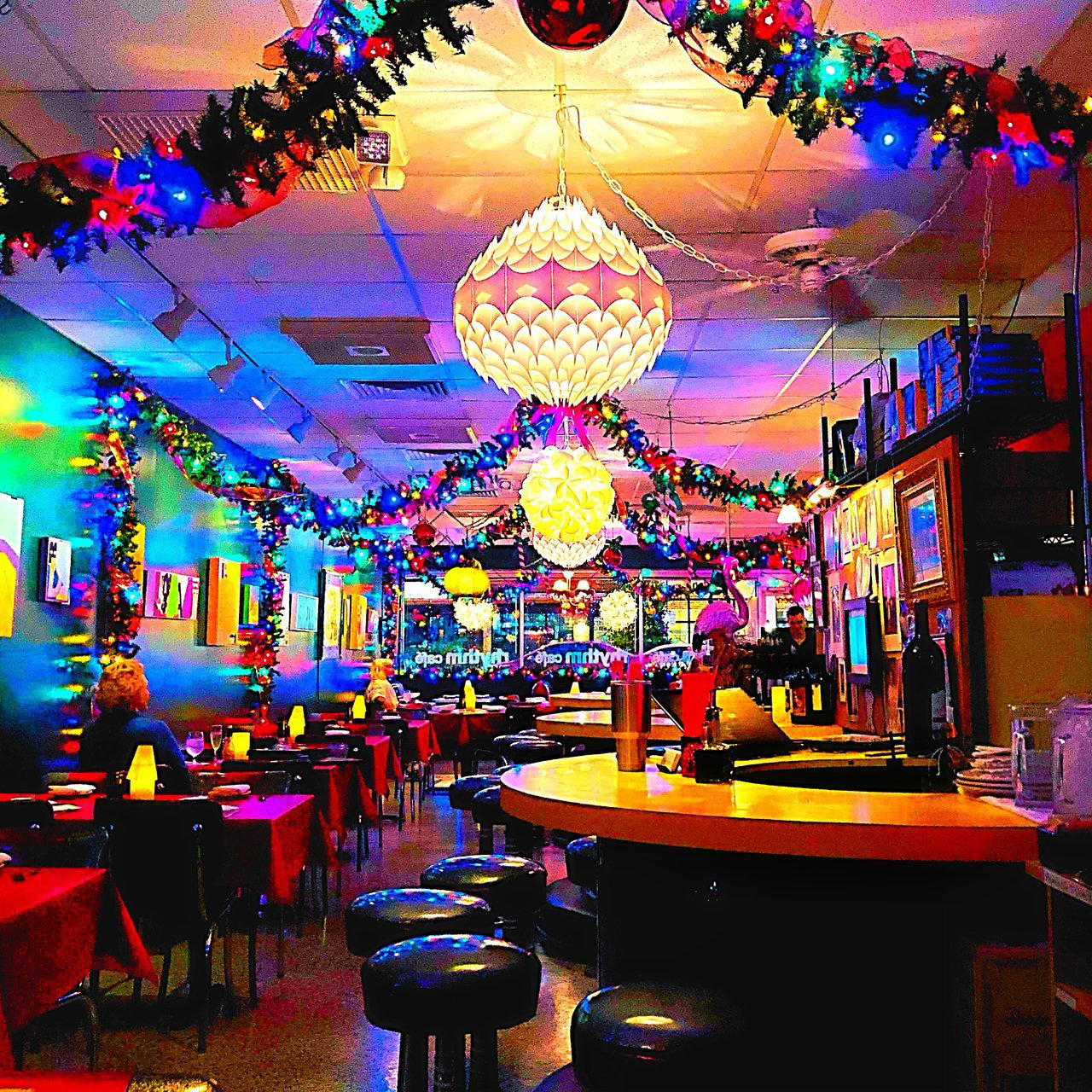
Bright and light-filled with traditional Ethiopian decor, comfortable antique chairs, and a welcoming home-like atmosphere.