PopUp Bagels
PopUp Bagels brings its New York-style, hand-rolled bagel format to Bethesda under a permanent lease, marking a shift from its pop-up origins. The operation sits in a category where sourcing discipline and dough technique matter more than dining-room spectacle. For Bethesda, it fills a gap between grocery-counter bagels and the more serious bread programs found at DC's independent bakeries.
Pearl is the En Primeur Club membership app — saves, bookings, and concierge access live there. Same editors, same standards.
- Address
- Bethesda, United States
- Directions
- Get directions
 Saves & bookings on Pearl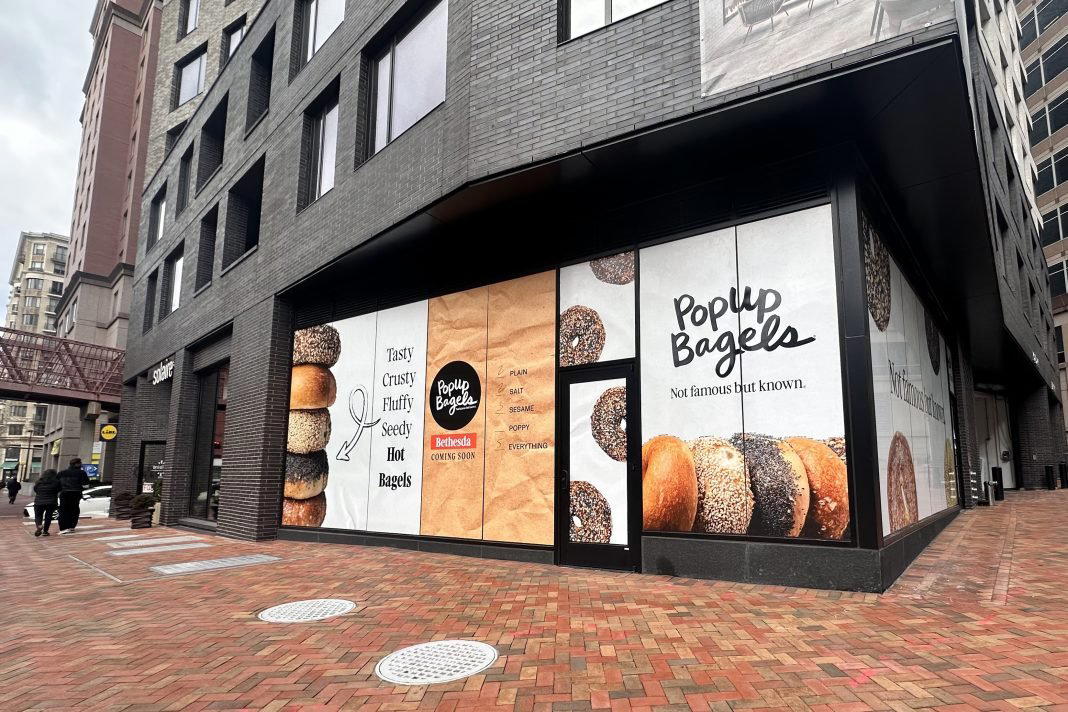
Where the Bagel Stands in Bethesda's Bread Conversation
Bethesda's dining scene has long skewed toward restaurant formats: sit-down, chef-driven, reservation-dependent. The bread and bakery tier has lagged behind, with most options running the spectrum from supermarket shelves to occasional farmers' market vendors. Against that backdrop, PopUp Bagels' decision to open in Bethesda is a notable category signal. It suggests the suburb's appetite for serious, single-focus food programs has grown enough to sustain a bagel shop.
The shift from pop-up to permanent shop is increasingly common in American food cities. A producer builds a following through limited, high-anticipation drops and then opens in a format that preserves the original pace. PopUp Bagels follows that trajectory, and the Bethesda location sits within a broader wave of destination-bakery thinking that has reshaped how American suburbs approach morning food. For context on where Bethesda's dining sits across categories, see our full Bethesda restaurants guide.
The Sourcing Argument Behind a Hand-Rolled Bagel
At the production level, bagels divide into two categories that have nothing to do with toppings: those made with commodity flour and industrial process, and those where the flour spec, water chemistry, and fermentation time are treated as primary variables. The latter approach is what separates a bagel program worth tracking from one that is simply convenient.
High-hydration dough bagels, particularly those shaped by hand rather than machine-extruded, carry ingredient provenance in a way that makes sourcing decisions audible in the final product. The chew, the crust tension, the density of the crumb, these are outputs of flour protein content, fermentation length, and boiling solution. Operations that take those variables seriously tend to be transparent about their inputs, because the inputs are the story. PopUp Bagels operates in that tradition, prioritizing process and sourcing over volume throughput.
This places the restaurant in a different competitive frame than a standard bagel shop. The relevant comparable set is not the grab-and-go counter at a Bethesda deli but rather the serious bread programs that have emerged in Washington DC over the past decade, operations where fermentation schedules and grain sourcing are treated with the same discipline that wine-focused restaurants apply to their cellar. That discipline is what makes a destination-bakery worth a specific trip rather than a casual proximity visit.
What the Pop-Up Format Tells You About the Product
Pop-up food businesses succeed for one of two reasons: novelty that doesn't hold up at permanent scale, or a product genuinely strong enough to justify repeat demand without the theatrical element. The restaurant' progression to a signed Bethesda lease is an argument for the second category. A landlord willing to commit square footage to a single-SKU bakery operation, and an operator willing to accept fixed rent obligations, both require confidence that the daily traffic justifies the overhead.
That confidence tends to be data-backed by the time a pop-up signs its first lease. The Georgetown location of the restaurant, which preceded the Bethesda expansion, provided the DC-area proof of concept. That PopUp Bagels Georgetown operation demonstrated that the format translates from occasional-event scarcity to sustained daily demand.
Bethesda as a Destination-Bakery Market
The suburb's food infrastructure has traditionally supported mid-to-high price restaurant formats more comfortably than artisan food production. Bethesda's restaurant density along the Wisconsin Avenue and Woodmont Triangle corridors has attracted chef-driven concepts across multiple cuisines, including Q by Peter Chang for Sichuan and Japanese formats like Uchi (Bethesda area offshoot) and the incoming Uchi Bethesda (planned). These are evening-format restaurants built around occasion dining.
A bagel operation fills a different slot entirely: morning-format, quick-transaction, repeat-visit. The customer logic is closer to a coffee subscription than a restaurant reservation. What makes the restaurant' Bethesda lease interesting is that it bets on a morning-format destination model in a neighborhood where that tier has historically been underdeveloped relative to the restaurant tier. It signals that DC-area suburbs are ready to support specialty food producers at the neighborhood level, not just in central urban locations.
How to Plan a Visit
Destination-bakery operations with a pop-up lineage typically run on a sell-through model: production quantities are set in advance, and once the day's batch is gone, the format closes rather than extending service. This means arrival time matters more than it does at a conventional café. For the restaurant, the practical logic is to arrive early, particularly on weekends.
Toppings and schmear configurations are where a bagel operation either commits to the sourcing argument or abandons it. Operations that invest in dough quality but compromise on cream cheese sourcing, cured fish provenance, or produce quality create a internal inconsistency that is immediately legible to anyone paying attention. Whether the restaurant maintains sourcing discipline across its full topping program is the substantive question for a first visit.
Situating the Format Against Fine Dining
The thread connecting formats as different as a Michelin three-star and a hand-rolled bagel shop is sourcing intention, the decision to treat ingredients as the primary variable rather than an afterthought. The thread connecting formats as different as a Michelin three-star and a hand-rolled bagel shop is sourcing intention, the decision to treat ingredients as the primary variable rather than an afterthought.
In that frame, a bagel operation that takes flour spec, fermentation, and water chemistry seriously is participating in the same conversation as the farm-to-table fine dining tier, just at a different price point and service format. The commitment is the same; the overhead and occasion are not. That is the argument the restaurant makes by existing in the format it does, and the Bethesda lease is evidence that the argument is finding an audience in the DC suburbs.
Fast Comparison
Comparable venues nearby, for context on price, style, and recognition.
| Venue | Cuisine | Price | Notes |
|---|---|---|---|
| PopUp BagelsThis venue — the venue you are viewing | New York-Style Bagels & Schmears | $ | Not listed |
| Tastee Diner | Classic American Diner | $ | Woodmont Triangle |
| PopUp Bagels | Artisan Bagels & Schmears | $$ | Bethesda |
| Silver | Contemporary American Brasserie | $$$ | Bethesda |
| Chicken on the Run | Peruvian Rotisserie Chicken | $ | Bethesda |
| The Salt Line | New England & Chesapeake Seafood | $$ | Bethesda Row |
Continue exploring
More in Bethesda
Restaurants in Bethesda
Browse all →
Bars in Bethesda
Browse all →
Hotels in Bethesda
Browse all →

At a Glance
- Trendy
- Cozy
- Casual Hangout
- Brunch
- Family
Casual and bustling with the fresh aroma of hot bagels and whipped schmears, designed for quick grab-and-go enjoyment.