Piano Nobile


Piano Nobile occupies the dining room of Château Mcely, a castle estate in the Bohemian countryside northeast of Prague. The room pairs high ceilings, ornate chandeliers, and decorative porcelain with classical French-style cuisine served either à la carte or as a tasting menu. For travellers already staying at the château's spa hotel, this is the natural anchor for an evening meal.
Pearl is the En Primeur Club membership app — saves, bookings, and concierge access live there. Same editors, same standards.
- Address
- Mcely 61, 289 36 Mcely, Czechia
- Phone
- +420 325 600 000
- Website
- chateaumcely.cz
- Directions
- Get directions
 Saves & bookings on Pearl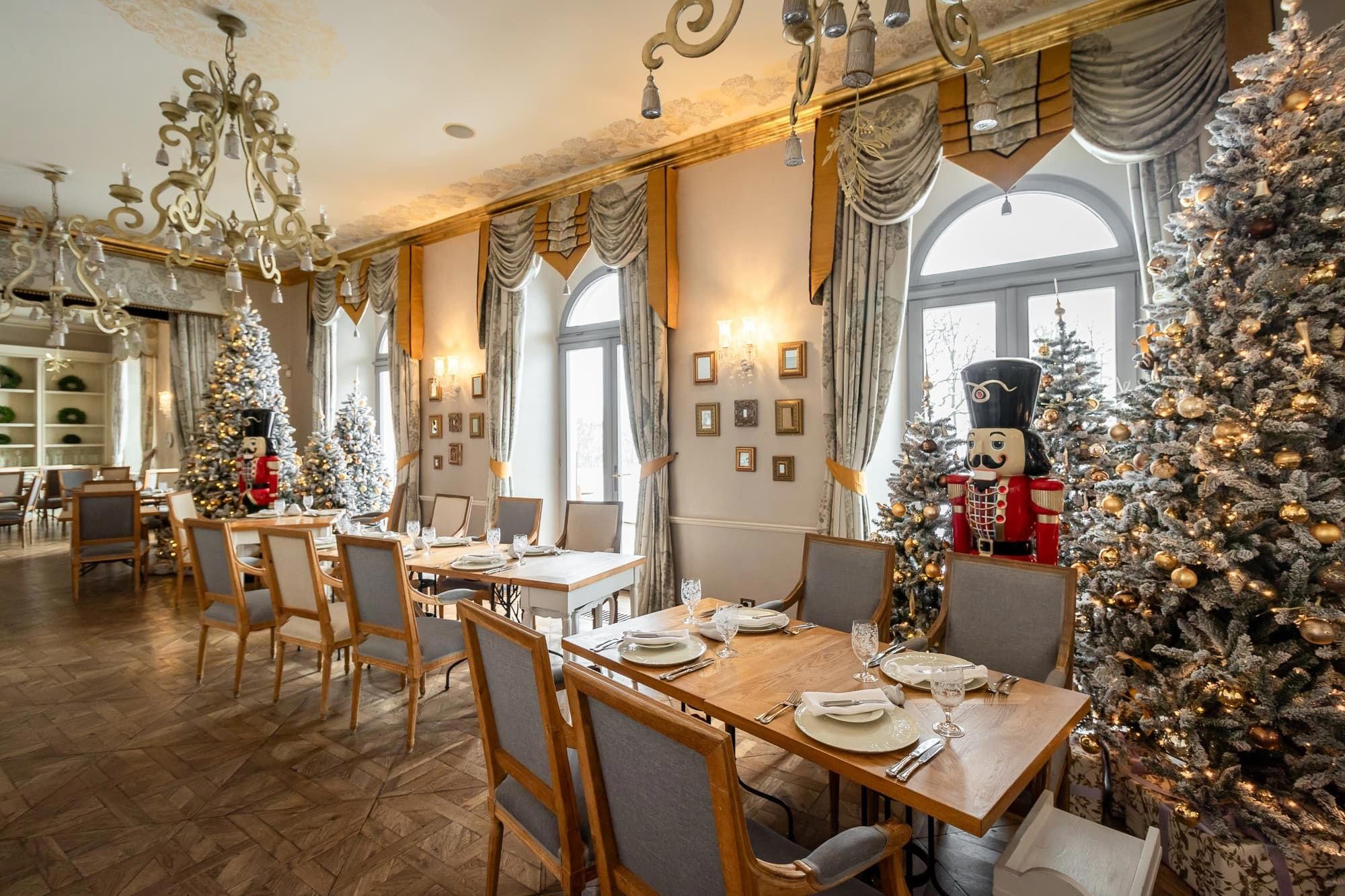
A Dining Room Built Into History
Arriving at Mcely 61, the scale of the setting registers before you reach the front door. Château Mcely is a full castle estate, and Piano Nobile sits within it as the formal dining room, occupying a space where the architectural ambition of the building does the first work. High ceilings stretch overhead, chandeliers distribute candlelit warmth across the room, and shelves of striking decorative porcelain line the walls in a way that reads less like décor and more like a private collection that simply stayed. The effect is of dining inside a functioning historic interior rather than a renovated facsimile of one.
French Classicism in Czech Countryside
The menu at Piano Nobile follows classical French technique, which is a meaningful editorial choice in a country where the stronger gastronomic tradition runs through Czech and Austro-Hungarian cooking. Across the Czech Republic, the upper tier of destination dining has largely split between two models: urban tasting-menu restaurants that marry French technique with Central European ingredients, and estate or château properties where fine dining arrives as part of a broader retreat experience. Piano Nobile belongs firmly in the second category. Restaurants like La Degustation Bohême Bourgeoise in Prague occupy the urban end of this spectrum, with a deliberate focus on Czech culinary heritage reconstructed through a fine-dining lens. The restaurant operates differently: the French classical framework here is less a statement of culinary nationalism and more a match for the formal architectural register of the room itself.
Guests choose between an à la carte selection and a tasting menu, a dual-format structure that gives the kitchen flexibility while allowing the dining room to accommodate different paces and intentions. The inclusion of a children's menu marks a practical acknowledgment that château hotels attract families as well as couples on weekend breaks, and the kitchen also prepares event-specific menus for occasions such as Halloween and Christmas. That seasonal event programming signals an active year-round calendar rather than a summer-only operation, which matters for travellers planning around the Bohemian countryside in the colder months.
The Sourcing Logic of an Estate Kitchen
Classical French cuisine, when done with any seriousness in rural Central Europe, requires a clear answer to the question of where ingredients come from. The Château Mcely estate sits in a region where agricultural land surrounds the property, and estate-based dining in this part of Bohemia has historically drawn from the same proximity that defined aristocratic table-keeping in earlier centuries. The logic of a château kitchen sourcing locally is not primarily about trend-following; it is about what a property of this scale and age was designed to do. Estate grounds, surrounding farmland, and seasonal game from the Bohemian countryside form the natural supply base for a kitchen operating at this address.
That context matters because it distinguishes an estate restaurant from a city fine-dining address transplanted to a rural postcode. At urban counterparts like Entrée in Olomouc or Chapelle in Písek, the sourcing conversation is about building supply chains into a city kitchen. At a working château estate, that relationship between land and table is structural rather than aspirational. Whether the restaurant's current menu makes explicit use of estate-grown or locally sourced produce is a detail that the kitchen would be best positioned to confirm directly, but the framework is there, and it is the right question to ask when booking.
Where It Sits Among Czech Destination Dining
Estate and château dining has grown as a category across Central Europe over the past fifteen years, partly as rural properties have converted or upgraded to attract the same guests who might otherwise fly to a Relais and Châteaux address in France or northern Italy. Within the Czech Republic specifically, the conversation around serious destination dining still concentrates heavily on Prague, where La Degustation and a handful of other addresses hold the critical attention. Beyond the capital, restaurants like Bohém in Litomyšl, Cattaleya in Čeladná, and Goldie in Tábor have developed reputations that draw guests specifically for the food rather than treating the meal as an add-on to a hotel stay. The restaurant operates in a context where the two motivations overlap: guests come for the château and find the dining room there; some may come for the dining room and stay for the château.
For reference on what formal tasting-menu dining looks like at the upper end of the Czech scale, the comparison to ARRIGŌ in Děčín or ATELIER bar and bistro in Brno is useful, though the format and ambition differ. Internationally, the French classical tradition that restaurant draws on connects to a long lineage that runs through addresses like Le Bernardin in New York City, where the commitment to classical technique has sustained relevance across decades. That is a different scale and context entirely, but the culinary vocabulary is shared.
Planning Your Visit
The restaurant is part of the Château Mcely estate at Mcely 61, in the Bohemian countryside northeast of Prague. It functions as the primary dining option for hotel guests, though the formal room and broader menu structure suggest it is also accessible for non-staying visitors making a specific journey. The inclusion of event menus and a children's menu means the kitchen accommodates a wider range of group compositions than a purely tasting-menu format would. Those planning around the wine side of a Czech countryside visit may also find Dvůr Perlová voda in Budyně nad Ohří and Babiččina zahrada in Průhonice worth comparing for a broader regional itinerary. Current booking availability, hours, and pricing follow the estate's published schedule. For those travelling with children, the menu provision at the restaurant addresses a gap that many estate fine-dining rooms do not, though the formal room and high-ceiling setting means this is not a casual family lunch spot in the conventional sense.
In Context: Similar Options
Comparable venues nearby, for context on price, style, and recognition.
| Venue | Cuisine | Price | Awards | Notes |
|---|---|---|---|---|
| Piano NobileThis venue — the venue you are viewing | French Contemporary | $$$$ | Michelin Plate | Not listed |
| Kampa Park | Modern French Fine Dining | $$$$ | Michelin Plate | Mala Strana |
| Parzival | Modern Levantine Fine Dining | $$$$ | Michelin Plate | Praha 1 |
| Pot au Feu | Traditional French Bistro | $$$ | Michelin Plate | Josefov |
| Augustine Restaurant & Garden | Creative French Fine Dining with International Influences | $$$ | Not listed | Mala Strana |
| Next Door by Imperial | Modern Czech Bistro | $$$ | Michelin Plate | Pelc Tyrolka |
Recognition history
Dated appearances from independent guides and award organizations, with the underlying list record or original source where available.
Michelin Plate
Michelin
World Culinary Awards Czech Republic's Best Hotel Restaurant 2025 #1
World Culinary Awards
Continue exploring
More in Mcely
Restaurants in Mcely
Browse all →

Bars in Mcely
Browse all →
Hotels in Mcely
Browse all →
At a Glance
- Elegant
- Sophisticated
- Romantic
- Intimate
- Classic
- Date Night
- Special Occasion
- Historic Building
- Hotel Restaurant
- Private Dining
- Terrace
- Extensive Wine List
- Local Sourcing
- Garden
- Street Scene
Current opening hours
- Monday
- 8 AM–10 PM
- Tuesday
- 8 AM–10 PM
- Wednesday
- 8 AM–10 PM
- Thursday
- 8 AM–10 PM
- Friday
- 8 AM–10 PM
- Saturday
- 8 AM–10 PM
- Sunday
- 8 AM–10 PM
Hours can change for holidays and private events. Last verified .
Elegant dining room with beautiful chandeliers, high ceilings, and striking decorative porcelain, creating a sophisticated and romantic atmosphere.