


Michelin Plate · Star Wine List · Falstaff Restaurant - 86 Falstaff Points
Our verdict
A Michelin Plate-recognised Mediterranean table in Cologne's Südstadt, Phaedra brings Greek hospitality and considered wine service to a 50-seat room on Elsaßstraße. The kitchen draws on Mediterranean pantry traditions, and the €€ price point makes it one of the more accessible entries in Cologne's recognised dining tier. Two consecutive Michelin Plate awards (2024 and 2025) confirm its consistency within that bracket.

Pearl is the En Primeur Club membership app — saves, bookings, and concierge access live there. Same editors, same standards.
- Address
- Elsaßstraße 30, 50677 Köln, Germany
- Phone
- +49 221 16826625
- Hours
- Mon–Tue ClosedWed–Fri 5:30 PM–12 AMSat 4 PM–12 AMSun Closed
- Website
- phaedra-restaurant.de
- Directions
- Get directions
The menu
What to order
- White Cream Tarama with Trout Caviar
- Roasted Scallops
- Entrecôte from Josper Grill
Südstadt's Mediterranean Counter-Argument
Cologne's recognised dining scene concentrates heavily around the city's western neighbourhoods and its river-facing addresses, with much of the critical conversation dominated by modern European formats at the €€€€ tier. Places like Ox & Klee (Modern Cuisine) and La Cuisine Rademacher (Modern French) set the tone for that upper register. Phaedra, on Elsaßstraße 30 in the Südstadt, operates at a different register entirely: a 50-seat room, a €€ price point, and a Mediterranean kitchen that reads Greek at its core. Two consecutive Michelin Plate awards, for 2024 and 2025, place it in the tier of restaurants the Guide considers worth knowing about without committing to a star rating. That bracket rewards consistency and clarity of purpose over ambition or novelty, and Phaedra has held its position across both cycles.
The Südstadt Setting
The Südstadt is one of Cologne's more liveable quarters: dense with independent cafés, a strong residential character, and a dining culture that skews local and repeat rather than destination-tourist. Elsaßstraße sits within that fabric comfortably. Arriving at Phaedra, the room signals its intentions immediately: 50 seats, a scale that allows the kitchen to maintain quality without the anonymity that attaches to larger covers, and a warmth in the service approach that the venue's own description frames explicitly as Greek hospitality. That framing matters in the context of Mediterranean dining more broadly. Greek restaurant culture in Northern Europe has historically been pulled toward the informal and the generic, the taverna shorthand of grilled protein and house white. Phaedra operates at a different register, where wine knowledge and service attention are positioned as part of the core offer rather than an afterthought.
Mediterranean Technique and the Import Question
The editorial angle on Mediterranean kitchens in Northern Europe has shifted considerably over the past decade. The older model imported the menu wholesale: Aegean ingredients transported north, cooked to approximations of their source-region form. The more current approach treats the Mediterranean pantry as a framework of technique and flavour logic rather than a geography of ingredient sourcing. Olive oil, preserved fish, citrus, legumes, and vine-grown produce define the grammar of the cuisine, but the execution increasingly reflects the culinary training environment of the chef's formation rather than their passport. This is the space where kitchens like Phaedra operate in a city like Cologne, where access to specific Greek imports is real but where the kitchen's daily output is shaped by a German supply chain and a Central European palate in the dining room.
This intersection of imported method and local product is where the more interesting Mediterranean tables in Northern Europe now differentiate themselves. The question for any kitchen in this position is whether the technique travels without the terroir, and whether regional German produce can carry the load that sun-grown Southern European ingredients perform more naturally. At Phaedra's price tier, this is less about fine-dining philosophical precision and more about whether the kitchen has internalised the flavour logic deeply enough to execute it reliably on local terms. The Michelin Plate recognition across two consecutive years suggests the answer is affirmative.
Wine Knowledge as a Structural Element
Greek wine has undergone significant critical rehabilitation over the past fifteen years. Varieties like Assyrtiko, Xinomavro, and Agiorgitiko now appear regularly in serious wine lists across European cities that would not have stocked them in the early 2000s. The emphasis on wine knowledge in Phaedra's self-framing is therefore not a superficial hospitality claim: it positions the restaurant in a conversation about Greek viticulture that has real critical depth. In a city where the wine list conversation is often dominated by German Riesling and Burgundy, a Greek-focused wine programme represents a genuine point of differentiation, and one that takes some investment to execute credibly. La Société (Modern Cuisine) and Le Moissonnier Bistro (French) anchor their wine offers in more familiar Franco-German territory. Phaedra's Greek orientation, if carried with genuine knowledge rather than novelty, fills a gap in Cologne's wine-by-cuisine map.
Where Phaedra Sits in the Cologne Dining Conversation
Cologne's Michelin-recognised dining ecosystem is broader than many visitors expect. The city has multiple starred addresses and a substantial tier of Plate-level restaurants that do serious work at accessible price points. Phaedra's €€ positioning puts it well below the starred tier occupied by Vendôme in Bergisch Gladbach and within reach of a wider dining public than the city's higher-end tables. Within the Cologne city proper, it sits alongside venues like Luis Dias - Das Restaurant as part of a recognition tier that rewards specificity and execution over spectacle.
For German Mediterranean dining at higher ambition levels, reference points include JAN in Munich, which has pursued Mediterranean technique with starred-level rigour, and further afield, La Brezza in Ascona and Arnaud Donckele & Maxime Frédéric at Louis Vuitton in Saint-Tropez represent the register at which Mediterranean cuisine operates when it attracts the highest critical attention. Phaedra does not compete at that altitude. What it offers is a credible, consistently recognised version of the genre at a price that keeps it relevant for regular use rather than special-occasion only.
Other German restaurants worth knowing for different cuisine perspectives include Schwarzwaldstube in Baiersbronn, Aqua in Wolfsburg, CODA Dessert Dining in Berlin, and ES:SENZ in Grassau, each occupying a distinct position in the country's broader dining map.
Planning a Visit
Phaedra sits at Elsaßstraße 30 in the Südstadt, a walkable neighbourhood with good public transport links from Cologne's central districts. At 50 seats, the room is not large, and the Michelin recognition across two consecutive years means demand at peak dining hours outstrips the capacity comfortably. Booking ahead is direct given the restaurant's size: this is the type of room where walk-in availability on a Friday or Saturday evening is unlikely, particularly in the autumn and winter months when Cologne's restaurant trade thickens. The €€ price range positions it as a table that delivers meaningful value relative to the city's higher-rated addresses. For broader orientation around what the city offers, our full Cologne restaurants guide maps the dining scene across cuisines and price tiers. Accommodation options across the city are covered in our full Cologne hotels guide, and the city's bar and drinks culture is detailed in our full Cologne bars guide. For wine-focused travel, our full Cologne wineries guide and our full Cologne experiences guide offer additional context.
Frequently asked questions
What distinctions does Phaedra have?
Phaedra has received recognition including: Located in Cologne’s Südstadt neighbourhood, Phaedra combines Greek cuisine and hospitality with great service and wine knowledge. This cosy 50-seat restaurant serves Mediterranean food made using sea...; Michelin Plate (2025); Michelin Pla….
What's the must-try dish at Phaedra?
Phaedra's kitchen is built around Mediterranean food with seafood as a core element, consistent with the Aegean focus signalled by the restaurant's Greek identity. The Michelin Plate recognition in both 2024 and 2025 points to sustained kitchen consistency rather than a single showpiece dish. The seafood-led cooking is the clearest expression of what the kitchen is doing, and the wine list — with its emphasis on Greek varieties — is designed to sit alongside it.
What does dinner at Phaedra typically cost?
Pricing at Phaedra is listed as €€.
Where exactly is Phaedra?
Phaedra is located at Elsaßstraße 30, 50677 Köln, Germany, Cologne.
What's the best way to book Phaedra?
Phaedra holds 50 seats at Elsaßstraße 30 in Cologne's Südstadt, and two consecutive years of Michelin Plate recognition (2024 and 2025) have put it on the radar of diners tracking the city's broader recognised tier. Advance booking is advisable, particularly for weekend evenings. Phone and online booking details are best confirmed by contacting the restaurant directly or checking current listings, as no booking platform is listed in the venue's published data.
A quick peer check to anchor this venue’s price and recognition.
| Venue | Cuisine | Price | Awards | Notes |
|---|---|---|---|---|
| PhaedraThis venue — the venue you are viewing | Modern Mediterranean with Greek Influences | $50–100 | Michelin Plate · Star Wine List | Not listed |
| maximilian lorenz | Modern German Fine Dining | $200–300 | 1 Michelin Star | French Brasserie, Modern Cuisine |
| NeoBiota | Modern European Fine Dining | Not listed | 1 Michelin Star | Modern German, Modern Cuisine |
| ZEN Japanese Restaurant | Modern Japanese Omakase & Sushi | $30–50 | Michelin Plate | Japanese |
| Ox & Klee | Modern European Fine Dining with Six-Sense Concept | $200–300 | 2 Michelin Stars · La Liste Top Restaurants | Modern Cuisine |
| La Cuisine Rademacher | Modern French Fine Dining | $150–200 | 1 Michelin Star | Modern French |
Recognition history
Dated appearances from independent guides and award organizations, with the underlying list record or original source where available.
Michelin Plate
Michelin
Star Wine List
Star Wine List
Falstaff Restaurant - 86 Falstaff Points
Falstaff
Full recognition history (5 entries)
Michelin Plate
Michelin
Michelin Plate
Michelin
Continue exploring
More in Cologne
Restaurants in Cologne
Browse all →
Bars in Cologne
Browse all →

Hotels in Cologne
Browse all →

Details
- Trendy
- Cozy
- Elegant
- Modern
- Date Night
- Special Occasion
- Open Kitchen
- Extensive Wine List
- A La Carte
- Small Plates
- Vegetarian Friendly
Current opening hours
- Monday
- Closed
- Tuesday
- Closed
- Wednesday
- 5:30 PM–12 AM
- Thursday
- 5:30 PM–12 AM
- Friday
- 5:30 PM–12 AM
- Saturday
- 4 PM–12 AM
- Sunday
- Closed
Hours can change for holidays and private events. Last verified .
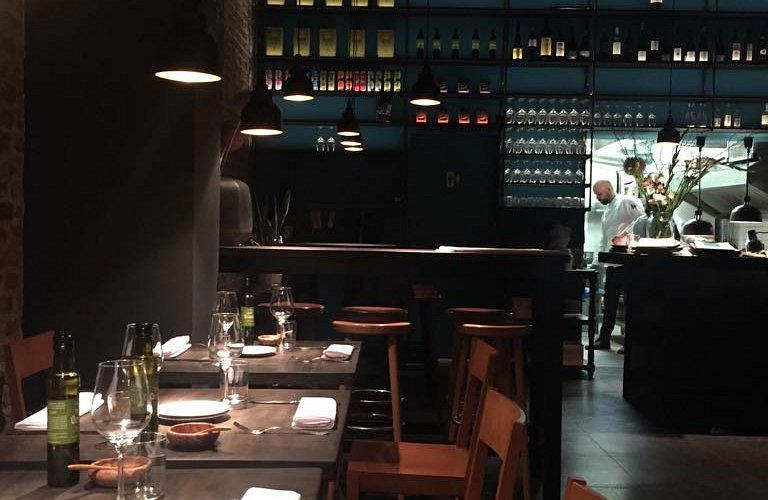
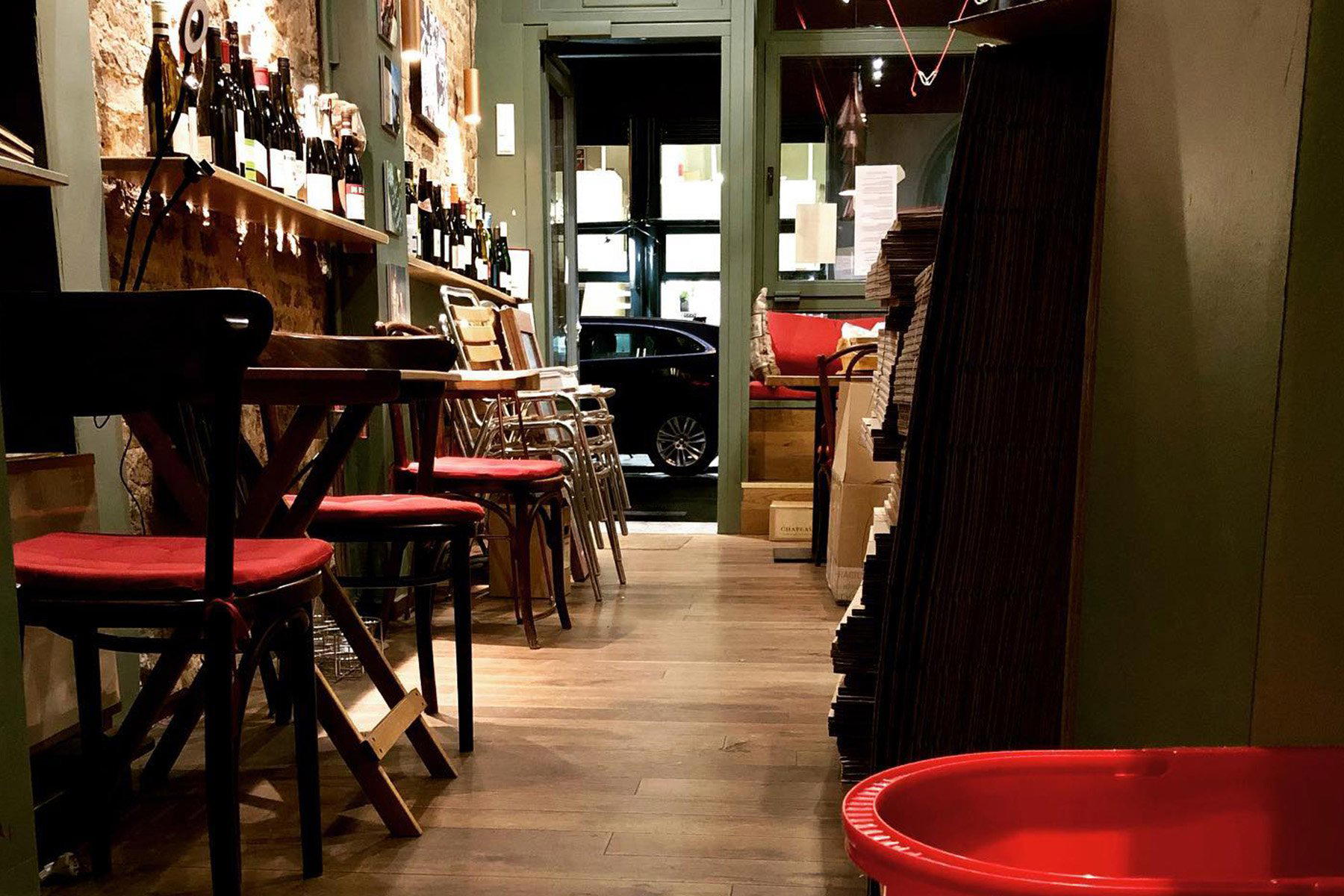
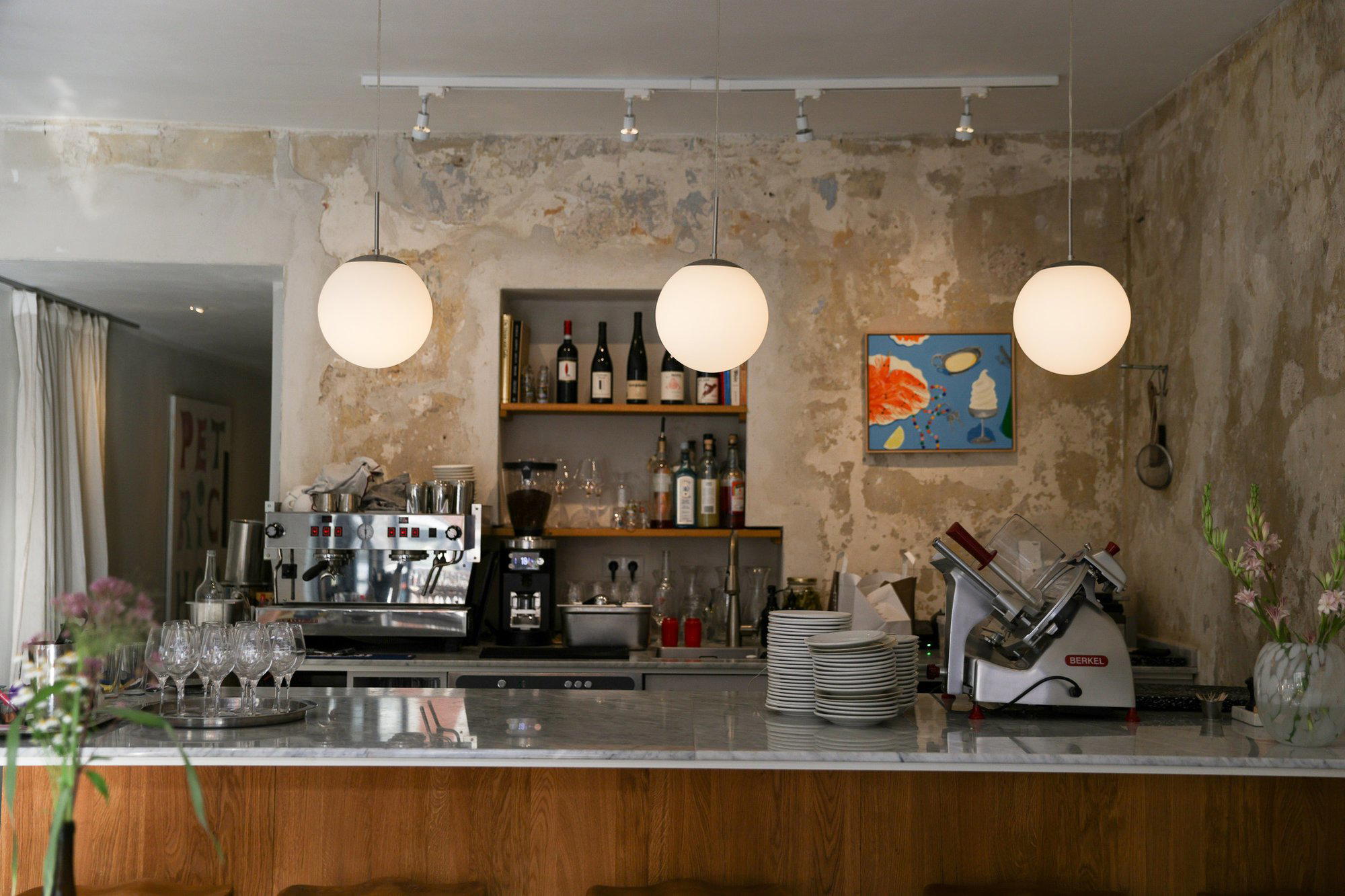
Trendy bistro look with pleasantly relaxed atmosphere, warm Mediterranean-inspired decor, and partial views into the open kitchen from high tables.