Parador La Huella

Parador La Huella sits on Playa Brava in José Ignacio, drawing an international summer crowd to its open-fire grills and wood-fired seafood in a setting that defines the village's particular brand of barefoot glamour. The cooking is grounded in what the Atlantic coast delivers daily, and the atmosphere runs warm from midday through late evening.
 Discover on Pearl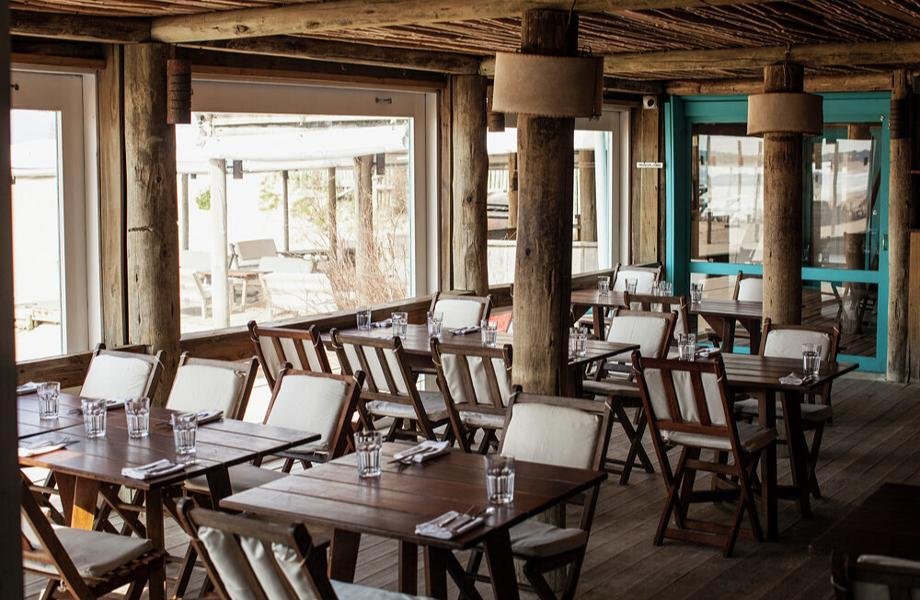
Where the Atlantic Comes to the Table
Arrive at Parador La Huella in the early evening and you understand immediately why José Ignacio has become one of South America's most closely watched summer destinations. The structure sits low against the dunes of Playa Brava, its wooden decks open to the wind off the Río de la Plata estuary, the smell of woodsmoke arriving before you reach the door. This is not a restaurant that tries to compete with its backdrop. It works with it — the fire pits, the salt air, the particular quality of light over the Atlantic at dusk — in a way that has made it a reference point for an entire category of coastal dining.
José Ignacio itself is a small fishing village on Uruguay's Atlantic coast, roughly an hour's drive east of Punta del Este, and the contrast between the two places matters for understanding La Huella. Punta del Este trades in scale and spectacle. José Ignacio operates on restraint: fewer than a thousand permanent residents, no traffic lights, no chain hotels. The dining scene that has emerged here reflects those conditions. Restaurants like La Huella are shaped by what this coast actually produces, not by a supply chain designed to replicate a menu year-round. For related context on the broader regional dining picture, see our full José Ignacio restaurants guide.
The shortlist, unlocked.
Hard-to-book tables, cellar releases, and concierge-planned trips.
Get Exclusive Access →Fire, Coast, and What the Atlantic Delivers
The cooking philosophy at La Huella is built around two facts of geography: proximity to the ocean and the tradition of wood-fire cooking that runs through Uruguayan culinary culture. Uruguay's cattle country and its open-grill asado tradition are well documented, but the coast adds a different register. The fish arriving here , corvina, lenguado, and other Atlantic species , come from waters that haven't been industrially overfished to the degree seen in many Northern Hemisphere fisheries. The sourcing is local by necessity and by practice, and the result is that the menu tracks what is actually available rather than what corporate supply chains make possible.
Wood-fired and open-fire techniques give the kitchen a distinctive approach that sits between the raw coastal informality of a beach shack and the discipline of a serious restaurant. The grilling programme at La Huella has become the signature of the kitchen's identity: fish cooked over direct heat, the char functioning as seasoning, the timing calibrated to preserve moisture in fillets that would collapse under the wrong conditions. This is not technically complex cooking in the way that, say, Le Bernardin in New York City or Aponiente in El Puerto de Santa María engage with seafood , it operates in a different register entirely, one where transparency of ingredient and simplicity of method are the standard against which the kitchen is judged.
The comparison that sits most naturally alongside La Huella isn't with fine-dining seafood programmes in Northern cities. It's with a handful of properties that have built their identity around fire, locality, and a particular landscape: coastal restaurants in Galicia, or the open-grill operations that define the Uruguayan interior. What distinguishes La Huella in that peer set is the setting and the crowd it draws, which together give the food a context that amplifies its appeal. This is also worth noting against the Punta del Este dining scene, where restaurants like L'Incanto and La Bourgogne operate in a more formal register.
The Crowd and the Context
La Huella's international reputation has been built largely through word of mouth among the South American summering class, reinforced by coverage in travel and style publications that follow that circuit. The summer months , December through March in the Southern Hemisphere , bring Argentine, Brazilian, and European visitors who treat José Ignacio as a discreet counterweight to the noisier luxury of Punta del Este. The restaurant functions as a social centre during this period, with tables occupied from lunch through the late evening. Outside peak summer season, José Ignacio contracts significantly, and the rhythm of La Huella reflects that: availability is much more open in the shoulder months.
The atmosphere is deliberately casual without being careless. There's a looseness to the room , sea-worn timber, the hum of conversation, the sound of the fire , that signals the management understands its location. Guests arrive in linen and sandals; the service registers accordingly. The stylish international crowd that La Huella attracts is drawn partly by the food and partly by the social choreography of the room, which functions as an informal gathering point for the village's summer population. This dynamic gives the restaurant an energy during December and January that is difficult to replicate in any other format.
Planning Your Visit
La Huella is located on Los Cisnes, along the Faro de José Ignacio stretch of Playa Brava, in the Departamento de Maldonado. During peak summer season, booking in advance is strongly advised: the combination of limited village capacity and high seasonal demand means walk-in availability at prime dinner hours cannot be counted on, though earlier lunch slots tend to offer more flexibility. Arriving by car is the practical approach from Punta del Este or Montevideo, as José Ignacio has no public transport infrastructure of note. The village is small enough that orientation presents no difficulty once you arrive.
For those building a broader itinerary around the village, the accommodation picture in José Ignacio skews toward boutique estancias and design-led small hotels rather than international chains. See our full José Ignacio hotels guide for the current options, and our bars guide, wineries guide, and experiences guide for what surrounds a meal at La Huella. For those comparing the restaurant to other serious fire-driven cooking programmes globally, references worth holding alongside it include Lazy Bear in San Francisco, Arzak in San Sebastián, and Atelier Moessmer Norbert Niederkofler in Brunico , though the register and ambition differ considerably across that group. For coastal fine dining that operates in a more formal mode, Manzanar in Montevideo offers a useful counterpoint within the Uruguayan context.
Frequently Asked Questions
- What is the signature dish at Parador La Huella?
- The kitchen's identity is built around its open-fire grilling programme. Grilled fish , particularly whole Atlantic species cooked over wood , is the consistent reference point in accounts of the restaurant, with the char and smoke functioning as the primary seasoning rather than secondary decoration. Wood-fired dishes more broadly define the menu's character rather than any single plated item.
- What is the vibe at Parador La Huella?
- Casual by design and social by consequence. The room is built from sea-worn timber, open to the coastal air, and during the Southern Hemisphere summer it attracts a stylish international crowd that treats the restaurant as José Ignacio's informal social hub. The energy is warm and animated in season; considerably quieter outside the December-to-March peak.
- Can I walk in to Parador La Huella?
- Walk-ins are possible but carry real risk during peak summer months, particularly at dinner. The combination of José Ignacio's small scale and La Huella's summer reputation means prime evening slots fill well in advance. Lunch and early-season visits offer better odds for spontaneous arrivals.
- Does Parador La Huella work for a family meal?
- The casual format and beach setting make it accessible for families. The open-air structure and relaxed service mean the room absorbs noise and movement in a way that more formal restaurants in the region do not. The summer crowd spans ages, and the food , grilled fish, wood-fired dishes , is straightforwardly approachable rather than technically intimidating.
- What makes Parador La Huella worth seeking out?
- La Huella sits at the intersection of genuine locality and exceptional setting in a way that is increasingly rare. The cooking is grounded in what the Atlantic coast of Uruguay actually produces, the fire techniques are practised rather than performative, and the context , Playa Brava, the José Ignacio summer scene, the low-key glamour of a village that refuses to scale up , gives the meal a specific character that no amount of technical ambition elsewhere can replicate. It earns its reputation through consistency with its own logic, not through external validation of the kind that Michelin-tracked restaurants in cities like New York or Monte Carlo accumulate.
In Context: Similar Options
These are the closest comparables we have in our database for quick context.
| Venue | Cuisine | Price | Awards | Notes |
|---|---|---|---|---|
| Parador La Huella | A legendary, rustic-chic beachfront restaurant in José Ignacio, famous for its o… | This venue | ||
| Parador la Huella | Uruguayan | Uruguayan | ||
| La Bourgogne | Uruguayan Seafood | Uruguayan Seafood | ||
| L’Incanto | ||||
| Lo de Tere | ||||
| Manzanar |
Need a table?
Our members enjoy priority alerts and concierge-led booking support for the world's most difficult tables.
Get Exclusive AccessThe shortlist, unlocked.
Hard-to-book tables, cellar releases, and concierge-planned trips.
Get Exclusive Access →