Parador la Huella

Parador la Huella defines barefoot luxury dining in Montevideo, where Chef Vanessa González's fire-grilled seafood mastery meets Atlantic beachfront views in Uruguay's most celebrated coastal restaurant, recognized as the country's best by Latin America's 50 Best Restaurants.
 Discover on Pearl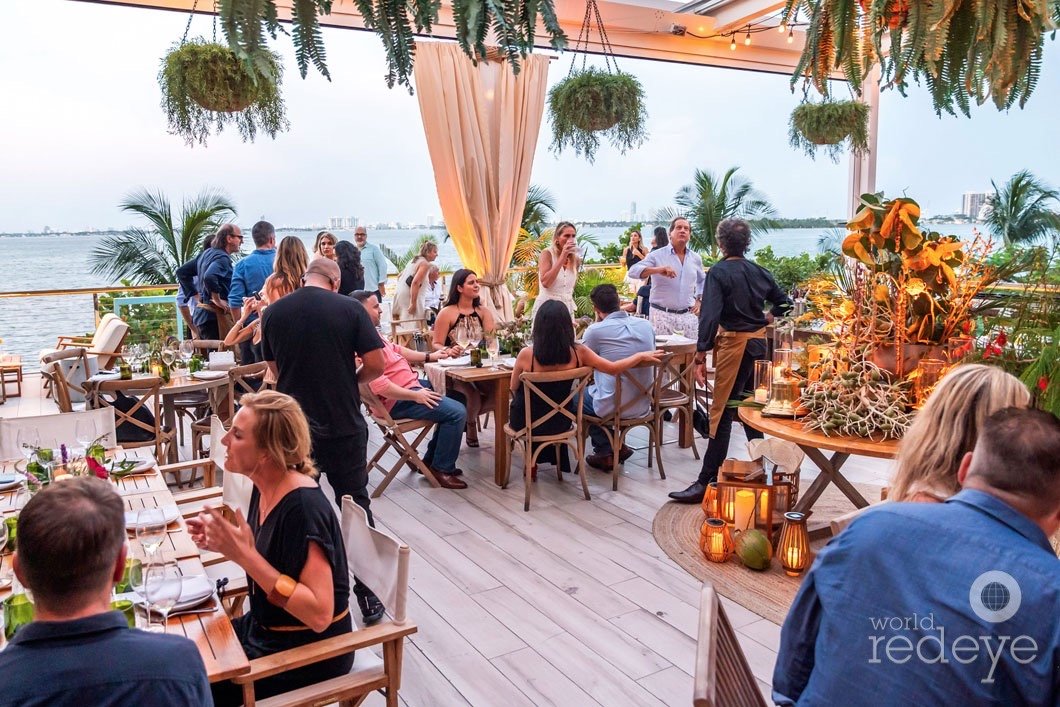
Sand, Smoke, and the Roast That Put José Ignacio on the Map
The road into José Ignacio — a narrow strip of Atlantic coastline roughly two and a half hours east of Montevideo — ends in little more than a lighthouse and a few low-slung buildings. It is the kind of place that empties in winter and fills in January with the particular crowd that prefers remote to resort. In that context, Parador la Huella is less a restaurant than a geographic argument: that the leading cooking in Uruguay does not live in a capital-city dining room but on a beach, around live fire, in a space where salt air is part of the flavor profile.
The building itself is low and open, with a terrace that faces the dunes. Approaching it from the sand, you see the smoke first , a steady curl rising from the parrilla that signals what the kitchen is organized around. This is not smoke as theater. In Uruguayan cooking, the parrilla is infrastructure. The entire southern cone tradition of live-fire cooking rests on the belief that cattle raised on open grassland and cooked directly over hardwood or quebracho coal needs almost nothing else to be complete. Parador la Huella operates inside that tradition while adapting it to a coastal setting: the proteins shift toward the sea, the vegetables come from the surrounding farm region of Maldonado, and the format is lunch-heavy, in keeping with how the beach crowd actually eats.
The shortlist, unlocked.
Hard-to-book tables, cellar releases, and concierge-planned trips.
Get Exclusive Access →Where the Ingredients Come From
Uruguay's position as a sourcing story is underappreciated relative to Argentina's larger marketing footprint. The country runs roughly four million people alongside roughly twelve million cattle, which produces a beef supply that is overwhelmingly grass-fed and largely free-range by default rather than by marketing designation. That ratio matters at a place like Parador la Huella, where the quality of raw ingredients is both the premise and the result. Chef Vanessa González works in a culinary tradition where the sourcing decision is often the cooking decision: choose well at the point of purchase and the fire does the rest.
Beyond beef, the Maldonado coast supplies ingredients that rarely travel further than the day's catch allows. The Atlantic shelf off Uruguay produces corvina, lenguado, and various shellfish that appear on menus along this coastline with a regularity that reflects genuine local abundance rather than a farm-to-table branding exercise. The broader Maldonado department , which includes farming land well inland from the coast , provides vegetables, herbs, and dairy that keep the menu grounded in what the surrounding region actually produces. The result is a sourcing structure that is as much logistical as philosophical: in a small market, cooking local is partly a matter of what is available and fresh, not solely a statement of intent.
Recognition and Competitive Context
Opinionated About Dining, one of the more data-driven restaurant ranking systems in use, has tracked Parador la Huella across three consecutive years of its South America list: ranked 34th in 2023, climbing to 11th in 2024, then settling at 27th in 2025. That arc , a sharp rise followed by a modest retreat , is a common pattern for restaurants in locations that attract seasonal surges of attention. What the three-year presence confirms is that the restaurant belongs to a small tier of South American tables that specialists consider worth traveling to, distinct from the Buenos Aires and São Paulo addresses that tend to dominate the regional conversation.
For context: the upper bracket of the OAD South America list is crowded with technically ambitious urban restaurants, some with European-trained chefs and tasting-menu formats designed to accumulate critical credentials. Parador la Huella's position in that list with a wood-fire, ingredient-led approach and a seaside parador format is an editorial statement from the ranking itself , that technical ambition is not the only vector along which cooking can be taken seriously. The Google rating of 4.4 across more than 4,000 reviews points in the same direction: this is not a restaurant that trades primarily on exclusivity or scarcity but on consistent execution at meaningful volume.
Restaurants operating at this level in comparable coastal destinations , think the kind of fire-forward, locally sourced format that has emerged in various forms from California to coastal Spain, from the lineup at Lazy Bear in San Francisco to the seafood-centric philosophy at Aponiente in El Puerto de Santa María , tend to share one structural feature: they are built around a place as much as a kitchen. The terroir of the setting is part of what you are eating. Parador la Huella is the Uruguayan instance of that model.
The Punta del Este Comparison
José Ignacio sits within the broader gravitational field of Punta del Este, which draws the region's high-spending summer crowd and generates a restaurant scene of its own. L'Incanto in Punta del Este and La Bourgogne in y Av del Mar represent the more formal, European-influenced end of that coastal dining spectrum. Parador la Huella positions itself differently: it is not trying to be the sophisticated dining room of a beach resort. It is the beach, with fire and fish and a parrilla that operates as the central organizing principle rather than as one section of a broader menu. That difference in philosophy is why it draws its own audience rather than competing directly with the Punta del Este hotel-dining circuit.
The original and better-known version of the restaurant is Parador La Huella in José Ignacio, which established the format and the reputation. The Montevideo expression of the concept carries that lineage into an urban setting, asking whether the coastal sourcing logic and live-fire approach translate when the dunes are no longer visible. That is a different editorial question and worth tracking on its own terms.
Planning Your Visit
Parador la Huella operates a limited weekly schedule that reflects the rhythms of the coastal community it serves. The restaurant is closed Monday through Thursday, open Friday and Saturday for both lunch (12:30 to 4:30 pm) and dinner (8 to 11:30 pm), and Sunday for lunch only (12:30 to 4:30 pm). The lunch window is the primary service in terms of setting and atmosphere: a long, open midday at the terrace in summer is the format the kitchen is built for. Arriving in the January-February high season without a reservation is a gamble that the 4,000-plus review volume suggests rarely pays off. If you are building an itinerary around the region, see our full Montevideo restaurants guide for context on the broader dining scene, and our full Montevideo hotels guide for accommodation options. The Montevideo bars guide, wineries guide, and experiences guide round out the regional picture. For a local comparison in the capital, Manzanar represents a different but complementary angle on Uruguayan cooking in an urban format.
The shortlist, unlocked.
Hard-to-book tables, cellar releases, and concierge-planned trips.
Get Exclusive Access →Frequently Asked Questions
Budget Reality Check
A fast peer set for context, pulled from similar venues in our database.
| Venue | Price | Awards | Notes |
|---|---|---|---|
| Parador la Huella | Opinionated About Dining Top Restaurants in South America Ranked #27 (2025); Opi… | This venue | |
| La Bourgogne | Uruguayan Seafood | ||
| L’Incanto | |||
| Manzanar | |||
| Lo de Tere | |||
| Parador La Huella |
Need a table?
Our members enjoy priority alerts and concierge-led booking support for the world's most difficult tables.
Get Exclusive AccessThe shortlist, unlocked.
Hard-to-book tables, cellar releases, and concierge-planned trips.
Get Exclusive Access →