Our verdict
Paprykarz Fish Market sits on Aleja Papieża Jana Pawła II in Szczecin, drawing on the city's position at the confluence of Baltic trade routes and Central European fish culture. The name references paprykarz szczeciński, the tinned fish paste that put this port city on Poland's culinary map, grounding the restaurant firmly in local sourcing tradition. For visitors tracing Poland's seafood heritage, this address earns serious attention.

Pearl is the En Primeur Club membership app — saves, bookings, and concierge access live there. Same editors, same standards.
- Address
- Aleja Papieża Jana Pawła II 42, 70-415 Szczecin, Poland
- Phone
- +48914332233
- Hours
- Mon–Fri 12–11 PMSat 12 PM–12 AMSun 12–10 PM
- Website
- paprykarz.com.pl
- Directions
- Get directions
- Booking
- Book on the venue's website
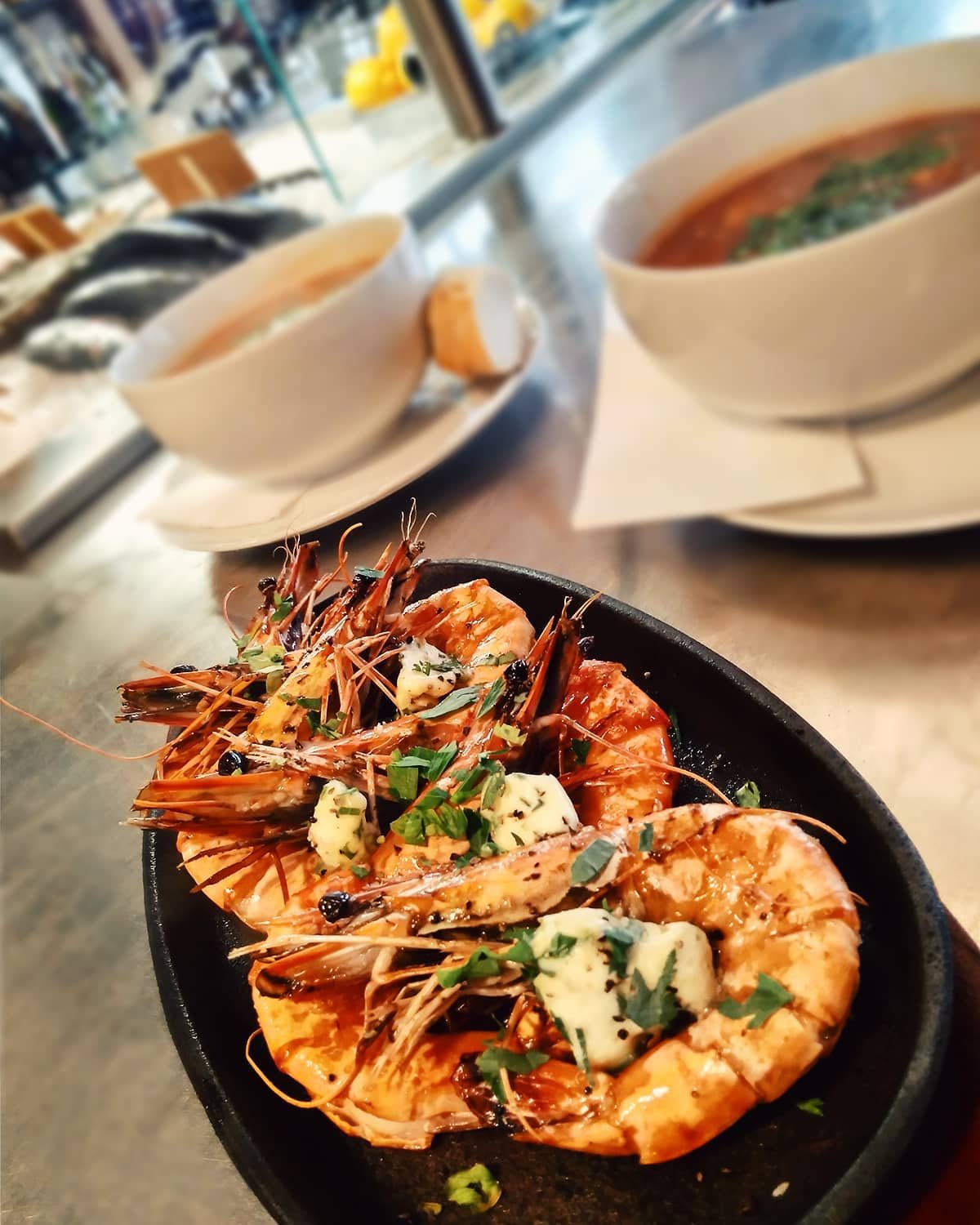
The menu
What to order
- Oysters
- Grilled squid
- Shrimp
- Mussels
- Octopus
A Port City's Relationship With Fish
Szczecin sits closer to the Baltic than almost any major Polish city, and its relationship with seafood runs deeper than most coastal towns. The Odra River delta, the nearby Szczecin Lagoon, and direct access to Baltic fishing fleets have shaped the city's food culture for centuries. In that context, a fish market concept here is not a novelty proposition — it is a return to something the city has always understood. Paprykarz Fish Market, at Aleja Papieża Jana Pawła II 42, plants itself squarely in that tradition, with a name that invokes paprykarz szczeciński, the spiced tinned fish paste that became one of post-war Poland's most recognizable preserved-fish products, originally developed in Szczecin's own canning industry.
That historical footnote matters more than it might initially appear. Paprykarz szczeciński — a blend of minced marine fish, rice, tomato paste, and paprika, was developed at the Gryf fish processing plant in the 1960s and distributed across the Polish People's Republic. It became a staple precisely because Szczecin had both the fishing infrastructure and the processing capacity to produce it at scale. A restaurant bearing that name in this city is making a deliberate statement about place and provenance, not borrowing a brand for decoration.
Where the Odra Meets the Baltic Table
The address on Aleja Papieża Jana Pawła II places the venue along one of Szczecin's main arterial streets, a stretch that connects the city's historic centre with its broader commercial districts. Szczecin's dining scene has expanded noticeably over the past decade as the city has drawn more visitors from Germany, Berlin is roughly two and a half hours by train, and as younger residents have pushed demand for more considered food concepts. The fish market format fits neatly into a category that has grown across Polish cities: casual-serious eating, where the sourcing and the product quality carry the experience rather than elaborate kitchen technique or high-end theatre.
That category now occupies a distinct position in Poland's restaurant culture. Across the country, from Arco by Paco Pérez in Gdańsk at the fine-dining end to direct port-adjacent fish stalls in Trójmiasto, the market for Baltic and river fish served with genuine attention to sourcing has broadened considerably. Szczecin, with its direct connection to fishing infrastructure, is a logical city for a concept built around that proposition.
Sourcing as the Central Argument
Fish market concepts live or die on one variable: the actual proximity of the supply chain. In a landlocked city, the format is largely aspirational. In Szczecin, the geography makes the claim credible. The Szczecin Lagoon, shared with Germany across the border, supports commercial fishing for species including perch, pike-perch, eel, and bream. The Baltic, accessible through the Świna strait, brings in cod, herring, sprat, and flatfish. A Szczecin fish market that sources regionally is drawing on a genuinely short supply chain, not importing product from distant markets and dressing it in local vocabulary.
This matters because the quality differential between fresh Baltic fish handled quickly and the same fish after multi-day transit is significant. Herring, for example, deteriorates faster than most freshwater species and rewards proximity to the catch more than almost any other Baltic staple. Pike-perch, the zander that appears across Central European menus, is at its finest when sourced from local freshwater systems rather than aquaculture operations further afield. A fish market format in Szczecin has structural advantages that the same concept in Warsaw or Kraków simply cannot replicate.
For comparison, the broader Polish dining scene at the premium end, venues like Bottiglieria 1881 Restaurant in Kraków or hub.praga in Warsaw, focuses more heavily on wine programs and modern European technique. Seafood-led concepts occupy a smaller niche within that range of serious dining, which is part of what makes a well-executed fish market format in a port city like Szczecin a different kind of proposition. You can find fish on menus across Poland, but the sourcing logic is harder to replicate inland. Hashi Sushi in Gdansk demonstrates how Baltic coastal cities have developed credible seafood-forward dining identities of their own, distinct from the capital's restaurant culture.
The Fish Market Format in Practice
Fish market concepts, as a dining format, sit in a particular register: more transactional than a tasting menu restaurant, more considered than a quayside shack. The format typically involves some degree of choice at the counter or display, selecting by species, weight, or preparation method, which puts the sourcing conversation front and centre. The product is the argument, and the kitchen's job is to not get in the way of it. When that contract between format and execution holds, these are among the most satisfying ways to eat seafood in any city. When it breaks down, the absence of technique becomes conspicuous.
Szczecin's dining scene, covered in depth in our full Szczecin restaurants guide, has developed enough critical mass that visitors now have genuine choices rather than a single default option. Fish market dining sits within that broader ecosystem, appealing to visitors who want to eat something specific to place rather than a menu that could plausibly appear in any European city. For that traveller, the one interested in what Szczecin actually produces and has historically eaten, a fish market built around Baltic and Lagoon sourcing is the more direct answer than any number of modern European menus.
Poland's regional dining scene has broadened significantly in recent years, with serious work happening in cities from Muga in Poznań to Kwestia Czasu in Białystok and Cudne Manowce in Olsztyn. Szczecin's particular contribution to that broader picture is tied to its port identity and its preserved-fish heritage, and a restaurant format that makes that heritage the organizing principle is, in this city, an entirely coherent response to what the geography offers.
Planning Your Visit
Paprykarz Fish Market is located at Aleja Papieża Jana Pawła II 42, in central Szczecin. The city is accessible by train from Berlin (approximately two and a half hours), making it a plausible day trip or overnight stop for visitors already in northeastern Germany. From Warsaw, the train journey runs around five to six hours, making Szczecin more naturally a dedicated destination than a stopover. Booking details, current hours, and contact information are best confirmed directly with the venue or through current local listings, as these details were not available at the time of writing.
Frequently asked questions
Is Paprykarz Fish Market child-friendly?
Fish market-format venues in general run on a casual, counter-style model that tends to suit families with children better than tasting menu restaurants do. Szczecin itself is a practical, unpretentious port city, and the fish market concept at Aleja Papieża Jana Pawła II 42 fits that register. For specific family facilities or seating arrangements, contacting the venue directly before visiting is advisable.
What kind of setting is Paprykarz Fish Market?
The venue sits on Aleja Papieża Jana Pawła II, one of Szczecin's main arterial streets, placing it in a central and accessible part of the city. Fish market concepts occupy a specific format register: more transactional and informal than a seated restaurant, built around display, selection, and proximity to the product. Expect a working, produce-led atmosphere rather than a conventional dining room.
Does Paprykarz Fish Market source its fish locally from Baltic suppliers?
Szczecin's geography makes local Baltic sourcing a plausible operational foundation: the city sits on the Odra river close to the Baltic coast, within reach of established Polish fishing ports. The fish market format as a concept depends on short supply chains to justify its premise, and Szczecin is better positioned for that than most Polish cities. For sourcing specifics or supplier provenance, the venue itself is the authoritative source.
What should I order at Paprykarz Fish Market?
Szczecin's position as one of Poland's closest major cities to the Baltic makes it a reasonable source point for herring, cod, and flatfish species that define the region's seafood tradition. A fish market format typically centres ordering around whatever is freshest that day rather than a fixed menu, so the counter display is the most reliable guide. Specific dish recommendations are best confirmed with staff on arrival.
What's the address for Paprykarz Fish Market?
Paprykarz Fish Market is located at Aleja Papieża Jana Pawła II 42, 70-415 Szczecin, Poland, Szczecin.
A Quick Peer Check
Comparable venues nearby, for context on price, style, and recognition.
| Venue | Cuisine | Price | Awards | Notes |
|---|---|---|---|---|
| Paprykarz Fish MarketThis venue — the venue you are viewing | Seafood Market | $20–30 | Not listed | Not listed |
| Shrimp Bistro | Shrimp Fusion Bistro | $20–30 | Not listed | Jatki |
| NOOKS | Modern Surf & Turf Seafood Grill | $30–50 | Michelin Plate | Wilda |
| Ato Ramen | Modern Vegan Ramen | $10–20 | Not listed | Stare Miasto |
| Choco&Latte Bistro-Cafe | Polish Bistro-Cafe with Desserts and Coffee | $10–20 | Not listed | Boguszów-Gorce |
| Kuchnia Manhattan | Authentic Polish Bistro | $10–20 | Not listed | city center |
Continue exploring
More in Szczecin
Restaurants in Szczecin
Browse all →
Wineries in Szczecin
Browse all →
Details
- Intimate
- Cozy
- Casual Hangout
- Date Night
- Group Dining
- Open Kitchen
- Beer Program
- Local Sourcing
- Sustainable Seafood
- A La Carte
- Small Plates
- Vegetarian Friendly
- Gluten Free Options
Current opening hours
- Monday
- 12–11 PM
- Tuesday
- 12–11 PM
- Wednesday
- 12–11 PM
- Thursday
- 12–11 PM
- Friday
- 12–11 PM
- Saturday
- 12 PM–12 AM
- Sunday
- 12–10 PM
Hours can change for holidays and private events. Last verified .
Intimate atmosphere with a focus on fresh, simple seafood preparations evoking port city fish markets.