Pakùpakù
Our verdict
Pakùpakù sits on Rue Vautier in Carouge, the Sardinian-influenced quarter just south of Geneva that has long operated as the city's most architecturally distinct dining neighbourhood. The address places it within a compact scene where French bistro traditions and newer farm-focused formats compete for the same local clientele. Visit our full Carouge guide for neighbourhood context before booking.

Pearl is the En Primeur Club membership app — saves, bookings, and concierge access live there. Same editors, same standards.
- Address
- Rue Vautier 43, 1227 Carouge, Switzerland
- Phone
- +41223010003
- Hours
- Mon ClosedTue–Sat 12–2 PM, 7–10:30 PMSun Closed
- Website
- pakupaku.ch
- Directions
- Get directions
- Booking
- Book on Zenchef
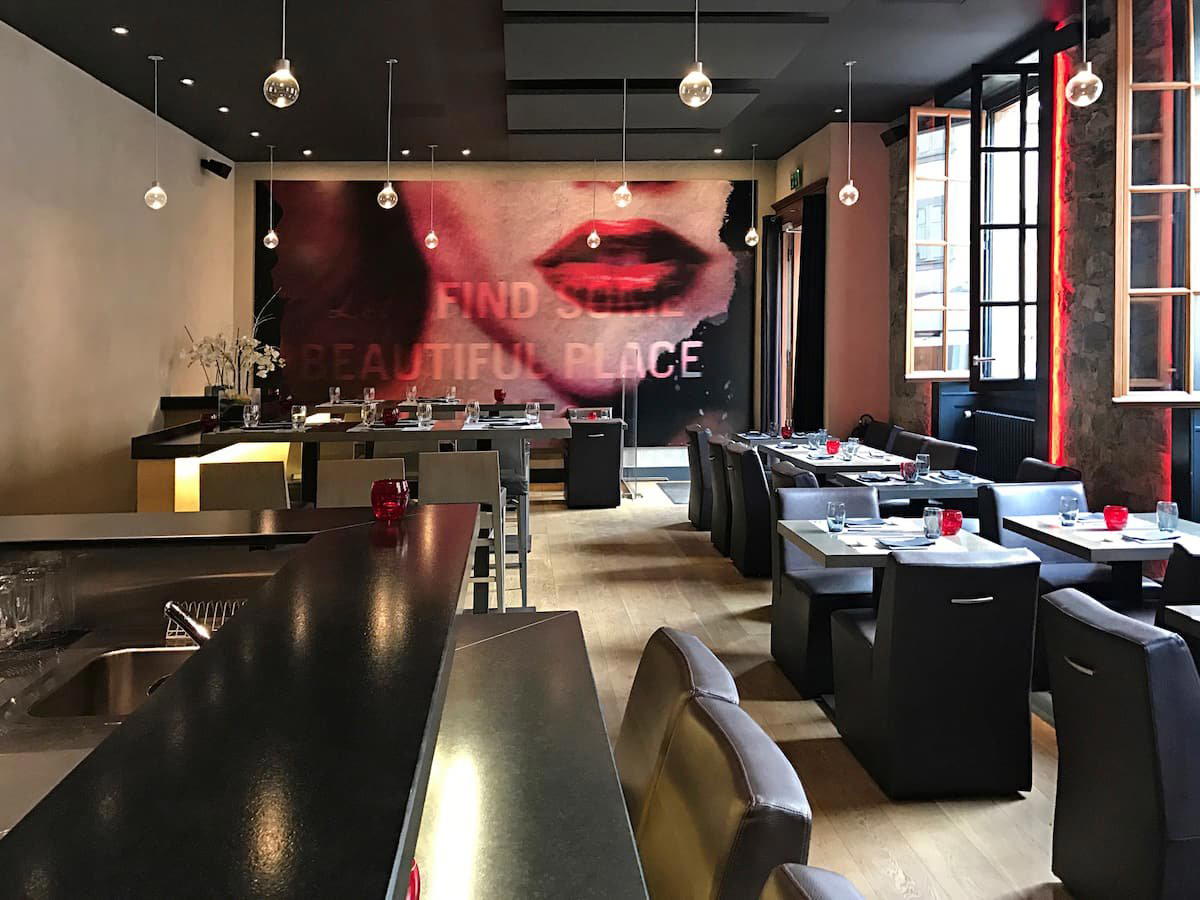
The menu
What to order
- Eggplant in miso sauce
- Crispy tacos with salmon tartare
- Black cod miso
- Crispy beef
Carouge and the Geometry of a Small Dining Scene
Carouge was designed in the eighteenth century by the Kingdom of Sardinia as a deliberate counterpoint to Geneva, and the urban logic of that origin has never quite disappeared. The streets are wider, the courtyards more open, the general disposition more Mediterranean than the Calvinist city to the north. Dining here has followed a similar pattern: smaller rooms, more idiosyncratic ownership, less pressure to perform according to the conventions of the international hotel corridor. The result is a neighbourhood where individual addresses carry more weight than brand affiliations, and where the dining identity of a single street can shift register between a Classic French bistro and something considerably harder to categorise.
Pakùpakù occupies a position on Rue Vautier 43, a street that sits within the quarter's residential core rather than on its more trafficked commercial edges. That address matters. Carouge's dining scene is small enough that location within it functions as a signal, separating the establishments that draw Geneva's dining public across the Arve from those that serve primarily the neighbourhood itself. Rue Vautier is firmly in the latter category, which tends to mean lower ambient noise, fewer tourists, and a clientele with direct opinions about what they want from a local address.
What the Name Signals
The name Pakùpakù is not French, not Swiss-German, and not Italian, the three dominant culinary idioms of the Swiss table. That alone positions the address outside the conventional expectations of Carouge dining, where the main competitive tension runs between Modern French formats and farm-to-table propositions in the middle price band. Names that resist easy regional attribution in Swiss dining contexts often indicate either a personal culinary biography that crosses several traditions, or a deliberate effort to signal distance from the French-continental mainstream. Both of those positions carry weight in a city that has, over the last decade, become more genuinely international in its dining expectations without losing its appetite for rigour and precision.
Swiss diners, and particularly those in the French-speaking western cantons, bring a set of expectations to the table that is distinct from both the French and the Italian models they neighbour. Portion discipline, technical consistency, and what might be called procedural seriousness are valued attributes, whether the format is a neighbourhood café or a destination counter. Against that backdrop, an address with a name that gestures toward a different cultural register creates a specific kind of anticipation.
Cultural Roots and the Currency of Difference in Swiss Dining
Switzerland's fine dining conversation is largely conducted at addresses that operate within European high-classical traditions. The multi-Michelin-starred tier, represented nationally by destinations such as Hotel de Ville Crissier in Crissier, Schloss Schauenstein in Fürstenau, and Cheval Blanc by Peter Knogl in Basel, draws on French technique and Alpine product as its primary vocabulary. Even at the more experimental end of the national scene, addresses like Memories in Bad Ragaz, 7132 Silver in Vals, or focus ATELIER in Vitznau tend to ground their innovation within European product logic. The country's relationship with non-European culinary traditions at the serious end of the market is narrower than its cosmopolitan self-image sometimes suggests.
That context is what makes a Carouge address with a non-European-sounding name worth paying attention to. If the kitchen is drawing on traditions outside the French-Swiss-Italian triangle, it operates in a category where there is limited direct competition at the local level, even as it sits in a neighbourhood whose dining frame of reference is firmly set by addresses like Indian Rasoi on the more casual end. The space between casual ethnic dining and the French-technical mainstream is where the most interesting moves in Swiss mid-market dining are currently being made, in Geneva as much as in Zurich, Sankt Gallen, Lucerne, or St. Moritz.
For a useful international comparison, the kind of cultural synthesis that produces a name like Pakùpakù in a European neighbourhood context has a parallel in how addresses such as Atomix in New York City or Le Bernardin in New York City each staked out a cultural position that was legible to a sophisticated diner before the menu was even read. The name is itself editorial.
Planning a Visit
Pakùpakù is located at Rue Vautier 43, 1227 Carouge, a short tram or bus ride from central Geneva via the Carouge stops on line 15 or 17. The neighbourhood is compact enough to walk from the Carouge-Marché tram stop in under ten minutes. Carouge addresses in this residential pocket sometimes operate without a visible online booking presence, relying instead on phone or walk-in custom, which is consistent with the neighbourhood's preference for a quieter, more direct relationship with its regulars. For a broader view of what the quarter offers before or after a visit to Pakùpakù, the full Carouge restaurants guide covers the neighbourhood's dining range in useful detail.
Frequently asked questions
Can I bring kids to Pakùpakù?
Nothing in the available record for Pakùpakù at Rue Vautier 43 indicates an adults-only policy. Carouge as a neighbourhood runs at a relaxed residential pace, which generally makes its dining rooms more tolerant of families than the formal addresses closer to central Geneva. check the venue's official channels before booking with young children to confirm seating arrangements.
How would you describe the vibe at Pakùpakù?
Pakùpakù sits on Rue Vautier in Carouge, a quarter the Kingdom of Sardinia laid out in the eighteenth century with wider streets and a more open grain than Geneva proper. That urban character tends to produce dining rooms that feel less ceremonial than the city's lakeside addresses. The name itself signals something outside the Franco-Italian-Swiss axis that dominates the Swiss table, which suggests a room with a distinct point of view rather than a conventional fine-dining posture.
Is Pakùpakù the kind of restaurant that reflects a non-European culinary tradition within the Geneva area?
The name Pakùpakù falls outside French, Italian, and Swiss-German — the three languages that shape most restaurant identities in this part of Switzerland. That positions Pakùpakù as a notable exception in Carouge, where the dining scene largely operates within European classical conventions. Switzerland's multi-Michelin-starred addresses are almost exclusively European in orientation, which makes any kitchen in Geneva's orbit working from a different cultural starting point relatively rare in this market.
What's the signature dish at Pakùpakù?
The name Pakùpakù sits outside the three dominant culinary idioms of Switzerland — French, Swiss-German, and Italian — which points toward a kitchen working in a different register entirely. For current menu information, reaching out directly to the restaurant at Rue Vautier 43, Carouge is the most reliable route.
What's Pakùpakù's location?
Pakùpakù is located at Rue Vautier 43, 1227 Carouge, Switzerland, Carouge.
What's the best way to book Pakùpakù?
Carouge is accessible from central Geneva via tram lines 15 and 17, so visiting the address at Rue Vautier 43 in person is one practical option for making a reservation. Checking third-party booking platforms that cover the Geneva dining scene is another avenue worth trying.
Budget and Context
Comparable venues nearby, for context on price, style, and recognition.
| Venue | Cuisine | Price | Awards | Notes |
|---|---|---|---|---|
| PakùpakùThis venue — the venue you are viewing | Modern Japanese Izakaya | $30–50 | Not listed | Not listed |
| Indian Rasoi | Modern Indian Fusion | $50–100 | Not listed | Carouge, Modern Indian Fusion |
| Sabi | Modern Asian-French Fusion | Not listed | Not listed | Carouge, Modern Asian-French Fusion |
| L'Écorce | Modern French Bistro | $50–100 | Michelin Plate | Vieux Carouge, Modern French Bistro |
| Café des Négociants | Traditional French Bistro | $50–100 | Not listed | Vieux Carouge, Traditional French Bistro |
| Ivy 23 | Modern French Bistro | $30–50 | Michelin Bib Gourmand | Carouge, Modern French Bistro |
Continue exploring
More in Carouge
Restaurants in Carouge
Browse all →
Bars in Carouge
Browse all →
Hotels in Carouge
Browse all →

Details
- Modern
- Trendy
- Cozy
- Lively
- Date Night
- Group Dining
- Casual Hangout
- Open Kitchen
- Extensive Wine List
- Small Plates
- A La Carte
- Vegetarian Friendly
- Vegan Options
Current opening hours
- Monday
- Closed
- Tuesday
- 12–2 PM, 7–10:30 PM
- Wednesday
- 12–2 PM, 7–10:30 PM
- Thursday
- 12–2 PM, 7–10:30 PM
- Friday
- 12–2 PM, 7–10:30 PM
- Saturday
- 12–2 PM, 7–10:30 PM
- Sunday
- Closed
Hours can change for holidays and private events. Last verified .
Modern and elegant with cozy, trendy decor, warm lighting, and an energetic yet welcoming vibe.