Indian Rasoi
Indian Rasoi brings subcontinental cooking to Carouge's compact dining scene, occupying a corner of the Geneva municipality where French-influenced bistros dominate. The kitchen works within a tradition that prizes spice layering and long preparation over speed, positioning it as an outlier in a neighbourhood otherwise defined by European cooking. For anyone seeking that contrast, the address on Rue Jacques-Dalphin is the reference point.
Pearl is the En Primeur Club membership app — saves, bookings, and concierge access live there. Same editors, same standards.
- Address
- Rue Jacques-Dalphin 54, 1227 Genève, Switzerland
- Phone
- +41223000609
- Website
- indianrasoi.ch
- Directions
- Get directions
 Saves & bookings on Pearl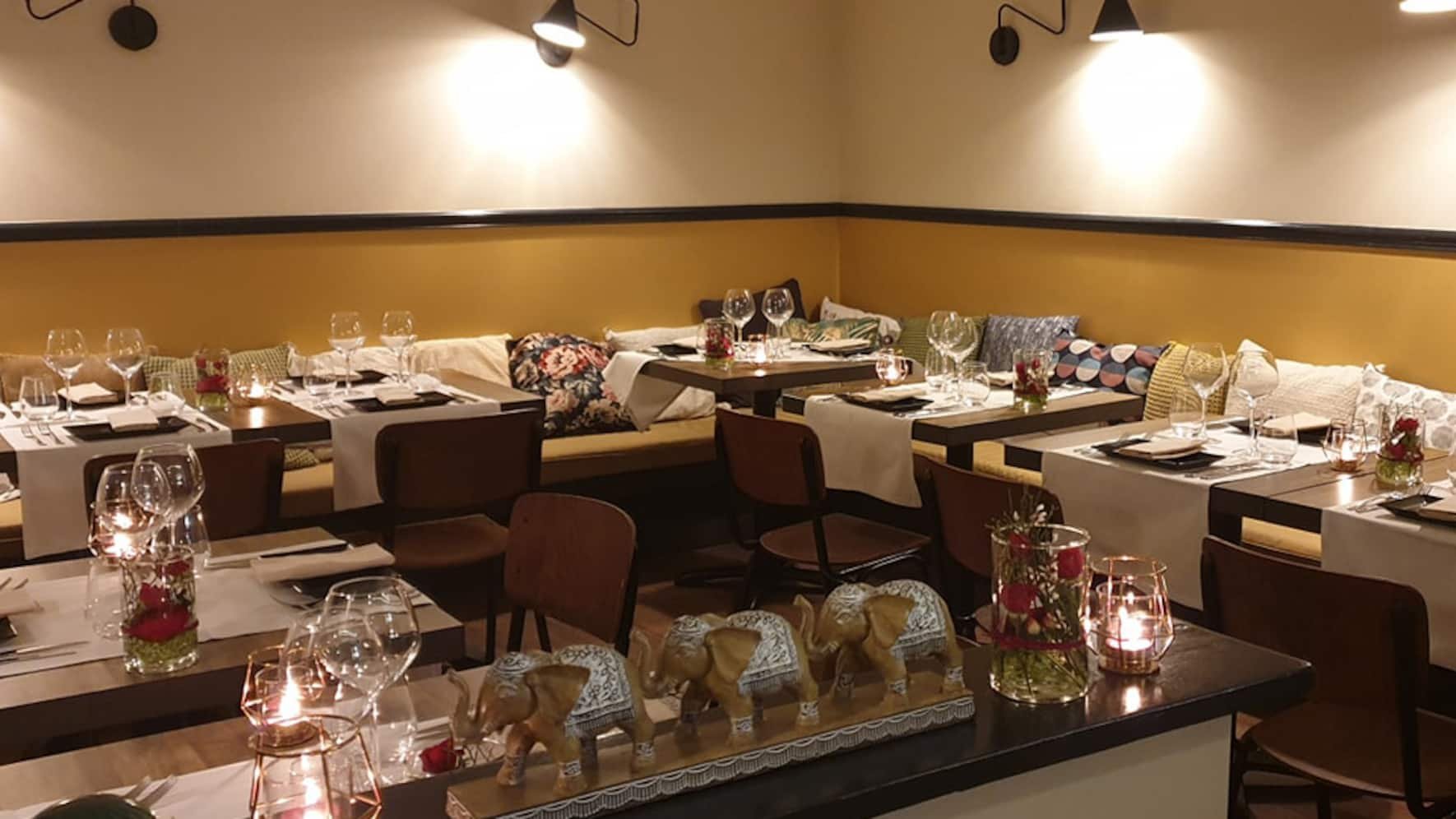
Where Spice Meets a French-Speaking Street
Carouge is a neighbourhood built on a specific culinary grammar. The bistros along its arcaded streets, places like Bistrot du Lion d'Or, L'Artichaut, and L'Écorce, operate within French and French-adjacent traditions, pricing in the €€ bracket and cooking to a clientele shaped by Genevan tastes. Into that context, Indian Rasoi at Rue Jacques-Dalphin 54 introduces an entirely different logic: spice architecture built over hours, not minutes, and sourcing frameworks that reach back to the subcontinent's regional larders rather than Burgundy or the Alps.
That contrast is worth naming directly. In a municipality where farm-to-table French cooking, as practiced at Ivy 23, and classic café culture, as embodied by Café des Négociants, represent the dominant register, a serious Indian kitchen is not merely an alternative choice, it is a structural departure. The question worth asking is not whether Indian Rasoi fits the neighbourhood's pattern, but what it contributes by not fitting it at all.
The Ingredient Logic Behind Indian Cooking in Switzerland
Indian cooking, when done with any seriousness, is among the more ingredient-dependent cuisines on earth. The layering of dried chilies, whole spices, fresh aromatics, and fermented or slow-reduced bases cannot be approximated with generic substitutes without the dish collapsing into something recognisably wrong. This creates a particular challenge for Indian restaurants operating far from the source markets of Mumbai, Chennai, or Delhi: either the kitchen commits to specialty sourcing, importing dried Kashmiri chilies, proper hing, specific regional lentils, and cold-pressed mustard oils, or it compromises the architecture of flavour that defines the cuisine.
Switzerland's position as a premium import market for specialty foods means that serious operators here have more sourcing options than they would in, say, a mid-sized German city. The infrastructure that supports the country's broader gourmet restaurant culture, think the supply chains that sustain three-Michelin-star kitchens like Hotel de Ville Crissier in Crissier or Cheval Blanc by Peter Knogl in Basel, creates a distribution environment in which specialty ingredients can reach smaller restaurants too. Whether Indian Rasoi works within that supply network or maintains its own sourcing relationships is the kind of detail that separates a kitchen cooking the real thing from one cooking an approximation of it.
Reading the Menu Through a Regional Lens
Indian cuisine is not monolithic, and any restaurant presenting it as such is already making an editorial choice that narrows the kitchen's range. The sub-cuisines of Kerala, Punjab, Bengal, and Rajasthan share almost no ingredient logic beyond certain base aromatics. A menu that leans Punjabi will emphasise dairy, wheat, and tandoor-charred proteins; one that skews to the South will work with tamarind, coconut, and fermented rice. Geneva diners encountering Indian food primarily through earlier-generation restaurants, where Anglicised curry-house conventions flattened regional distinctions, may not immediately recognise the difference, but a kitchen committed to specificity will signal it in the sourcing and the heat profile of its dishes.
At the level of the broader Swiss dining scene, this kind of regional specificity in non-European cuisines remains relatively rare. The Michelin-starred tier in Switzerland, from Schloss Schauenstein in Fürstenau to Memories in Bad Ragaz and IGNIV Zürich by Andreas Caminada, is overwhelmingly European in its foundations. Outside that tier, the country's restaurant culture does support a wider range of cuisines, but the depth of execution in subcontinental cooking across Swiss cities is uneven. Carouge, as a satellite of Geneva with its own distinct commercial identity, sits in an interesting position: small enough that any given cuisine operates as the neighbourhood's primary representative of that tradition, which raises the stakes for execution.
Vegetarian Cooking as a Structural Feature, Not an Afterthought
One of Indian cooking's distinguishing features on the European restaurant scene is that vegetarian dishes are not adapted from meat-based templates, they are primary constructions with their own internal logic. A proper dal makhani is not a vegetarian concession; it is a dish that requires overnight cooking, specific lentil varieties, and a reduction process that takes longer than most European kitchens allocate to any single component. The same is true of dishes built around paneer, eggplant, or specific legume preparations. In a city like Geneva, where diners skew internationally minded and dietary diversity is common, a kitchen that takes its vegetarian programme seriously is not offering a niche menu, it is addressing a substantial segment of the room.
For comparison, consider how seriously the vegetarian dimension is treated at the more technically exacting end of Swiss dining. At places like 7132 Silver in Vals or focus ATELIER in Vitznau, plant-based cooking receives the same technical rigour as protein-centred dishes. Indian cooking, when properly executed, operates on a similar principle by default, the vegetarian side of the menu is where much of the technique lives.
Carouge's Place in the Wider Dining Context
Visitors plotting a broader Swiss dining itinerary will note that the country's headline restaurant addresses cluster in Zürich, Basel, and the Vaud region. Geneva proper has its own serious dining culture, and Carouge extends that culture into a more village-scaled setting. The neighbourhood's character, quieter streets, independent operators, a slightly more relaxed pace than central Geneva, means that its restaurants generally trade on regularity and neighbourhood loyalty rather than destination dining tourism. That dynamic applies across cuisines. For a visitor arriving from, say, a meal at Einstein Gourmet in Sankt Gallen or Da Vittorio in St. Moritz, Indian Rasoi sits in a different register entirely, closer to Colonnade in Lucerne in terms of neighbourhood positioning than to destination fine dining.
That positioning is not a criticism. Particularly instructive meals in any city come from kitchens that cook for a returning local clientele rather than a rotating visitor base. The discipline required to keep a neighbourhood room loyal across years is different from the discipline required to impress a one-time reviewer, and often more revealing of what the kitchen actually does well. For diners who want to understand Carouge's full dining picture rather than just its European coordinates, nearby dining options help frame the area.
Planning Your Visit
The restaurant occupies the address at Rue Jacques-Dalphin 54 in the 1227 postal zone, technically falling within the Carouge municipality that borders Geneva's southern edge. The location is accessible from central Geneva by tram, with the neighbourhood well-served by public transport lines that connect it to the city's main stations. The restaurant is a modern Indian fusion restaurant at Rue Jacques-Dalphin 54, 1227 Genève, Switzerland.
For diners calibrating expectations against the broader scene: the restaurant operates in a neighbourhood where French-tradition bistros at the €€ price point set the surrounding context. Those planning a wider Geneva or Swiss itinerary might also consider how the city's Indian dining options compare to the technical depth visible at internationally placed restaurants like Le Bernardin in New York City or the Korean-American fine dining model represented by Atomix in New York City, not as direct peers, but as reference points for what serious ethnic-cuisine execution looks like when it fully commits to sourcing and technique.
- pani puri
- lamb biryani
- chicken tandoori
- samosas
- naan
- kulfi ice cream
- Malabar scallops
- masala zucchini
Comparable Spots, Quickly
Comparable venues nearby, for context on price, style, and recognition.
| Venue | Cuisine | Price | Awards | Notes |
|---|---|---|---|---|
| Indian RasoiThis venue — the venue you are viewing | Modern Indian Fusion | $$$ | Not listed | Not listed |
| Pakùpakù | Modern Japanese Izakaya | $$ | Not listed | Carouge |
| L'Écorce | Modern French Bistro | $$$ | Michelin Plate | Vieux Carouge |
| Café des Négociants | Traditional French Bistro | $$$ | Not listed | Vieux Carouge |
| Le Flacon | Bistronomic French | $$$$ | Not listed | Carouge |
| Bistrot du Lion d'Or | Contemporary French Bistro | $$$ | Bib Gourmand | Carouge |
Continue exploring
More in Carouge
Restaurants in Carouge
Browse all →
Bars in Carouge
Browse all →
Hotels in Carouge
Browse all →

At a Glance
- Elegant
- Romantic
- Quiet
- Modern
- Sophisticated
- Date Night
- Business Dinner
- Group Dining
- Celebration
- Special Occasion
- Terrace
- Garden
- Open Kitchen
- Private Dining
- Extensive Wine List
- Craft Cocktails
- Beer Program
- Sommelier Led
- Farm To Table
- Local Sourcing
- Garden
- Street Scene
Current opening hours
- Monday
- Closed
- Tuesday
- 11:45 AM–1:45 PM, 6:30–10 PM
- Wednesday
- 11:45 AM–1:45 PM, 6:30–10 PM
- Thursday
- 11:45 AM–1:45 PM, 6:45–10 PM
- Friday
- 11:45 AM–1:45 PM, 6:45–10 PM
- Saturday
- 12–2 PM, 6:30–10 PM
- Sunday
- Closed
Hours can change for holidays and private events. Last verified .
Warm and welcoming with upmarket interiors; quiet and peaceful atmosphere enhanced by garden seating and street-side tables; impeccably maintained spaces with attentive service.