1 Michelin Star · Gault & Millau Remarkable Restaurant
Our verdict
Pages, on Rue Auguste Vacquerie in the 16th arrondissement, is a modern French restaurant where chef Ryuji Teshima works a surprise tasting menu built around Normandy shellfish, Brittany fish, and Perche poultry. Ranked #95 in Opinionated About Dining's Top Restaurants in Europe for 2025, it operates on a narrow window service across five weekday sittings. Booking requires planning; the reward is precision cooking with a distinctly Japanese sensibility applied to Gallic produce.

Pearl is the En Primeur Club membership app — saves, bookings, and concierge access live there. Same editors, same standards.
Where Japanese Discipline Meets French Gastronomy
France has a long history of absorbing outside influence and producing something distinctly its own. The wave of Japanese chefs who trained in French kitchens over the past three decades, then opened their own restaurants in Paris, represents one of the more interesting chapters in that pattern. Kei Kobayashi at Alliance-adjacent circles and the broader cohort of Japanese-French kitchens have demonstrated that the combination is neither fusion novelty nor cultural pastiche. Pages, which opened in the 16th arrondissement, belongs to that tradition. Opinionated About Dining placed it at #100 among Leading New Restaurants in Europe in 2023, then moved it to #97 in 2024 and #95 in 2025 — a consistent upward trajectory that confirms it as one of the more quietly serious rooms in the city.
The Planning Problem: How to Actually Book Pages
The first thing to understand about Pages is that booking it requires deliberate effort. The restaurant operates lunch and dinner Tuesday through Friday, with Saturday and Sunday service closed entirely. The service windows are narrow by design: lunch seating opens at noon with a last entry at 1 PM, and dinner seating begins at 7:30 PM with a last entry at 8 PM. That adds up to ten sittings per week across five days, which, given the restaurant's recognition and small footprint, means availability moves quickly. Visitors to Paris on a fixed itinerary should treat Pages as a first-priority reservation rather than a fallback option.
The address is 4 Rue Auguste Vacquerie, in the 16th, a residential stretch that is quieter than the tourist circuits of the Marais or Saint-Germain. For travellers staying in the 8th or 16th, it is a short distance on foot or a brief taxi ride from the main boulevards. Those planning a broader Paris dining itinerary should cross-reference our full Paris restaurants guide, and for accommodation near this arrondissement, the full Paris hotels guide gives relevant options at various price points.
The Surprise Menu: What the Format Delivers
Pages operates on a single surprise menu format — no à la carte, no choice of dishes. For diners accustomed to having input over what arrives, this can feel constraining. In practice, it is how the kitchen leading expresses what Teshima does: a produce-led sequence where the sourcing is the argument. Shellfish and fish arrive from Normandy and Brittany; poultry is sourced from the Perche region. There is a dedicated small refrigerator for maturing beef, including wagyu, which positions the menu at a point where French product logic intersects with Japanese aging technique.
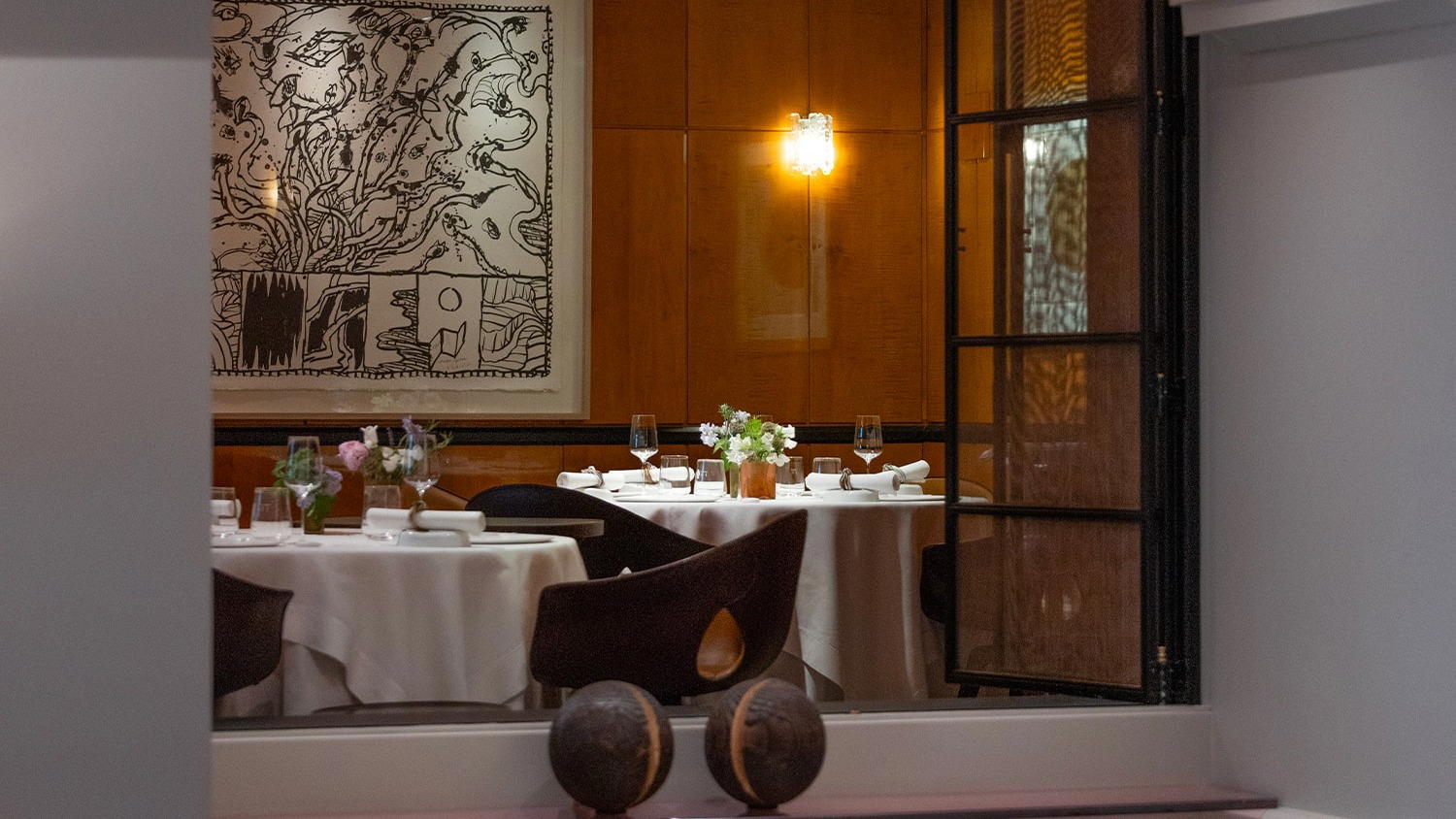
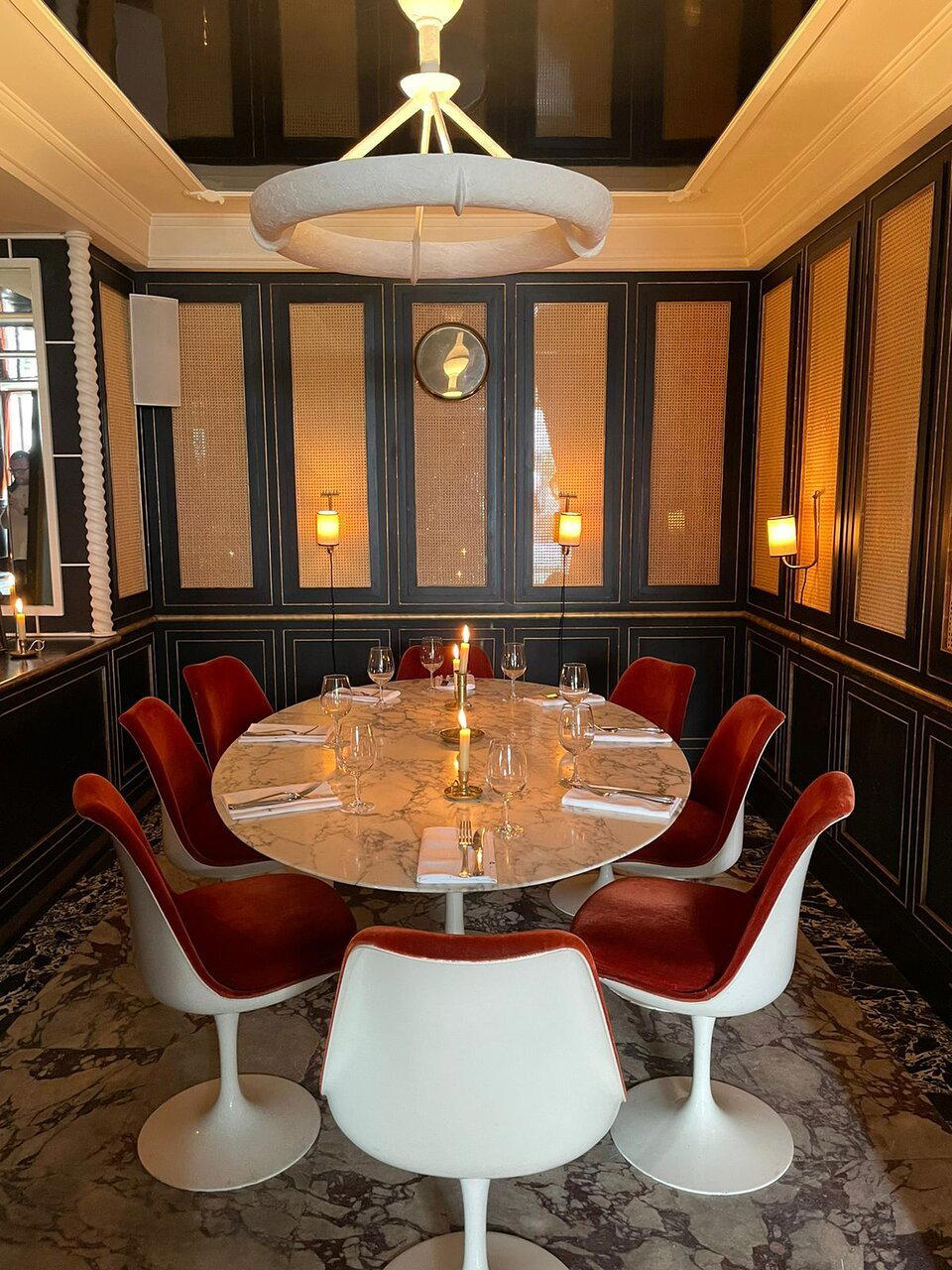
The kitchen uses a small binchotan charcoal grill, which introduces a controlled, charred register to certain courses without overriding the delicacy of the seafood-forward sections. The open kitchen is part of the dining experience: sightlines into the cooking space are unobstructed, and the service dynamic is quiet and considered rather than theatrical. Bare white walls complete the aesthetic, the OAD citation drew a direct comparison to unwritten pages of a book, which is where the name lands its meaning.
The price tier is €€€€, placing Pages in the same bracket as Table by Bruno Verjus, Marsan par Hélène Darroze, and Plénitude. Within that set, Pages occupies a position defined less by grandeur than by restraint: small room, focused menu, produce-first logic.
Pages in the Broader Paris Context
Cross-cultural French-Japanese kitchen has become a recognisable category in Paris fine dining, but it spans a wide range of approaches. At one end are restaurants that apply Japanese technique to classical French structure; at the other are rooms where Japanese ingredients and French method coexist in a more hybrid register. Pages fits the former pattern. The produce is French, the sourcing logic is French, and the structure of the menu follows French tasting conventions. What the kitchen brings is a Japanese-trained precision and a discipline of restraint that shows in the execution rather than the concept.
For context on how this compares with what the French regional tradition has built over decades, it is worth holding Pages against the longer-established rooms that define the country's gastronomic DNA: Troisgros in Ouches, Bras in Laguiole, and Auberge de l'Ill in Illhaeusern each represent a distinct regional argument about what French cuisine means on its own terms. Pages is doing something different: it is asking what happens when a Japanese sensibility engages seriously with Gallic produce in the capital. The same question is being asked in New York kitchens, where Atomix applies Korean rigour to a fine dining framework and Le Bernardin has long shown what a French-trained sensibility does to seafood outside France. The cross-cultural transfer runs in multiple directions.
Closer to home, Tomy & Co and Virtus operate in the same bracket of Paris restaurants where foreign-trained chefs work with French technique and French produce. In the French Alps, Flocons de Sel in Megève and on the Riviera, Mirazur in Menton demonstrate how produce-led thinking functions across different French geographies. Pages is the Paris expression of a broader national conversation about sourcing, precision, and what constitutes contemporary French cooking. The legacy institutions like Paul Bocuse in Collonges-au-Mont-d'Or remain the reference point against which any serious French kitchen is measured, consciously or not.
What to Arrange Before You Arrive
Beyond securing the booking itself, which should happen several weeks in advance, particularly for Friday dinner slots, a few practical considerations apply. The restaurant is closed on weekends, so Pages cannot anchor a Saturday or Sunday evening plan. Visitors on short Paris trips who have flexibility should prioritise the weekday dinner sitting, which at 7:30 PM fits naturally within an evening that could begin with a drink in the 16th or 8th before the meal. For bars to consider in the area, the full Paris bars guide covers the range from wine-focused rooms to classic cocktail addresses. Wine-focused travellers planning wider exploration around the Paris visit should consult the Paris wineries guide, and the Paris experiences guide covers cultural and specialist programming that pairs well with a fine dining itinerary.
The €€€€ price tier signals that Pages sits at the higher end of Paris dining spend. Diners who arrive expecting a long, multi-act tasting in a formal grand-restaurant setting will find instead a more spare, focused room where the investment goes into the produce and the cooking rather than the décor or the ceremony. That trade-off is the point.
Frequently asked questions
Is Pages better for a quiet night or a lively one?
Pages tilts toward quiet focus rather than convivial buzz. The bare white walls, tight service windows — lunch seatings begin at noon, dinner at 7:30 PM — and single surprise menu format all point toward concentrated attention on the plate. The open kitchen adds a layer of visual engagement, but this is a room built for conversation in pairs, not a table that feeds off ambient noise.
Is Pages award-winning?
Pages has received recognition including: Category: Remarkable; Opinionated About Dining Top Restaurants in Europe Ranked #95 (2025); The passion Japanese chefs show for French gastronomy is once again demonstrated by this surprising restaurant whose bare white walls evoke the unwr….
What do people recommend at Pages?
The restaurant runs a single surprise menu with no à la carte choices, so there is nothing to pre-select. What OAD reviewers consistently flag — ranking Pages #95 in Europe for 2025 — is the precision cooking, the shellfish and fish sourced from Normandy and Brittany, and the binchotan-charred notes that thread through the sequence. The wagyu maturing fridge signals where the kitchen's attention to produce sits.
How would you describe the cuisine at Pages?
Is Pages expensive?
Pricing at Pages is listed as €€€€.
Is Pages open every day?
Hours at Pages: Monday 12 PM-1 PM 7:30 PM-8 PM Tuesday 12 PM-1 PM 7:30 PM-8 PM Wednesday 12 PM-1 PM 7:30 PM-8 PM Thursday 12 PM-1 PM 7:30 PM-8 PM Friday 12 PM-1 PM 7:30 PM-8 PM Saturday closed Sunday closed.
Where is Pages in Paris?
Pages is located at 4 Rue Auguste Vacquerie, 75116 Paris, France, Paris.
Price and Recognition
| Venue | Cuisine | Price | Awards | Notes |
|---|---|---|---|---|
| PagesThis venue (the venue you are viewing) | Modern French Fine Dining with Japanese Influence | $100–150 | 1 Michelin Star · Gault & Millau Remarkable Restaurant | Not listed |
| Alléno Paris au Pavillon Ledoyen | Modern French Fine Dining | $150–200 | 3 Michelin Stars · World's 50 Best #79 | Creative |
| Kei | Modern French with Japanese Influences | $300–500 | 3 Michelin Stars · World's 50 Best #93 | Contemporary French, Modern Cuisine |
| L'Ambroisie | Classic French Haute Cuisine | $300–500 | 2 Michelin Stars · World's 50 Best #23 | French, Classic Cuisine |
| Le Cinq - Four Seasons Hôtel George V | French, Modern Cuisine | Not listed | Michelin 3 Star | Not listed |
| Plénitude | Modern French Sauce-Led Fine Dining | $300–500 | 3 Michelin Stars · World's 50 Best #14 | Contemporary French |
Recognition history
Dated appearances from independent guides and award organizations, with the underlying list record or original source where available.
Michelin 1 Star
Michelin
Opinionated About Dining Top Restaurants in Europe Ranked #111
Opinionated About Dining
Gault & Millau Remarkable Restaurant
Gault & Millau
Full recognition history (8 entries)
Michelin 1 Star
Michelin
Opinionated About Dining Top Restaurants in Europe Ranked #95
Opinionated About Dining
Michelin 1 Star
Michelin
Opinionated About Dining Top Restaurants in Europe Ranked #97
Opinionated About Dining
Opinionated About Dining Top New Restaurants in Europe Ranked #100
Opinionated About Dining