
On the edge of Ortigia, Ostaria takes a deliberately narrow focus — meat sourced from non-intensive farms, much of it aged on the premises, cooked in a Josper oven with contemporary precision. The wine list leans Sicilian but ranges across Italy and beyond.
Pearl is the En Primeur Club membership app — saves, bookings, and concierge access live there. Same editors, same standards.
- Address
- Via G. B. Perasso, 10/12, 96100 Siracusa SR, Italy
- Phone
- +39 0931 090740
- Website
- ostariasiracusa.it
- Directions
- Get directions
 Saves & bookings on Pearl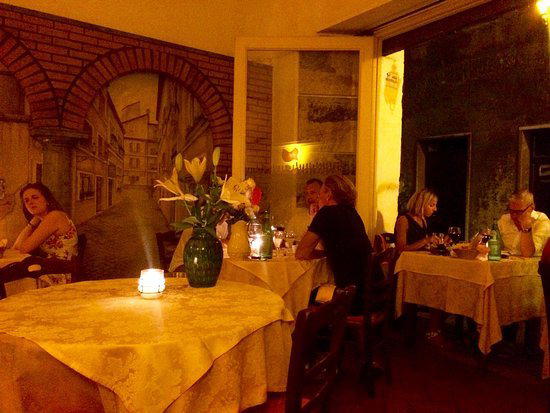
Where Syracuse Eats Its Meat
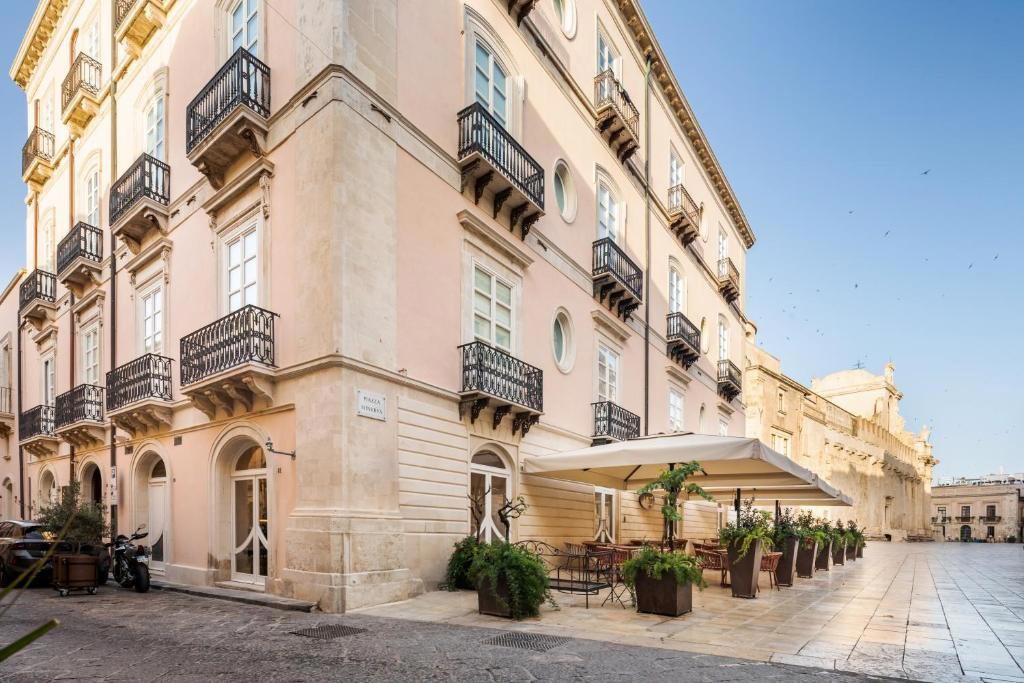
The street address puts Ostaria in the modern city grid, but the distance to Ortigia's baroque waterfront is close enough that the two worlds bleed into each other. Step through the entrance in the early evening and the room settles into soft light, the kind that makes a Sicilian dining room feel unhurried rather than dim. The service operates in that same register: attentive without performance, professional without formality. It is the atmosphere of a place that knows its purpose and does not need to announce it.
That purpose is meat. Not as a broad category but as a discipline. Ostaria's kitchen works within a deliberately restricted scope: cuts sourced from non-intensive farming operations, a proportion of which are aged on the premises before service. In a region better known for swordfish and red prawn, this is a considered counter-position, and the kitchen holds to it without compromise.
The Sourcing Logic Behind the Menu
Across Italy's serious meat-focused restaurants, provenance has become the central argument. The debate that once centred on which cut or which technique has shifted upstream, to breed selection, farming method, and the chain of custody between field and counter. Ostaria sits inside that shift. The menu draws from local Sicilian supply — where the island's pastoral traditions, including native breeds raised on smallholdings rather than industrial operations — and from further afield when the sourcing credentials hold up. The commitment to non-intensive farming is not incidental to the offer; it is the offer.
On-premises ageing narrows the supply chain further. Dry-ageing at the restaurant level rather than buying pre-aged product gives the kitchen direct control over the transformation process: the degree of moisture loss, the development of enzymatic complexity, the timing of service. It also signals a seriousness about beef as a primary subject that separates Ostaria from restaurants that treat meat as one section among many. Comparable Italian operations working at this level of specificity include Damini Macelleria & Affini in Arzignano and Carcasse in Sint-Idesbald, both of which have built reputations around the butcher-restaurant model where sourcing and ageing are front-of-house talking points, not back-of-house details.
The Josper oven, a charcoal-fired enclosed grill operating at temperatures difficult to replicate on an open hearth, is the primary cooking instrument. It delivers the surface crust and smoky register that open-flame grilling produces while giving the kitchen tighter control over internal temperature. For aged beef especially, this matters: a long-aged piece requires precision at the cooking stage to justify the weeks of dry-ageing that preceded it. The technique is contemporary in the sense that it is deliberate and calibrated, not in the sense that it is decorative.
The Wine List as a Sicilian Document
Sicily's wine identity has been rewritten over the past two decades. Nero d'Avola shed its bulk-wine reputation, Etna's volcanic reds and whites entered the international conversation, and a generation of smaller producers began working with indigenous varieties at quality levels that shifted international perception of the island entirely. Ostaria's wine list reflects this evolution. The Sicilian focus is primary: local labels occupy the core of the list, positioned not as regional curiosity but as the natural counterpart to aged meat from the same island. Italian bottles from outside Sicily extend the range, and selections from other serious wine-producing regions provide international width without diluting the list's Sicilian logic.
For context within Syracuse's €€€ tier: Don Camillo and Cortile Spirito Santo both carry wine programs weighted toward Sicilian producers, which reflects broader local consensus that the island's labels are now strong enough to anchor a serious list. Regina Lucia, working in modern cuisine, takes a similar position. At Ostaria, the Sicilian emphasis reads particularly coherently because the menu's meat sourcing from the island creates a natural pairing logic.
Michelin Recognition and What It Signals
The 2025 Michelin Plate is the guide's designation for restaurants that fall outside the star tiers but produce cooking of consistent quality. It is not a consolation award; Michelin's Plate category covers a large proportion of recommended restaurants in any given region, and inclusion indicates that inspectors found the kitchen coherent and the experience worth directing readers toward. For a restaurant operating in a category, dedicated meat and grills, that remains relatively rare in a Sicilian coastal city dominated by seafood, the recognition carries useful context.
At a volume of 457 ratings, the 4.8 figure is statistically meaningful rather than an artifact of a small enthusiastic group. Among Syracuse's restaurant options, that combination of Michelin recognition and high-volume public approval puts Ostaria in a narrow tier.
How to Approach a Visit
Ostaria sits at Via G. B. Perasso, 10/12, in the modern city, close enough to Ortigia that it fits naturally into an itinerary built around the historic island, but a few minutes' walk from the waterfront rather than on it. The €€€ price range aligns with the serious restaurant tier in Syracuse rather than the casual end: expect it to price against Don Camillo and Cortile Spirito Santo rather than against neighbourhood trattorie. Reservations are advisable, particularly in the high-season months when Syracuse draws significant visitor numbers. Given the on-site ageing program, menu availability will vary depending on what is currently at the right stage of maturity.
For visitors building a wider Syracuse itinerary, the hotels guide, bars guide, wineries guide, and experiences guide map the rest of the city's offer. For Italian meat-focused restaurants at a comparable level of ambition, Damini Macelleria & Affini in the Veneto provides a useful reference point for what the butcher-restaurant format can achieve at its most developed. Elsewhere in the Italian fine dining spectrum, Uliassi in Senigallia, Le Calandre in Rubano, Quattro Passi in Marina del Cantone, Enrico Bartolini in Milan, Atelier Moessmer Norbert Niederkofler in Brunico, and Dal Pescatore in Runate represent the range of what Michelin-recognised cooking looks like across the country.
Category Peers
| Venue | Cuisine | Price | Awards |
|---|---|---|---|
| OstariaThis venue — the venue you are viewing | Meats and Grills | €€€ | Not listed |
| Cortile Spirito Santo | Creative | €€€ | Michelin 1 Star |
| Don Camillo | Sicilian | Not listed | Sicilian, €€€ |
| Regina Lucia | Modern Cuisine | Not listed | Modern Cuisine, €€€ |
Recognition history
Dated appearances from independent guides and award organizations, with the underlying list record or original source where available.
Michelin Plate
Michelin
Michelin Plate
Michelin
Continue exploring
More in Syracuse
Restaurants in Syracuse
Browse all →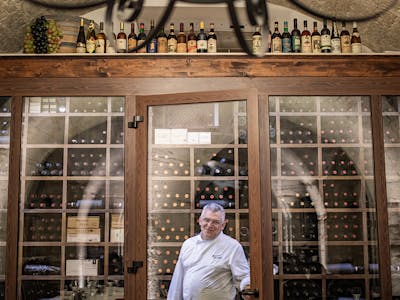
Bars in Syracuse
Browse all →
Hotels in Syracuse
Browse all →

At a Glance
- Intimate
- Elegant
- Cozy
- Rustic
- Date Night
- Special Occasion
- Business Dinner
- Open Kitchen
- Extensive Wine List
- Local Sourcing
Current opening hours
- Monday
- 7:30–11 PM
- Tuesday
- 7:30–11 PM
- Wednesday
- Closed
- Thursday
- 7:30–11 PM
- Friday
- 7:30–11 PM
- Saturday
- 7:30–11 PM
- Sunday
- 12:30–2:30 PM
Hours can change for holidays and private events. Last verified .
Soft lighting, intimate setting with elegant yet relaxed atmosphere, quieter than typical Italian restaurants.
Know Before You Go
- Getting there
- Via G. B. Perasso, 10/12, 96100 Siracusa SR, Italy