Our verdict
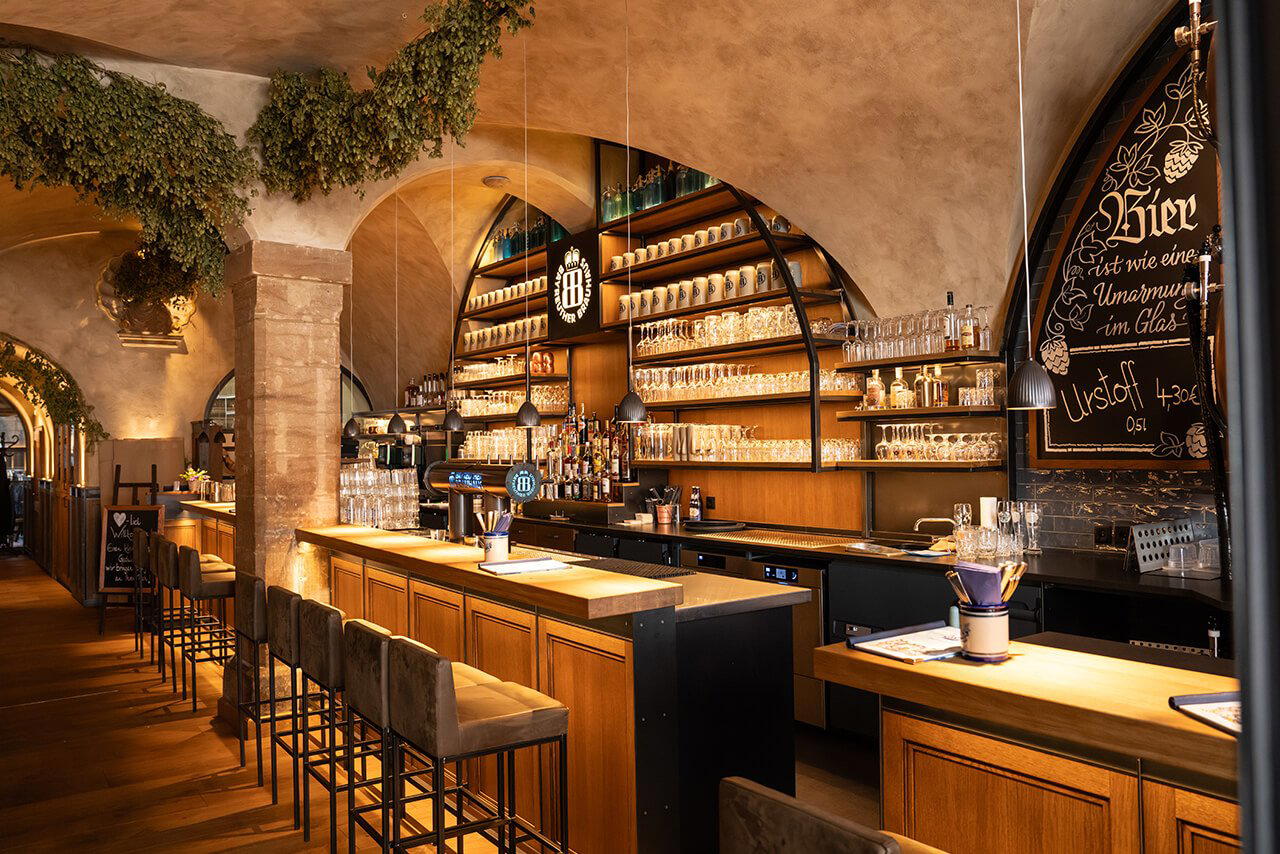
On Maximilianstraße, Bayreuth's central market axis, Oskar - Das Wirtshaus am Markt occupies the kind of position that Bavarian Wirtshäuser have held for centuries: an anchor for the neighbourhood, a place where market-day appetites and evening gatherings share the same floor. The format is rooted in regional tradition, with the sourcing and setting that make a Wirtshaus worth the detour.

Pearl is the En Primeur Club membership app, where members save venues, book tables and use the concierge.
The menu
What to order
- Franconian river trout
- Bayreuth meat in horseradish
- Schäufele
- Kaiserschmarrn
A Market Address and What It Signals
Bavarian market squares have always organised themselves around a particular logic: the butcher, the baker, and the Wirtshaus that turns their produce into lunch. Maximilianstraße 33 sits directly in that tradition. Oskar - Das Wirtshaus am Markt occupies one of Bayreuth's central commercial addresses, and the name itself is a statement of intent, not a restaurant pretending to be a Wirtshaus, but a Wirtshaus that takes its market-square position seriously. In a city whose culinary reputation is shaped almost entirely by the Wagner Festival calendar, a permanent neighbourhood anchor of this type serves a different and arguably more durable function than the seasonal event-dining circuit.
The physical approach matters here. Maximilianstraße runs through the heart of Bayreuth's old city grid, lined with the kind of mid-scale commercial frontage that keeps a city centre functional rather than merely scenic. The Wirtshaus format, a term that resists clean translation but sits somewhere between a tavern, a communal dining room, and a local institution, depends on exactly this kind of address. It is not a destination you approach along a quiet lane; it is a place you arrive at because the street brought you there.
The Wirtshaus Tradition and the Sourcing Question
Germany's Wirtshäuser occupy a distinct position in European food culture, and Bavaria's version of the format is arguably the most codified. The sourcing logic is embedded in the tradition itself: proximity to the market means proximity to the supplier, and the leading Wirtshäuser have always operated on short supply chains by default rather than by design philosophy. Franconia, the region in which Bayreuth sits, produces some of Germany's most characterful raw materials, Franconian carp from the pond systems of the Aischgrund and Bamberg area, game from the Fichtelgebirge forests to the north and east, and the dense network of small breweries that makes this corner of Bavaria one of the highest-density brewing regions anywhere in the world.
What a Wirtshaus on a market square is positioned to do, structurally, is convert that regional supply into daily cooking without the intermediary steps that longer distribution chains introduce. The question for any restaurant in this format is how deliberately it exercises that proximity. In Franconia, where regional identity is a point of local pride distinct from broader Bavarian identity, the sourcing story tends to be expressed through the menu's backbone rather than its garnish, through the protein and the grain, not the microherb.
For context on how Germany's leading tables approach the sourcing question at the fine-dining end of the spectrum, the contrast is instructive. Properties like ES:SENZ in Grassau and Schanz in Piesport have built multi-course formats around hyper-local supply in ways that have drawn national recognition. The Wirtshaus format operates on different terms, the sourcing imperative is the same, but the expression is more direct, less ceremonial, and ultimately more embedded in the daily life of the neighbourhood it serves.
Bayreuth's Dining Context
Bayreuth is a mid-sized Franconian city of around 73,000 residents, better known internationally for its annual Wagner Festival than for its restaurant scene. That festival, held each summer at the Festspielhaus on the hill above the city, concentrates significant spending power into a short window, and the dining market responds accordingly, with prix-fixe formats and refined pricing during the festival weeks. The rest of the year, the city functions on a more grounded scale, and the places that survive across both registers tend to be those with a rooted local clientele rather than a purely festival-facing model.
The Wirtshaus format is well suited to that dual-register function. It can absorb festival visitors without restructuring itself around them, and it can sustain the regulars who keep a restaurant viable through January and February. Bayreuth lacks the density of fine-dining infrastructure you find in Munich or Nuremberg, for Germany's most decorated tables, you need to travel: JAN in Munich, Schwarzwaldstube in Baiersbronn, or further afield to properties like Aqua in Wolfsburg and Vendôme in Bergisch Gladbach. What Bayreuth does have is a Franconian food culture with genuine depth, and a market-square Wirtshaus is one of its most direct expressions.
Those looking to understand how the broader German dining scene is evolving can explore further through our full Bayreuth restaurants guide, which maps the city's options across formats and price points. For more context on creative dining at the national level, the programs at CODA Dessert Dining in Berlin and Jante in Hanover represent how far the format can be pushed in an urban context. Internationally, the sourcing-led ethos that underpins good Wirtshaus cooking finds a different expression at places like Lazy Bear in San Francisco and the product-driven precision of Le Bernardin in New York City.
Planning Your Visit
Oskar - Das Wirtshaus am Markt is located at Maximilianstraße 33, 95444 Bayreuth, in the city's central commercial district. The address is walkable from the main train station and from the majority of central accommodation. Bayreuth is served by regional rail connections from Nuremberg, which is approximately one hour away and offers the nearest significant transport hub with intercity and international connections. During the Wagner Festival period in late July and August, the city operates at compressed capacity and advance planning across all categories of dining and accommodation becomes necessary. Outside that window, the city is considerably easier to move through.
Frequently asked questions
Would Oskar - Das Wirtshaus am Markt be comfortable with kids?
The Wirtshaus format is historically a community dining institution in Bavaria, designed to serve a broad cross-section of guests rather than a narrow demographic. Oskar's market-square address on Maximilianstraße 33 in central Bayreuth places it in a workaday commercial district, the kind of setting where family groups are a standard part of the room. That said, specific family facilities are not documented, so it is worth contacting the venue directly before visiting with very young children.
Is Oskar - Das Wirtshaus am Markt better for a quiet night or a lively one?
A Wirtshaus am Markt, a tavern anchored to a market square, tends to run at a sociable volume, particularly on market days and during Bayreuth's summer Wagner Festival season when the city's population of 73,000 is supplemented by festival visitors. Expect a convivial atmosphere rather than a hushed one. For a quieter experience, an early-week visit outside the festival calendar (late July to late August) is likely the more reliable choice.
Is Oskar - Das Wirtshaus am Markt a good option for dining near the Bayreuth Festspielhaus during the Wagner Festival?
Oskar sits at Maximilianstraße 33 in Bayreuth's central commercial district, which is walkable from the main civic infrastructure of the city. During the annual Wagner Festival, Bayreuth's dining options face concentrated demand, and a central Wirtshaus with a market-square address is a practical pre- or post-performance option for visitors who want a grounded Franconian meal rather than a destination-restaurant booking. Festival season runs from late July to late August; reservations well in advance are advisable during that window.
What do regulars order at Oskar - Das Wirtshaus am Markt?
The Franconian variant of the Wirtshaus tradition places a particular emphasis on local beer and hearty, produce-driven plates rather than the richer, cream-heavy preparations more common in Munich.
Fast Comparison
| Venue | Cuisine | Price | Awards | Notes |
|---|---|---|---|---|
| Oskar - Das Wirtshaus am MarktThis venue (the venue you are viewing) | Young Franconian Cuisine | $20–30 | Not listed | Not listed |
| Schwarzwaldstube | Modern French Fine Dining | $150–200 | 3 Michelin Stars · World's 50 Best #47 | French, Classic French |
| Aqua | Contemporary German, Italian/Japanese, Creative | Not listed | Michelin 3 Star | Not listed |
| Vendôme | Modern German Haute Cuisine | $200–300 | 2 Michelin Stars · World's 50 Best #47 | Modern European, Creative |
| CODA Dessert Dining | Dessert-Inspired Fine Dining | $200–300 | 2 Michelin Stars · World's 50 Best #82 | Creative |
| Tantris | Modern French Fine Dining | $300–500 | 2 Michelin Stars · World's 50 Best #73 | Modern French, French Contemporary |
Continue exploring
More in Bayreuth
Restaurants in Bayreuth
All restaurants in Bayreuth →
Bars in Bayreuth
Browse all →
Details
- Rustic
- Cozy
- Classic
- Casual Hangout
- Group Dining
- Family
- Historic Building
- Terrace
- Beer Program
- Local Sourcing
- Street Scene
- A La Carte
- Beer Program
- Vegetarian Friendly
- Vegan Options
- Gluten Free Options
Current opening hours
- Monday
- 8 AM–12 AM
- Tuesday
- 8 AM–12 AM
- Wednesday
- 8 AM–12 AM
- Thursday
- 8 AM–12 AM
- Friday
- 8 AM–12 AM
- Saturday
- 8 AM–12 AM
- Sunday
- 9 AM–12 AM
Hours can change for holidays and private events. Hours as of .
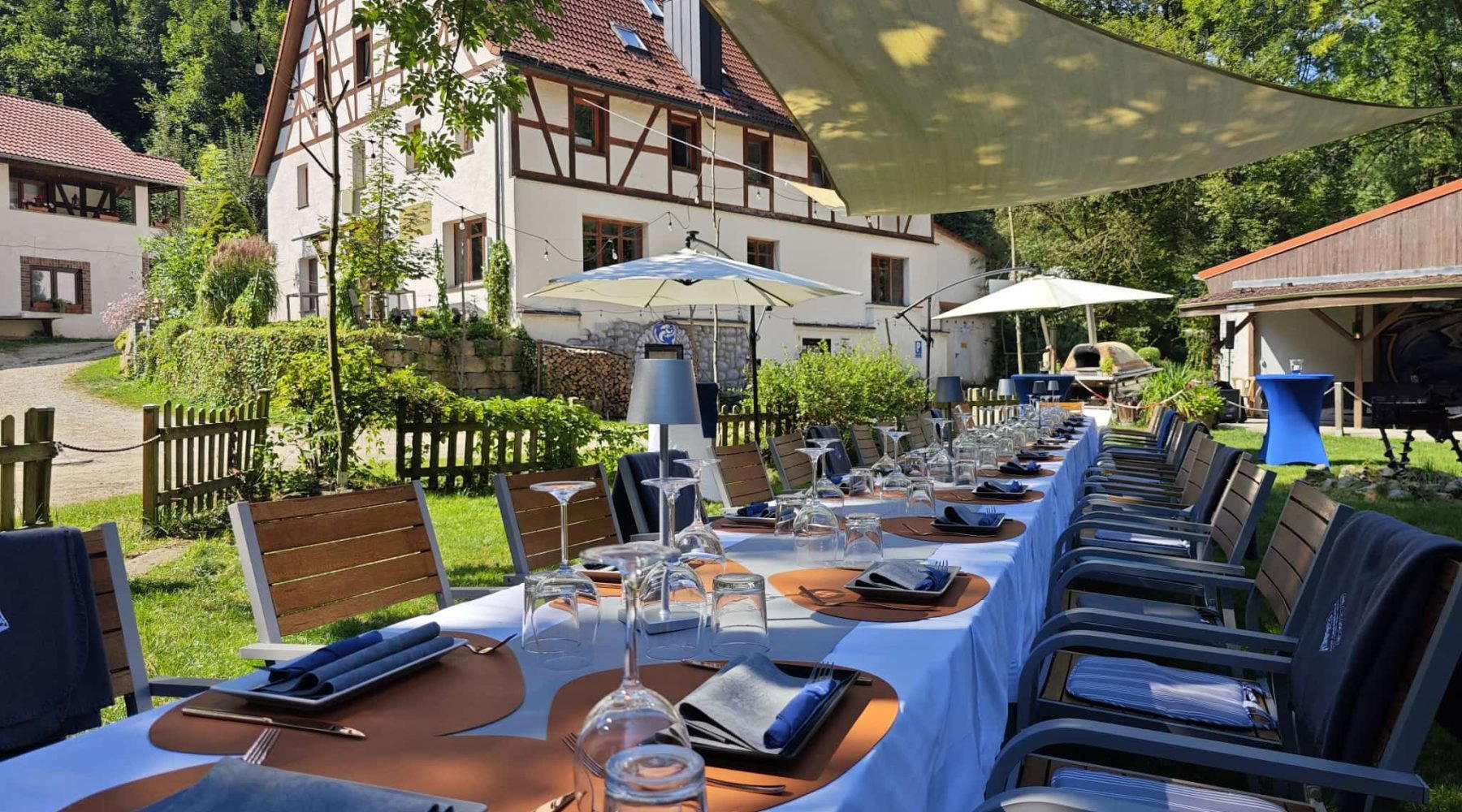
Rustic-charming atmosphere in cozy rooms, light-filled wintergarten, lively bar, and gemütlicher beer garden.