
Tabelog 100 #91
Our verdict
Shimbashi’s station-side udon culture is built for speed, repetition, and precision rather than ceremony. Oniyanma Shimbashi ten brings that ritual into a counter-seating format near JR Shimbashi Station, with Tabelog 100 Udon EAST recognition in 2024 and a sub-¥1,000 budget that places it far from Tokyo’s reservation-led dining circuit.

Pearl is the En Primeur Club membership app, where members save venues, book tables and use the concierge.
The menu
What to order
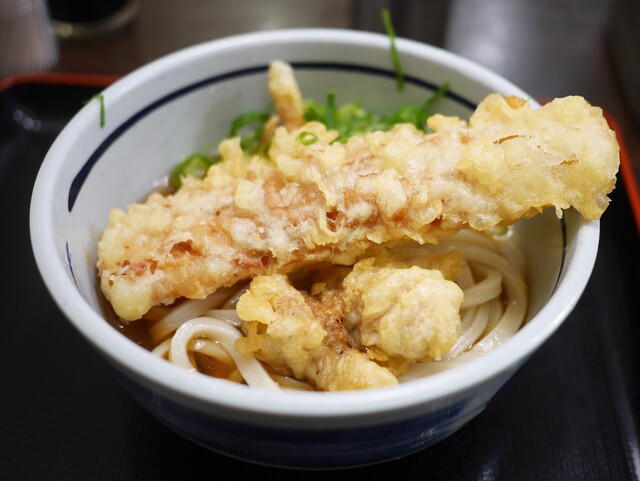
- Kashiwa-ten (chicken tempura) udon
- Chikuwa-ten tempura udon
Approaching Oniyanma Shimbashi ten in Tokyo, the dining rhythm changes before the meal begins. Office workers move in bursts, city movement feeds compact streets, and the udon counter belongs to a Tokyo tradition where speed is not compromise but purpose. The ritual is compact: arrive, decide quickly, eat, and leave space for the next person. Oniyanma Shimbashi ten fits with unusual clarity, and its 2024 Tabelog Hyakumeiten recognition places a low-cost noodle shop in the same city conversation that often favors counters, dining rooms, and reservation-led meals. Its 2024 Tabelog 100 Udon EAST selection is a trust marker in a category where Michelin-style ceremony is not the measure.
That contrast matters. A meal listed at - JPY 999 - JPY 999 sits opposite other Tokyo after-work spending at places such as Shimbashi Tsuruhachi, New Shin Mikan, or Bar P.M.9, where the evening may follow a very different pace. The useful comparison is not luxury versus cheapness, but time. Tokyo’s dining hierarchy has room for both the booked counter and the fast bowl, and the city sharply tests whether a place can satisfy under pressure.
Shimbashi udon is a timing ritual, not a long lunch
Udon in Tokyo often competes with other quick meals for commuter attention, but its appeal differs. Some formats carry more formality; udon is more forgiving, heavier in the bowl, and suited to the short pause between one part of the day and the next. A compact setup reinforces the choreography. Nobody needs a long explanation, and nobody benefits from lingering. The format rewards confidence: know the category, move through the meal, eat with momentum.
Oniyanma Shimbashi ten shows how serious Tokyo dining can exist without the usual signals of expense. Its 2024 Tabelog Hyakumeiten recognition is a trust marker in a category where ceremony is not the measure. The shop’s Tabelog score of 3.70 also places it in a meaningful bracket for a casual noodle specialist, especially in a city where high-volume formats face relentless daily judgment. Recognition here does not imply linen, tasting courses, or a long wine list. It signals that a plain-spoken format has earned attention in a crowded field.
The etiquette is pragmatic. The meal compresses itself to essentials, making it easy to fit into movement through Tokyo rather than anchor a whole evening. For travelers mapping a Tokyo day, it is closer to a practical food stop than a destination dinner. For broader planning, Our full Tokyo restaurants guide is the better frame for pairing this kind of meal with slower dining later.
Why the sub-¥1,000 counter still matters in Tokyo
Tokyo’s low-price dining is often misunderstood by visitors. The point is not only value; it is specialization. A narrow format can outperform a broad menu because repetition sharpens the system. Udon shops and other focused counters share the logic: reduce choice, increase pace, hold consistency. A sub-¥1,000 bowl can feel more culturally specific than a safer mid-market meal built for a broad audience.
Tokyo intensifies that logic because busy dining areas have little patience for ornamental dining. The city is full of lunch counters, after-work restaurants, and compact places built around usefulness. Its food culture is not always polished in the luxury sense. It can be transactional in a good way. Places survive by being useful at peak moments, not by asking guests to surrender an evening.
That context explains why the format matters more than amenities. This is not the kind of meal to approach like a slow tasting menu or a room for extended dealmaking. It suits solo diners, pairs moving through the city, and anyone who understands that comfort can come from efficiency rather than space. It is a quick Tokyo meal with clear purpose.
For comparison within the city’s casual and mid-casual range, other Tokyo dining rooms show how varied lower-commitment eating can be. Match format to purpose. Udon in Tokyo is for velocity; other casual counters, cafés, bars, and informal kitchens run on different social clocks.
How to place it in a Tokyo itinerary
The strongest use case is tactical: a fast meal between plans, or a pre-drink stop before the evening moves elsewhere. The location is Tokyo. Parking is not the point; city movement usually is. Travelers staying elsewhere should treat it as a useful Tokyo stop, not a cross-town pilgrimage requiring a schedule built around it.
Because practical details for compact Tokyo counters can change, treat published information as guidance rather than promise. The safer reading is simple: go when the city is already moving, and do not expect sit-down pacing. The appeal is the clarity of the category, the low listed budget, and the fact that Tabelog’s 2024 recognition puts this modest format on the map.
In a larger Tokyo plan, this meal corrects over-scheduled dining. A traveler can build one day around a serious counter, another around bars, and still leave space for a fast noodle ritual locals fold into ordinary life. For adjacent planning, use Our full Tokyo bars guide, Our full Tokyo hotels guide, Our full Tokyo experiences guide, and Our full Tokyo wineries guide to keep drinking, lodging, culture, and wine separate rather than forcing one meal to carry the day.
For readers extending the same logic beyond Tokyo, the comparison works across Japan and Japanese food abroad: many focused counters, cafés, noodle shops, bars, and specialist kitchens ask the same question differently. Is the format disciplined enough to justify its narrowness? Oniyanma Shimbashi ten answers that question through udon, price, pace, and the kind of recognition that makes a simple Tokyo meal worth noting.
Accolades, Compared
Comparable venues in the metro at similar price points.
| Venue | Cuisine | Price | Awards | Notes |
|---|---|---|---|---|
| Oniyanma Shimbashi tenThis venue (the venue you are viewing) | Stand-up Sanuki Udon | $1–10 | Tabelog 100 #91 | Not listed |
| Asada Ya | Traditional Japanese wagashi & daifuku shop | $1–10 | Tabelog 100 #75 | Minato |
| 玄冶店 濱田家 | Traditional Japanese Kaiseki Ryotei | $200–300 | Not listed | Chūō |
| Zehn Coffee | Japanese Kissaten / Coffee Shop | $1–10 | Tabelog 100 | Taitō |
| Echigoya Wakasa | Traditional Japanese Sweets | $1–10 | Tabelog 100 #34 | Sumida |
| Tsuruse Yushima honten | Traditional Japanese wagashi & tea cafe | $1–10 | Tabelog 100 #50 | Bunkyō |
Recognition history
Dated appearances from independent guides and award organizations, with the underlying list record or original source where available.
Tabelog 100 #91 · No. 91
Tabelog · Tabelog 100 - Udon - EAST - 2024
Continue exploring
More in Tokyo
Restaurants in Tokyo
All restaurants in Tokyo →
Bars in Tokyo
All bars in Tokyo →


Details
- Lively
- Casual
- Energetic
- Solo
- After Work
- Casual Hangout
- Family
- Late Night
- Standalone
- Street Scene
- A La Carte
- Counter Dining