Normah Cafe
Normah Cafe sits on Queensway in Bayswater, a stretch of west London that has long operated as one of the city's more genuinely multicultural eating corridors. The cafe occupies a position in a neighbourhood where Malaysian, Chinese, and Middle Eastern kitchens have coexisted for decades, making it a natural reference point for anyone tracking how London's casual Asian dining scene has shifted over time.
Pearl is the En Primeur Club membership app — saves, bookings, and concierge access live there. Same editors, same standards.
- Address
- 23, 25 Queensway, London W2 4QJ, United Kingdom
- Phone
- 07771 630828
- Website
- normahs.co.uk
- Directions
- Get directions
 Saves & bookings on Pearl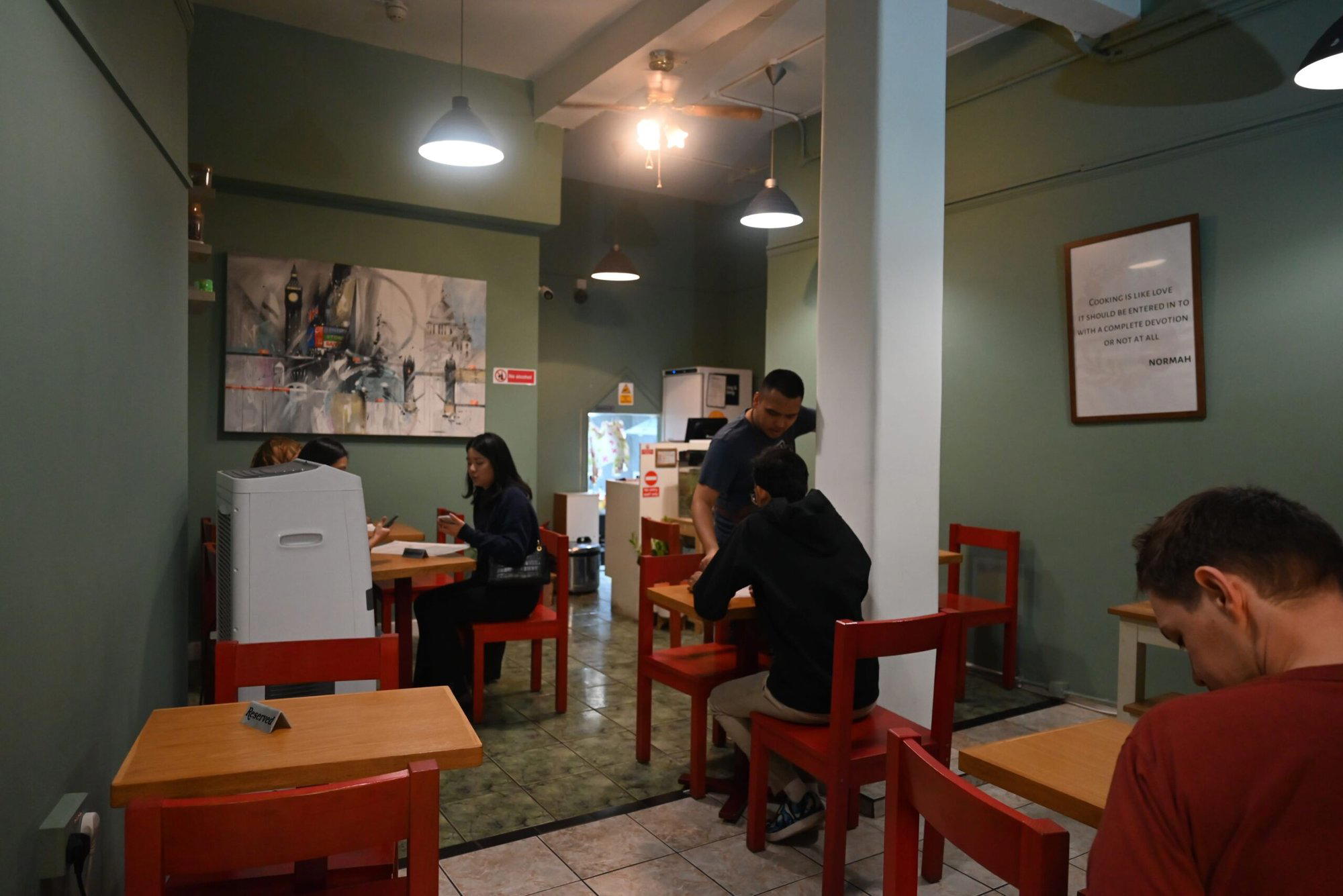
Queensway's Long Game: How Bayswater's Dining Corridor Keeps Reinventing Itself
Normah Cafe is a restaurant at 23, 25 Queensway, London W2 4QJ, in Bayswater. It serves authentic Malaysian home cooking at an accessible price point. It was never fashionable in the way that Soho's Chinatown became, nor did it attract the critical attention that followed Taiwanese and Japanese restaurants into Fitzrovia and Marylebone. Instead, it accumulated: Malaysian kopitiam-style operators, Hong Kong-style roast meat houses, late-night noodle spots, and a rotating cast of Chinese regional specialists arrived steadily, driven by the area's large Chinese and Southeast Asian diaspora population rather than by any food media cycle. Normah Cafe, at 23 to 25 Queensway, is part of that longer story.
The cafe's address places it firmly in the denser, more commercial southern section of Queensway, where foot traffic from Queensway tube station keeps the street economically viable for smaller, independent operators even as rents in adjacent Notting Hill and Paddington have climbed. Bayswater has historically absorbed operators who could not afford the premium zones to the north and east, which is why its food offer has remained more diverse than the neighbourhoods that receive more editorial attention.
The Bayswater Shift: From Canteen to Considered
The broader evolution of casual Southeast Asian dining in London over the past decade tracks clearly through streets like Queensway. In the early 2000s, Malaysian and Singaporean restaurants in this part of the city operated largely as functional canteens: formica tables, laminated menus running to forty or fifty items, an emphasis on speed and volume over any particular refinement. The model worked because the clientele was predominantly diaspora, eating familiar food at functional prices, and the competition came primarily from within the same ethnic category rather than from the wider London restaurant market.
That model has been under pressure from two directions since roughly 2012. On one side, a generation of more design-conscious Southeast Asian operators opened in central and east London, drawing on the same culinary traditions but reframing them for a broader, more food-literate audience. On the other side, rising costs, particularly for labour and commercial rent, squeezed the margins that had made the canteen model viable. Operators on streets like Queensway faced a choice: absorb the costs and reduce quality, raise prices and risk the core diaspora clientele, or reinvent the offer in some way that justified the change.
Normah Cafe sits within this evolution. What the address and category do signal is that any operator running a cafe-format venue on Queensway in the current period is doing so in a market that has been tested repeatedly by the forces above. Survival and continued operation on this street is itself a form of institutional knowledge, earned through adaptations that rarely make headlines but show up in the loyalty of a returning customer base.
The Cafe Format in a Changing City
Across London, the cafe format has undergone its own transformation. The term once described a fairly narrow set of operations: counter service, short menus, modest prices, no bookings. It now covers a much wider range, from the specialty coffee-led all-day venues that colonised east London in the 2010s to small Southeast Asian and South Asian operations that retain the cafe name as a marker of informality and accessibility rather than as an accurate description of price or ambition. The restaurant's use of the format name signals something about how it positions itself within that spectrum, closer to the accessible, neighbourhood-facing end than to the tasting-menu or reservation-heavy tier occupied by venues like CORE by Clare Smyth, The Ledbury, or Sketch, The Lecture Room and Library.
That positioning matters in a city where the distance between a neighbourhood cafe and a Michelin-starred dining room like Restaurant Gordon Ramsay or Dinner by Heston Blumenthal is measured not just in price but in the entirely different social contract each format represents. The cafe, at its leading, offers a kind of access to food that is specific, skilled, and rooted in a particular culinary tradition. London has always needed both, and Queensway has historically supplied the former in ways that the more celebrated neighbourhoods have not.
London's Wider Dining Context
Situating the restaurant within London's full dining picture requires acknowledging how much the city has changed as a destination for serious eating. The UK's destination restaurant scene now extends well beyond the capital: The Fat Duck in Bray, L'Enclume in Cartmel, Moor Hall in Aughton, Gidleigh Park in Chagford, Hand and Flowers in Marlow, and Le Manoir aux Quat' Saisons in Great Milton have all built reputations that draw visitors specifically for the table rather than the city. Internationally, the comparison set extends to operations like Le Bernardin in New York City and Atomix in New York City, which represent the high-format end of what serious dining can look like.
Against that backdrop, the neighbourhood cafe occupies a different but complementary role. It is where the texture of a city's actual food culture lives between the headline restaurants. Queensway's concentration of Southeast Asian and East Asian operators has historically been more instructive about London as a genuinely multicultural city than any curated list of destination tables.
Know Before You Go
- Address: 23 to 25 Queensway, London W2 4QJ
- Nearest Tube: Queensway (Central line), approximately 1 to 2 minutes on foot
- Phone: Not listed, contact directly via the venue
- Website: Not listed, verify current hours before visiting
- Bookings: Cafe-format operations on Queensway typically operate on a walk-in basis; confirm current policy before travelling
- Price: About $25 per person
Comparable Venues
Comparable venues nearby, for context on price, style, and recognition.
| Venue | Cuisine | Price | Notes |
|---|---|---|---|
| Normah CafeThis venue — the venue you are viewing | Authentic Malaysian Home Cooking | $ | Not listed |
| Flat White | Australian-Inspired Coffee Shop | $ | Wapping |
| Trinco Bay | Authentic Sri Lankan | $$ | South Harrow |
| Catalyst | Modern Greek-Leaning Cafe | $$ | Holborn |
| Silk Stockings | Cocktail Bar Snacks | $$ | Dalston |
| Lanka | Authentic Sri Lankan | $$ | Soho |
Continue exploring
More in London
Restaurants in London
Browse all →
Bars in London
Browse all →
Hotels in London
Browse all →
Wineries in London
Browse all →
At a Glance
- Cozy
- Intimate
- Rustic
- Casual Hangout
- Group Dining
- Solo
- Open Kitchen
- Standalone
- Local Sourcing
Current opening hours
- Monday
- Closed
- Tuesday
- 5–9 PM
- Wednesday
- 5–9 PM
- Thursday
- 5–9 PM
- Friday
- 5–9 PM
- Saturday
- 5–9 PM
- Sunday
- Closed
Hours can change for holidays and private events. Last verified .
Simple, whitewashed walls in a basic cafe setting inside Queensway Market; feels like being invited into someone's home kitchen with warm, welcoming energy and no pretension.