Norah

Conde Nast Hot List Restaurants
Our verdict
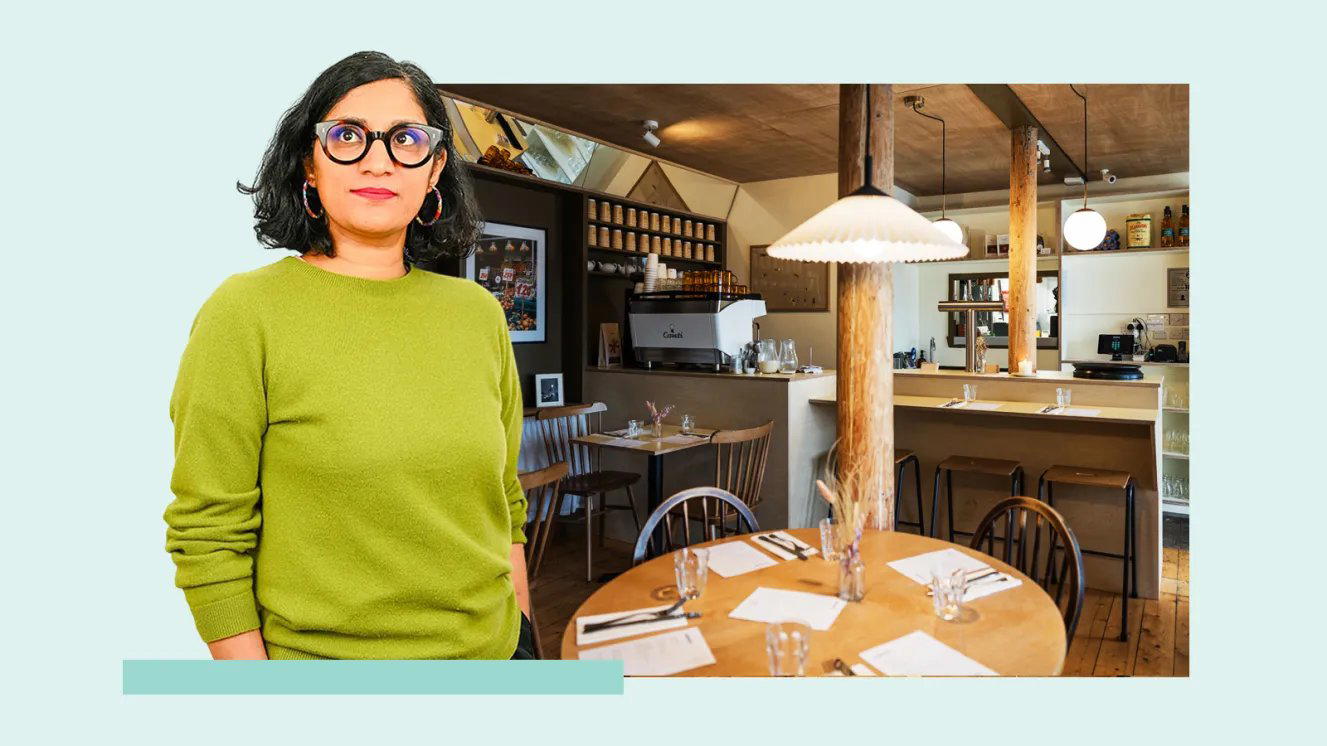
Norah brings an Irish-inflected sensibility to Edinburgh's all-day dining scene, anchored firmly in Scottish produce. Operating across breakfast, lunch, and dinner, it occupies a distinct position in a city where tasting-menu formality dominates the upper tier. The kitchen's dual heritage, Celtic in spirit, local in sourcing, gives it a character that sits apart from Edinburgh's Michelin corridor.

Pearl is the En Primeur Club membership app, where members save venues, book tables and use the concierge.
The menu
What to order
- Soda bread ice cream
- Smoked haddock chowder
- Spinach and ricotta gnudi
Where the All-Day Format Does Serious Work
Edinburgh's dining conversation tends to orbit its formal end: the tasting-menu counters along Leith's waterfront, the Michelin-tracked kitchens that have made the city a credible rival to London on any given weekend. Norah enters from a different direction. The all-day format it operates within is one that most ambitious cities struggle to execute well, too easy to drift into café casualness on one end, or forced bistro seriousness on the other. What distinguishes the better examples of the form is a coherent identity that holds across the whole day, from a morning plate through to an evening table.
That coherence, at Norah, comes from two clear coordinates: an Irish-influenced sensibility and a commitment to Scottish produce. The combination is less obvious than it first appears. Ireland and Scotland share a Celtic larder, the same cold-water seafood, the same tradition of slow-cooked meats, the same honest relationship with root vegetables and dairy, but they've developed distinct culinary personalities. Bringing those traditions into conversation, against a backdrop of Edinburgh's own supplier network, gives the kitchen a framework that isn't simply fusion in the loose, uncommitted sense. It's a specific cultural overlap, made material through local sourcing.
The Heritage Question: What Makes a Fish and Chip Worth Eating
Any kitchen operating in a British city with serious intent eventually has to reckon with the national dish, not in the sense of feeling obliged to serve it, but in understanding what it represents as a benchmark. Fish and chips, in its leading form, is a study in restraint and timing: the quality of the fish, the temperature of the oil, the texture of the batter, the acidity of the accompaniment. It is not a dish that hides behind complexity. Inferior versions are immediately obvious; exceptional ones are precise about each variable.
The Irish tradition has its own relationship with this category. The chipper culture that runs deep in Irish cities, from Dublin's better-regarded chippies to the coastal villages where the fish is caught that morning, prizes freshness and simplicity over novelty. A kitchen that draws on that sensibility, working with Scottish coastal supply, has access to some of the finest raw material available anywhere in the British Isles. The North Sea and the waters around the Scottish coast produce haddock, cod, and plaice that measure against anything coming out of comparable North Atlantic fisheries. The editorial question, when a kitchen with Irish inflection meets Scottish sourcing, is whether that material is treated with the directness it deserves.
Edinburgh's upper dining tier, represented by places like The Kitchin and Martin Wishart, approaches Scottish seafood through the lens of fine-dining technique. Timberyard applies a Nordic-influenced restraint. AVERY and Condita operate within creative, modern registers. Norah's position, all-day, Irish-influenced, produce-led, is meaningfully different from all of them. It occupies a gap in Edinburgh's dining map where approachability and ingredient quality are not treated as opposing values.
Irish Influence in a Scottish Kitchen
The Irish-Scottish culinary axis is underrepresented in serious food writing, which tends to treat them as separate national traditions rather than overlapping ones. Both share a deep relationship with peat-smoked preservation, cold-climate vegetables, and Atlantic seafood. Irish cooking at its more considered end, as seen in Dublin restaurants that have drawn international attention over the past decade, has moved toward a clarity of expression that favours the ingredient over the technique. That philosophy travels well to a Scottish context, where the produce has always been the argument.
Scotland's larder is well-documented: its beef and lamb from upland farms, its game from the estates, its shellfish from the west coast sea lochs, its root vegetables from the Lothians. A kitchen that sources within this network and approaches it with an Irish sensibility is likely to prioritise directness, less architectural plating, more attention to flavour at the source. Whether that translates into specific menu decisions at Norah is for the table to determine, but the framework is a coherent one.
All-Day Dining in Edinburgh: Context Matters
The all-day format has a complicated reputation in cities with strong fine-dining cultures. It can signal ambition that hasn't yet committed to a lane, or it can represent a deliberate editorial choice, a rejection of the idea that serious cooking only happens at dinner, at a set-menu price, in a formal room. The latter reading is more interesting, and it's the one that Edinburgh's restaurant scene increasingly supports. The city now has enough tasting-menu destinations, comparable in ambition to CORE by Clare Smyth in London or L'Enclume in Cartmel at the national level, that the all-day format no longer reads as a fallback. It reads as a choice.
In that context, Norah's format is a positioning statement. It says that good food does not require ceremony, that Scottish produce can be the subject of a weekday lunch as much as a Saturday tasting menu, and that a dining room can hold different kinds of guests at different hours without compromising either. That is harder to execute than it sounds. The kitchens at Waterside Inn in Bray, Le Manoir aux Quat'Saisons in Oxford, or Moor Hall in Aughton operate within single-register formats that allow total focus. An all-day kitchen must be more agile, and the discipline required to maintain quality across that range is rarely acknowledged.
Planning a Visit
Norah sits within Edinburgh's dining scene as one of the more distinctly positioned options below the Michelin tier, worth considering when the occasion calls for genuine cooking without the architecture of a tasting-menu evening. Given the city's increasingly tight booking window for better restaurants (the Michelin-tracked rooms regularly book four to six weeks ahead), an all-day venue of this character tends to offer more flexibility, though specific booking arrangements are best confirmed directly. Edinburgh's visitor density peaks between June and August during the Festival, and again over Hogmanay; visiting outside those windows generally means a calmer room and more attentive service across the city. For those building a broader Edinburgh itinerary, our full Edinburgh restaurants guide maps the city's dining options by format, price, and culinary tradition.
Frequently asked questions
How would you describe the cuisine at Norah?
How does Norah's Irish-Scottish approach differ from other Edinburgh all-day restaurants?
Most Edinburgh all-day venues draw on either generic European café influences or straightforward local Scottish identity. Norah works a less common axis: Irish culinary tradition applied to Scottish produce, which reflects genuine geographic and cultural overlap rather than a branding decision.
What's the best thing to order at Norah?
Norah's kitchen is built around Scottish produce read through an Irish culinary lens, so dishes rooted in that cross-border sensibility are where the menu has most to say. The all-day format means the offer shifts across morning, midday, and evening, arriving at a quieter hour tends to give you more room to work through it properly. Specific dish recommendations aren't publicly confirmed at this time, but the Irish-Scottish produce axis is the throughline worth following.
Do I need a reservation for Norah?
Norah operates as an all-day eatery in Edinburgh, a format that typically absorbs walk-ins more readily than tasting-menu kitchens, though peak weekend hours in the city's busier neighbourhoods can fill tables quickly. Booking ahead is the safer approach if you have a fixed window.
What do critics highlight about Norah?
Edinburgh's serious food press tends to focus on its Michelin-tracked and waterfront fine-dining tier, which leaves the all-day middle ground less documented. Norah's positioning, Irish influence applied to Scottish produce, outside the formal dining lane, is the quality that distinguishes it from most of the city's comparable casual options.
Credentials Lens
Comparable venues nearby, for context on price, style, and recognition.
| Venue | Cuisine | Price | Awards | Notes |
|---|---|---|---|---|
| NorahThis venue (the venue you are viewing) | Irish-Inspired Café | $20–30 | Conde Nast Hot List Restaurants | Not listed |
| La Querencia | Authentic Argentine Parrilla | $20–30 | Not listed | Pilrig |
| The Gruff Goat | Scottish Gastropub Bistro | $20–30 | Not listed | Lauriston |
| Shish | Authentic Turkish | $20–30 | Not listed | Old Town |
| Shao | Cantonese Dimsum & Korean BBQ | $20–30 | Not listed | The Canongate |
| Bonoful Restaurant | Bangladeshi and Indian | $20–30 | Not listed | Portobello |
Recognition history
Dated appearances from independent guides and award organizations, with the underlying list record or original source where available.
Conde Nast Hot List Restaurants
Conde Nast