
At 300 Tache Ave in Winnipeg's St. Boniface neighbourhood, NOLA runs a seasonally shifting menu of small plates that pulls from West Coast sensibilities and Chinese culinary heritage. Seafood anchors the menu, but the kitchen reaches wide — Reuben gyozas, gunpowder roasted carrots, tuna crudo with coconut-pandan sauce — inside a fun, low-key room with local brews on tap and a strong vegetarian showing.
 Discover on Pearl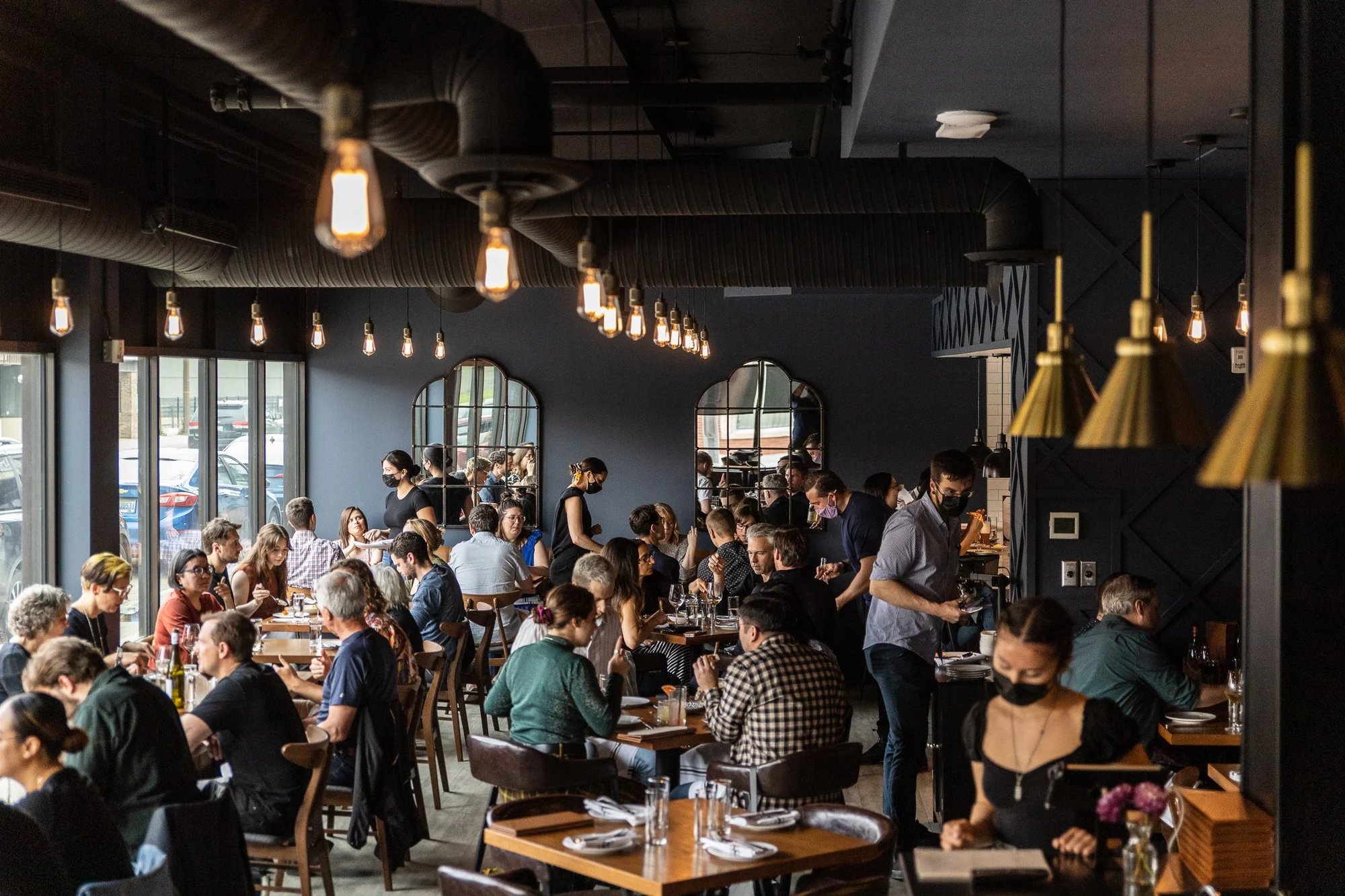
Where the Menu Refuses to Stay in One Place
St. Boniface, Winnipeg's historically French neighbourhood on the east bank of the Red River, has quietly become one of the more interesting stretches in the city for independent restaurants. The area's dining character is defined less by a single cuisine than by a pattern of small, owner-operated rooms that operate outside the downtown core's louder, higher-traffic scene. NOLA, at 300 Tache Ave, fits that pattern. It is a casual, small-plates room where the energy runs warm rather than formal, and where the menu signals immediately that the kitchen is not interested in staying in one lane.
The physical setting reinforces the approach. The space has been described consistently as fun and funky — a room that reads as deliberately low-key rather than aspirationally polished. That distinction matters in Winnipeg's current dining moment, where a number of the city's more compelling restaurants have moved away from the white-tablecloth register entirely. The audience here is not looking for ceremony; they are looking for cooking that earns its attention through range and precision rather than presentation theatre.
The shortlist, unlocked.
Hard-to-book tables, cellar releases, and concierge-planned trips.
Get Exclusive Access →A Menu Built from Two Coasts and Several Traditions
The cross-cultural cooking that defines NOLA's menu has become one of the more visible trends in Canadian independent restaurants over the past decade. Chefs with dual or multiple cultural inheritances have been increasingly willing to let that range show explicitly on the plate rather than editing toward a single, legible identity. At NOLA, that means a menu that draws from West Coast casual dining and Chinese culinary tradition simultaneously, and does so without treating either as a theme or concept. The result is a list of small plates that spans Reuben gyozas, gunpowder roasted carrots, and tuna crudo with coconut-pandan sauce — three dishes that sit in entirely different flavour registers, connected mainly by a shared emphasis on seasonal produce and seafood.
Chef behind this approach is Emily Butcher, previously of Deer + Almond, which spent years as one of Winnipeg's most discussed small-plates rooms. That lineage is relevant context, not biography: Deer + Almond helped establish a template for Winnipeg dining in which the small-plate format serves genuine culinary ambition rather than just casual convenience, and Butcher's move to NOLA carries that expectation with it.
Seafood weighting is pronounced. In a landlocked prairie city, a restaurant that leans into ocean ingredients as a primary identity takes a deliberate position , one that aligns NOLA more closely with Vancouver's casual fine-dining register than with the red-meat-forward comfort cooking that still dominates much of Winnipeg's mid-range scene. Canadian restaurants working in this territory, from AnnaLena in Vancouver to Narval in Rimouski, tend to treat seafood not as a luxury marker but as a vehicle for ingredient-led technique. NOLA's coconut-pandan tuna crudo sits in that lineage.
The Cultural Logic Behind the Combinations
Specific combination of West Coast sensibility and Chinese culinary heritage at NOLA is worth examining as a broader tendency rather than just a personal signature. West Coast Canadian cooking , particularly in Vancouver , has absorbed Chinese, Japanese, and Southeast Asian influence more deeply than any other regional cuisine in the country, largely because of the demographics of the Pacific cities. Chefs who trained or ate in that environment carry those reference points as part of their culinary baseline, not as a borrowing from another tradition. When that background moves inland, as it does here, the results often read as genuinely hybrid rather than fusion in the decorative sense.
Gyoza-Reuben combination illustrates the principle. The Reuben is a deli sandwich with a specific set of flavour signals , cured beef, fermented cabbage, sharp cheese. Reformatting those signals inside a gyoza wrapper is not fusion for novelty's sake; it is a question about what the wrapper can do with those flavours, and whether the steamed or pan-fried cooking method changes how the sourness and fat register. That kind of question, applied across a menu, produces cooking that rewards attention without requiring explanation. Similarly, the gunpowder-roasted carrot sits at the intersection of Indian spice blending and a Western vegetable preparation tradition, with the spice doing structural work rather than decorative dusting.
For readers comparing NOLA's approach to how cultural synthesis operates at more formally recognised Canadian tables, the distance between this room and something like Alo in Toronto or Tanière³ in Québec City is largely a matter of register and price point rather than ambition. The cross-cultural cooking impulse runs through Canadian independent restaurants from ÄNKÔR in Canmore to Jérôme Ferrer - Europea in Montréal; NOLA operates in a casual, accessible tier of that same conversation. Internationally, the precision-driven cultural synthesis visible at Atomix in New York City or the seafood rigour of Le Bernardin in New York City defines what the most formally ambitious end of this territory looks like; NOLA's value is that it brings a version of that sensibility to a neighbourhood room without the associated formality or price.
Drinks, Dietary Range, and Who This Room Works For
The drinks programme at NOLA includes local brews on tap and a selection of low-alcohol cocktails , a combination that reflects current hospitality thinking about inclusivity in the drinks category. The low-alcohol cocktail movement has gained ground across Canada's independent restaurant scene as a response to a genuine shift in how a portion of dining audiences want to engage with the drinks list. Having that option on a menu that also runs local draft beer signals a room paying attention to how its audience actually drinks rather than defaulting to a wine-forward structure because that is what restaurant convention dictates.
Vegetarian diners are well served. The menu's breadth , gunpowder carrots, the wider seasonal plate rotation , means that plant-based eating here is not an afterthought or a single adapted dish. In a small-plates format, vegetarian depth is often the clearest indicator of how seriously the kitchen takes the whole menu rather than just its protein anchors.
NOLA sits in the accessible tier of Winnipeg's independent dining scene. The small-plates format, casual room, and non-formal service register make it appropriate for a wider range of occasions than a tasting-menu room. For context on how it sits within Winnipeg's wider dining options, the full Winnipeg restaurants guide maps the city's current independent scene in detail. Those planning a longer stay can find accommodation and evening options across the Winnipeg hotels guide, bars guide, wineries guide, and experiences guide. Readers interested in what Winnipeg's small-plates scene looked like before NOLA opened should also note Deer + Almond's role in shaping the format's local appetite, and Yujiro for a contrasting Japanese-led approach within the same city.
Planning Your Visit
NOLA is located at 300 Tache Ave Unit 101, in Winnipeg's St. Boniface neighbourhood , a short drive or cab ride from the downtown core, easily combined with an evening in the area. Booking details and current hours are leading confirmed directly with the venue, as specific scheduling and reservation policies are not published centrally. The casual room and small-plates format mean the table moves at a pace set by the diner rather than a tasting-menu clock, which suits both shorter and longer evenings. Given the neighbourhood's quieter foot traffic compared to the Exchange District, arriving with a reservation rather than walking in is the lower-risk approach.
The shortlist, unlocked.
Hard-to-book tables, cellar releases, and concierge-planned trips.
Get Exclusive Access →Frequently Asked Questions
Cost Snapshot
These are the closest comparables we have in our database for quick context.
| Venue | Price | Awards | Notes |
|---|---|---|---|
| NOLA | Emily Butcher (ex-Deer + Almond) mines West Coast vibes and her Chinese heritage… | This venue | |
| Alo | $$$$ | Michelin 1 Star | Contemporary, $$$$ |
| Sushi Masaki Saito | $$$$ | Michelin 2 Star | Sushi, Japanese, $$$$ |
| Aburi Hana | $$$$ | Michelin 1 Star | Kaiseki, Japanese, $$$$ |
| AnnaLena | $$$$ | Michelin 1 Star | $$$$ · Contemporary, $$$$ |
| Don Alfonso 1890 | $$$$ | Michelin 1 Star | Contemporary Italian, Italian, $$$$ |
Need a table?
Our members enjoy priority alerts and concierge-led booking support for the world's most difficult tables.
Get Exclusive AccessThe shortlist, unlocked.
Hard-to-book tables, cellar releases, and concierge-planned trips.
Get Exclusive Access →