Nōksu



1 Michelin Star · Wine Spectator Best of Award of Excellence
Our verdict
Behind a code-locked door on West 32nd Street in Koreatown, Nōksu operates a black marble counter format that places modern Korean technique, particularly its squab prepared in the style of Peking duck, against a $$$$ price tier occupied by Michelin-starred peers. The restaurant earned its first Michelin star in 2024 and runs dinner service Wednesday through Sunday, with a wine program of 1,075 selections weighted toward France and California.

Pearl is the En Primeur Club membership app, where members save venues, book tables and use the concierge.
The menu
What to order
- Surf Clam with Hen-egg Custard Caviar and Scallion
- Smoked Quail
- Gizzard Shad
Koreatown's Counter Format and the Rise of Upscale Korean Dining
Korean cooking in New York has followed a trajectory familiar in other immigrant cuisines: a long period of neighborhood-anchored establishments, then a generation of chefs translating the tradition into the city's fine-dining vocabulary. That second generation now occupies a distinct tier. Atomix, with its tasting-menu format and multi-Michelin recognition, sits at the category's ceiling. Nōksu, which earned its first Michelin star in 2024, represents the category's expanding middle, committed to technique and sourcing at a $$$$ price point, but built around a counter format that keeps the experience immediate rather than ceremonial.
The address places this squarely in the geography of the tradition it refines. West 32nd Street is the spine of Koreatown, a block-dense corridor between Fifth Avenue and Broadway where Korean barbecue, karaoke, and late-night dining have coexisted for decades. That Nōksu operates here rather than in a higher-rent neighborhood signals something about its intentions: the cuisine and the community are the context, not a backdrop to be escaped.
The Counter, the Tweezers, and What Korean Technique Looks Like in 2024
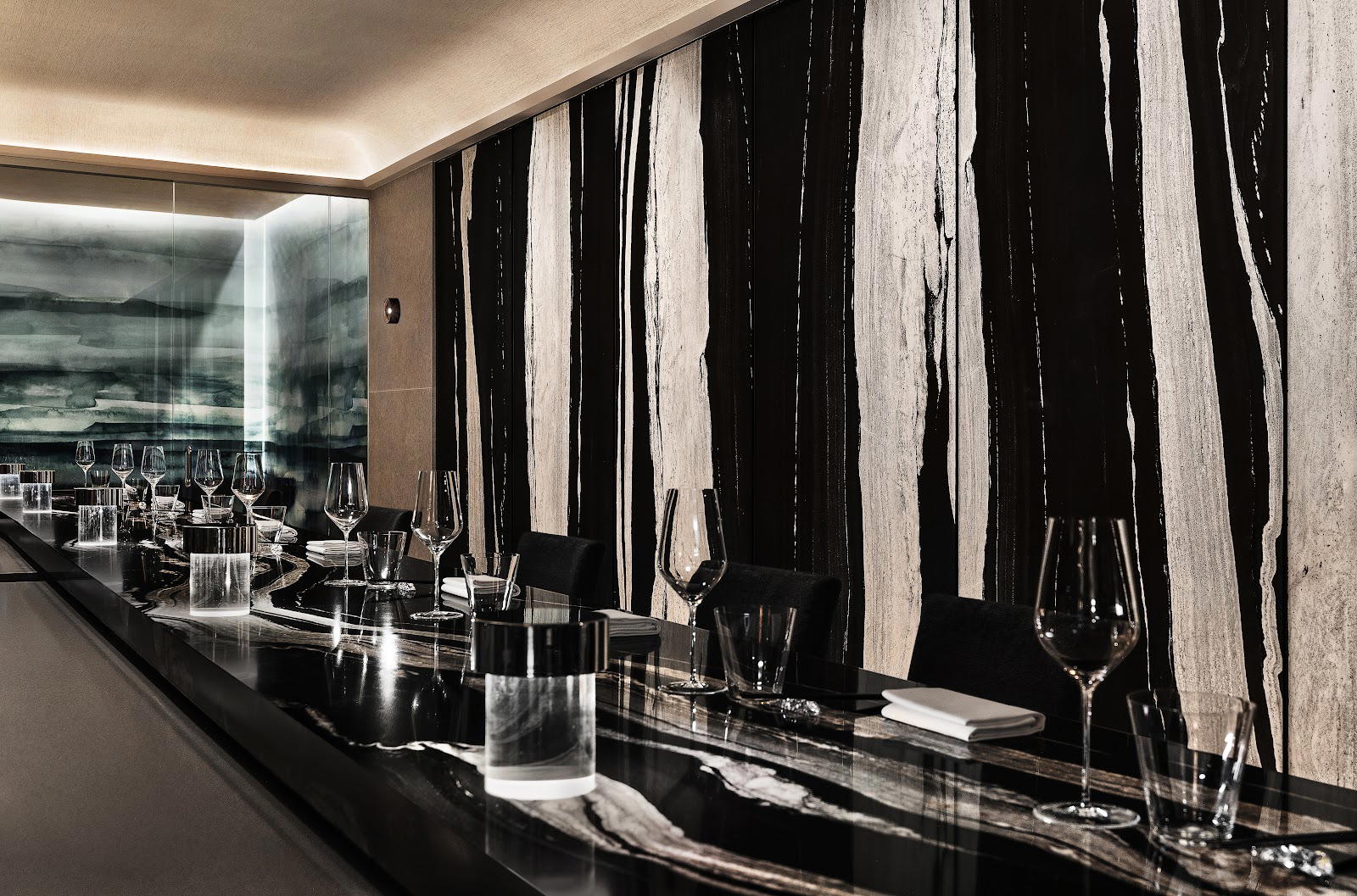
The room itself communicates the program before a dish arrives. A black marble counter runs the length of the space, and the kitchen operates in full view. Every chef works with tweezers, the instrument that has become shorthand for precision cooking globally but carries particular weight in a Korean fine-dining context where banchan presentation has always demanded careful composition. The format places the cooking at the center of the room rather than behind closed doors, the counter model that Masa has long used for Japanese omakase, repurposed here for a Korean-inflected menu heavy on seafood.
Crab, fluke, clams, and mackerel appear as anchors of the seafood program, reflecting the coastal and river-heavy sourcing traditions of Korean cooking. At the $$$$ tier, seafood execution is a useful comparator across cuisine categories: Le Bernardin has defined the ceiling for French seafood technique in New York for decades, while Nōksu applies Korean precision to similar primary ingredients from a fundamentally different flavor logic, fermentation, char, broth concentration rather than cream and butter reduction.
The Squab as Signature: Korean Technique Meets Peking Duck Logic
Nōksu's signature dish is not fried chicken. But the cultural and technical logic that produced Korean fried chicken's global moment, the discipline of hot-oil cookery, the commitment to controlled heat application, the theatricality of the frying process, runs directly through the squab preparation that defines the Nōksu experience.
Korean fried chicken's influence on fine dining has been underappreciated. The technique of double frying, which produces a thin, crackling crust without heavy batter, and the practice of sauce application at the final moment, represent a precision logic that fine-dining kitchens have absorbed. The repeated oil-basting method used at Nōksu for its dry-aged squab, a chef ladling hot oil over the bird repeatedly, a technique borrowed structurally from Peking duck preparation, belongs to the same tradition of controlled, repetitive heat application. The result is, by all documented accounts, the restaurant's defining moment of theater and its clearest technical statement.
The squab is dry-aged in a visible refrigerator, a choice that communicates the kitchen's sourcing philosophy to anyone sitting at the counter. Dry aging in a display context has become a trust signal in high-end restaurants globally; at Nōksu it also prepares the diner for what the basting process will eventually produce, a bird with concentrated flavor and a lacquered exterior that references Chinese roasting traditions while operating within a Korean culinary framework. This cross-referencing of technique across East Asian traditions is one of the more interesting things happening in New York's Korean fine-dining scene right now.
The Setting: A Code-Locked Door and 80s Hits in the Subway Corridor
The entrance requires a code, a detail that sits oddly with the straightforwardness of the Koreatown address but makes more sense once you understand the physical context. The restaurant occupies a space described as underground, in the building infrastructure below street level at Herald Square. The subway system runs beneath much of Midtown Manhattan, and building basements in this corridor connect to it in ways that create genuinely unusual real estate. Fine dining in basement and below-grade spaces has precedent across Manhattan, but Nōksu's specific configuration, black marble, full-view counter, precision cooking, and an 80s soundtrack playing overhead, produces a register that is neither ironic nor reverent. It is simply New York: the city's tendency to place serious things in improbable rooms.
That tendency appears across the city's leading restaurants. Eleven Madison Park and Per Se operate in grand, purpose-built spaces. Nōksu operates in the opposite register, which is itself a statement about where Korean fine dining sits in the city's self-image: technically serious, locally embedded, and not particularly interested in performing grandeur for its own sake.
The Wine Program: 1,075 Bottles and France-California Depth
Wine Director Anthony Salazar oversees a list of 1,075 selections with documented strength in France and California, priced at the $$$ tier with many bottles above $100. A corkage fee of $100 applies for bottles brought in, which positions Nōksu in the range typical for Michelin-starred Manhattan restaurants rather than at the ceiling occupied by some multi-starred peers.
The French-California axis is a conventional choice for a New York fine-dining program, but 1,075 selections at a restaurant of this size and format suggests breadth beyond the obvious. General Manager Matthew Mako and the ownership team of Bobby Kwak and Joe Ko have constructed a program that functions as a genuine destination for wine-focused diners, not simply as an adjunct to the food. At comparison venues like Lazy Bear in San Francisco or Alinea in Chicago, wine programs at this depth are understood as a co-equal part of the experience rather than a secondary consideration.
Internationally, the model of pairing technically demanding Asian cuisine with European-weighted wine programs has precedent: 8½ Otto e Mezzo Bombana in Hong Kong has long demonstrated that serious European wine collections can operate coherently alongside Asian cooking. Nōksu's list reads as part of that broader shift in how non-European fine-dining restaurants approach their wine identity.
Peer Context: Where Nōksu Sits in New York's $$$$ Restaurant Tier
New York's $$$$ restaurant tier is competitive in ways that make a first Michelin star in 2024 a meaningful credential rather than a baseline. The restaurants that occupy this price bracket, and the Michelin starred subset within it, are subject to consistent critical scrutiny, and the list turns over.
Compared to tasting-menu operations at The French Laundry in Napa, Single Thread Farm in Healdsburg, or Providence in Los Angeles, Nōksu operates in a more compressed, immediate format. The counter setting and the visible kitchen create a different energy from a multi-course dining room. Alain Ducasse at Louis XV in Monte Carlo or Emeril's in New Orleans represent the dining-room tradition; Nōksu's counter model belongs to a different lineage, one that values proximity to the cooking as a form of hospitality in itself. For more context on how Nōksu fits into the broader New York dining scene, see our full New York City restaurants guide.
Know Before You Go
- Address: 49 W 32nd St, New York, NY 10001 (Koreatown, Herald Square)
- Hours: Wednesday through Sunday, 5:30 PM–11 PM. Closed Monday and Tuesday.
- Price: $$$$; cuisine pricing at $$$ (typical two-course meal $66+, not including beverages or tip)
- Wine: 1,075 selections; France and California strengths; $$$ pricing tier; corkage fee $100
- Michelin: 1 Star (2024)
- Format: Black marble counter, full kitchen view, dinner only
- Explore more: New York City hotels guide | New York City bars guide | New York City wineries guide | New York City experiences guide
Frequently asked questions
Is Nōksu more mid-range or high-end?
Pricing at Nōksu is listed as $$$$.
What are the operating hours at Nōksu?
Hours at Nōksu: Monday closed Tuesday closed Wednesday 5:30 PM-11 PM Thursday 5:30 PM-11 PM Friday 5:30 PM-11 PM Saturday 5:30 PM-11 PM Sunday 5:30 PM-11 PM.
What's the address for Nōksu?
Nōksu is located at 49 W 32nd St, New York, NY 10001, New York City.
Comparable Spots
| Venue | Cuisine | Price | Awards | Notes |
|---|---|---|---|---|
| NōksuThis venue (the venue you are viewing) | Modern Korean Tasting Counter | $200–300 | 1 Michelin Star · Wine Spectator Best of Award of Excellence | Not listed |
| Le Bernardin | French Seafood Fine Dining | $300–500 | 3 Michelin Stars · World's 50 Best #13 | French, Seafood |
| Atomix | Modern Korean Tasting Menu | $300–500 | 2 Michelin Stars · World's 50 Best #7 | Modern Korean, Korean |
| Masa | Seasonal Hokkaido Tempura Omakase | $150–200 | Tabelog 100 #34 | Sushi, Japanese |
| Per Se | French Fine Dining Tasting Menu | $300–500 | 3 Michelin Stars · World's 50 Best #40 | French, Contemporary |
| Eleven Madison Park | Contemporary Plant-Based Fine Dining | $300–500 | 3 Michelin Stars · World's 50 Best #4 | French, Vegan |
Recognition history
Dated appearances from independent guides and award organizations, with the underlying list record or original source where available.
Michelin 1 Star
Michelin
Opinionated About Dining Top Restaurants in North America Highly Recommended
Opinionated About Dining
Wine Spectator Best of Award of Excellence
Wine Spectator
Full recognition history (5 entries)
Wine Spectator Award of Excellence
Wine Spectator
Michelin 1 Star
Michelin
Continue exploring
More in New York City
Restaurants in New York City
All restaurants in New York City →
Bars in New York City
All bars in New York City →






Nōksu
The wine
Nōksu holds the Wine Spectator Best of Award of Excellence, which Wine Spectator gives to lists of usually 350 or more selections.
- Wine program
- Deep wine list
- Wine Spectator
- Wine Spectator Best of Award of Excellence
- Selections
- 300
- Bottles in cellar
- 1,075
- List strengths
- France, California
- Wine director
- Anthony Salazar
- Extensive wine list
- Sake program
Details
- Intimate
- Modern
- Sophisticated
- Elegant
- Date Night
- Special Occasion
- Celebration
- Chefs Counter
- Open Kitchen
- Extensive Wine List
- Sake Program
Current opening hours
- Monday
- Closed
- Tuesday
- Closed
- Wednesday
- 5–11 PM
- Thursday
- 5–11 PM
- Friday
- 5–11 PM
- Saturday
- 5–11 PM
- Sunday
- 5:30–11 PM
Hours can change for holidays and private events. Hours as of .
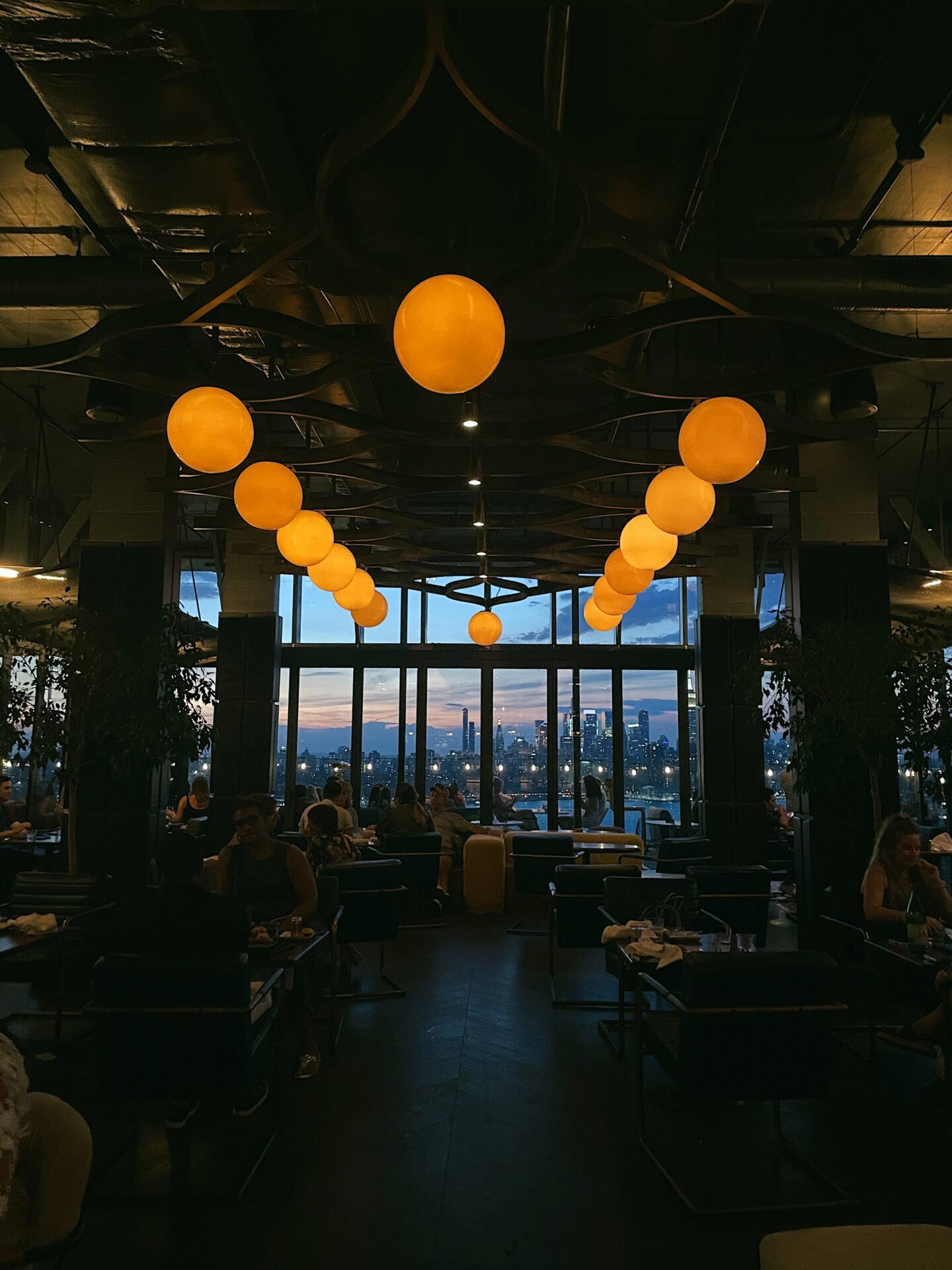
Sleek, moodily lit space with black and white contrasts inspired by Korean ink paintings, open kitchen view, and serene speakeasy atmosphere.