Nasi Lemak Pak Aji
Nasi lemak in Kampung Baru occupies a specific cultural register that fine-dining rooms cannot replicate. Nasi Lemak Pak Aji operates from Jalan Raja Muda Musa, one of Kuala Lumpur's most established Malay enclaves, where the dish is served in its everyday, unadorned form, coconut rice, sambal, and accompaniments assembled without ceremony and consumed before the city fully wakes up.
Pearl is the En Primeur Club membership app — saves, bookings, and concierge access live there. Same editors, same standards.
- Address
- 4, Jalan Raja Muda Musa, Kampung Baru, 50300 Kuala Lumpur, Wilayah Persekutuan Kuala Lumpur, Malaysia
- Phone
- +60 11 5111 1991
- Website
- nasilemakantarabangsa.my
- Directions
- Get directions
 Saves & bookings on Pearl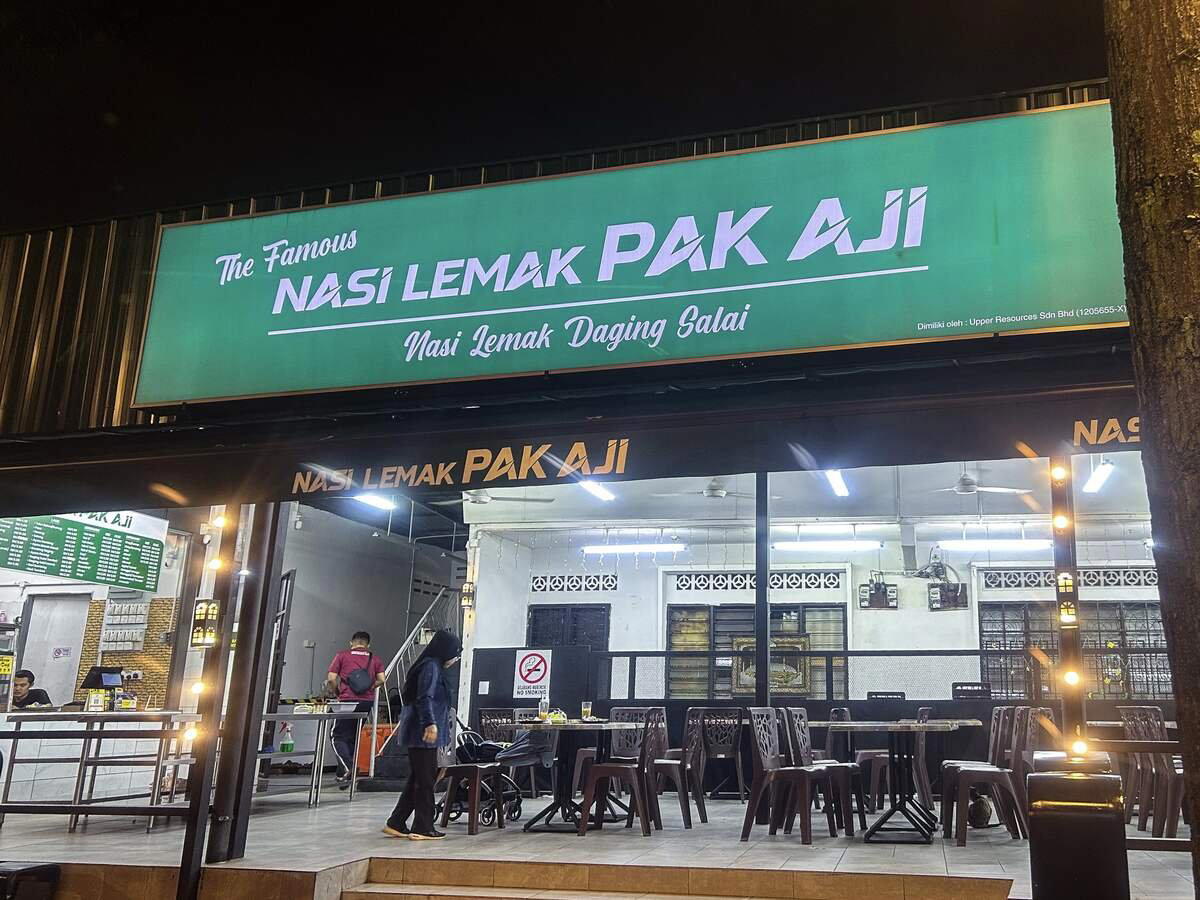
Kampung Baru and the Architecture of the Malaysian Breakfast
Nasi Lemak Pak Aji is a casual Malaysian nasi lemak restaurant in Kuala Lumpur, priced at about $5 per person. Kampung Baru, the Malay residential enclave sitting just north of KLCC, has functioned as a culinary anchor for Kuala Lumpur's Malay food culture for decades. While the city's restaurant scene has fragmented into price tiers and concept formats, with tasting-menu addresses like Dewakan and Beta reinterpreting Malaysian ingredients through contemporary frameworks, Kampung Baru has largely resisted that recasting. The food here is not in conversation with those formats. It answers a different question entirely.
Nasi Lemak Pak Aji sits on Jalan Raja Muda Musa, a street in Kampung Baru that has historically concentrated Malay food stalls and vendors serving a predominantly local clientele. The address places it inside one of the city's most culturally coherent food corridors, where the benchmark is not ambience or technique as understood by restaurant critics, but consistency and the accumulated trust of a neighbourhood that eats the same breakfast repeatedly and notices when something changes.
What Nasi Lemak Actually Is, and What Kampung Baru Demands of It
Nasi lemak is Malaysia's most discussed dish in both policy and popular culture, officially designated as a national heritage food. But the designation flattens what is in practice a highly differentiated category. At its simplest, nasi lemak is rice cooked in coconut milk and pandan leaf, served with sambal, a hard-boiled or fried egg, fried anchovies, and roasted peanuts, sometimes wrapped in banana leaf for portability. At its most elaborate, it becomes the anchor of a full meal, surrounded by rendang, fried chicken, squid sambal, and cucumber slices. The distance between those two versions is wide, and Kampung Baru vendors occupy specific points along that spectrum.
The sambal is the technical and reputational centre of any nasi lemak operation. Dried chillies, shallots, garlic, belacan, and often tamarind are ground and cooked down into a paste that should carry heat, depth, and a controlled sweetness without becoming cloying. The ratio and cooking time separate a pedestrian sambal from one worth crossing the city for. In Kampung Baru, where regulars eat nasi lemak on consecutive mornings, the sambal is evaluated seriously and without sentimentality.
The rice itself is the second variable. Coconut milk concentration, pandan intensity, and cooking method determine whether the rice holds its structure on the plate or collapses into a gummy mass. In the wrapped, portable format, the rice also needs to steam correctly inside the leaf, absorbing residual moisture without losing texture. These are practical craft judgements that Kampung Baru's repeat customers make intuitively.
The Stall Format and Its Logic
Nasi lemak in this category is not a restaurant. The stall format that defines places like Nasi Lemak Pak Aji operates on a different economy and a different set of social contracts. Turnover is high, seating is functional, and the interaction between vendor and customer is transactional rather than hospitality-oriented. That is not a limitation. It is the correct format for a dish that is consumed quickly, often before 9am, by people who have somewhere to be.
This contrasts sharply with the sit-down, multi-course positioning of addresses like DC. by Darren Chin or the ingredient-forward tasting menus at Molina and Ling Long. Those venues are building an argument about what Malaysian or global cooking can become. Nasi lemak stalls in Kampung Baru are not building an argument. They are executing a known form with consistency, and the reputation of a stall rises or falls on whether that execution holds across years and across the density of a regular customer base.
The same dynamic appears at heritage food addresses elsewhere in Malaysia. The stall or shophouse format is not a precursor to something more developed. For certain foods and certain communities, it is the appropriate final form.
Kampung Baru as a Food District
Jalan Raja Muda Musa and the surrounding streets form a food corridor that functions most actively in the early morning and at lunch. Weekend mornings draw a wider catchment, with visitors arriving from across Kuala Lumpur to eat in a neighbourhood that still operates on its own social and commercial rhythms. The Kampung Baru area borders the Chow Kit market district and sits within walking distance of the Kampung Baru LRT station, which provides direct access from most central KL points. Arriving early, before 9am on weekdays and earlier on weekends, is the practical approach for high-demand stalls.
The food profile of Kampung Baru skews Malay-Muslim, which means halal credentials are assumed and the accompaniment options at nasi lemak stalls tend toward rendang, ayam goreng, and sambal sotong rather than the pork-based additions found in Chinese-operated nasi lemak formats elsewhere in the city. That distinction matters for some diners and is worth understanding before arrival.
Visitors exploring Malaysian food across multiple cities will find useful reference points in the contrasts between Kampung Baru nasi lemak and, say, the more resort-oriented dining at The Dining Room at The Datai Langkawi or the pan-Asian format at Lavo and Lavo Gallery in Petaling Jaya. The price differential between these categories is significant. Nasi lemak at a Kampung Baru stall sits at one accessible price point in the Malaysian eating spectrum, often under ten ringgit for a full plate, which places it in the same value tier as BM Cathay Pancake in Seberang Perai and similar heritage street food operations.
Planning Your Visit
Nasi Lemak Pak Aji is located at 4, Jalan Raja Muda Musa, Kampung Baru, 50300 Kuala Lumpur. No booking is required at the restaurant. Arrival time is the only variable within the visitor's control: the stall operates on a sell-out model, meaning particularly popular items, particularly specific lauk accompaniments, can run out before mid-morning. Weekend mornings are busiest and early arrival is the practical solution. Payment is cash-based at most stalls in this category. For dining at opposite ends of the price and format spectrum, Le Bernardin in New York City and Lazy Bear in San Francisco represent how the tasting-counter format operates in a different culinary register entirely.
Pricing, Compared
Comparable venues nearby, for context on price, style, and recognition.
| Venue | Cuisine | Price | Notes |
|---|---|---|---|
| Nasi Lemak Pak AjiThis venue — the venue you are viewing | Kampong Baharu, Malaysian Nasi Lemak | $ | Not listed |
| Penrose | City Centre, Modern Cocktail Bar | $$ | Not listed |
| Village Park Restaurant, TnR by Sean & Angie, and Fook Heong Bak Kut Teh | Not listed | $$ | Damansara Utama, Petaling Jaya, Traditional Malaysian Nasi Lemak |
| Basic Wine Store | Not listed | $$ | Mont Kiara, European Bistro with Natural Wines |
| Loke Yun Chicken Rice | Ampang, Hainanese Chicken Rice | $ | Not listed |
| TTDI Meat Point | Taman Tun Dr Ismail, Halal Steakhouse | $$ | Not listed |
Continue exploring
More in Kuala Lumpur
Restaurants in Kuala Lumpur
Browse all →
Bars in Kuala Lumpur
Browse all →




At a Glance
- Lively
- Casual Hangout
- Open Kitchen
Current opening hours
- Monday
- 6 AM–2 AM
- Tuesday
- 6 AM–2 AM
- Wednesday
- 6 AM–2 AM
- Thursday
- 6 AM–2 AM
- Friday
- 6 AM–2 AM
- Saturday
- 6 AM–2 AM
- Sunday
- 6 AM–2 AM
Hours can change for holidays and private events. Last verified .
Casual open-air atmosphere with lively street-side dining.