Monk's Cafe
A South of Rittenhouse Square institution on 16th Street, Monk's Cafe has anchored Philadelphia's Belgian beer bar tradition for decades. The worn wood, church pew seating, and serious draft list place it firmly in the category of bars that function as genuine gathering points rather than themed concepts. It draws a cross-section of the city that few comparable venues manage.
Pearl is the En Primeur Club membership app — saves, bookings, and concierge access live there. Same editors, same standards.
- Address
- 264 S 16th St, Philadelphia, PA 19102
- Phone
- +1 215 545 7005
- Website
- monkscafe.com
- Directions
- Get directions
 Saves & bookings on Pearl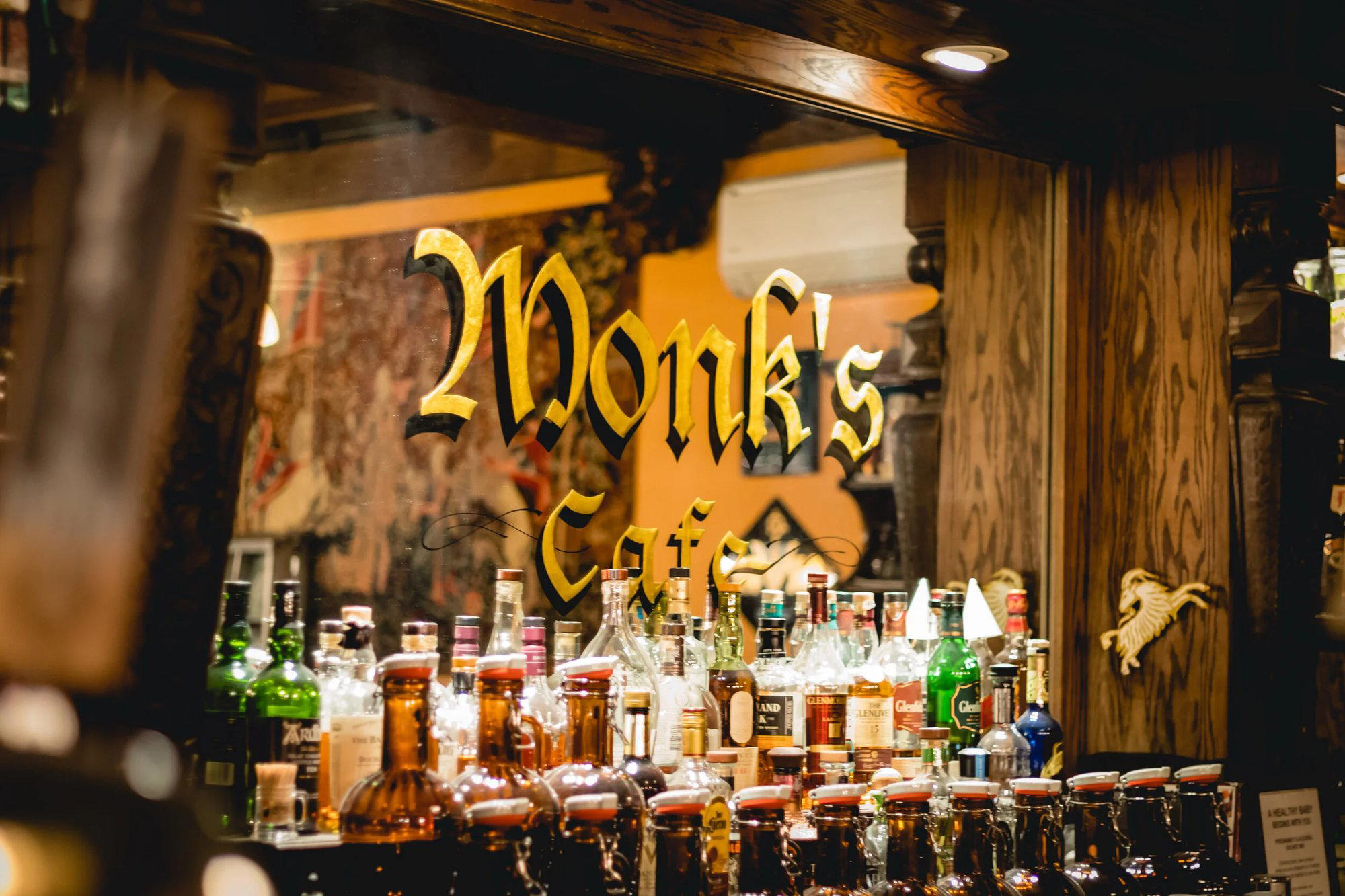
The Room That Made the Bar
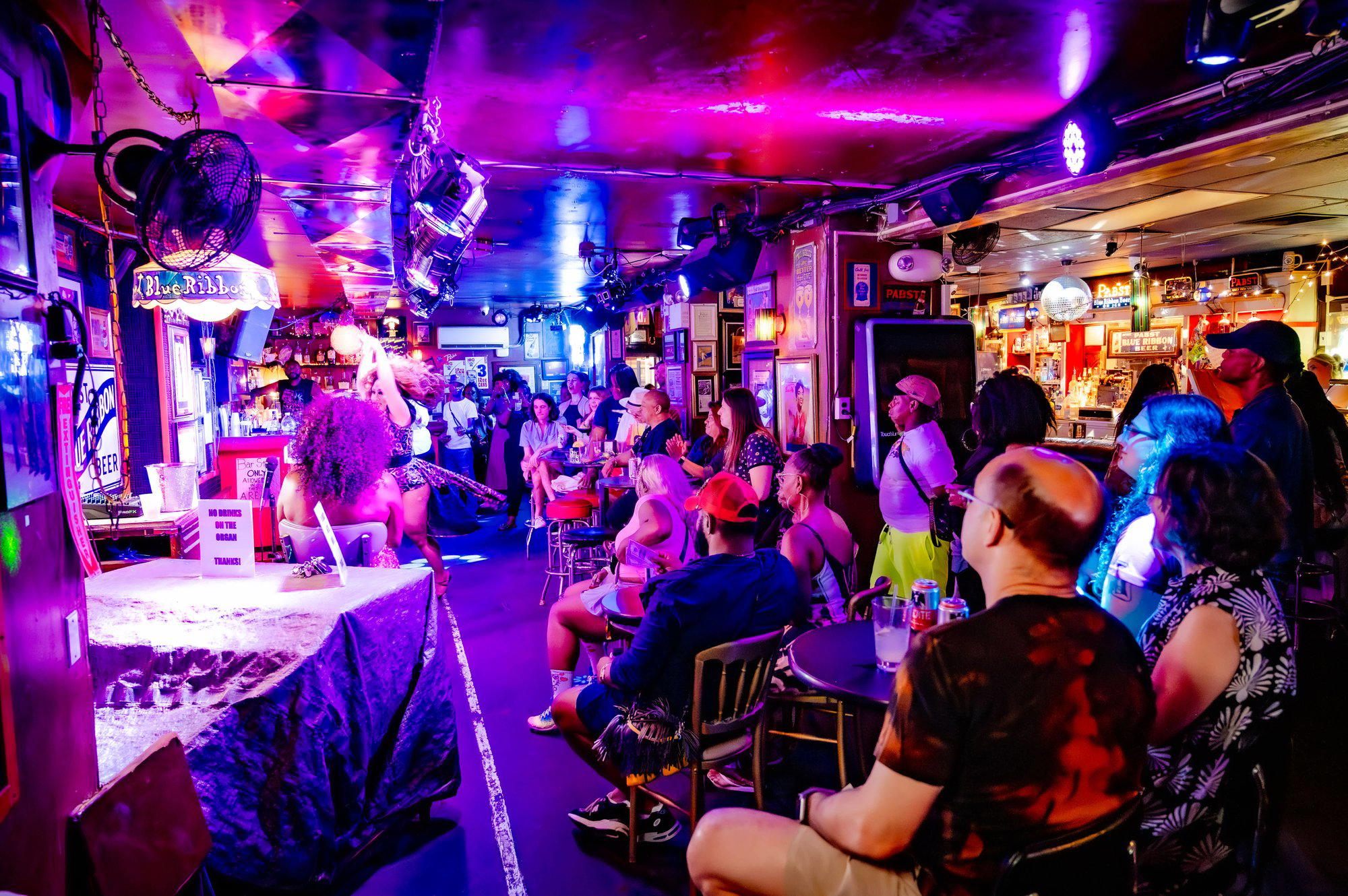
Monk's Cafe is a Belgian gastropub in Philadelphia. Before you read the tap list at Monk's Cafe, the room has already told you something. The interior on South 16th Street operates in the tradition of the Belgian bruine kroeg, the brown cafe, where dark wood, low light, and the accumulated weight of years of use do more atmospheric work than any deliberate design intervention could. Church pew benches line the walls. The bar itself is long and functional, oriented toward the serious business of draft beer rather than the performance of it. Philadelphia has produced several bars with strong beer programs, but few that have allowed the physical container to age into something this coherent.
That distinction matters in a city where the neighborhood bar has split into two directions: the gastropub renovation, all exposed Edison bulbs and reclaimed timber deployed with obvious intent, and the dive, which earns its character through neglect rather than curation. Monk's occupies a third category, one where the wear is real but the program behind it is not accidental. The space on 16th Street, a block from Rittenhouse Square, has been refined by use rather than by interior designers cycling through trends.
Belgian Beer Culture in an American City
The Belgian cafe tradition that Monk's draws from is one of the more transportable drinking formats in the world. Unlike, say, the Japanese izakaya, which relies on specific culinary infrastructure, the bruine kroeg model travels on draft lines and knowledge. What made Belgian beer culture exportable to American cities in the 1990s and early 2000s was a combination of factors: the complexity and range of the beer styles, the food pairing logic built into the tradition, and the physical format of the bar itself, which invites long occupancy rather than quick turnover.
Philadelphia in that period was a receptive city. Its bar culture, particularly around Rittenhouse and South Philly, had an appetite for substance over concept. Monk's arrived at a moment when craft and import beer culture was building institutional momentum in the United States, and it grew into something more durable than a trend response. The Belgian beer category has since fractured and expanded, American craft breweries now produce saisons, tripels, and lambic-adjacent sours at scale, which means the tap list at a serious Belgian-focused bar in 2024 requires more curation than it did in 1997. The bar's position in the city's beer conversation has shifted accordingly, from novelty to reference point.
Where Monk's Sits in Philadelphia's Dining and Drinking Scene
Rittenhouse Square draws a concentration of Philadelphia's most discussed restaurants. Fork (New American) and Friday Saturday Sunday (New American) both operate in the refined American dining register that defines much of the neighborhood's restaurant identity. My Loup (French-Inspired) adds a European-leaning counterpoint. Against that dining context, Monk's functions as something different: an anchor rather than a destination, a place that draws regulars on Tuesday evenings as readily as it draws visitors on weekends.
The comparison set for Monk's is not other Belgian bars in Philadelphia, the format is rare enough that direct comparison is limited, but rather the broader category of serious beer bars that have achieved genuine neighborhood institution status in American cities. That category is defined less by tap count than by the combination of program depth, physical permanence, and the kind of mixed clientele that signals a bar has escaped its original demographic gravity. Monk's draws a cross-section of the city that bars launched on concept alone rarely sustain past the first few years.
For visitors building a Philadelphia itinerary that moves between table-service dining and serious drinking, the geography matters. South Philly Barbacoa (Mexican) and Mawn (Cambodian, Pan-Asian) represent the city's appetite for specific, technique-driven cooking in less formal registers, a different evening structure than what Monk's offers, but part of the same argument that Philadelphia's dining and drinking scene rewards exploration beyond the Rittenhouse core.
The Beer Bar as a Spatial Argument
What the bruine kroeg format argues, spatially, is that the leading drinking environment is one that recedes. The design task is to create a room where the beer, the conversation, and the company become the foreground, while the physical container supports without competing. The wooden booths at Monk's do this by providing enclosure without isolation. The bar seating does it by orienting drinkers toward the draft system and toward each other rather than toward a view or a spectacle. The lighting does it by being warm enough to read a menu and dark enough to not feel clinical.
This is a different design philosophy from what drives much of contemporary American bar culture, where the room is often the primary product and the drinks are secondary. Bars like this one sit at the opposite end of that spectrum from the theatrically designed cocktail programs at places like Atomix in New York City, where the space communicates ambition through precision. The bruine kroeg communicates something closer to indifference to impression, and that indifference is itself a form of confidence.
The broader American fine dining conversation, anchored by institutions like The French Laundry in Napa, Le Bernardin in New York City, and Blue Hill at Stone Barns in Tarrytown, is one where space, service, and program are designed to signal investment. The serious neighborhood bar sits outside that conversation by choice, and its value is precisely that it does not compete on those terms. Regional peers like Smyth in Chicago and Lazy Bear in San Francisco demonstrate how American cities have developed their own fine dining languages; what Monk's demonstrates is that institutional durability does not require that register.
Planning a Visit
Monk's Cafe sits at 264 S 16th Street in Philadelphia, one block from Rittenhouse Square, which makes it a natural stop before or after dinner at any of the neighborhood's table-service restaurants. The bar's format, walk-in, long occupancy, rotating tap list, suits an evening that is not tightly scheduled. Arriving at the bar rather than angling for a booth gives the leading access to the draft system and the staff who know it. The kitchen serves Belgian-influenced bar food. For first-time visitors to Philadelphia's bar scene, Monk's functions as a useful orientation point, not because it represents the city's range, but because it represents one mode of doing things well for a long time.
Cuisine and Awards Snapshot
Comparable venues nearby, for context on price, style, and recognition.
| Venue | Cuisine | Price | Notes |
|---|---|---|---|
| Monk's CafeThis venue — the venue you are viewing | Belgian Gastropub | $$ | Not listed |
| Mixto | Cuban, Latin American & Caribbean | $$ | Gayborhood |
| A Fine Line Screening + Brunch & Bubbles Reception | American Brunch with Bubbles | $$ | Logan Square |
| Cafe Lift | Seasonal American Brunch Cafe | $$ | Callowhill |
| Abbaye | American Gastropub | $$ | Northern Liberties |
| Seaforest Bake Shop | Korean Bakery | $$ | Graduate Hospital |
Continue exploring
More in Philadelphia
Restaurants in Philadelphia
Browse all →
Bars in Philadelphia
Browse all →
At a Glance
- Lively
- Classic
- Cozy
- Casual Hangout
- Late Night
- Group Dining
- Historic Building
- Beer Program
Current opening hours
- Monday
- 5–11:45 PM
- Tuesday
- 11:30 AM–11:45 PM
- Wednesday
- 11:30 AM–11:45 PM
- Thursday
- 11:30 AM–11:45 PM
- Friday
- 11:30 AM–11:45 PM
- Saturday
- 11:30 AM–11:45 PM
- Sunday
- 11:30 AM–11:45 PM
Hours can change for holidays and private events. Last verified .