Our verdict
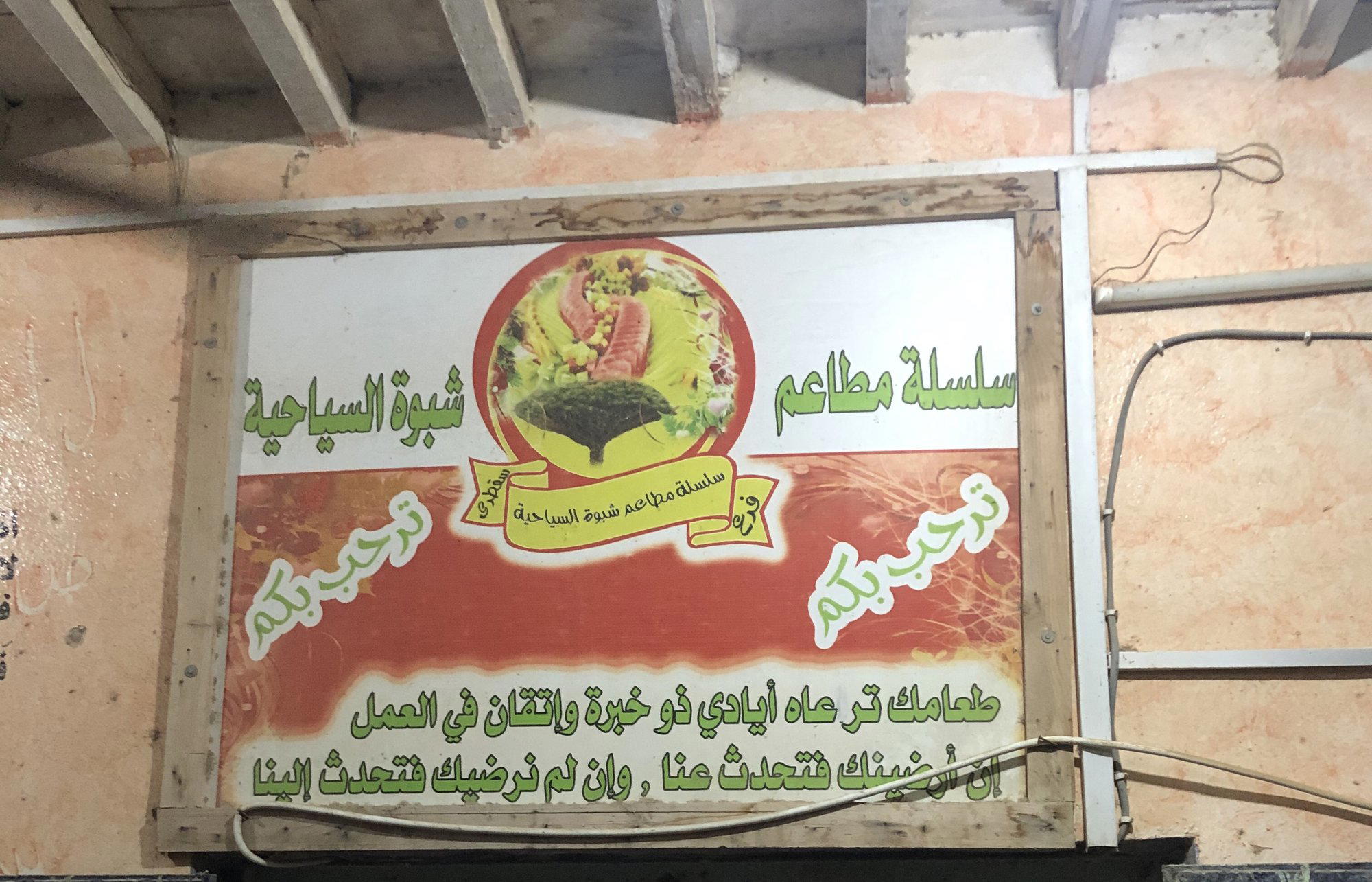
Modern Shabwa sits on Socotra Island in Hadibo, one of the most geographically remote dining destinations on earth. The restaurant draws on the island's extraordinary biodiversity, where endemic flora and centuries-old fishing tradition shape what arrives on the table. For travellers who reach Hadibo, it represents a rare opportunity to eat food that is genuinely shaped by its place.

Pearl is the En Primeur Club membership app — saves, bookings, and concierge access live there. Same editors, same standards.
- Address
- 20 street Hadibo =, Island, Yemen
- Phone
- +967 777 748 677
- Hours
- Daily Open 24 hours
- Directions
- Get directions
The menu
What to order
- Fassulya
- Ful
- Kibda
Eating at the Edge of the World
Socotra Island does not ease you in. The approach to Hadibo, whether by the twice-weekly flights that connect the island to the Yemeni mainland or to Abu Dhabi, deposits you into a range of dragon blood trees, frankincense groves, and a coastline the Arabian Sea has been sculpting for millennia. The town itself is modest: a grid of low buildings, fishing boats pulled onto white sand, and a population that has maintained trading and culinary traditions largely insulated from mainland influence. Modern Shabwa, located on Hadibo's main street, occupies this context directly. It is not a retreat from the island's rawness but an expression of it.
Hadibo functions as the administrative and commercial centre of Socotra, and its restaurants reflect the island's dual identity as both a working fishing community and, increasingly, a destination for travellers drawn by Socotra's UNESCO World Natural Heritage status. For diners engaging seriously with place-driven food, few settings on the Arabian Peninsula offer anything comparable in terms of ecological singularity. Socotra's isolation, which kept it cut off from continental land masses for roughly six million years, produced a degree of endemic biodiversity found almost nowhere else on earth. That isolation is precisely what makes eating here matter. See our full Hadibo restaurants guide for broader context on the island's food scene.
What the Island Puts on the Plate
The editorial logic of ingredient sourcing, applied anywhere, tends to reward specificity. At restaurants operating in isolated island environments, that specificity becomes structural rather than aspirational. Socotra's waters, sitting at the confluence of the Arabian Sea and the Gulf of Aden, produce fish populations shaped by some of the most nutrient-rich upwelling currents in the region. Local fishermen working the waters around Hadibo use traditional methods that have remained largely unchanged across generations, and the catch that results reflects both the health of those fisheries and the knowledge embedded in that practice.
Yemeni coastal cuisine, broadly, draws on a layered spice tradition that reflects centuries of trade through the region's ports. Hadramawt-style cooking, which shares lineage with the Shabwa governorate that gives Modern Shabwa its name, tends toward slow-cooked proteins, complex spice blends incorporating cumin, turmeric, and dried lime, and a bread culture centred on flatbreads eaten as the primary vehicle for broth and sauce. On Socotra, this mainland tradition encounters a local ingredient vocabulary that includes endemic plants, hand-harvested honey from Socotran bees, and fish species that do not appear on menus elsewhere. The result is a cuisine that is neither purely Yemeni nor purely local, but a working synthesis shaped by geography and necessity rather than culinary programme.
This is a markedly different dynamic from the sourcing narratives attached to destination restaurants in places like the Basque Country or coastal California, where provenance has been institutionalised into a marketing vocabulary. Consider how Aponiente in El Puerto de Santa María has built a three-Michelin-star programme around Atlantic marine ingredients, or how Atelier Crenn in San Francisco frames sourcing through a formal sustainability framework. In Hadibo, the sourcing is not a framework. It is simply what is available, and that directness carries its own authority.
Hadibo in the Broader Context of Remote Dining
Restaurants in genuinely remote locations occupy a different category from destination restaurants that require travel. The distinction matters. A traveller flying to San Sebastián to eat at Arzak is making a deliberate pilgrimage to a three-Michelin-star institution with a documented five-decade legacy. A traveller who reaches Hadibo has, by definition, committed to a level of logistical effort that filters the audience considerably. Socotra's air connections are limited and subject to disruption. The island has no developed tourism infrastructure in the conventional sense. Accommodation is basic. The journey itself is the selection mechanism.
The relevant comparison is with the category of places that matter because of where they are and what they genuinely reflect, not because of what awards they have accumulated. Atelier Moessmer Norbert Niederkofler in Brunico offers a useful structural parallel: a restaurant whose argument rests substantially on its engagement with a specific regional larder and landscape, with formal recognition serving as secondary validation of what the place already does. Modern Shabwa operates without that formal recognition layer, but the underlying logic, that geography and sourcing create a dining experience that cannot be replicated elsewhere, applies with equal force.
Planning a Visit
Reaching Hadibo requires advance planning that goes well beyond restaurant booking. Yemenia Airways and FlyDubai have operated routes to Socotra International Airport, though schedules shift with the island's political and security situation, which has remained complex given Yemen's ongoing conflict. Travellers should verify current flight availability and any entry requirements well ahead of travel. The Yemeni conflict has also affected the island's supply chains and, periodically, its connectivity, making flexibility in travel dates advisable.
Given the informal nature of most dining in Hadibo, walk-in visits are likely the standard approach, though travellers staying with local guides or guesthouses will often receive practical recommendations and introductions. That local knowledge layer tends to be more reliable than any published information for a destination at this level of remoteness.
For readers whose appetite for remote food culture extends to more documented contexts, the sourcing-driven programmes at Azurmendi in Larrabetzu, Arpège in Paris, and Benu in San Francisco each offer instructive reference points for how ingredient provenance shapes a menu's identity. The same principle operates in Hadibo, with the significant difference that the provenance here is not curated. It is simply Socotra.
Frequently asked questions
Would Modern Shabwa be comfortable with kids?
Hadibo is a small working town rather than a resort, and Modern Shabwa sits within that local context. No dedicated children's menu or play provisions are documented for the venue. Families travelling to Socotra with children tend to find the island's informal dining culture generally accommodating, though parents should expect a stripped-back setting rather than a child-proofed one.
What kind of setting is Modern Shabwa?
Modern Shabwa is located on Socotra Island in Hadibo, the island's main town and its closest approximation to an urban centre. Given Hadibo's scale and infrastructure, expect a straightforward local dining room rather than a polished destination restaurant. The draw is geographic context as much as décor: few places on earth offer a sit-down meal this far off the conventional travel circuit.
Is Modern Shabwa one of the only restaurants operating in Hadibo, Socotra?
Hadibo has a very limited formal dining scene by any measure — Socotra receives only a few thousand visitors per year and the island's food infrastructure reflects that. Modern Shabwa sits on a named street in Hadibo, making it one of the few identifiable sit-down venues in a town where most eating happens in small local establishments or guesthouses. Travellers flying in via Yemenia Airways or FlyDubai should treat confirmed operating restaurants as a logistical priority rather than an afterthought.
What should I order at Modern Shabwa?
No menu details are currently documented for Modern Shabwa. Socotra's geographic isolation means ingredient supply runs on island logic: fish from the Arabian Sea, locally kept goats, and whatever arrives on the twice-weekly flights from the mainland. Yemeni staples such as saltah, salta-style broths, and rice-based dishes are the regional baseline, and local restaurants in Hadibo typically build around them.
Details
- Rustic
- Casual
- Casual Hangout
- Group Dining
- Family
- Standalone
- A La Carte
- Halal
Current opening hours
- Monday
- Open 24 hours
- Tuesday
- Open 24 hours
- Wednesday
- Open 24 hours
- Thursday
- Open 24 hours
- Friday
- Open 24 hours
- Saturday
- Open 24 hours
- Sunday
- Open 24 hours
Hours can change for holidays and private events. Last verified .
Simple, unpretentious atmosphere with basic furnishings typical of traditional Yemeni restaurants; casual and welcoming to visitors.