
Michelin Bib Gourmand
Our verdict
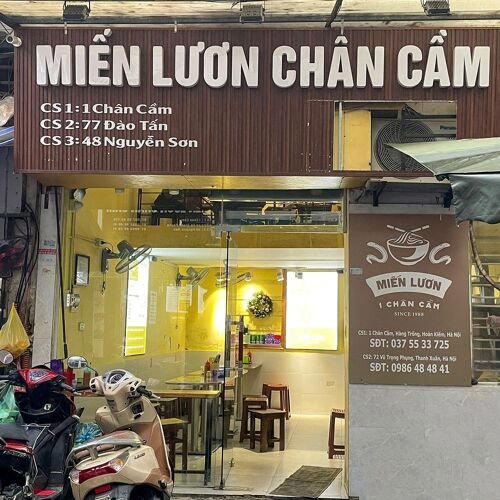
A Michelin Bib Gourmand-recognised address on Chân Cầm Street in Hoàn Kiếm, Miến Lươn Chân Cầm serves eel vermicelli noodles at some of Hanoi's lowest price points. The format is strictly local: quick, casual, and built around a single dish tradition that has sustained Hanoi's Old Quarter eating culture for generations.

Pearl is the En Primeur Club membership app — saves, bookings, and concierge access live there. Same editors, same standards.
- Address
- 1 P. Chân Cầm, Hàng Trống, Hoàn Kiếm, Hà Nội, Vietnam
- Phone
- +84 375 533 725
- Hours
- Daily 7 AM–10 PM
- Website
- foody.vn
- Directions
- Get directions
The menu
What to order
- Miến Lươn (eel cellophane noodle soup)
- Crispy eel vermicelli
- Eel congee
A Single Bowl, a Single Street, a Single Purpose
Chân Cầm Street runs a short block through the Hàng Trống ward of Hoàn Kiếm, narrow enough that motorbikes negotiate it carefully and loud enough at midday that conversation competes with the clatter of bowls. It is the kind of street that Hanoi's Old Quarter produces in abundance: dense, purposeful, saturated with the smell of broth. At number 1, Miến Lươn Chân Cầm occupies a position that has become, in the post-2025 Michelin Bib Gourmand cycle, a reference point for what the guide recognises as honest, high-value cooking in the Vietnamese capital. The Bib Gourmand designation, awarded to restaurants offering notable quality at moderate prices, places this address alongside a cohort of Hanoi spots where the cooking is measured not by ambition or theatre but by the consistency of a single, well-executed tradition.
The price tier here is the lowest available on the Hanoi spectrum, a ₫ designation shared with places like Bun Cha Ta (Nguyen Huu Huan Street) and Phở 10 Lý Quốc Sư (Hoan Kiem). At that level, the economics are clear: there is no tasting menu, no beverage program, no à la carte range to speak of. What exists instead is the bowl, the ritual around it, and the crowd that assembles for it.
The Miến Lươn Ritual
Miến lươn, eel vermicelli noodle soup, sits within a broader category of Hanoi bowl dishes that are defined by their specificity. Unlike phở, which has spread globally and adapted accordingly, or bún chả, which has earned international exposure through media attention, miến lươn remains largely a local affair. The dish centres on freshwater eel, either braised or fried, served over glass vermicelli noodles in a clear, aromatics-forward broth. The eel's texture and the lightness of the glass noodles make it a different register from heavier pork-based soups; the bowl reads cleaner, the flavour more concentrated around the protein.
Eating it follows a rhythm that is common across Hanoi's street-level noodle culture: arrive, find a seat at a low table or plastic stool, watch the bowl assembled in front of you, and eat quickly. There is no pacing in the European sense, no interval between courses, no waiting for the table to fill before ordering. The meal begins when the bowl arrives and ends when it is finished. Condiments, typically chilli, vinegar, and fish sauce in some combination, are adjusted to personal calibration at the table. This is a dining format where the guest's role is active rather than passive: you season, you time your visit, you eat without ceremony.
Hanoi's noodle culture rewards this kind of specificity. The city maintains a long tradition of single-dish specialists, addresses that have refined one preparation across years or decades rather than building a menu. Miến Lươn Đông Thịnh operates in the same category and offers a useful comparison point for how the miến lươn tradition plays out across different Hanoi neighbourhoods. Similarly, Hiệu Lực Canh Cá Rô Hưng Yên (Hai Ba Trung) demonstrates how single-protein, single-format cooking in Hanoi can achieve sustained recognition without broadening its scope.
What Michelin Recognition Means at This Price Point
The 2025 Bib Gourmand listing represents a specific kind of validation. Michelin's Bib Gourmand category does not assess the same variables as a star: it is not asking whether the cooking is technically innovative or whether the service has formal polish. It is asking whether the food is good and whether the price is honest. At a ₫ price point in Hanoi, that second criterion is almost automatic; the first is where the selection is made. The listing signals that the miến lươn here performs above the baseline for its category, not that it competes with the ₫₫₫₫ tier that includes restaurants like Gia or Hibana by Koki.
This distinction matters for how the address should be read. A Bib Gourmand in Hanoi's Old Quarter is not a restaurant discovery in the conventional sense; it is a confirmation signal for a place that local eaters already know and that visiting food travellers can now find with a degree of institutional backing.
For context on how Michelin recognition functions across Vietnamese dining more broadly, Anan Saigon in Ho Chi Minh City and La Maison 1888 in Da Nang occupy the starred and high-end end of the spectrum, while the Bib tier in Hanoi clusters around exactly the kind of street-level single-dish addresses that the city has always produced.
Noodle Specialisation as a Regional Pattern
The logic of the single-dish noodle specialist is not unique to Hanoi. Across East and Southeast Asia, Michelin has consistently recognised addresses that do one thing with sustained precision: A Niang Mian Guan in Shanghai, A Bing Bao Shan Mian in Hangzhou, A Kun Mian in Taichung, and Ajisai in Taichung all demonstrate the pattern. In Fuzhou, A Xin Xian Lao (Gongnong Road) operates on similar terms. In Da Nang, Bà Diệu (Tran Tong Street) extends the Vietnamese version of the format.
What these addresses share is a refusal to diversify as a growth strategy. The menu stays narrow, the craft concentrates, and the repeat customer base stabilises around a product that is consistent precisely because it has not been stretched. Miến Lươn Chân Cầm fits that model, and its Bib Gourmand listing places it in that regional peer group regardless of the cuisine differences between them.
For visitors building an itinerary around Hanoi's noodle culture, Bún Chả Chan covers a different preparation in the same price tier, and the full picture of where single-dish specialists sit within the city's dining scene is mapped in our full Hanoi restaurants guide.
Planning a Visit
Miến Lươn Chân Cầm is at 1 Phố Chân Cầm, Hàng Trống ward, Hoàn Kiếm district, a short walk from Hoan Kiem Lake and well within the walking radius of most Old Quarter accommodation. The ₫ pricing means a meal here represents negligible cost by any international standard, and the format expects no reservation. Visits at peak lunch hours will find the address at its busiest; arriving slightly before or after the midday rush is the practical adjustment that applies to virtually every street-level specialist in this part of the city. No dress code applies, no booking infrastructure exists, and the experience is not designed around extended stays. Bring a tolerance for close seating and fast turnover, which are features of the format rather than limitations of the space.
For further orientation across the city's hospitality and leisure options, our full Hanoi hotels guide, our full Hanoi bars guide, our full Hanoi experiences guide, and our full Hanoi wineries guide cover the broader picture.
Frequently asked questions
What is the signature dish at Miến Lươn Chân Cầm (Hoan Kiem)?
The address specialises in miến lươn, glass vermicelli noodle soup with freshwater eel. The Michelin Bib Gourmand recognition in 2025 is tied to this preparation specifically. The dish is the restaurant's entire focus, which is consistent with the single-dish specialist model common across Hanoi's street-level noodle culture.
What is the overall feel of Miến Lươn Chân Cầm (Hoan Kiem)?
It reads as a working neighbourhood specialist in the Old Quarter of Hoàn Kiếm: fast, casual, priced at the lowest end of the Hanoi scale (₫), and built around local regulars rather than destination dining. The Bib Gourmand award provides institutional backing, but the atmosphere is entirely consistent with the street-food register the city is known for.
Is Miến Lươn Chân Cầm (Hoan Kiem) suitable for children?
At a ₫ price point with a simple, broth-based noodle format, the practical barriers are low. The Hoàn Kiếm Old Quarter context means the street is busy and seating is compact, which is standard for this category across Hanoi. The dish itself, eel vermicelli soup, is mild in heat by default, with condiments added at the table to personal preference, making it adaptable. The fast-turnover format suits shorter meals rather than extended sittings.
Accolades, Compared
Comparable venues nearby, for context on price, style, and recognition.
| Venue | Cuisine | Price | Awards | Notes |
|---|---|---|---|---|
| Miến Lươn Chân Cầm (Hoan Kiem)This venue — the venue you are viewing | Traditional Vietnamese Eel Vermicelli Noodles | $1–10 | Michelin Bib Gourmand | Not listed |
| Phở Khôi Hói | Northern Vietnamese Beef Pho | $1–10 | Michelin Bib Gourmand | Hoan Kiem |
| Phở 10 Lý Quốc Sư (Hoan Kiem) | Authentic Northern Vietnamese Pho | $1–10 | Michelin Bib Gourmand | Hoan Kiem |
| Tuyết Bún Chả 34 | Traditional Vietnamese Bún Chả | $1–10 | Michelin Bib Gourmand | Ba Dinh |
| Phở Bò Lâm | Authentic Hanoi Pho Bo | $1–10 | Michelin Bib Gourmand | Hoan Kiem |
| Luk Lak | Modern Fusion Vietnamese | $20–30 | Michelin Bib Gourmand | Hoan Kiem |
Recognition history
Dated appearances from independent guides and award organizations, with the underlying list record or original source where available.
Michelin Bib Gourmand
Michelin
Full recognition history (2 entries)
Michelin Bib Gourmand
Michelin
Details
- Rustic
- Classic
- Casual Hangout
- Historic Building
- Standalone
- Local Sourcing
- Street Scene
- A La Carte
Current opening hours
- Monday
- 7 AM–10 PM
- Tuesday
- 7 AM–10 PM
- Wednesday
- 7 AM–10 PM
- Thursday
- 7 AM–10 PM
- Friday
- 7 AM–10 PM
- Saturday
- 7 AM–10 PM
- Sunday
- 7 AM–10 PM
Hours can change for holidays and private events. Last verified .
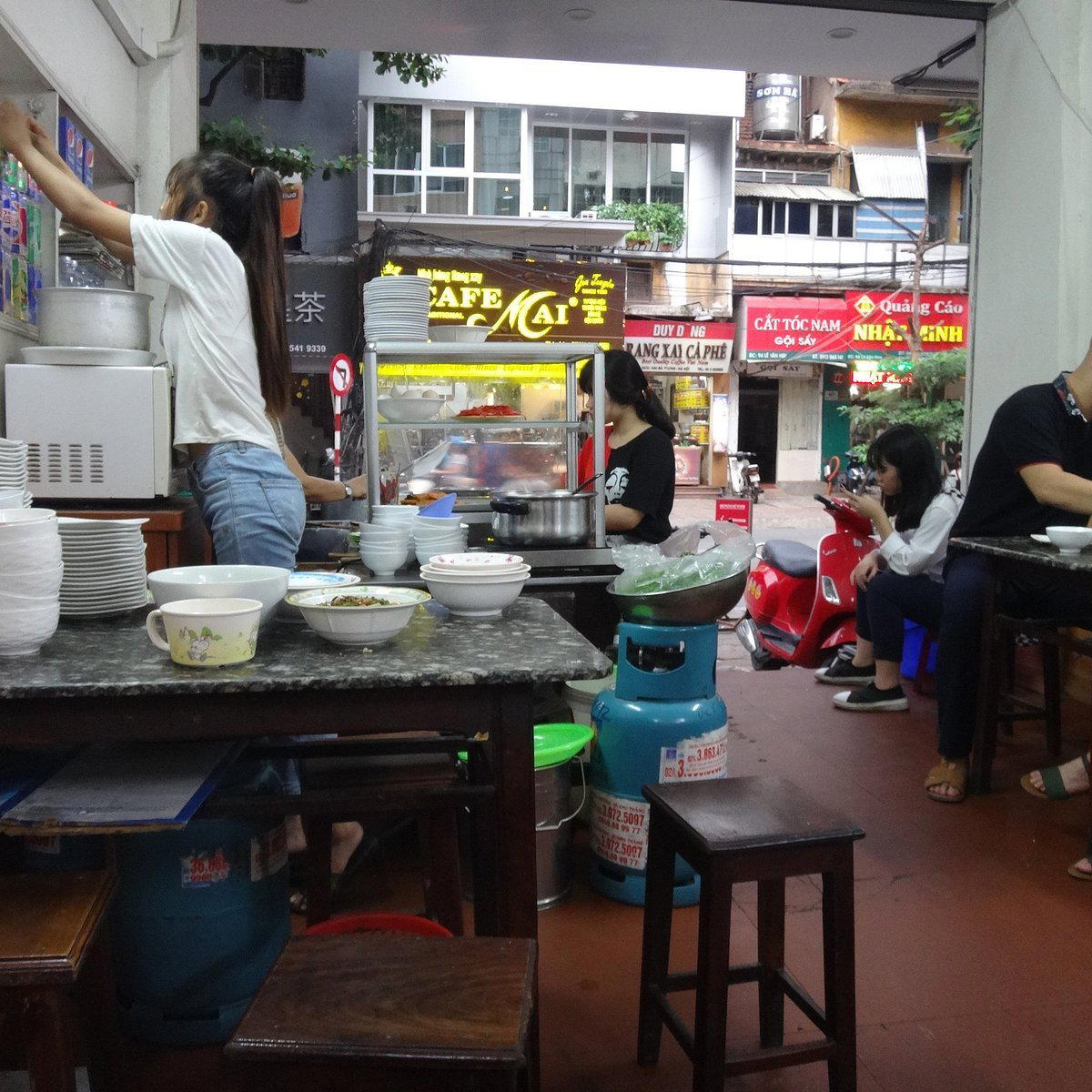
Bustling street stall atmosphere in the lively Old Quarter with a casual, local dining vibe.