.png)
At Milano, the city’s urbane spirit unfolds in a dining room where luminous design meets masterfully composed Italian cuisine. The chef’s contemporary interpretation of Milanese tradition elevates pristine seasonal ingredients into dishes of sculptural beauty and layered flavor, each course a quiet revelation. With a discreet, design-forward ambiance, an exceptional cellar curated by insightful sommeliers, and service that anticipates desire, Milano offers an intimate, subtly theatrical experience meant for those who savor the art of lingering. Here, culinary precision meets cosmopolitan ease—an elegant refuge where time slows, conversation deepens, and every detail feels exquisitely considered.
 Discover on Pearl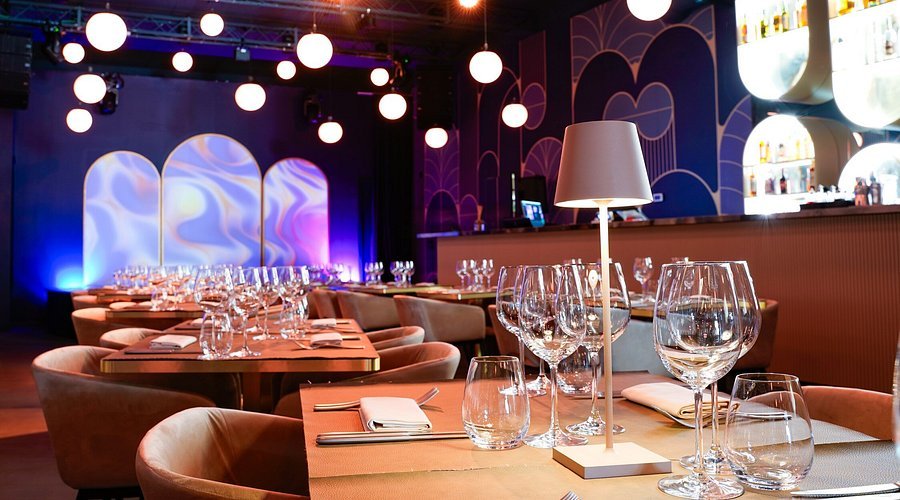
Where the Mountain Road Ends and the Kitchen Begins
The drive up to Mottarone sets the terms before you arrive. From the shores of Lake Maggiore, the road climbs steadily through beech and chestnut forest until the valley floor disappears below and the air takes on that particular alpine stillness. At around 1,400 metres, the road delivers you to a late 19th-century hunting lodge that has been converted, with considerable care, into a restaurant called Milano. The building carries the logic of its original purpose: solid, positioned for the view, built for people who knew what they were looking for and were prepared to travel to find it. The panoramic terrace, which serves as an outdoor dining space in favourable conditions, extends the room outward to the lake and the Alps beyond.
The category here is country cooking, which in this part of northern Italy is not a simplified register. It is a form defined by proximity to specific terrain, and the terrain around Mottarone and the Ossola valley produces ingredients of particular character: game, foraged plants, freshwater fish from the lake below. A self-taught couple runs the kitchen and the front of house together, and both their approach and their ten-year tenure here have earned consecutive Michelin Plate recognition in 2024 and 2025, placing them in a recognised tier of serious, regionally rooted Italian cooking without the formality or price ceiling of the starred houses.
The shortlist, unlocked.
Hard-to-book tables, cellar releases, and concierge-planned trips.
Get Exclusive Access →The Source as Discipline: Game from Ossola, Lake on the Side
In Italian mountain cooking, the sourcing of game is a matter of both geography and season. The Ossola valley, which runs north from Verbania toward the Swiss border, has a long tradition of hunting wild boar, venison, and smaller game birds that move through its forests. What matters at this altitude and in this tradition is the difference between game sourced casually and game sourced with the specificity that comes from direct relationships with hunters and a thorough knowledge of how animals move through a defined territory. At Milano, the Ossola provenance for game is not a marketing footnote; it is the structural spine of the menu.
This kind of hyper-localised sourcing sits within a broader movement across northern Italian mountain restaurants. Operations like Atelier Moessmer Norbert Niederkofler in Brunico have made the Alpine supply chain central to a creative programme at the starred level, while Reale in Castel di Sangro has demonstrated how rigorous sourcing from a single region can generate a complete culinary identity. Milano operates in the same intellectual register, but at a different price tier and without the infrastructure of a larger operation. The discipline here is narrower and more personal: two people, one mountain, one valley for the game, and the lake as a secondary but present reference point.
A few lake specialties appear on the menu alongside the land-based dishes, which reflects the geography accurately. Lake Maggiore's freshwater fish, including coregone, lavarello, and agone, have their own culinary traditions in the towns below, and incorporating a selection into a mountain menu acknowledges the vertical relationship between shore and peak that defines this part of Piedmont and Lombardy. The kitchen does not attempt to be a lake restaurant; it uses the water as a complement to its dominant mountain register.
The Sentiero Menu and What Ten Years Produces
The "Sentiero" tasting menu, whose name translates as "path" or "trail," is framed as a summary of the kitchen's decade of work at this address. Tasting menus in this format, offered alongside an à la carte option at Michelin Plate-level country restaurants, typically serve a dual purpose: they allow a kitchen to present its most considered sequence, and they give a first-time visitor the most complete picture of what the restaurant understands itself to be. Here, the menu works as a form of editorial selection, drawing from ten years of seasonal iteration across a single mountain environment.
The seasonality is not decorative. At 1,400 metres, the productive seasons are compressed, which means a kitchen working seriously with foraged and local ingredients is operating on a tighter calendar than its counterparts in the valley or on the lake shore. Spring brings specific herbs and shoots that the same altitude will extinguish by July. Game seasons impose their own windows. This compression tends to produce menus that are more precisely calibrated to the week rather than the month, which is one reason that the Michelin Plate designation, awarded for cooking quality without the full framework of starred service, is a more appropriate signal for what this kitchen does than a three-month set menu printed in advance would ever be.
Wine list and the selection of wines by the glass are both noted as worthy of attention, which at this price tier (€€€ rather than the €€€€ of comparison houses like Dal Pescatore in Runate or Enoteca Pinchiorri in Florence) suggests a genuine programme rather than a perfunctory list. Piedmont and Lombardy produce between them a range of wines that pair specifically with game and freshwater fish, from the nebbiolo-based reds of the Ossola's neighbours to lighter northern white varieties, and a by-the-glass selection that reflects that geography adds real utility for a table working through a tasting menu.
How It Sits in the Northern Italian Mountain Cooking Scene
Territory between Lake Maggiore and the high valleys of Piedmont produces a style of cooking that rarely achieves the international visibility of the starred houses in Alba, Modena, or the Lombard plains. Piazza Duomo in Alba and Osteria Francescana in Modena operate at the apex of Italian fine dining, drawing visitors from other continents and commanding menus priced accordingly. Le Calandre in Rubano and Enrico Bartolini in Milan represent a different tier of serious urban and semi-urban creative cooking. The mountain country cooking format, by contrast, is evaluated against a smaller peer set: 21.9 in Piobesi d'Alba and Andrea Monesi at Locanda di Orta in Orta San Giulio both work within regional ingredient frameworks at comparable price points, and together these places define what regionally serious, non-starred mountain cooking means in this part of Italy.
Milano's positioning within that peer set is defined by its altitude, its game focus, and its duration at a single address. Ten years in a remote mountain location with consistent Michelin recognition is a different kind of credential than a newly opened address in a larger town. It signals that a clientele makes the drive deliberately, and makes it repeatedly. The Google review score of 4.7 across 242 reviews reinforces that signal.
Planning the Visit
The hunting lodge sits above Stresa and Pallanza on the Mottarone road, which makes it most accessible by car. The climb from the lake takes time, and the reward of the panoramic terrace means it is worth timing a visit to the warmer months when outdoor service is available. The €€€ price bracket places it comfortably below the starred competition while above the casual lake-town trattoria tier, making it a considered destination rather than a spontaneous stop. For those planning a broader stay in the area, our Pallanza hotels guide covers accommodation options on the lake shore below, and our full Pallanza restaurants guide maps the wider dining picture. The Pallanza bars guide, wineries guide, and experiences guide round out the planning picture for a longer visit to the Verbano territory.
Reservations are advisable, particularly for the Sentiero tasting menu, which requires more preparation from the kitchen than à la carte service. Arriving in time to use the terrace, and allowing the meal to extend over the full tasting menu arc rather than truncating it, is how the kitchen is designed to be used.
The shortlist, unlocked.
Hard-to-book tables, cellar releases, and concierge-planned trips.
Get Exclusive Access →Frequently Asked Questions
How It Stacks Up
These are the closest comparables we have in our database for quick context.
| Venue | Cuisine | Price | Awards | Notes |
|---|---|---|---|---|
| Milano | Country cooking | €€€ | From Lake Maggiore, the road climbs up to Mottarone, about 1,400 meters above se… | This venue |
| Atelier Moessmer Norbert Niederkofler | Italian, Creative | €€€€ | Michelin 3 Star | Italian, Creative, €€€€ |
| Dal Pescatore | Italian, Italian Contemporary | €€€€ | Michelin 3 Star | Italian, Italian Contemporary, €€€€ |
| Enoteca Pinchiorri | Italian - French, Italian Contemporary | €€€€ | Michelin 3 Star | Italian - French, Italian Contemporary, €€€€ |
| Enrico Bartolini | Creative | €€€€ | Michelin 3 Star | Creative, €€€€ |
| Osteria Francescana | Progressive Italian, Creative | €€€€ | Michelin 3 Star | Progressive Italian, Creative, €€€€ |
Need a table?
Our members enjoy priority alerts and concierge-led booking support for the world's most difficult tables.
Get Exclusive AccessThe shortlist, unlocked.
Hard-to-book tables, cellar releases, and concierge-planned trips.
Get Exclusive Access →