Mereon
Our verdict
On Clyde Avenue in West Vancouver, Mereon operates in a municipality where the dining conversation increasingly turns on proximity to some of British Columbia's most productive agricultural and coastal supply chains. The address places it within reach of Howe Sound seafood, Fraser Valley producers, and the broader Pacific Northwest sourcing network that defines serious cooking in this corner of Canada.

Pearl is the En Primeur Club membership app — saves, bookings, and concierge access live there. Same editors, same standards.
- Address
- 1479 Clyde Ave, West Vancouver, BC V7T 1E9, Canada
- Phone
- (236) 323-2010
- Hours
- Mon–Tue ClosedWed–Fri 11:30 AM–9 PMSat–Sun 10:30 AM–9 PM
- Website
- mereon.ca
- Directions
- Get directions
- Booking
- Book on OpenTable
The menu
What to order
- Steak au Poivre
- Canard A L'Orange
- Croque Monsieur
- Socca
West Vancouver's Sourcing Advantage and Where Mereon Fits
West Vancouver occupies an unusual position in the Canadian dining conversation. It sits across the Burrard Inlet from Vancouver proper, separated by geography but connected to the same supply infrastructure that has made the broader region one of North America's more compelling destinations for ingredient-driven cooking. Dungeness crab pulled from Georgia Strait, spot prawns landed at Steveston, wild salmon from the Fraser and beyond, Okanagan produce arriving via the Coquihalla — the raw material available to any serious kitchen operating within this postal code is, by Canadian standards, extraordinary. The question for any restaurant on this side of the bridge is always the same: how deliberately does the kitchen engage with that supply chain, and how legibly does that engagement appear on the plate?
Mereon sits at 1479 Clyde Ave, a West Vancouver address that puts it in a neighbourhood where dining has historically trended toward the comfortable and the familiar rather than the ambitious. That context matters. Restaurants that lean into serious sourcing in suburban West Vancouver are working against a dining culture shaped by proximity to Vancouver's Yaletown and Gastown scenes, where the ingredient-forward conversation is louder and the competition for the same motivated diner is more intense. Operating here requires a different kind of confidence.
The Case for Ingredient Provenance in Pacific Northwest Cooking
Across Canada's Pacific coast, the most consequential shift in fine dining over the past decade has been the formalisation of producer relationships. What was once a loose arrangement — a chef knowing a farmer, a fisherman dropping by the back door, has become something more structured and more communicable to guests. Restaurants like AnnaLena in Vancouver have built their identity partly around transparency of sourcing, placing the names of farms and fishing operations into the dining conversation as a form of editorial positioning. Further east, Restaurant Pearl Morissette in Lincoln has taken this to its logical extreme, with the farm itself generating much of what appears on the menu. Eigensinn Farm in Singhampton operates on a similar premise, where the sourcing decision and the dining experience are effectively the same decision.
West Vancouver's geography makes it a natural candidate for this kind of cooking. The ocean is immediate. The agricultural zones of the Fraser Valley begin within an hour's drive. The Pacific Northwest's foraging culture, coastal mushrooms, sea vegetables, wild herbs, has been absorbed into professional kitchens across the region to the point where it has become a baseline expectation rather than a novelty. Any kitchen operating seriously in this geography is implicitly in dialogue with those traditions, whether or not it makes that dialogue explicit.
For comparison, Canada's most decorated ingredient-led restaurants tend to be explicit about those relationships. Tanière³ in Quebec City has built a national profile around the specificity of its Quebec terroir sourcing. Narval in Rimouski works within a coastal framework not unlike what's available to kitchens in the Sea to Sky corridor. The through-line in both cases is that the sourcing story is the editorial story, and that the diner is positioned as a participant in a regional food system rather than a consumer of a menu.
The West Vancouver Dining Scene: Context for the Address
West Vancouver's restaurant scene has long been quieter than its property values might suggest. The municipality's affluent residential character has historically produced demand for reliable, well-executed dining rather than ambitious experimentation. That pattern is shifting, slowly, as the demographics of serious dining in Metro Vancouver broaden and as chefs begin to see value in operating outside the density and rental pressure of the city core.
The Park Royal corridor, a short distance from the Clyde Avenue address, anchors much of the area's casual dining. Hello Nori at Park Royal represents the area's appetite for quality casual formats. Cineplex Cinemas Park Royal captures the entertainment-dining overlap that defines much of the neighbourhood's evening economy. But the Clyde Avenue pocket sits slightly apart from that retail-adjacent cluster, in a stretch that has historically supported neighbourhood-scale dining rather than destination formats. A venue at that address that is operating at a higher level of intention is, by definition, working in a context where the ambient competition is not the pressure. The pressure is the diner's default assumption that West Vancouver restaurants are pleasant rather than serious.
That assumption has been challenged elsewhere in the Canadian dining conversation. Alo in Toronto demonstrated that ambitious contemporary cooking could anchor a neighbourhood identity rather than simply reflect an already-established one. Jérôme Ferrer's Europea in Montreal operates in a similar register of intention against a neighbourhood context that might not demand it. The Pine in Creemore and Barra Fion in Burlington both work in smaller markets where the kitchen's ambition is the differentiating variable rather than the location. The pattern across all of these is that place-specific ambition, when it is genuine, tends to find its audience regardless of postal code.
For those planning a broader West Vancouver or Metro Vancouver itinerary, our full West Vancouver restaurants guide maps the neighbourhood's dining options by format and price tier. For reference points on how the highest tier of Canadian ingredient-led cooking currently presents itself, Aux Anciens Canadiens in Quebec, Bonimi in Etobicoke, and Biagio's Kitchen in Ottawa each offer a useful comparison across different regional contexts. Internationally, Le Bernardin in New York City and Atomix in New York City represent the benchmark conversation that serious Canadian kitchens are increasingly entering, and Bearspaw Golf Club in Calgary shows how ambition translates into non-urban contexts.
Planning Your Visit
Mereon is located at 1479 Clyde Ave in West Vancouver, accessible from downtown Vancouver via the Lions Gate Bridge, with the drive typically running under twenty minutes outside peak hours. West Vancouver is a car-dominant municipality, and street parking in the Clyde Avenue area is generally available.
Frequently asked questions
Is Mereon suitable for children?
Mereon sits on residential Clyde Ave in West Vancouver, a neighbourhood where family-oriented dining is common.
What's the overall feel of Mereon?
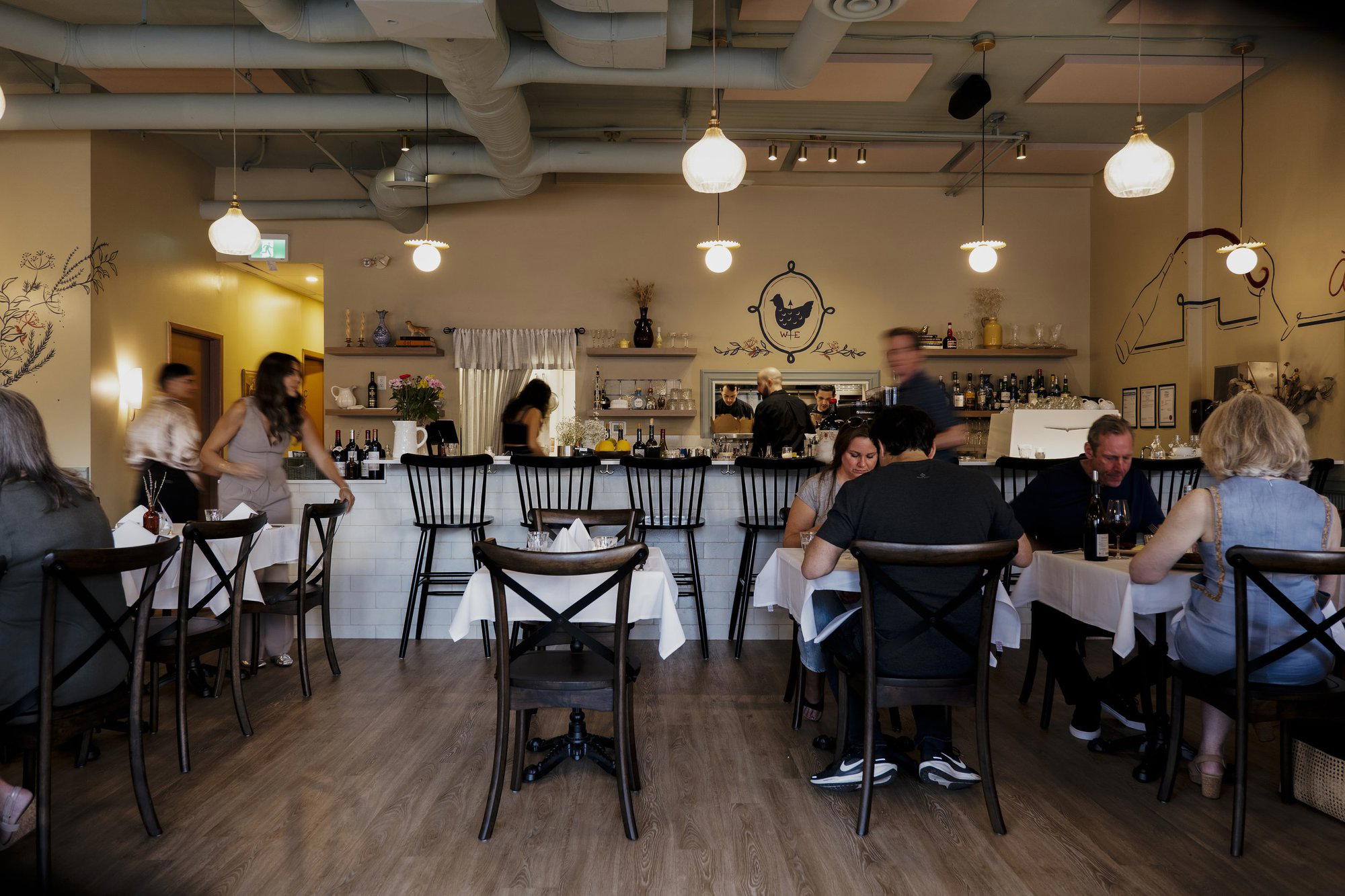
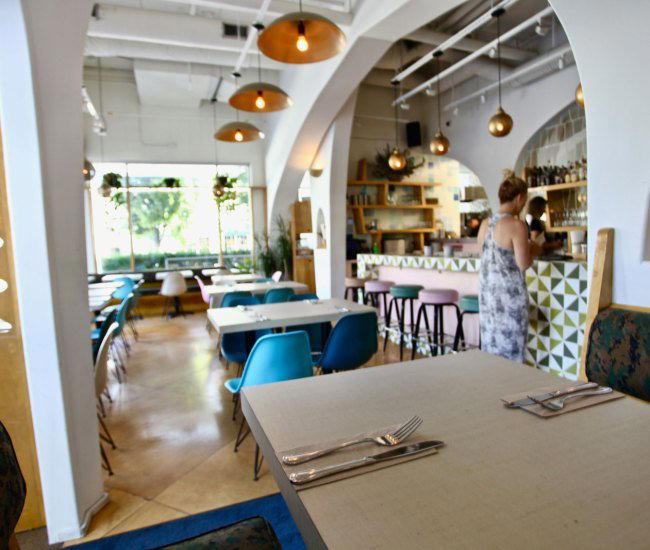
Mereon occupies a quiet address on Clyde Ave in West Vancouver, a municipality better known for its residential character than its restaurant density. That setting tends to produce a more unhurried, neighbourhood-scaled atmosphere than you'd find across the inlet in downtown Vancouver.
How does Mereon's West Vancouver location compare to dining in central Vancouver?
Mereon is located at 1479 Clyde Ave, West Vancouver — across the Burrard Inlet from the city's main dining corridors, accessible via Lions Gate Bridge in typically under 20 minutes from downtown. That separation places it firmly in North Shore territory, where the restaurant scene runs smaller and less competitive than Yaletown or Gastown, often allowing for a more relaxed, locally embedded experience.
Where is Mereon located?
Mereon is located at 1479 Clyde Ave, West Vancouver, BC V7T 1E9, Canada, West Vancouver.
Do I need a reservation for Mereon?
West Vancouver's dining options are spread thin relative to the municipality's population, which means well-regarded neighbourhood restaurants regularly run at capacity. Booking ahead is advisable; reach out directly via 1479 Clyde Ave or check current contact details through local directories.
Quick Comparison
Comparable venues nearby, for context on price, style, and recognition.
| Venue | Cuisine | Price | Notes |
|---|---|---|---|
| MereonThis venue — the venue you are viewing | French Bistro with West Coast Fusion | Not listed | Not listed |
| Chez Christophe | French Patisserie & Café | $10–20 | West Vancouver |
| Cineplex Cinemas Park Royal & VIP | Cinema Concessions | $20–30 | Park Royal |
| Hello Nori - Park Royal | Modern Japanese Hand Roll Bar | $30–50 | Park Royal |
| Barbara | Contemporary Seasonal Tasting Menu | Not listed | Chinatown |
| Blue Water Cafe | Sustainable West Coast Seafood with Sushi | Not listed | Yaletown |
Continue exploring
More in West Vancouver
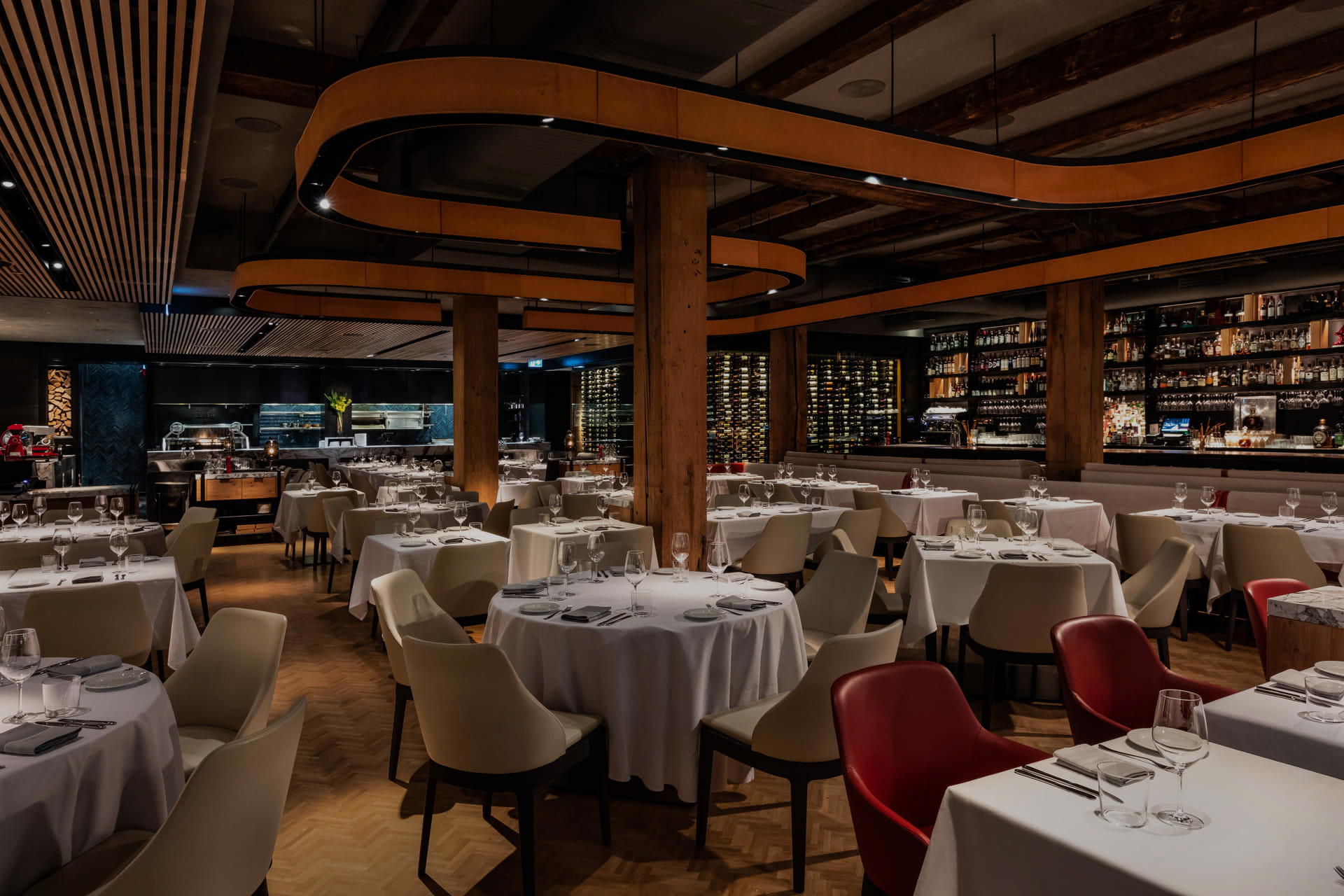
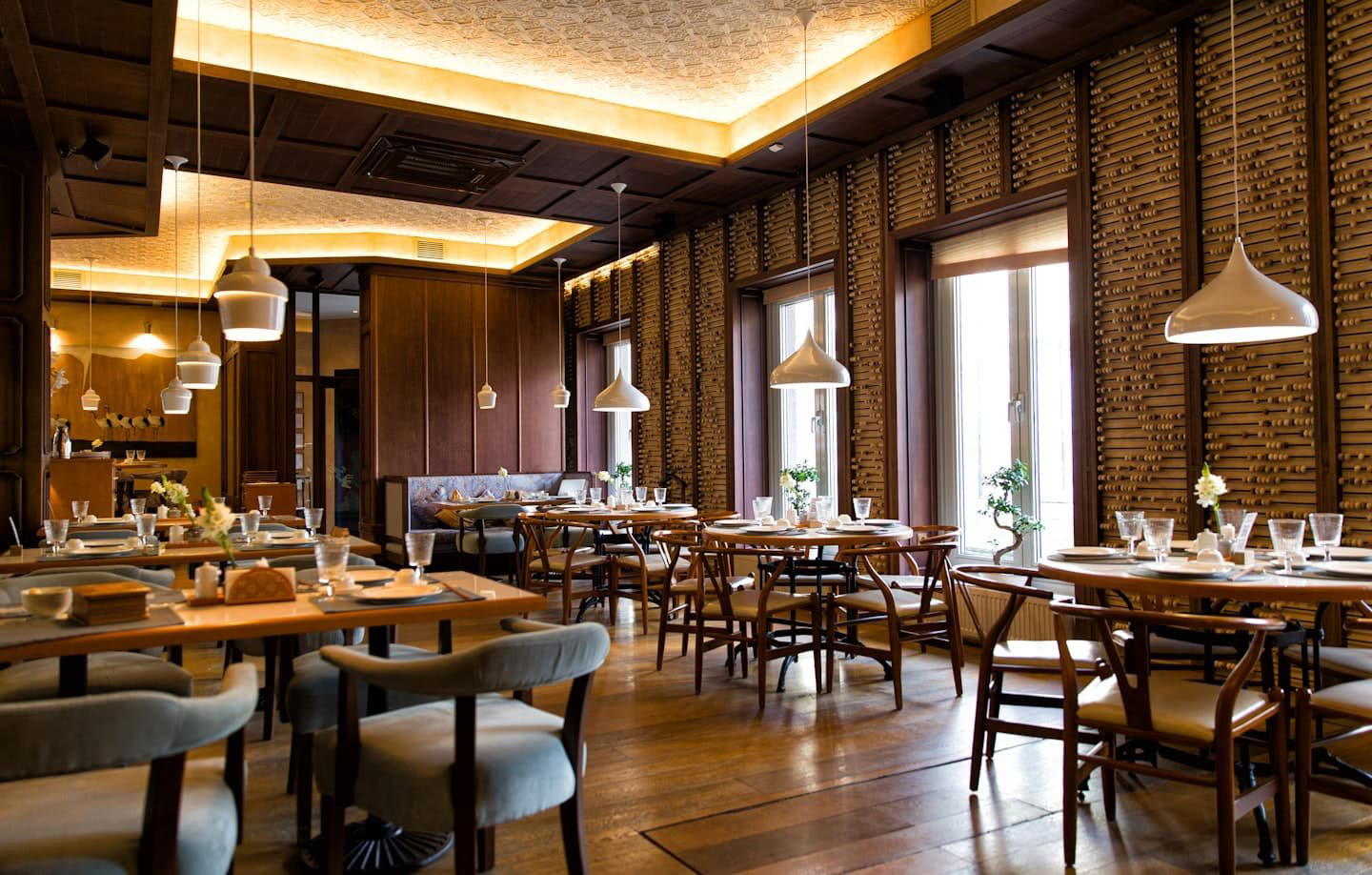
Restaurants in West Vancouver
Browse all →
Bars in West Vancouver
Browse all →
Details
- Cozy
- Elegant
- Classic
- Brunch
- Date Night
- Special Occasion
- Open Kitchen
- Craft Cocktails
- Local Sourcing
- A La Carte
- Small Plates
Current opening hours
- Monday
- Closed
- Tuesday
- Closed
- Wednesday
- 11:30 AM–9 PM
- Thursday
- 11:30 AM–9 PM
- Friday
- 11:30 AM–9 PM
- Saturday
- 10:30 AM–9 PM
- Sunday
- 10:30 AM–9 PM
Hours can change for holidays and private events. Last verified .
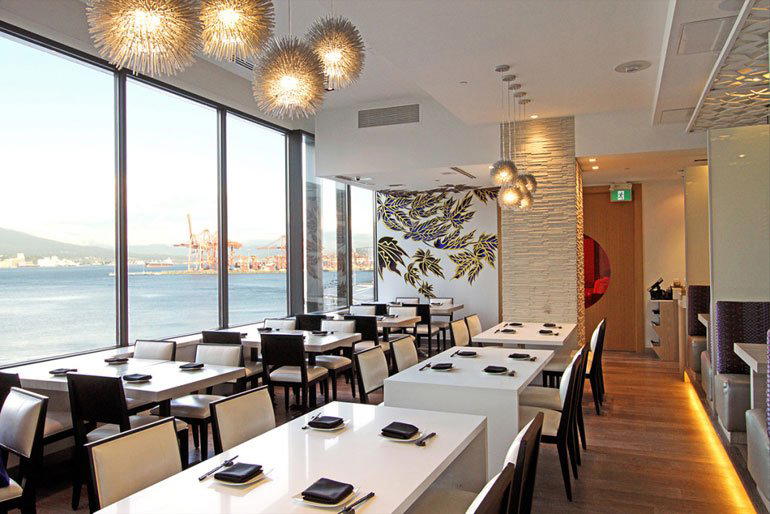
Brightly lit dining room with light blues, warm browns, cozy yet classy feel, and floral decorations creating a comforting and inviting space.