
A counter-led ramen and tsukemen stop in Daito, Menya Jikon Daitou honten belongs to Osaka’s disciplined, everyday noodle culture rather than the city’s celebratory dining circuit. Its Tabelog Ramen OSAKA 100 selection in 2025 and long run of prior Hyakumeiten recognition place it in the serious ramen tier, with the meal shaped by pace, queue etiquette, and concise counter service.
Pearl is the En Primeur Club membership app — saves, bookings, and concierge access live there. Same editors, same standards.
- Address
- 6 Chome-7-9 Haizuka, Daito, Osaka 574-0043, Japan
- Phone
- +81 72-873-0147
- Website
- twitter.com
 Saves & bookings on Pearl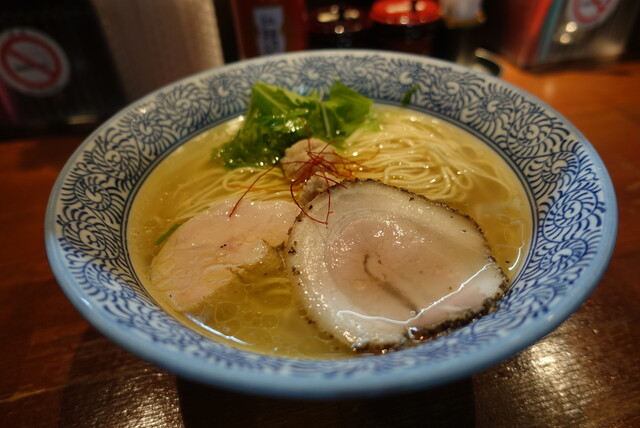
Approaching a suburban ramen counter in Daito is a different Osaka ritual from arriving hungry in Namba or Umeda. The rhythm is quieter, the expectations sharper: decide quickly, sit compactly, eat while the bowl is at its intended temperature, and return the seat. Menya Jikon Daitou honten belongs to that school, where ramen is not a lingering restaurant occasion but a precise exchange between kitchen, counter, and guest.
Osaka’s food reputation is often flattened into takoyaki, okonomiyaki, and late-night drinking, but its noodle culture is just as instructive. Across the prefecture, ramen and tsukemen shops trade in small rooms, narrow menus, and repeat customers who know the sequence before crossing the threshold. The serious end is measured less by ceremony than consistency. A Tabelog Ramen OSAKA 100 selection in 2025, alongside Hyakumeiten selections stretching back through the WEST and OSAKA lists, gives this Daito address a clear place in that conversation.
A nine-seat counter and the etiquette of quick ramen
The defining experience is the counter format. Nine seats leave little margin for dawdling, which is how many respected ramen shops in Japan keep momentum without becoming impersonal. The guest’s role is simple: arrive prepared, order without turning the counter into a committee meeting, and eat with attention. The room disciplines the meal. Conversation stays low, coats and bags stay controlled, and the bowl takes priority.
That compact format explains why ramen can feel more exacting than its price category suggests. A bowl may share an everyday spending bracket with casual udon or gyoza, but the operational pressure is closer to a tasting counter: limited seats, fast turnover, and an audience that notices minor lapses. Compared with Osaka peers such as Udon Biyori or Tonkatsu Hiroki Tokuan honten, the decision is not simply noodle versus rice or broth versus cutlet. It is about tempo. Ramen compresses the meal into a shorter, hotter, more focused window.
Tsukemen adds a second ritual. Dipping noodles ask the diner to manage pace and texture rather than passively work through a bowl. Separating noodles and broth changes the action of eating, making each bite a small adjustment of coating, lift, and timing. Menya Jikon Daitou honten lists ramen and tsukemen as its core categories, placing it in a part of Osaka dining where form matters as much as flavor category. The idea is not abundance; it is control.
Why Daito matters in Osaka's ramen map
Daito is not the default choice for visitors building an Osaka dining itinerary around central stations and hotel districts. That is why its ramen counters tell a useful story about the city. Osaka’s stronger casual dining addresses are not confined to entertainment zones. Many operate in residential or commuter neighborhoods, where regulars enforce standards through repetition rather than spectacle. The meal has to work on a weekday, not just on a travel itinerary.
This is where recognition has weight. Tabelog’s Hyakumeiten lists are not Michelin equivalents, but for ramen in Japan they are a meaningful filter for shops that have earned sustained attention in a crowded field. The 2025 OSAKA 100 listing, with earlier selections in 2024, 2023, and the WEST lists before that, signals continuity rather than one season of attention. For a counter shop in Daito, that continuity matters more than decorative ambition.
The price tier also shapes expectations. Osaka has casual specialists that remain tightly priced, while other compact formats move into destination spending, such as Yakitori Tokei. Ramen sits in a different economy: technical labor, fast service, and low tolerance for wasted seats. In that context, a small counter can feel stricter than a larger restaurant because every movement is visible. The reward is not leisure. It is clarity.
How to place it within an Osaka day
For travelers, this is not a loose grazing-crawl stop without wider route planning. Daito sits outside the central Osaka pattern many visitors follow, so treat the meal as a focused stop rather than a casual detour. The nearest rail access is Konoikeshinden Station, and the surrounding neighborhood rewards an itinerary that allows time for a suburban meal instead of forcing every dining choice into the city core.
Payment and seating customs point to a traditional ramen-shop mindset: small room, counter service, and a practical preference for simple transactions. That matters for international diners accustomed to reservation-led restaurants, multilingual menus, and flexible pacing. Here, preparation is cultural rather than luxurious. Know the category, respect the queue, keep the meal moving, and understand that the counter’s compactness is part of the value, not a compromise.
Readers building a broader Osaka food plan can use Menya Jikon Daitou honten as the ramen anchor and then widen the frame through Our full Osaka restaurants guide. For other city planning layers, EP Club also maps Our full Osaka hotels guide, Our full Osaka bars guide, Our full Osaka wineries guide, and Our full Osaka experiences guide.
Within Osaka’s casual dining spectrum, it sits alongside different everyday specializations rather than formal fine dining. For bakery, café, and quick-service context, compare the city’s range through.cafe, 52CHO-ME BAKERY, 551 Horai (551蓬莱), 99 Pizza Napoletana Gourmet, and a canto (Italian). For a wider Japan and overseas reading trail, see -Grilled beef Sukiyaki- KAMAKURA TANUKIAN 鎌倉 たぬき庵 in Kamakura. 鮪と炭火焼き うお炭 秋葉原店 in Tokyo.know in Kumamoto, (Shoku) Vietnam in Kawasaki, [Curry Senmon Ten] Maruyama Kyoju. in Sapporo, [ki:] in Kyoto, Jōdo Saké Bar in Los Angeles, and Onigiri Time in Pasadena.
The critical point is not that this is a grand restaurant in miniature. It is that Osaka’s ramen culture often achieves seriousness through restraint: few seats, narrow focus, no prolonged table theatre. The restaurant is compelling because it makes the diner participate in that discipline. The meal asks for attention, speed, and respect for the counter, which is exactly the point.
Cuisine Context
Comparable venues by cuisine and price in the same metro.
| Venue | Cuisine | Price | Notes |
|---|---|---|---|
| Menya Jikon Daitou hontenThis venue — the venue you are viewing | Ramen & Tsukemen | $ | Not listed |
| Human beings everybody noodles (人類みな麺類) | Traditional Shoyu Ramen | $ | Nishinakajima, Yodogawa-ku |
| Kadoya | Japanese sweets cafe (wagashi, kakigori & ice cream) | $ | Asahi |
| Rika Shokudo Tenma honten | Japanese Curry House | $ | Kita |
| Ennosuke Shoten | Ramen & Tsukemen Shop | $ | Higashiyodogawa |
| Toki Ya | Tsukemen ramen shop | $ | Yodogawa |
Recognition history
Dated appearances from independent guides and award organizations, with the underlying list record or original source where available.
Tabelog 100 #5 · No. 5
Tabelog · Tabelog 100 - Ramen - OSAKA - 2025
Continue exploring
More in Osaka
Restaurants in Osaka
Browse all →




Bars in Osaka
Browse all →


Hotels in Osaka
Browse all →



Wineries in Osaka
Browse all →
At a Glance
- Cozy
- Lively
- Solo
- Casual Hangout
- After Work
- Family
- Standalone
- Beer Program
Current opening hours
- Monday
- 11 AM–2 PM
- Tuesday
- Closed
- Wednesday
- 11 AM–2 PM
- Thursday
- 11 AM–2 PM, 6–9 PM
- Friday
- 11 AM–2 PM, 6–9 PM
- Saturday
- 11 AM–2 PM, 6–9 PM
- Sunday
- 11 AM–2 PM
Hours can change for holidays and private events. Last verified .
An intimate, counter-only neighborhood ramen shop with a no-smoking policy, simple decor, and a focused, somewhat intense atmosphere where guests are expected to follow house rules and eat quietly.