
Tabelog 100 #5
Our verdict
Mendo Hitohira puts Konan into Aichi’s serious ramen conversation through house-made noodles, dashi-led broth work and a compact ramen-tsukemen format. Its selection for Tabelog 100 - Ramen - AICHI - 2025 gives the small city address a credential that matters in a prefecture where noodle shops compete on craft rather than ceremony.

Pearl is the En Primeur Club membership app, where members save venues, book tables and use the concierge.
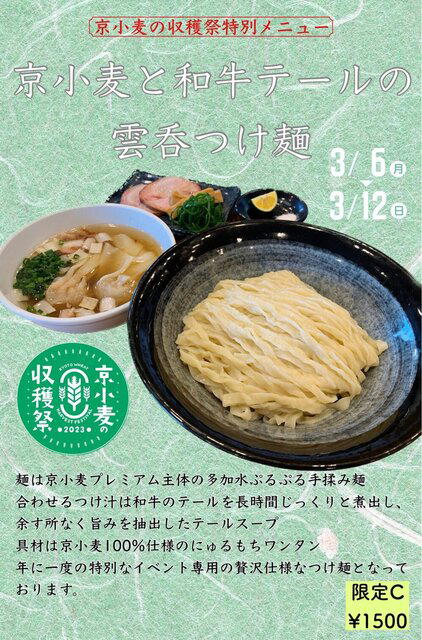
Approaching a suburban ramen counter in Aichi is different from chasing noodles through a central Nagoya arcade. The rhythm is quieter, more local and shaped by arrival: names written down, diners waiting their turn, the room moving in short waves rather than lingering sittings. In that setting, Mendo Hitohira belongs to a strain of Japanese ramen culture where seriousness is expressed not through luxury signals, but through the bowl itself, timing and restraint.
Konan is not built around destination dining like larger Japanese food capitals. That is part of the point. Ramen in smaller Aichi cities often functions first as lunch counter, solo meal, quick dinner and repeat habit. Recognition changes the frame. Selection for Tabelog 100 - Ramen - AICHI - 2025 places this Konan shop in a prefecture-level conversation, not just a local one, in a category where small differences in noodle texture, soup clarity and service pacing matter more than room theatre.
Noodle focus puts the bowl before the room
The useful way to read this shop is through the category it occupies. Mendo Hitohira is listed for ramen and tsukemen, a pairing that keeps attention on noodle texture, soup balance and the way each bowl is paced. In ramen, those are not decorative details. The pleasure depends on bite, aroma, temperature and how the noodles carry the broth or dipping soup from first mouthful to last.
The broth side belongs to the same broader noodle logic. Rather than treating ramen only as maximal richness, the better reading is as a focused Japanese soup-and-noodle format where balance matters. For travellers used to equating ramen with weight, Aichi’s broader noodle scene becomes interesting when it shows discipline: depth without collapsing into excess. Tsukemen sharpens that test because dipping noodles expose texture more directly than soup ramen.
Category helps with comparison. Raamen to Tenshin Graphmi and Ramen Nageyari sit in the same broader ramen conversation, while Seimen Misaku offers another point of reference for noodle-focused dining. Mendo Hitohira’s JPY 1,000 - JPY 1,999 range keeps it in the democratic ramen tier, but its prefecture-level Tabelog selection raises expectations beyond a casual fuel stop. Yamada Gohei Mochi Ten belongs to a different snack-shop rhythm; Grill Sanka Tei shares the wider local dining map but not the noodle-specific lens.
A compact counter culture with suburban discipline
Format matters at a ramen shop like this. Even without treating the room as the main attraction, the genre is built around a clear sequence: arrive, order, eat while the noodles are at their best, then make space for the next diner. In Japan’s ramen tradition, the counter is not a lesser seat. It is often the genre’s clearest expression: quick ordering, direct focus, minimal ceremony and high turnover.
Operation reflects a common reality of sought-after regional ramen shops: access is managed through order, not luxury. The practical culture around this kind of address is built for fairness, speed and accuracy, with diners expected to follow the flow of the room rather than linger over a long restaurant-style sitting. That procedure also defines the mood. The shop is best approached as a precise, food-first stop.
The suburban setting reinforces the same low-friction ramen logic. Konan dining often feels different from a station-to-counter crawl in a major city, and the pace can be shaped as much by local routines as by visitor itineraries. That makes Mendo Hitohira less about a grand arrival and more about fitting into the practical rhythm of a small Aichi city.
Why it belongs on a Konan food itinerary
For EP Club readers, the question is not whether a ramen shop at this price should be treated like a grand restaurant. It should not. The question is whether the detour teaches something about Aichi’s noodle culture that a central-city itinerary may miss. Here, the answer is clear: value lies in a focused, bowl-led format where ramen, tsukemen and compact service carry the experience.
The recognition also matters. Tabelog’s 3.65 score and 2025 Hyakumeiten selection indicate traction in a demanding category. In Japan, ramen recognition tends to reward consistency over spectacle because diners return, compare and scrutinise small changes, making the award signal more useful than generic popularity.
The choice set around Konan is narrower than in Nagoya, which makes curation sharper. For trip structure beyond the meal, see Our full Konan hotels guide, Our full Konan bars guide, Our full Konan wineries guide and Our full Konan experiences guide.
For wider Japan and Japan-adjacent dining research, EP Club also tracks formats far outside Aichi, from city ramen counters and casual cafes to specialist bars, snack shops and compact neighbourhood restaurants. Those references are useful for context, but Mendo Hitohira is best understood locally: as a Konan ramen and tsukemen stop whose appeal is tied to the discipline of a single bowl rather than to a broad restaurant programme.
The editorial read is simple: choose this for a concise, noodle-first meal, not a long evening. The appeal is not ceremony. It is how a small Konan shop competes inside Aichi’s ramen field while keeping the price in everyday territory.
Frequently asked questions
Would Mendo Hitohira be comfortable with kids?
Mendo Hitohira is best approached as a compact, food-first ramen and tsukemen stop rather than a lingering family restaurant. The listed price of JPY 1,000 - JPY 1,999 keeps it accessible, and the shop is in Konan.
Is Mendo Hitohira better for a quiet night or a lively one?
It suits a quiet meal better than a lively night out. Its Tabelog 100 Ramen AICHI 2025 selection suggests a focused, food-first stop rather than a social scene.
Is Mendo Hitohira expensive?
Pricing at Mendo Hitohira is listed as JPY 1,000 - JPY 1,999.
When is Mendo Hitohira open?
Check current opening hours directly before visiting, as the verified venue details provided here do not include a specific schedule.
At-a-Glance Comparison
Comparable venues by cuisine and price in the same metro.
| Venue | Cuisine | Price | Awards | Notes |
|---|---|---|---|---|
| Mendo HitohiraThis venue (the venue you are viewing) | Ramen & Tsukemen | Not listed | Tabelog 100 #5 | Not listed |
| Hirosueya | Okonomiyaki & yakisoba teppan diner | $10–20 | Tabelog 100 #54 | Yasucho Kamiyasu |
| Masashi (正嗣 駒生店) | Utsunomiya Gyoza Specialist | Not listed | Not listed | Komanu |
| Matsuya Choshun | Traditional Japanese Wagashi (Confectionery) | Not listed | Tabelog 100 #41 | Inazawa |
| Haruki | Traditional Japanese Ramen (Chuka Soba) | $10–20 | Tabelog 100 #44 | Not listed |
| Menja Sugure | Tsukemen and ramen shop | $1–10 | Tabelog 100 #56 | Kasugai |
Recognition history
Dated appearances from independent guides and award organizations, with the underlying list record or original source where available.
Tabelog 100 #5 · No. 5
Tabelog · Tabelog 100 - Ramen - AICHI - 2025
Continue exploring
More in Konan
Restaurants in Konan
All restaurants in Konan →



Details
- Solo
- Casual Hangout
- After Work
- Standalone
- A La Carte
- Counter Dining
Current opening hours
- Monday
- 10:30 AM–2:30 PM
- Tuesday
- 10:30 AM–2:30 PM
- Wednesday
- 10:30 AM–2:30 PM
- Thursday
- Closed
- Friday
- 10:30 AM–2:30 PM, 5:30–8 PM
- Saturday
- 10:30 AM–2:30 PM, 5:30–8 PM
- Sunday
- 10:30 AM–2:30 PM
Hours can change for holidays and private events. Hours as of .