Melur
On the Edgware Road's stretch of Lebanese and Middle Eastern restaurants, Melur occupies a position worth understanding in the context of London's broader engagement with the cuisines of the Arab world. The address, 175A Edgware Road, W2, places it inside one of the capital's most concentrated corridors of Levantine and North African dining, where the competition is both abundant and serious.
Pearl is the En Primeur Club membership app — saves, bookings, and concierge access live there. Same editors, same standards.
- Address
- 175A Edgware Rd, Tyburnia, London W2 1ET, United Kingdom
- Phone
- +44 20 7706 8083
- Website
- melurbypakawie.co.uk
- Directions
- Get directions
 Saves & bookings on Pearl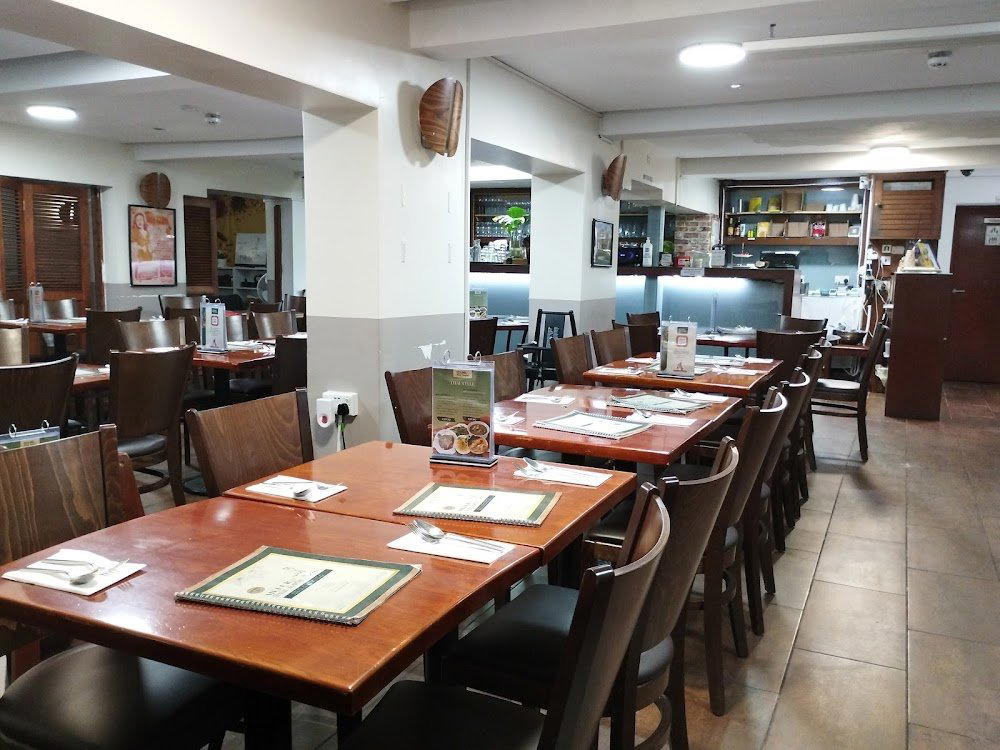
The Edgware Road Corridor and What It Demands
London's relationship with Middle Eastern and Levantine cuisine runs deeper than most European capitals, and the Edgware Road is where that relationship is most legible. The stretch between Marble Arch and Paddington has functioned for decades as a genuine dining destination for Arab diaspora communities, tourists from the Gulf, and Londoners who know the difference between a perfunctory mezze board and the real thing. Restaurants here are not performing ethnicity for an uninitiated audience, they are feeding people who grew up with this food, which raises the standard considerably. Melur, at 175A Edgware Road in Tyburnia, sits inside that demanding context.
The Edgware Road's density is worth noting as a frame. Within a few hundred metres, diners have access to restaurants that have been operating for a generation or more, competing on the quality of their kibbeh, the freshness of their fattoush, and the smoke on their mixed grills. This is not a neighbourhood where novelty alone carries a venue. Longevity and repeat custom from communities who know the food intimately are the real measures of credibility here.
How a Meal Tends to Move on Edgware Road
The logic of a meal in this part of London follows a different arc than the tasting-menu progression that defines the capital's Michelin tier, places like CORE by Clare Smyth, Sketch, The Lecture Room and Library, or Restaurant Gordon Ramsay, where a kitchen's narrative is delivered in a fixed sequence over several hours. On Edgware Road, the meal is typically assembled by the table, not the kitchen. Cold mezze arrive first: hummus, moutabal, tabbouleh, a fatayer or two. The table fills before anything hot has been ordered. It is a communal, lateral structure rather than a linear one, and it rewards groups over solo dining.
Middle section of the meal is where kitchens distinguish themselves. Grilled meats, shish taouk, kafta, mixed grills, require a confidence with heat and seasoning that is difficult to fake. Lamb dishes, whether braised or minced, reveal the quality of sourcing and the restraint of spicing. This is the point in any meal on Edgware Road where a kitchen either justifies its address or retreats into mediocrity. The final register, sweets and tea, is brief but specific: baklava, knafeh, or ma'amoul alongside heavily sweetened tea or Arabic coffee are the expected close, and their quality signals how seriously a kitchen takes the full arc of hospitality rather than just the revenue-generating centre of a meal.
This structural pattern matters for understanding what any restaurant on this stretch is trying to do. The ambition is not to impress with technique in the European fine-dining sense, the way The Ledbury or Dinner by Heston Blumenthal use precision and provenance as primary signals, but to deliver coherence and generosity across a longer, more socially distributed meal format.
Positioning Within a Concentrated Market
The Edgware Road presents a more compressed competitive environment than almost any other dining corridor in London. Restaurants that operate here are not simply competing with the broader London market; they are competing with immediate neighbours who share the same ingredient suppliers, the same diaspora customer base, and often the same menu architecture. Differentiation in this context is granular: the texture of the hummus, whether the bread is baked in-house, the quality of the charcoal on the grill.
Melur's address on the W2 section of Edgware Road places it in the densest part of this cluster. The surrounding area, Tyburnia, is predominantly residential with a strong Arab and South Asian demographic, which shapes the expectations of the local customer base. This is not a tourist-facing postcode in the way that Soho or Covent Garden function. The dining room's primary audience is likely to include regulars who make precise judgements about consistency rather than first-time visitors arriving with an open brief.
For comparison, the multi-course tasting formats that define London's highest-profile dining experiences, from The Fat Duck in Bray to L'Enclume in Cartmel or Moor Hall in Aughton, operate on the premise that the kitchen controls the sequence entirely. Edgware Road operates on the opposite premise: the table controls the sequence, and the kitchen's job is to execute each component with equal reliability whether it arrives first or last. Both models demand skill; they simply demand different kinds of it.
The Broader London Context for Middle Eastern Dining
London has seen considerable critical attention paid to Middle Eastern and Levantine dining over the past decade, with restaurants in Mayfair and Fitzrovia attracting press coverage and a younger, style-conscious audience. That attention has largely focused on restaurants that adapt Levantine formats for a non-specialist audience, smaller portions, wine lists, a tasting-menu option. The Edgware Road tradition operates parallel to this trend without being much affected by it. The clientele here is not primarily seeking an introduction to the cuisine; they are seeking reliable execution of dishes they already know well.
This is a meaningful distinction. It means that critical frameworks developed for venues like Gidleigh Park in Chagford, Hand and Flowers in Marlow, or Le Manoir aux Quat' Saisons, where provenance storytelling and tasting note vocabulary are central to the offer, do not map cleanly onto what Edgware Road restaurants are doing. The more relevant comparison points are probably precision-led urban restaurants in other cities where a specialist diaspora audience sets the benchmark, much as Korean tasting format venues like Atomix in New York operate in a different register from the same city's seafood institutions like Le Bernardin.
Know Before You Go
- Address: 175A Edgware Road, Tyburnia, London W2 1ET
- Nearest Transport: Edgware Road (Circle, District, Hammersmith & City lines) or Marble Arch (Central line)
- Price Range: About $20 per person
- Booking: Reservations are recommended
- Hours: Mon-Sat 3-10:30 PM; Sun 3-9:30 PM
- Awards: No awards data listed
Cost Snapshot
Comparable venues nearby, for context on price, style, and recognition.
| Venue | Cuisine | Price | Notes |
|---|---|---|---|
| MelurThis venue — the venue you are viewing | Paddington, Authentic Malaysian | $$ | Not listed |
| Roti King Battersea | Nine Elms, Malaysian Street Food | $$ | Not listed |
| Mr Ji | Camden, East-West Asian Fusion | $$ | Not listed |
| Casa Brindisa | Not listed | $$ | South Kensington, Authentic Spanish Tapas |
| The Lucky Pig | Fitzrovia, Italian Pizza & Cocktails | $$ | Not listed |
| The Buttery | Belgravia, Contemporary British Cafe | $$ | Not listed |
Continue exploring
More in London
Restaurants in London
Browse all →
Bars in London
Browse all →
Hotels in London
Browse all →

At a Glance
- Cozy
- Family
- Group Dining
- Casual Hangout
Current opening hours
- Monday
- 3–10:30 PM
- Tuesday
- 3–10:30 PM
- Wednesday
- 3–10:30 PM
- Thursday
- 3–10:30 PM
- Friday
- 3–10:30 PM
- Saturday
- 3–10:30 PM
- Sunday
- 3–9:30 PM
Hours can change for holidays and private events. Last verified .
Friendly family atmosphere in a casual, somewhat dated underground space.