Maven's Delicatessen
Our verdict
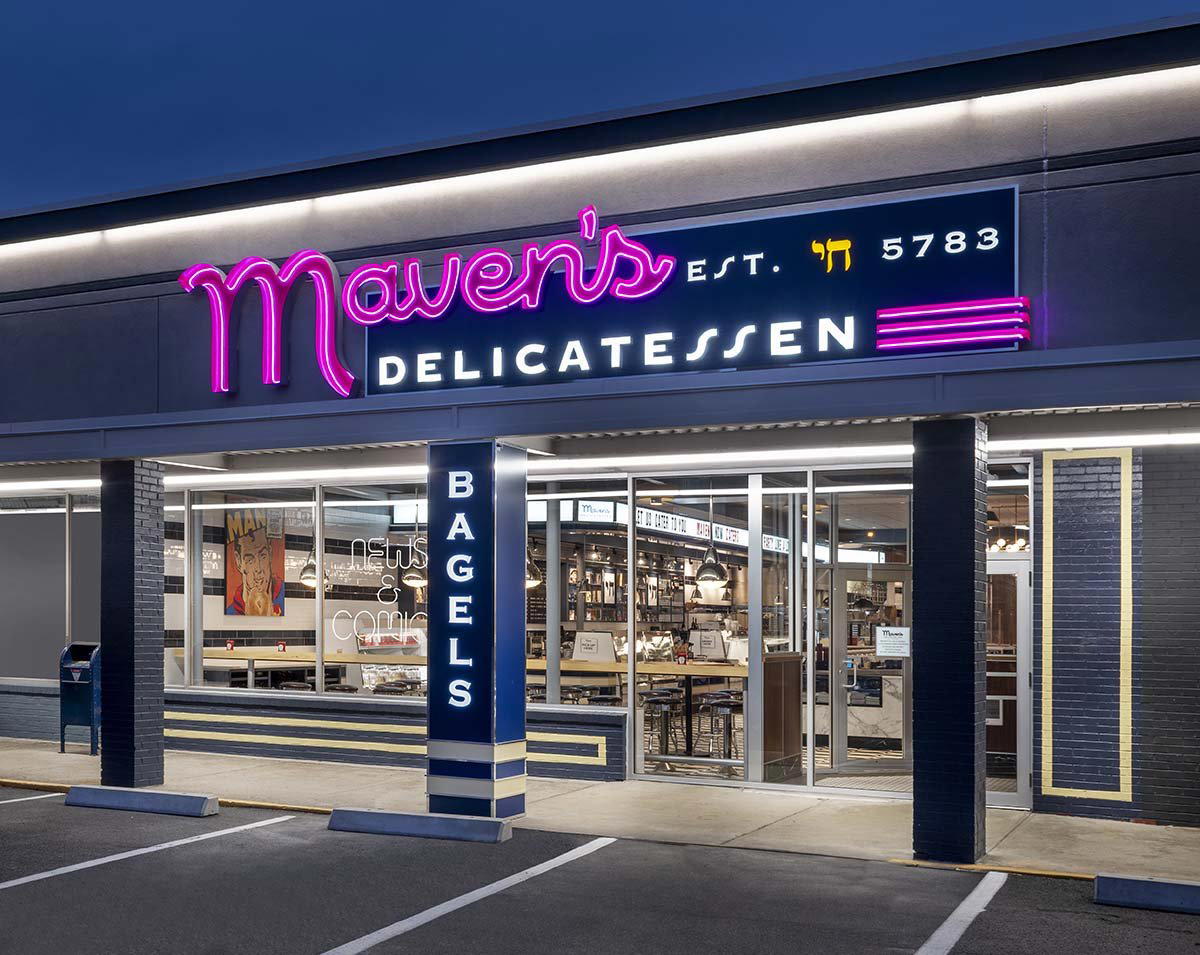
Maven's Delicatessen on East Avenue sits within Pawtucket's growing independent food corridor, where Jewish-American deli tradition and neighborhood regulars intersect. The format is counter-service deli, a category with deep roots in the American Northeast that has seen quiet revival interest over the past decade. For a fuller picture of where Maven's fits in Pawtucket's dining scene, see our complete city guide.

Pearl is the En Primeur Club membership app — saves, bookings, and concierge access live there. Same editors, same standards.
- Address
- 727 East Ave, Pawtucket, RI 02860
- Phone
- (401) 205-8560
- Hours
- Mon–Thu 8 AM–8 PMFri–Sat 8 AM–9 PMSun 8 AM–8 PM
- Website
- mavensdeli.com
- Directions
- Get directions
- Booking
- Book on the venue's website
The menu
What to order
- Pastrami Reuben
- Bagels and Lox
- Matzo Ball Soup
- Loaded Latke
Where the Deli Counter Holds Its Ground
Pawtucket's East Avenue runs parallel to the city's industrial past but increasingly reflects something newer: a string of independent food businesses that serve residents rather than tourism. The American delicatessen, as a format, has never quite belonged to the fine-dining conversation — and that is precisely what makes it worth examining here. While destination restaurants in cities like New York (Le Bernardin) or Chicago (Alinea) occupy the upper register of American dining, the deli counter occupies a different and arguably more durable position: it feeds neighborhoods across decades, anchored by familiarity rather than spectacle.
Maven's Delicatessen, at 727 East Ave, belongs to that tradition. The address places it in a stretch of Pawtucket that has been building a small but genuine independent food identity, alongside spots like Boundary Kitchen and Rasoi. The name itself signals intent: a maven, in Yiddish-derived American English, is someone who has accumulated knowledge and expertise through sustained attention. Applied to a delicatessen, the word makes a quiet claim about seriousness of craft.
The Deli as an American Cultural Form
To understand what a deli in the American Northeast represents, it helps to step back from the individual venue and look at the format's trajectory. The Jewish-American delicatessen emerged in the late nineteenth century as immigrant communities in New York, Philadelphia, and Boston created spaces where specific curing traditions, bread-making techniques, and communal eating habits could survive transplantation. The format spread through the mid-twentieth century, reaching its saturation point in the 1950s and 1960s, then contracting sharply as demographics shifted and food culture fragmented.
Rhode Island has its own deli history, shaped by a Jewish community concentrated in Providence that extended into surrounding cities like Pawtucket. What makes the format resilient in this region is that it never fully depended on destination traffic. The deli functions as infrastructure, not entertainment — a place where pastrami is sliced to order on a Tuesday morning and rye bread arrives still warm from a local baker. That functional integrity is what the better contemporary deli operations are trying to preserve or restore, in a food culture that otherwise tends to perform rather than serve.
Nationally, the past decade has seen a modest but documentable revival of deli formats, driven partly by a broader interest in cured and fermented foods, and partly by younger operators who grew up eating at delis and want to return the format to something closer to its original purpose. Cities like San Francisco and Los Angeles have seen this most visibly, but the Northeast, where the form originated, has followed its own quieter version of the same pattern.
Pawtucket's Food Character and Where the Deli Fits
Pawtucket is not a dining destination in the way that Providence is. It lacks the density of restaurants and the visitor traffic that drives that kind of identity. What it has instead is a food scene shaped by residents: working people with specific tastes, immigrant communities with their own culinary priorities, and a growing cohort of independent operators willing to bet on neighborhood loyalty over critical attention. That environment is, historically, exactly where the deli format thrives.
East Avenue is a practical address for a deli. It draws foot traffic from surrounding residential blocks and is accessible enough to pull customers from neighboring Providence. The deli-as-neighborhood-anchor model depends on exactly this kind of positioning: not tucked into a tourist corridor, not competing for the same attention as the city's more ambitious dining rooms. For comparison, consider how the broader American farm-to-table conversation, represented at its high end by places like Blue Hill at Stone Barns or Single Thread Farm in Healdsburg, operates in a completely different register from the deli counter. Neither is more legitimate as a category; they are answering different questions about what American food can mean.
Maven's sits closer to the neighborhood-anchor end of that spectrum, which places it in a different competitive set from the tasting-menu rooms that tend to dominate premium dining coverage. That is a tighter and arguably more demanding peer group than it might appear, because the format allows no technical concealment, quality of curing, freshness of bread, and precision of slicing are immediately legible to any regular customer.
What the Deli Tradition Asks of an Operator
Running a serious deli counter is labor-intensive in ways that are not always visible from the customer side. Pastrami and corned beef require multi-day brining and smoking cycles. Pickles and relishes follow fermentation timelines that cannot be compressed. Bread, particularly rye, demands either a reliable local baker or in-house production. These are not glamorous operations, and they resist the kind of rapid scaling that food investors typically prefer. The delis that survive and build genuine reputations tend to do so by accepting those constraints rather than working around them.
The broader American dining scene has moved decisively toward experience formats, the tasting-menu room, the chef's counter, the progressive dining event, represented at their most refined by venues like Atomix in New York City, Providence in Los Angeles, or Addison in San Diego. The deli counter is the opposite of that direction: anti-theatrical, repetition-dependent, and measured in years rather than seasons. That is not a limitation; it is a different set of values about what food is for.
For a city like Pawtucket, which is still developing its independent food identity, a venue like Maven's contributes something that neither Bacchanalia in Atlanta nor Causa in Washington, D.C. can offer: daily, accessible, culturally rooted eating that connects a neighborhood to a specific culinary tradition. See our full Pawtucket restaurants guide for more on how the city's food scene is developing across different formats and price points.
Planning Your Visit
Maven's Delicatessen is located at 727 East Ave, Pawtucket, RI 02860, in a walkable stretch of East Avenue with street parking available nearby. Current hours, booking details, and phone contact are best confirmed directly, as the venue's operational information was not available at the time of publication. Deli formats of this kind typically operate on a walk-in, counter-service basis without a reservation requirement, though weekend mornings tend to draw the heaviest neighborhood traffic at similar operations in the region. Dress is, as with any working deli, whatever you arrived in.
Frequently asked questions
What part of town is Maven's Delicatessen in?
Maven's Delicatessen is located at 727 East Ave, Pawtucket, RI 02860, Pawtucket.
Is Maven's Delicatessen a good option for feeding a group in Pawtucket?
The deli counter format is historically one of the more practical formats for group eating in American cities — portions tend to be generous, ordering is flexible, and the model does not require synchronized seating the way a tasting-menu restaurant does. Maven's address at 727 East Ave, Pawtucket, puts it on a walkable stretch with street parking, which reduces the logistics friction for groups arriving by car.
What do regulars order at Maven's Delicatessen?
American deli counters in the Northeast built their reputations on cured meats — pastrami, corned beef, and brisket are the structural pillars of the format. Until we can verify Maven's specific offerings directly, those categories represent the reasonable starting point for a first visit.
Do I need a reservation for Maven's Delicatessen?
No reservation data is recorded for Maven's Delicatessen. The counter-service deli format in the American Northeast has operated on a walk-in basis as a default since the format took hold in the early twentieth century. Maven's position on East Avenue in Pawtucket — a neighborhood-anchored stretch rather than a high-traffic dining corridor — further suggests walk-in access is the norm.
What do critics highlight about Maven's Delicatessen?
Pawtucket sits outside the Providence dining circuit that draws most Rhode Island food press, which means independent neighborhood operators here often accumulate local loyalty without regional editorial coverage. That gap between reputation and documentation is common in this tier of American deli culture.
Can Maven's Delicatessen adjust for dietary needs?
Delis operating within or adjacent to the Jewish-American tradition frequently observe separation of meat and dairy, which has practical implications for how dishes are composed. Contacting the venue directly at 727 East Ave is the most reliable route for specific accommodation questions.
Budget Reality Check
Comparable venues nearby, for context on price, style, and recognition.
| Venue | Cuisine | Price | Awards | Notes |
|---|---|---|---|---|
| Maven's DelicatessenThis venue — the venue you are viewing | Classic New York Jewish Deli | $10–20 | Not listed | Not listed |
| Boundary Kitchen | American BBQ & Comfort Food | $20–30 | Not listed | Darlington, American BBQ & Comfort Food |
| Rasoi | Modern Regional Indian | $20–30 | Not listed | Pawtucket, Modern Regional Indian |
| Bywater | Coastal American Seafood & Raw Bar | Not listed | Not listed | Warren waterfront, Coastal American Seafood & Raw Bar |
| Honeybird | Modern Southern Fried Chicken | $20–30 | James Beard Award Semi Finalist | Rumford Center, Modern Southern Fried Chicken |
| Julian's | Creative American Brunch | $20–30 | Not listed | Federal Hill, Creative American Brunch |
Continue exploring
More in Pawtucket
Restaurants in Pawtucket
Browse all →
Bars in Pawtucket
Browse all →
Details
- Classic
- Energetic
- Cozy
- Casual Hangout
- Family
- Group Dining
- Brunch
- Standalone
- A La Carte
- Cream Soda
- Vegetarian Friendly
- Vegan Options
- Allergy Accommodating
Current opening hours
- Monday
- 8 AM–8 PM
- Tuesday
- 8 AM–8 PM
- Wednesday
- 8 AM–8 PM
- Thursday
- 8 AM–8 PM
- Friday
- 8 AM–9 PM
- Saturday
- 8 AM–9 PM
- Sunday
- 8 AM–8 PM
Hours can change for holidays and private events. Last verified .
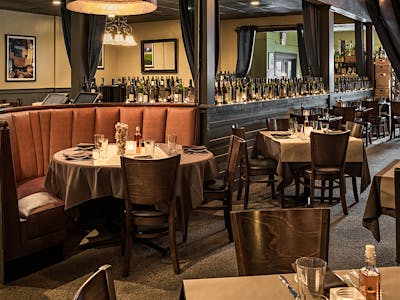
Glossy and bright with retro appeal, featuring vintage wall photography and a convivial, energetic setting that evokes the golden age of Jewish delis.