Our verdict
Where most Paris institutions ask you to choose between food and ceremony, Mariage Frères, on Rue du Bourg Tibourg in the Marais, has spent more than a century and a half building a case that tea deserves the same rigour as wine. The salon at the 4th arrondissement address draws serious tea drinkers and curious visitors alike, operating as one of France's most recognisable houses of speciality tea.

Pearl is the En Primeur Club membership app, where members save venues, book tables and use the concierge.
The menu
What to order
- Marco Polo tea-infused dishes
- Tea jellies
- Scones and muffins
- Brioches
- Macarons
- Afternoon tea service
The Marais as a Stage for Serious Tea
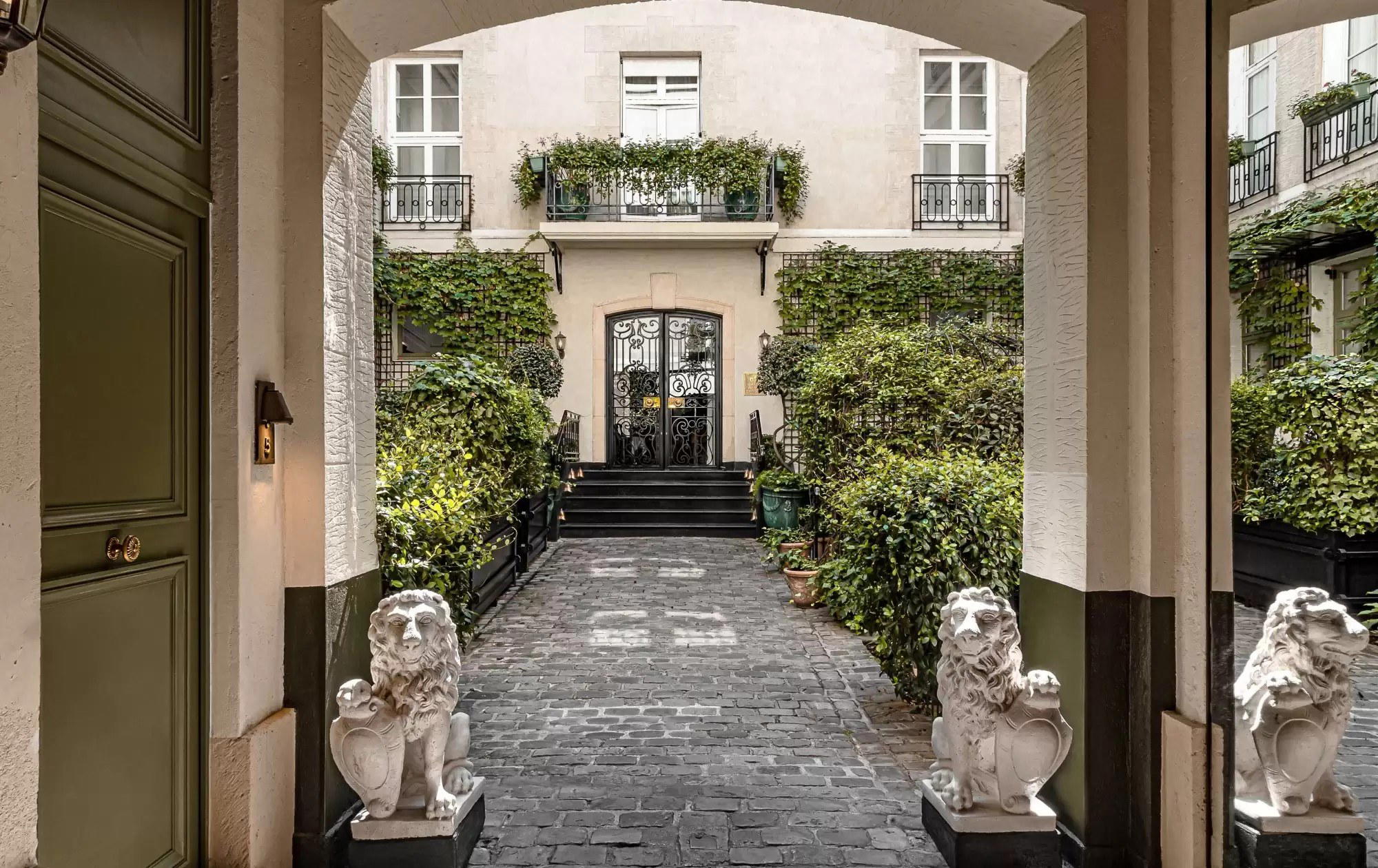
The 4th arrondissement has always been a neighbourhood of compressed contrasts: medieval street grids, contemporary galleries, and institutions that predate the Republic itself. In that company, Rue du Bourg Tibourg is exactly the kind of address where a tea house with colonial-era roots feels architecturally appropriate rather than incongruous. The street is narrow, the light arrives at angles, and the shopfront at number 30 carries the visual grammar of a 19th-century merchant house rather than a modern hospitality brand.
Mariage Frères was founded in 1854, placing it in the same generational bracket as the grands cafés of the Grands Boulevards and well ahead of most of the French culinary institutions that now define the country's gastronomic reputation. For context, Paul Bocuse's Auberge du Pont de Collonges opened more than a century later. That longevity is not a marketing claim; it is a structural fact about how the house sources, names, and archives its catalogue.
A Menu Architecture Built Like a Library
The editorial angle that makes Mariage Frères unusual among Paris institutions is not the quality of any individual tea, it is the architecture of the total offer. The house catalogue runs to several hundred references, organised by region of origin, processing method, and season of harvest in a manner that mirrors the classification logic of Burgundy's premier and grand cru designations. A first-time visitor confronting the menu faces the same orientation challenge as a newcomer to a serious wine list: the categories are meaningful, the vocabulary is specific, and skipping the learning curve produces a worse result.
This structure implies a particular kind of customer relationship. The house does not assume that visitors arrive knowing what they want. The physical menu, a bound document closer in format to a sommelier's reference guide than a café drinks list, functions as an educational instrument before it functions as an order form. That design choice places Mariage Frères in the same category as the tasting-menu restaurants where the menu itself is the first course: institutions like Arpège or L'Ambroisie, where the experience of reading what is available shapes expectations before anything arrives at the table.
The breadth of the tea catalogue also functions as a comparative signal. Where a neighbourhood café might carry a dozen tea varieties, and where a hotel salon such as Le Cinq at the Four Seasons George V treats tea as a complement to pastry rather than as the primary subject, Mariage Frères inverts that hierarchy. Tea is the text; everything else is annotation.
How the Room Works
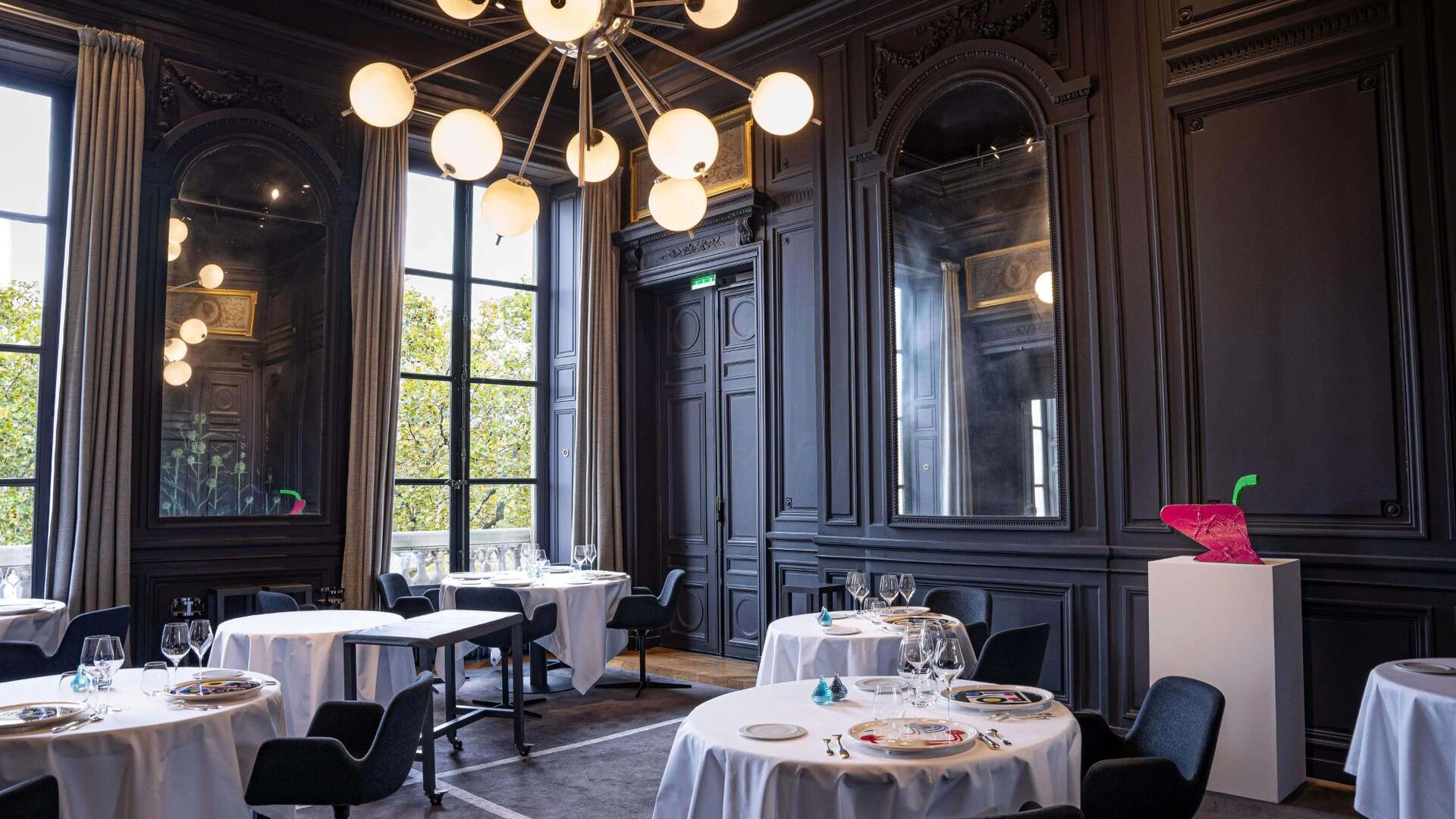
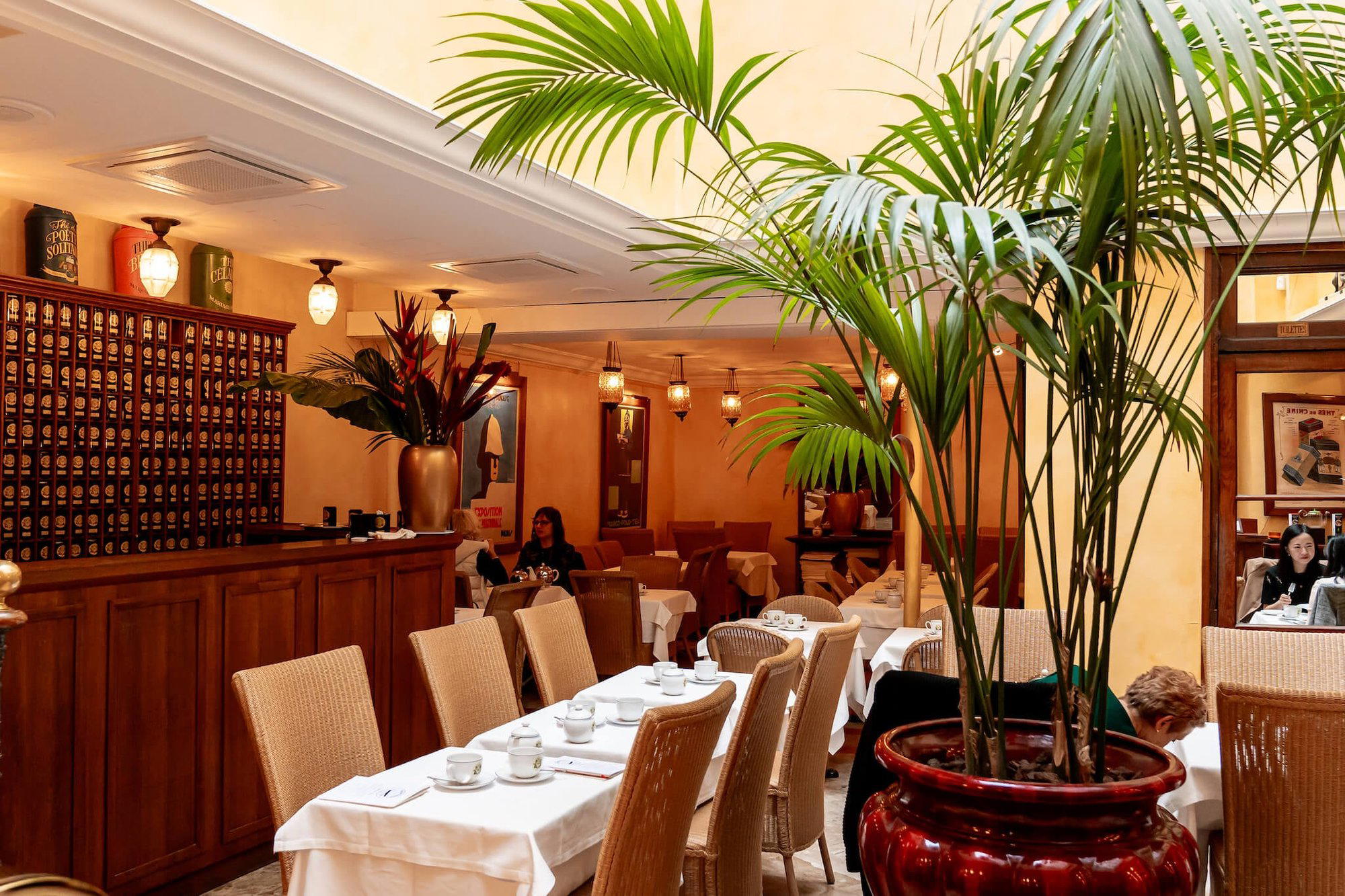
The ground floor operates as a retail space: shelves of canisters, display cases, and the particular compressed silence of a specialist shop where the merchandise is treated as serious inventory. The salon is upstairs or through to the rear depending on the location, and it operates with table service rather than counter service, a distinction that matters more than it sounds. Table service at this level implies a pacing commitment from both sides: the house will not rush the order, and the visit is not structured around turnover.
Tea salon format in Paris occupies a specific social register that sits between the grand café and the private club. It is more formal than a patisserie and less theatrical than the hotel tea services that compete on ceremony. For visitors accustomed to London's approached to afternoon tea, where the ritual at Claridge's or The Ritz is explicitly a performance, the Mariage Frères salon reads as quieter and more focused. The food accompaniments, typically a restrained selection of teas cakes and light savoury options, are present but subordinate. The frame is comparable to how a serious wine bar in Paris presents its food: essential supporting material, not co-equal billing.
That positioning places it in a different register from the three-Michelin-star dining rooms that occupy the same city, Alléno Paris au Pavillon Ledoyen, Kei, or the multi-course formats at Mirazur in Menton, but the underlying seriousness about ingredient provenance and menu classification is structurally similar.
Tea as a Regional Speciality System
France's relationship with tea is different from Britain's, and Mariage Frères has been the primary institution shaping what that relationship looks like in Paris for over 150 years. Where British tea culture historically standardised around blends, consistent, reproducible, producer-agnostic, the French house model, as practised here, leans toward single-origin and named-garden teas in a way that more closely parallels how France thinks about wine or cheese: provenance, vintage specificity, and house interpretation of raw material from a named source.
This framework connects to a broader French tradition of treating artisanal products as worthy of serious classification and archiving. The same intellectual seriousness about terroir and process that informs Bras in Laguiole or Auberge de l'Ill in Illhaeusern at the table applies here to a leaf product. The classification system is not marketing language; it is a genuine epistemology about how to describe and differentiate agricultural products from specific places and moments in a growing season.
For visitors who have engaged with single-origin coffee culture, the conceptual vocabulary transfers directly. For those arriving from the fine dining world, the parallel to how Assiette Champenoise in Reims or Flocons de Sel in Megève treat regional ingredient sourcing is more apt. The principle, that where something comes from and when it was harvested changes its character in ways worth naming, is consistent across categories.
Planning Your Visit
The Rue du Bourg Tibourg address sits within walking distance of the Hôtel de Ville Métro stop on lines 1 and 11, placing it in a part of the Marais that is accessible from most central Paris arrondissements without requiring a taxi. The area around the address includes several other institutions worth building into a morning or afternoon: the nearby Place des Vosges is within a ten-minute walk, and the concentration of serious food retail in the Marais makes the neighbourhood a coherent half-day destination rather than a single-stop errand.
For the salon specifically, midday and weekend afternoons represent peak pressure periods. Arriving early on a weekday morning or after the midday service window typically allows more time with the menu without the table-turnover pressure that affects weekend seatings. The retail shop operates on independent hours from the salon and does not require a reservation.
Visitors planning a broader Paris dining programme will find useful context in our full Paris restaurants guide. For those extending the trip into France's fine dining circuit, comparable seriousness about produce and provenance can be found at Troisgros in Ouches, AM par Alexandre Mazzia in Marseille, Auberge du Vieux Puits in Fontjoncouse, and Au Crocodile in Strasbourg.
For international reference points, the ingredient-led rigour here is structurally comparable to what Le Bernardin in New York City applies to seafood or what Atomix in New York City applies to its tasting structure, the subject matter differs, the intellectual commitment to sourcing and classification does not.
Quick reference: Mariage Frères, 30 Rue du Bourg Tibourg, 75004 Paris. Retail and salon on-site. Nearest Métro: Hôtel de Ville (lines 1, 11).
Frequently asked questions
Where do I go for Mariage Frères?
Mariage Frères is located at î30 Rue du Bourg Tibourg, 75004 Paris, France, Paris.
Does Mariage Frères have a tea museum, and is it open to the public?
The Rue du Bourg Tibourg address in Paris's 4th arrondissement includes a small tea museum alongside the retail shop and salon. It holds an archive of trade objects, historical equipment, and documentation spanning the house's history from 1854 onward. Access is available during normal visiting hours without a separate admission process, making it a practical addition to any visit to the salon.
What should I eat at Mariage Frères?
The food programme at Mariage Frères functions as supporting material for the tea selection rather than a destination in its own right. Lead with the tea catalogue, the house has been building it since 1854, and let the kitchen order follow from that. Tea-scented pastries and light savoury options are available in the upstairs salon at the Rue du Bourg Tibourg address, but no single dish is the reason to be here.
How far ahead should I plan for Mariage Frères?
The salon at Rue du Bourg Tibourg does not operate on the advance-booking timelines of Paris tasting-menu restaurants. Weekday visits generally allow for same-week planning, though weekend afternoons draw longer waits given the address's position in a heavily trafficked part of the Marais. Arriving before peak lunch hours gives the clearest run at a table without a reservation.
What makes Mariage Frères worth seeking out?
The house has been operating since 1854, a generational span that places it alongside a very short list of Paris food and drink institutions still functioning at their original purpose. What that longevity has produced is not nostalgia but catalogue depth: a tea selection structured more like a reference library than a menu, with sourcing across dozens of producing regions. The Rue du Bourg Tibourg location adds a small tea museum, which puts archival trade objects alongside the retail and salon spaces.
Can Mariage Frères accommodate dietary restrictions?
The core offer, the tea catalogue, is inherently plant-based and free of gluten, which means the primary reason most visitors come to the Rue du Bourg Tibourg address is accessible across most dietary frameworks. The food accompaniments in the salon involve pastries and light dishes that may contain allergens; those with specific requirements should confirm with staff on arrival. The retail floor requires no such consideration.
| Venue | Cuisine | Price | Awards | Notes |
|---|---|---|---|---|
| Mariage FrèresThis venue (the venue you are viewing) | French Tea Salon and Restaurant | $50–100 | Not listed | Not listed |
| Alléno Paris au Pavillon Ledoyen | Modern French Fine Dining | $150–200 | 3 Michelin Stars · World's 50 Best #79 | Creative |
| Kei | Modern French with Japanese Influences | $300–500 | 3 Michelin Stars · World's 50 Best #93 | Contemporary French, Modern Cuisine |
| L'Ambroisie | Classic French Haute Cuisine | $300–500 | 2 Michelin Stars · World's 50 Best #23 | French, Classic Cuisine |
| Le Cinq - Four Seasons Hôtel George V | Modern French Fine Dining | $300–500 | 3 Michelin Stars · World's 50 Best #24 | French, Modern Cuisine |
| Pierre Gagnaire | Avant-Garde French Fine Dining | $200–300 | 3 Michelin Stars · World's 50 Best #17 | French, Creative |