Mandarin Garden
Mandarin Garden on South Oneida Street sits within Ashwaubenon's casual dining corridor, serving Chinese-American fare to Green Bay's west-side neighborhoods. The restaurant occupies a category that has defined Midwestern suburban dining for decades: the neighborhood Chinese restaurant, where regulars return not for spectacle but for consistency and familiarity. For the local context, see our full Ashwaubenon restaurants guide.
Pearl is the En Primeur Club membership app — saves, bookings, and concierge access live there. Same editors, same standards.
- Address
- 2394 S Oneida St, Green Bay, WI 54304
- Phone
- +19204994459
- Website
- mandaringardenoneida.com
- Directions
- Get directions
 Saves & bookings on Pearl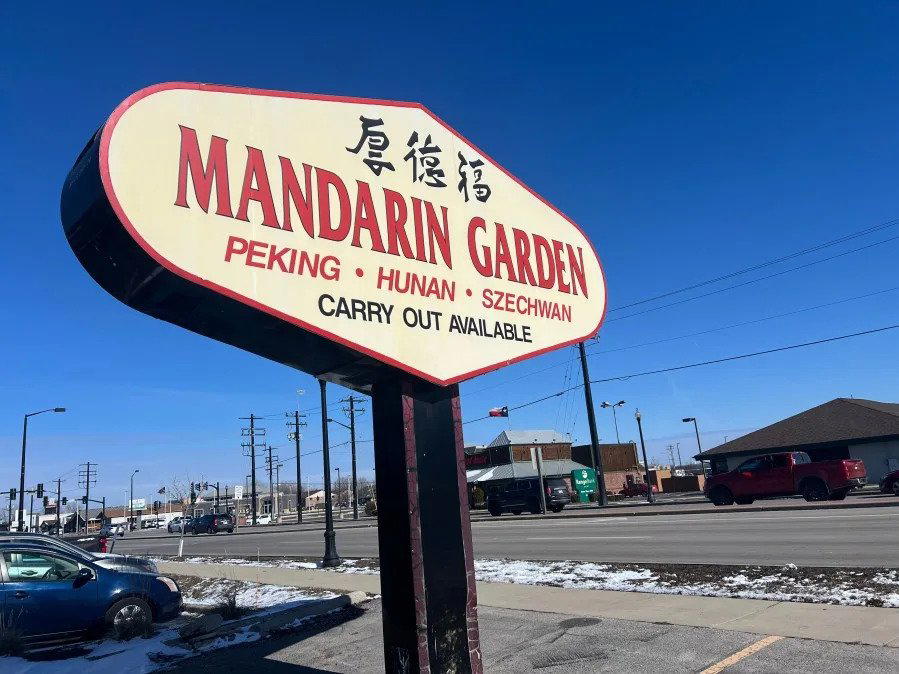
Chinese-American Dining in the Green Bay Suburbs
The South Oneida Street corridor in Ashwaubenon runs through one of Greater Green Bay's most functional dining strips, where the audience is largely residential and the standard is comfort over ceremony. It is the kind of American restaurant geography that produced, and continues to sustain, the neighborhood Chinese-American restaurant as a distinct institution. Mandarin Garden at 2394 S Oneida St in Ashwaubenon serves Traditional Chinese cuisine at a casual, walk-in-friendly price point of about $15 per person.
That geographic reach is no accident of history. Chinese immigration to the American interior, accelerating after the railroad era, brought with it a style of cooking that was genuinely pragmatic: adapted to local ingredients and palates, built around dishes that could be executed consistently at volume, and priced to serve working households rather than special occasions. What emerged was a cuisine with its own internal logic, distinct from the regional cooking of Guangdong or Sichuan from which it drew, but coherent on its own terms. Dishes like fried rice, lo mein, sweet-and-sour preparations, and egg drop soup are not degraded versions of something more authentic; they are the product of a specific migration and adaptation story that played out across hundreds of American cities and towns.
What the Neighborhood Chinese Restaurant Does
In a dining market like Ashwaubenon, the neighborhood Chinese restaurant fills a role that more specialized formats cannot. It operates at a price point and with a menu breadth that makes it genuinely versatile, covering family dinners, takeout orders, and casual sit-down meals within a single format. The kitchen typically runs a long menu organized by protein and cooking method, allowing regulars to establish a personal rotation of dishes they return to reliably. That repeatability is a feature, not a limitation.
Across the Midwest, this category has proven durable precisely because it does not depend on trend cycles. While fine-dining formats in cities like Chicago or New York shift with each season, the neighborhood Chinese-American restaurant holds a position grounded in community routine. For reference, the ambition of restaurants like Alinea in Chicago or Lazy Bear in San Francisco operates in an entirely different register, serving audiences who seek novelty and technical progression as primary values. The neighborhood Chinese restaurant serves a different and no less legitimate need: the reliable weeknight meal that does not require planning.
Closer to Mandarin Garden's actual comparable set, Ashwaubenon's dining strip offers a range of casual American formats. Kroll's West anchors the local burger-and-butter-burger tradition, while Margarita's covers the Mexican-American casual segment and Sammy's Pizza holds the pizza category. Each of these serves a defined local function. Mandarin Garden fits within that structure as the area's Chinese-American option, which positions it as a regular-use restaurant rather than a destination one.
The Cultural Roots of Chinese-American Cuisine
Understanding what Chinese-American cooking is requires setting aside the comparison to what it is not. The cuisine is not a simplified or corrupted version of mainland Chinese regional cooking. It is, instead, a distinct branch that evolved under specific American conditions: limited access to specialized ingredients in the pre-global-supply era, a customer base with unfamiliarity with fermented, dried, or intensely spiced preparations, and the economic pressure to run high-volume, low-overhead kitchens.
The result was a repertoire that traded the complexity of regional Chinese technique for a different kind of skill: the ability to produce satisfying, consistent food quickly and cheaply, using proteins, starches, and sauces calibrated to a broad American palate. That calibration is not a failure of authenticity. It is a form of adaptation that parallels what Italian-American, Mexican-American, and Greek-American cuisines each did in their own ways. Across the country, restaurants representing this adaptive tradition continue to form the backbone of community dining in suburbs and small cities. For a sense of how different the reference points become at the prestige end of the American dining spectrum, venues like Le Bernardin in New York City, The French Laundry in Napa, or Providence in Los Angeles operate under entirely different economic and creative frameworks.
That shift has not changed how most neighborhood restaurants operate, but it has added context to what these establishments represent within American food culture. Restaurants like Atomix in New York City represent the high-concept end of Asian-American dining, while the neighborhood Chinese-American restaurant occupies the opposite end of the formality scale, without any reduction in cultural significance.
Ashwaubenon's Dining Context
Ashwaubenon is a village that functions largely as an extension of Green Bay's commercial and retail infrastructure, concentrated along routes that feed Lambeau Field and the regional retail corridor. Its restaurant density reflects that function: the dining here is built around accessibility, parking, and value rather than culinary destination-seeking. Visitors arriving for Packers games contribute seasonal volume, but the core audience is local and repeat. That audience rewards reliability over novelty, which is precisely the operating environment in which the neighborhood Chinese-American restaurant has historically been most durable.
The national reference points for ambition-driven dining, from Blue Hill at Stone Barns in Tarrytown to Single Thread Farm in Healdsburg or Addison in San Diego, represent a category of restaurant built around a specific kind of dining decision. The restaurant's position in the Ashwaubenon dining corridor represents a different decision entirely, one made by a community that has sustained this format for decades for clear and practical reasons.
Planning Your Visit
The restaurant is located at 2394 S Oneida St in Ashwaubenon, within easy reach of Lambeau Field and the South Oneida retail corridor. Hours are Mon to Thu 11 AM to 9 PM, Fri and Sat 11 AM to 9:30 PM, and Sun closed. Nearby alternatives include Emeril's in New Orleans-style experiences for special occasions, or more locally, referencing the Ashwaubenon guide for the full picture. Further afield, Bacchanalia in Atlanta, Brutø in Denver, The Inn at Little Washington, and 8 1/2 Otto e Mezzo Bombana in Hong Kong each represent the prestige end of the international dining spectrum,
- sesame chicken
- kung pao chicken
- walnut chicken
- general tso's chicken
- crab rangoon
- egg drop soup
Price and Positioning
Comparable venues nearby, for context on price, style, and recognition.
| Venue | Cuisine | Price | Notes |
|---|---|---|---|
| Mandarin GardenThis venue — the venue you are viewing | South Oneida, Traditional Chinese | $$ | Not listed |
| Kroll's West | Ashwaubenon, Classic American Diner | $$ | Not listed |
| Sammy's Pizza | Not listed | $$ | Ashwaubenon, Classic Italian Pizza & Pasta |
| Margarita's | Ashwaubenon, Mexican Cantina | $$ | Not listed |
Continue exploring
More in Ashwaubenon
Restaurants in Ashwaubenon
Browse all →
Bars in Ashwaubenon
Browse all →
Hotels in Ashwaubenon
Browse all →
At a Glance
- Quiet
- Cozy
- Classic
- Casual Hangout
- Family
- Group Dining
- Standalone
Current opening hours
- Monday
- 11 AM–9 PM
- Tuesday
- 11 AM–9 PM
- Wednesday
- 11 AM–9 PM
- Thursday
- 11 AM–9 PM
- Friday
- 11 AM–9:30 PM
- Saturday
- 11 AM–9:30 PM
- Sunday
- Closed
Hours can change for holidays and private events. Last verified .
Small, charming curved dining room with simple, clean decor; quiet atmosphere suitable for conversation; recently updated interior furnishings.