
Black Pearl 1 Diamond
Our verdict
Lu Style holds a Black Pearl 1 Diamond (2025) and occupies the third floor of Wenhua West Road's Wenhua New World complex in Jinan's Lixia District, one of the few fine-dining addresses in the city built explicitly around the Lu cuisine canon. For travellers treating Shandong's capital as a serious dining destination, it is the clearest entry point into the province's culinary identity at a recognised level of kitchen ambition.

Pearl is the En Primeur Club membership app, where members save venues, book tables and use the concierge.
The menu
What to order
- Sweet and Sour Carp
- Stewed Pork Hock
Lu Cuisine, Sourced and Seated: Jinan's Black Pearl Table
On Wenhua West Road, in the part of Jinan's Lixia District where cultural institutions and mid-century civic architecture press against newer commercial blocks, the third floor of the Wenhua New World complex does not announce itself with obvious fanfare. The approach is deliberate: Lu Style is aimed at diners who already know what they are looking for, which is to say, those who take Lu cuisine seriously enough to want it at a recognised, award-validated level rather than in the casual registers where the tradition more commonly lives in Shandong.
Lu cuisine (鲁菜) is one of the eight canonical regional styles in Chinese gastronomy and, by many historical accounts, the most influential. It shaped the kitchens of the imperial court for centuries and provided the technical vocabulary, precise knife work, controlled heat application, stock-based braising, that many other northern Chinese styles drew from. Yet it occupies an awkward position in contemporary fine dining: it lacks the overseas diaspora footprint of Cantonese, the current trend momentum of Sichuan, and the romantic coastal framing of Jiangsu cuisine. A venue serious about representing it at a premium level is, by definition, operating in a niche.
What Shandong Soil and Sea Bring to the Table
The ingredient case for Lu cuisine is harder to argue against than its reputation sometimes suggests. Shandong Province produces a disproportionate share of China's premium agricultural output: garlic from Jinxiang, ginger from Laiwu, Dezhou-braised chicken that has carried geographic indication status, seafood from a coastline that runs from Qingdao to Weihai. The cuisine's classical canon was built around this abundance, and the technical methods it developed, long-simmered clear broths, vinegar-forward dressings, precise wok temperatures for quick-seared proteins, are responses to the quality and character of local ingredients rather than techniques imposed from outside.
At the fine-dining tier, that sourcing logic becomes a positioning statement. Where Cantonese fine dining in cities like Guangzhou and Hong Kong has long centred its premium identity on live seafood provenance and dim sum refinement (Ming Court and Imperial Treasure Fine Chinese Cuisine in Guangzhou both operate in that register), and where Jiangnan-influenced restaurants such as Dingshan·Jiangyan (Xiangcheng) in Suzhou lean on the delicate freshwater and seasonal produce of the Yangtze Delta, Lu cuisine's premium identity is anchored in a different set of raw materials: strong inland and coastal Shandong produce presented through a technically demanding classical kitchen vocabulary.
That is, in substance, the editorial case for a restaurant like Lu Style. It is not simply a regional curiosity. It is a site where a significant culinary tradition, one with centuries of documented influence, gets applied to provincial ingredients at a level of ambition that the Black Pearl programme, operated by Meituan, formally recognised with a 1 Diamond award in 2025.
The Black Pearl Benchmark and What It Signals Here
The Black Pearl Diamond awards have, since their 2018 launch, operated as the most prominent China-domestic fine-dining recognition system, covering a geographic and culinary range that Michelin's China presence does not yet match. A 1 Diamond designation places a restaurant in a tier of genuine kitchen seriousness, above the mass market, recognised as delivering a consistent standard, without the two and three diamond designations that signal the country's most rarefied addresses. For context, peers at the 1 Diamond level across mainland China include restaurants working in Taizhou cuisine (Xin Rong Ji in Chengdu), Shanghainese fine dining (102 House in Shanghai), and Hangzhou-tradition cooking (Ru Yuan in Hangzhou).
In Jinan specifically, that peer tier is thin. The city's dining scene, while substantial in volume, has fewer fine-dining addresses with external validation than comparably sized Chinese provincial capitals. Spring Pavilion represents the other named reference point in Jinan's recognised dining tier. Lu Style's 1 Diamond, then, is not incidental to its positioning, it is the signal that distinguishes it from the city's wider Lu cuisine offering and places it inside a national conversation about where Chinese regional cooking is taken seriously at a formal level.
Placing Lu Style in the Wider Chinese Fine-Dining Map
The broader pattern across Chinese fine dining is one of increasing regional specificity at the upper end. The decade that produced venues like Xin Rong Ji (Xinyuan South Road) in Beijing, which built a serious reputation on Taizhou coastal produce sourced and transported with precision, demonstrated that regional cuisine credentials, when backed by genuine sourcing discipline and technical consistency, can compete on equal terms with Cantonese or international fine-dining formats. That same logic, applied to Shandong's particular agricultural and coastal resources, is the opportunity that Lu Style is positioned to occupy in Jinan.
For reference, the contrast with venues operating in more internationally legible formats is instructive. Chef Tam's Seasons in Macau and Fleurs Et Festin in Xiamen operate in markets with higher tourist volumes and broader international dining audiences. Jiangnan Wok·Rong in Fuzhou and Dai Yuet Heen in Nanjing work within more coastal-influenced regional traditions. Lu Style's position is different: it is a provincial capital restaurant serving a cuisine that is historically central to Chinese cooking but commercially underleveraged at the fine-dining level, in a city that is neither a primary tourist destination nor a major expat dining market. That combination makes the Black Pearl recognition more meaningful, not less.
Planning a Visit
Lu Style is located on the third floor of the Wenhua New World complex at 10 Wenhua West Road, Lixia District, Jinan, a central address in a district with a concentration of cultural and commercial institutions. The postal code is 250061. No booking contact, hours, or price information is available in the public record at time of writing; confirming reservations in advance through local platforms or the venue directly is advisable, as Black Pearl-recognised addresses in second-tier Chinese cities frequently operate with limited covers and no walk-in availability. For broader orientation in Jinan, see our full Jinan restaurants guide, our full Jinan hotels guide, our full Jinan bars guide, our full Jinan wineries guide, and our full Jinan experiences guide.
Frequently asked questions
Is LU STYLE good for families?
A Black Pearl 1 Diamond award in 2025 places Lu Style in the upper tier of Jinan fine dining, where the format and price point are aligned to purposeful occasions rather than casual family meals. It suits a table of adults marking a significant event more naturally than it does a multigenerational group with children.
What is the atmosphere like at LU STYLE?
The third-floor position inside the Wenhua New World complex on one of Lixia District's established civic streets suggests a composed, inward-looking room insulated from street-level noise. A 2025 Black Pearl 1 Diamond implies a setting calibrated to serious dining rather than social spectacle.
What's LU STYLE known for in terms of accolades?
LU STYLE has received recognition including: Black Pearl 1 Diamond (2025).
What's the signature dish at LU STYLE?
No specific dishes are documented in the public record for Lu Style. Lu cuisine's classical canon, braised sea cucumber, Yellow River carp preparations, and clear-broth soups, forms the broader repertoire from which a Black Pearl 1 Diamond kitchen in Jinan would logically draw.
Where exactly is LU STYLE?
LU STYLE is located at China, Shandong, Jinan, Lixia District, 10, Wenhua W Rd, 10号3楼文体新世界 邮政编码: 250061, Jinan.
Quick Comparison
Comparable venues nearby, for context on price, style, and recognition.
| Venue | Cuisine | Price | Awards | Notes |
|---|---|---|---|---|
| LU STYLEThis venue (the venue you are viewing) | Shandong (Lu) Cuisine | $50–100 | Black Pearl 1 Diamond | Not listed |
| Spring Pavilion | Shandong Fine Dining | $100–150 | Black Pearl 1 Diamond | Quancheng Plaza Commercial Area |
| Dong Yu | Modern Shandong Fine Dining | $30–50 | Black Pearl 1 Diamond | Not listed |
| The longyin | Modern Huaiyang fine dining | $50–100 | Black Pearl 2 Diamond | Jiangning |
| 金氏园江米鸡 | 延边传统江米鸡 | Not listed | Not listed | 延吉 |
| Guiyu Family Noodles | Zhejiang Cuisine | $50–100 | Not listed | Xihu District |
Recognition history
Dated appearances from independent guides and award organizations, with the underlying list record or original source where available.
Black Pearl 1 Diamond
Black Pearl
Full recognition history (2 entries)
Black Pearl 1 Diamond
Black Pearl
Continue exploring
More in Jinan
Restaurants in Jinan
All restaurants in Jinan →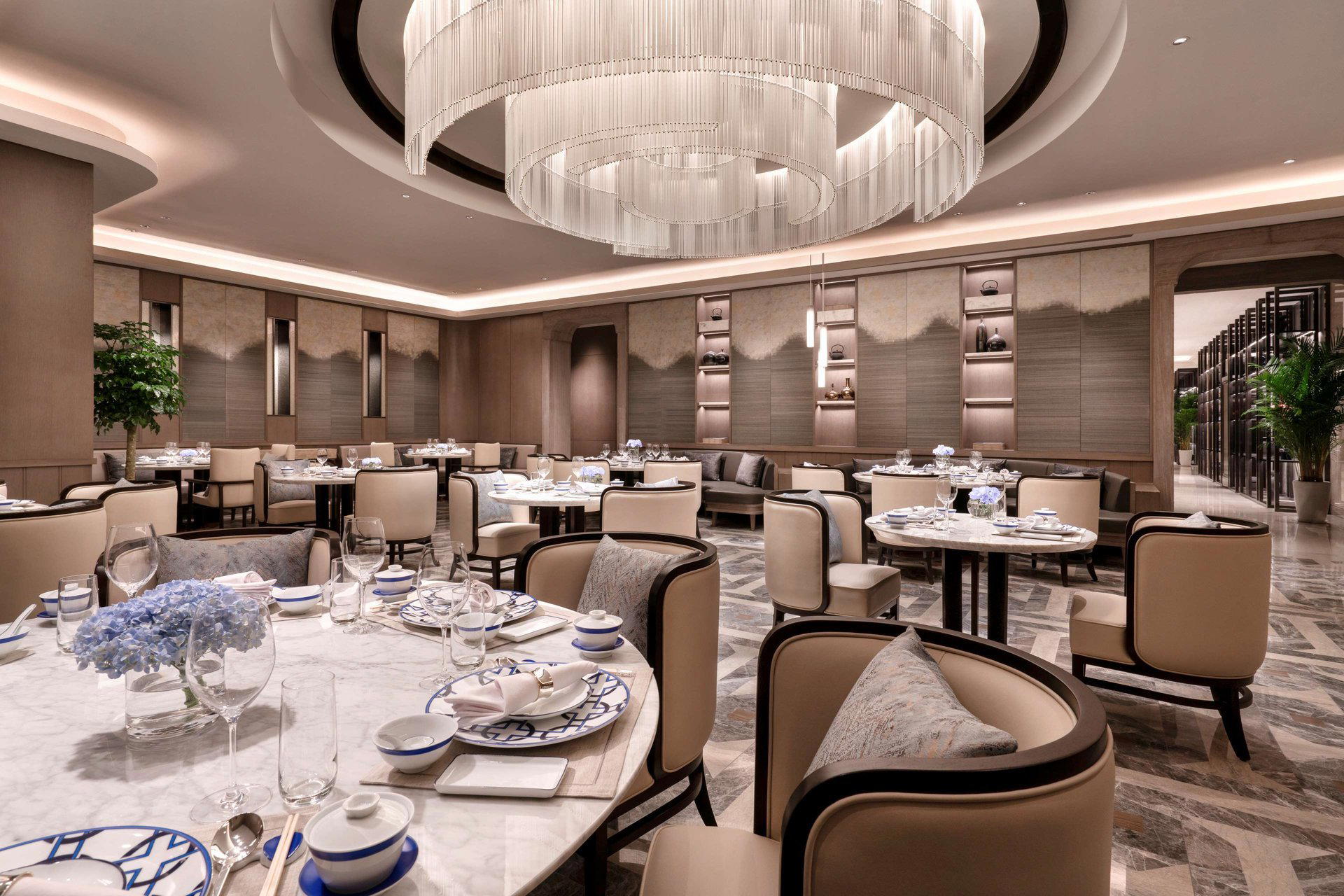
Details
- Modern
- Elegant
- Sophisticated
- Business Dinner
- Group Dining
- Open Kitchen
- Local Sourcing
- A La Carte
Contemporary layout with warm woods, muted textiles, clean lines, and functional warm lighting focused on comfortable group and intimate dining.