
Michelin Plate
Our verdict
A century-old family inn on a 400-year-old wine estate in the Wachau Valley, Loibnerhof pairs classic Austrian cooking—veal goulash, Tafelspitz, apricot Buchteln—with wines from the adjacent Weingut Emmerich Knoll. The country-style dining room and summer tables beneath apple boughs draw visitors seeking the Wachau's farm-to-table tradition in its most traditional form.

Pearl is the En Primeur Club membership app — saves, bookings, and concierge access live there. Same editors, same standards.
The menu
What to order
- Butter-Schnitzel
- Hausgemachtes Gänseleberparfait
- Krebsschaumsuppe mit Donaukrebserln
- Beuschel (Wiener Ragout)
- Lammkarree in Kräuterkruste
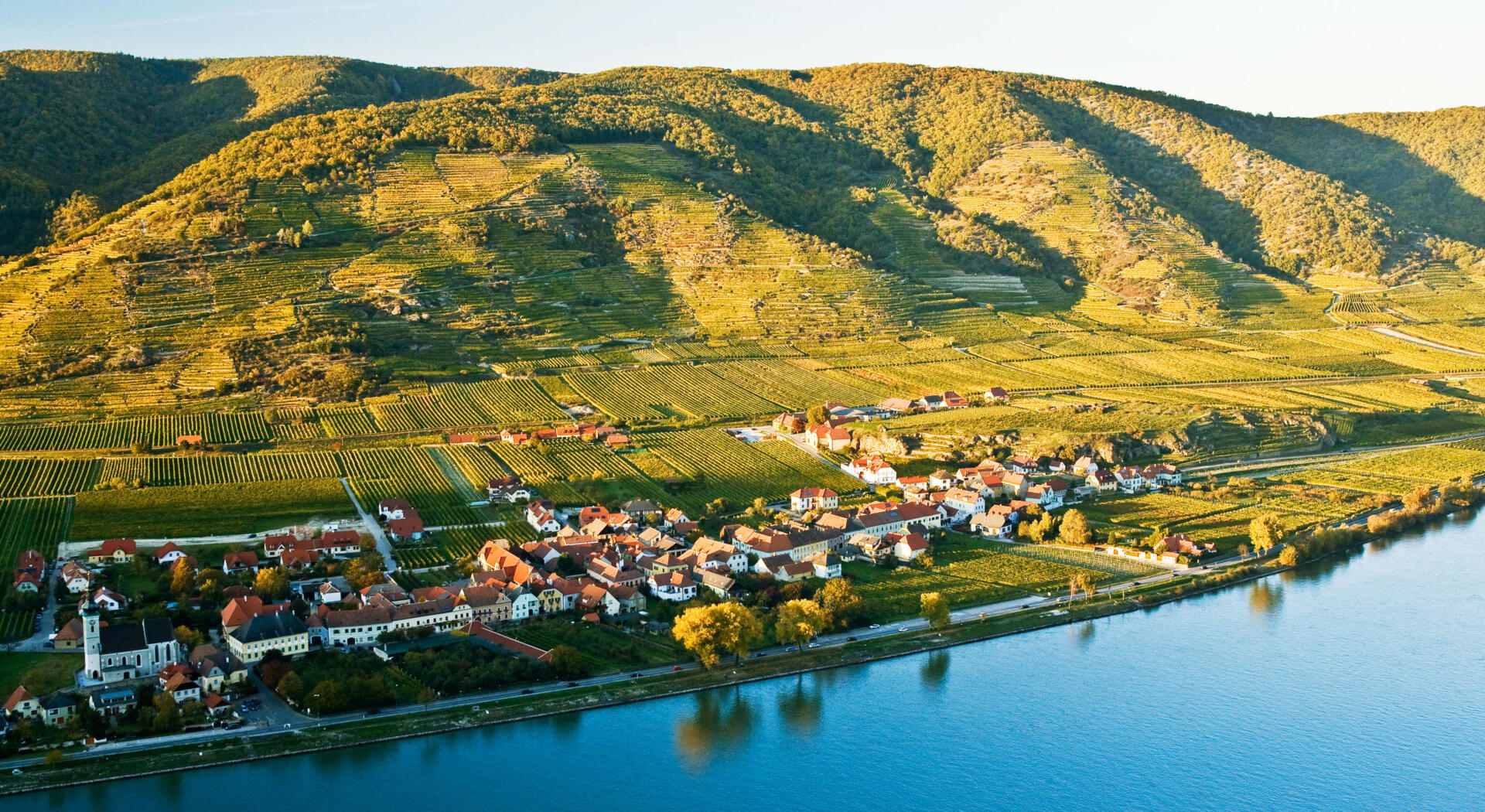
Approach Loibnerhof down Unterloiben's narrow lane and you see two buildings that define the Wachau Valley's food culture: a 400-year-old wine estate with stone cellars dug into the hillside, and the inn that has fed grape harvesters and river traders for more than a hundred years. The Knoll family, now in its fourth generation, runs both, and the arrangement explains why the menu reads like an archive of regional cooking and the wine list reads like a single-producer vertical. Father Sepp and son Josef work the kitchen, the Weingut Emmerich Knoll supplies the bottles, and the format remains what it has always been: no tasting menus, no reinterpretation, just the dishes that built the reputation.
Danube Crayfish, Wachau Beef, and Apricot Country
Austria's traditional inn dining depends on proximity, to rivers, pastures, and orchards, and Loibnerhof draws from all three. Foam soup arrives with crayfish pulled from the Danube's cooler stretches upstream. Veal and beef come from farms within the Wachau and adjoining valleys, where cattle graze the steep terraced vineyards after harvest. The creamy veal goulash and the Tafelspitz, beef simmered in broth until the collagen softens, are the two dishes the kitchen has served longest, and the ones guests still request most often. Dessert leans on the valley's defining crop: apricot Buchteln, the yeasted buns filled with fruit preserves, and Topfenknödel, quark dumplings rolled in breadcrumbs and served warm. Apricot orchards blanket the hillsides between Dürnstein and Krems, and the Knolls buy from producers whose harvest schedule aligns with the inn's seasonal rhythm. The kitchen does not announce a farm list or trace every carrot back to the plot; sourcing here is a function of geography, not a marketing angle.
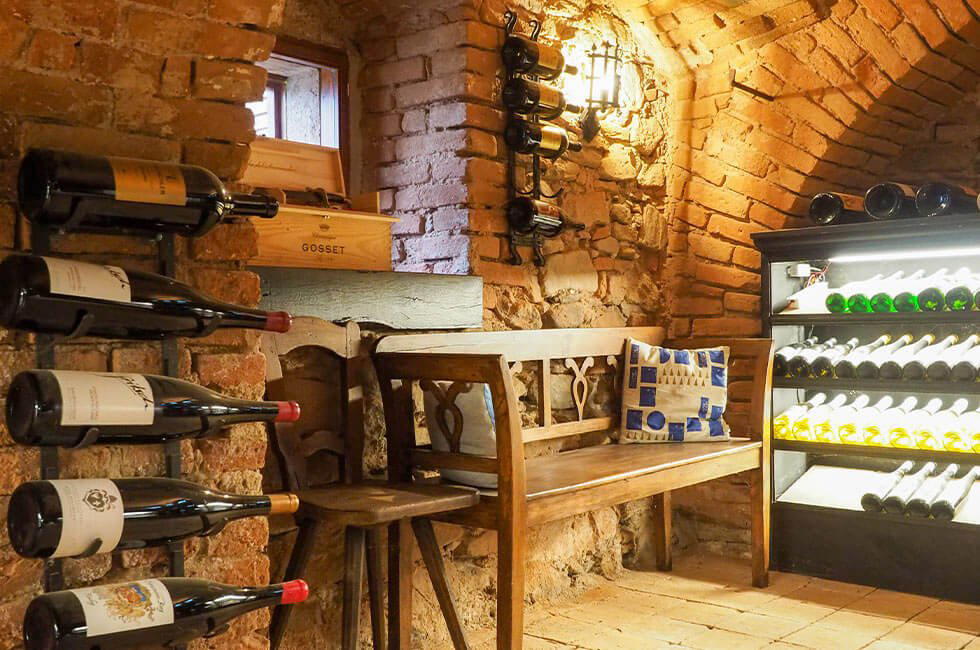
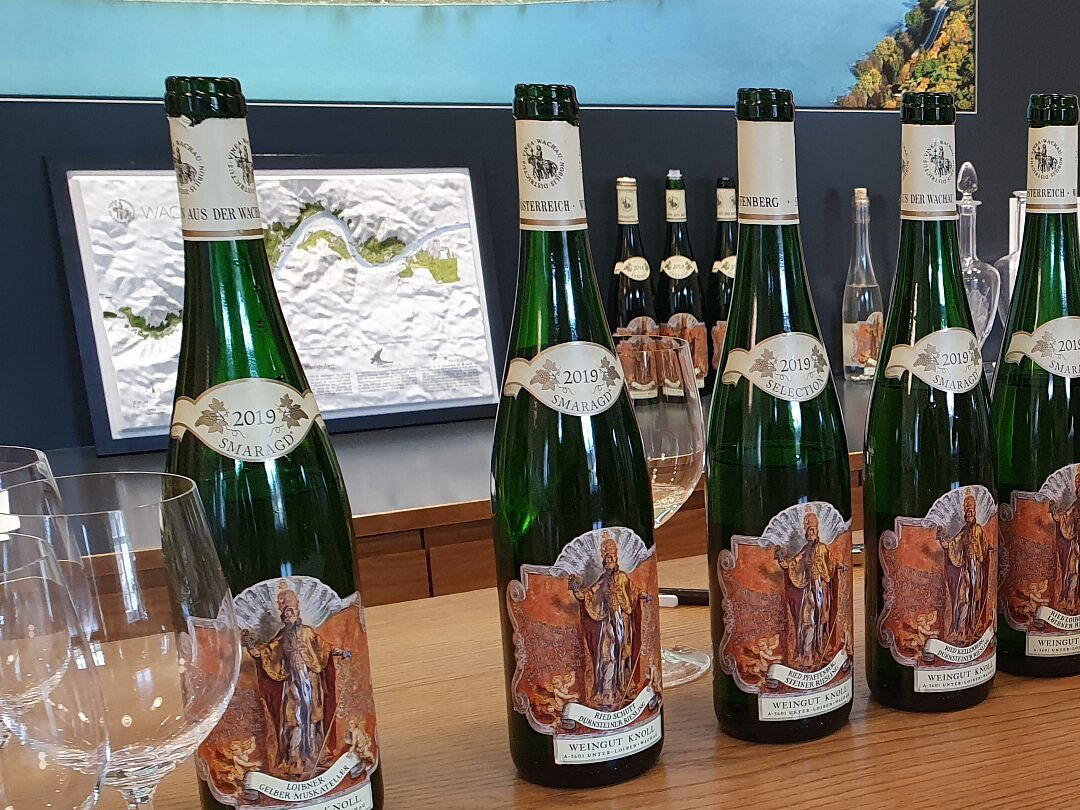
Wine service follows a parallel logic. Weingut Emmerich Knoll sits less than 200 metres away, and the list reflects the estate's Riesling and Grüner Veltliner range with a depth that would be difficult to assemble elsewhere. Older vintages appear intermittently, depending on cellar release. For visitors who arrive without prior knowledge of Wachau's Smaragd designation or the terroir distinctions between Loibenberg and Kellerberg, the staff will guide; for those who know the producer's work, the list offers vertical tastings that few restaurants outside the valley can match. The pairing culture is not formalized, this is not a tasting-menu restaurant, but the proximity between kitchen and vineyard makes ingredient-to-vintage alignment direct.
A Country Dining Room and the Apple-Tree Tables
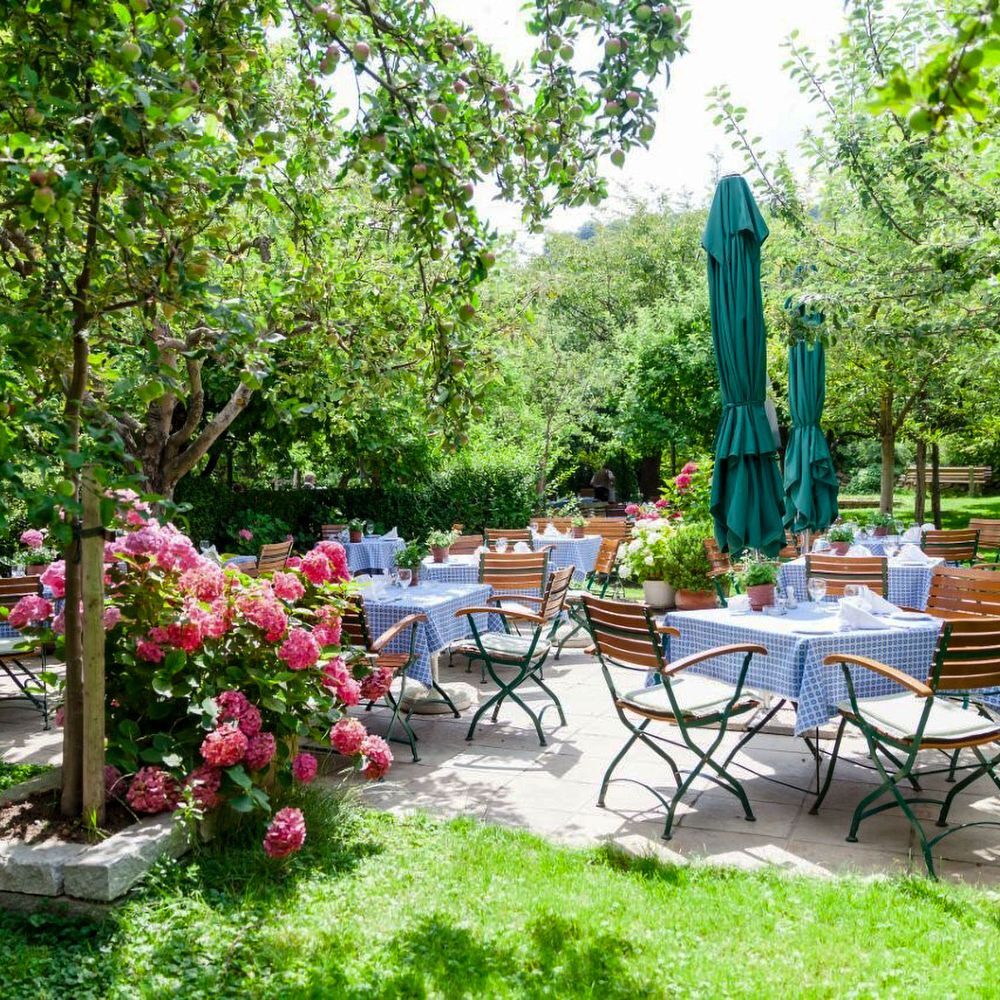
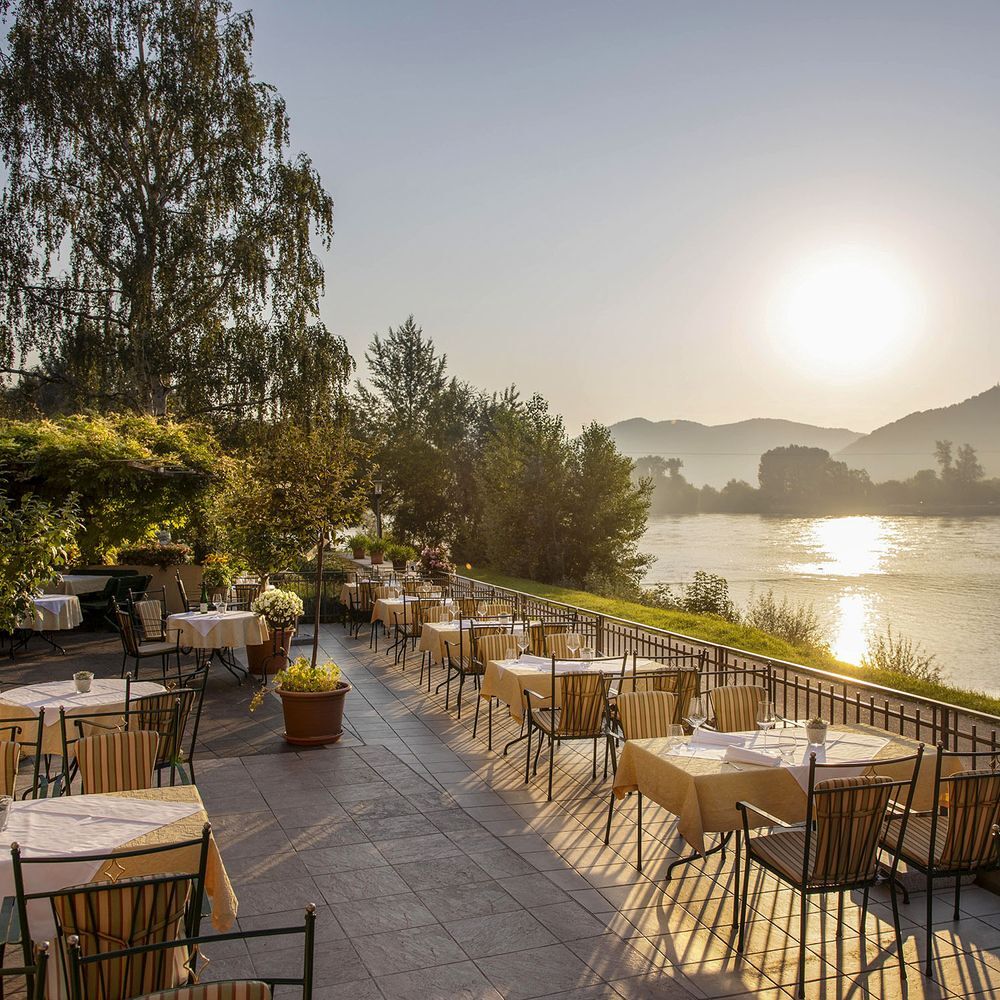
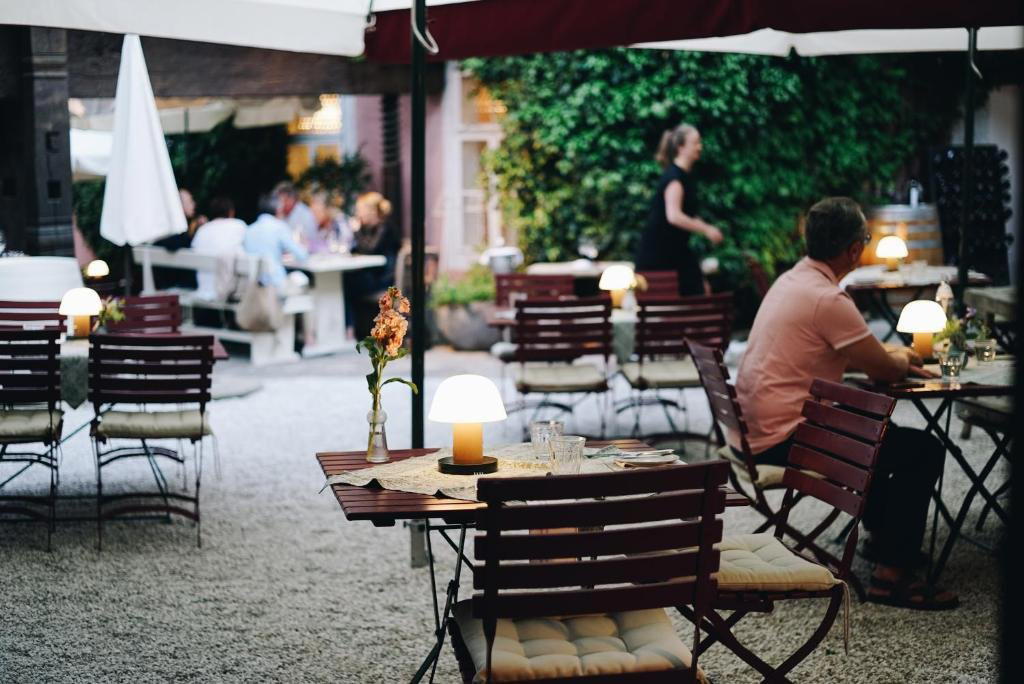
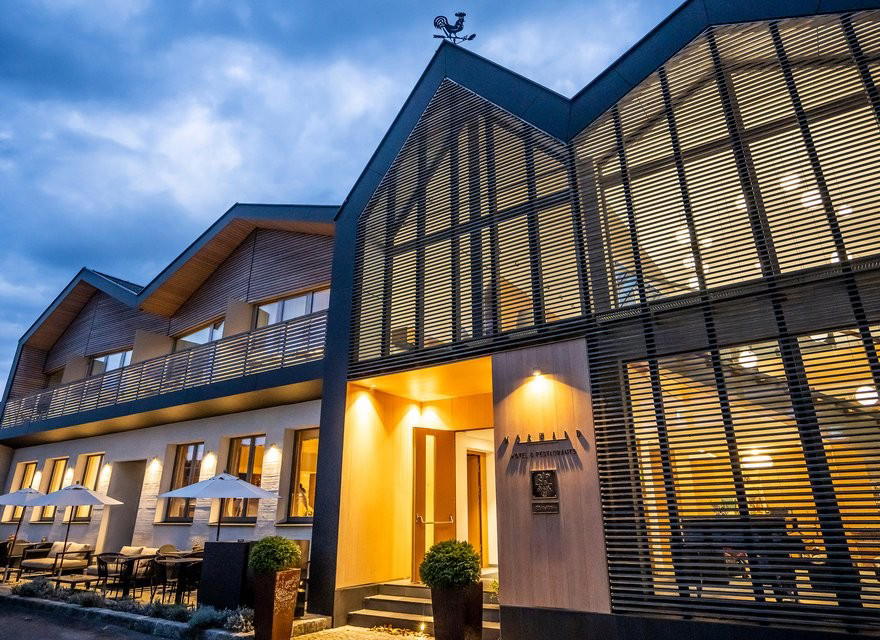
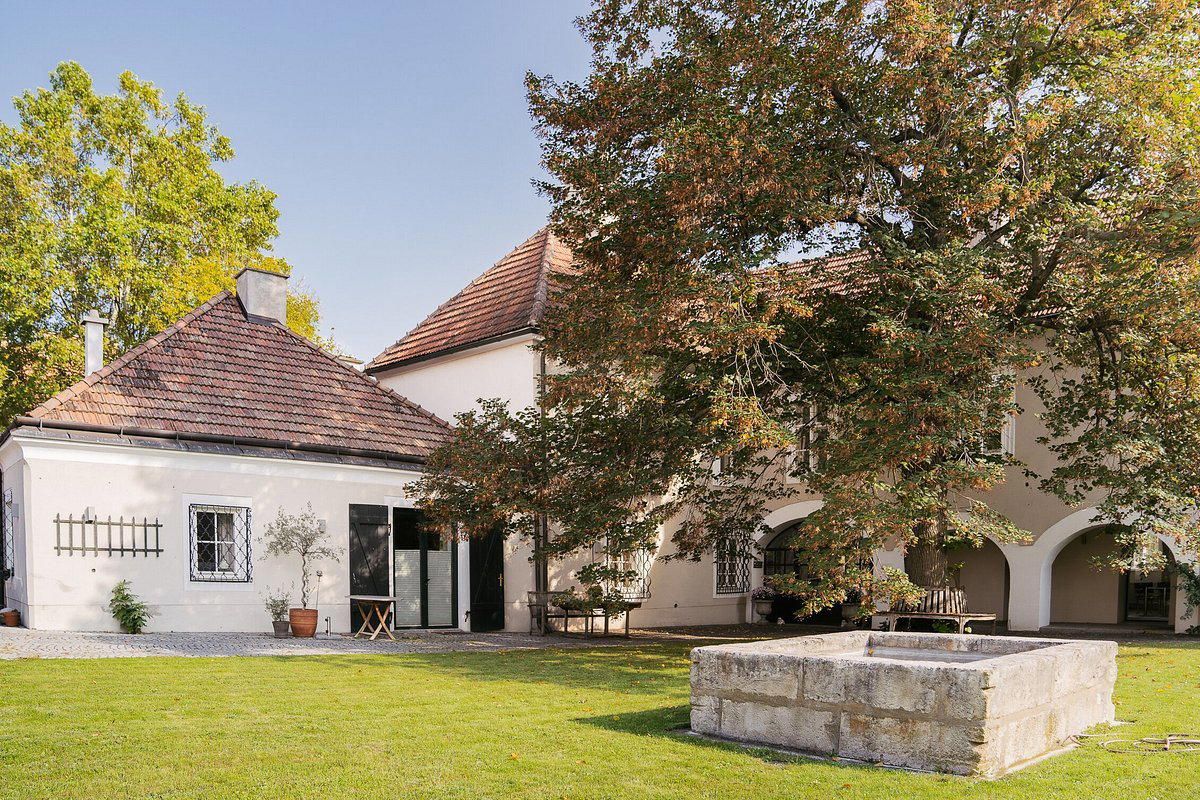
Inside, the dining room holds a few dozen seats arranged in the timber-beamed, whitewashed style common to Wachau farmhouses. The furniture is simple, the lighting warm, the acoustics soft. It is not a design statement; it is the interior of a working inn that has absorbed a century of wear and maintenance. In summer, the preferred seating shifts across the street to an outdoor area shaded by apple trees. Guests book those tables weeks ahead, particularly in late June and throughout August when the valley's river path draws cycling tourists and Vienna weekenders. The setting is prettier than the indoor room, dappled light, orchard breeze, distant views of terraced vineyards, and the kitchen maintains the same menu and pace outdoors.
Dürnstein's dining scene splits between two tiers: the inn format, where Loibnerhof and Restaurant Richard Löwenherz operate, and the castle-hotel tier, exemplified by Schloss Dürnstein. The latter offers tasting menus and seasonal reinterpretation; the former preserves traditional Austrian cooking with minimal revision. Loibnerhof competes on sourcing proximity and producer access rather than technique or presentation innovation. For visitors seeking the Wachau's ingredient tradition in its most literal expression, the inn format delivers what the castle format has moved beyond.
The restaurant does not publish hours or booking policies online; the Knolls prefer phone reservations and walk-in flexibility during slower weeks. In practice, summer lunch and weekend dinner require advance contact, particularly for the outdoor tables. The kitchen does not accommodate extensive menu modifications, and the wine list does not extend beyond Austrian producers. This is not a critique, it is a format choice consistent with the inn's century-long operating model. For context on the broader Dürnstein dining landscape, see our full Dürnstein restaurants guide, and for accommodation options that align with this style of regional cooking, consult our full Dürnstein hotels guide.
Dürnstein sits 80 kilometres west of Vienna along the B3, reachable by car in just over an hour. The town has limited parking; arrive early or use the public lot near the river path. Train service to Krems (12 kilometres east) connects to Vienna's main stations, and a local bus links Krems to Dürnstein. Cyclists following the Danube route will find Loibnerhof directly on the path. The Wachau Valley's wine-tasting circuit includes dozens of estates, many within walking distance of the town; for a full view of the valley's wine culture, see our full Dürnstein wineries guide. The town also supports a small bar and café scene covered in our full Dürnstein bars guide, and seasonal experiences, harvest tastings, river excursions, are catalogued in our full Dürnstein experiences guide.
The Knoll family's century at Loibnerhof anchors the restaurant's credibility, but the format itself, ingredient proximity, single-producer wine access, minimal menu revision, remains the clearer signal of what to expect. This is Austrian inn cooking at its most traditional, sustained by the valley's agriculture and the family's dual role as vintner and kitchen operator. For visitors who prioritize sourcing transparency and regional authenticity over technique-driven presentation, Loibnerhof delivers a format that Dürnstein's other dining options have either abandoned or never adopted.
Frequently asked questions
Is Loibnerhof a family-friendly restaurant?
The inn has been run by the Knoll family for over a century and welcomes multi-generational groups in both the timber-beamed dining room and the outdoor seating beneath apple trees. Menu staples such as veal goulash and sweet yeast buns appeal to a wide range of ages, and the setting inside a 400-year-old wine estate offers ample space for families.
How would you describe the vibe at Loibnerhof?
Loibnerhof occupies a 400-year-old wine-growing estate and follows the whitewashed, timber-beamed farmhouse aesthetic common to Wachau inns. In summer the draw shifts to tables across the street under apple trees, where the Danube valley backdrop and proximity to the Knoll winery create an unhurried country atmosphere. Inside, simple furniture and a few dozen seats reinforce the family-inn format.
Is Loibnerhof award-winning?
Loibnerhof has received recognition including: This beautiful inn in a 400-year-old wine-growing estate has been run by the Knoll family for over a century. Sepp and Josef – father and son – serve classic Austrian cuisine here, including dishes such as foam soup made with crayfish from ….
Where is Loibnerhof located?
Loibnerhof is located at Unterloiben 7, Dürnstein, Niederösterreich, 3601, AUT, Dürnstein.
Do I need a reservation for Loibnerhof?
The outdoor tables beneath the apple trees are noted as highly prized during warm months, which suggests advance booking is advisable in season. Sepp and Josef Knoll operate the dining room alongside the adjacent Weingut Emmerich Knoll, and the kitchen focuses on dishes such as Danube crayfish foam soup and regional veal, which require lead time for sourcing.
What has Loibnerhof built its reputation on?
The inn draws on more than a century of Knoll family stewardship and close ties to the adjacent Weingut Emmerich Knoll. Classic preparations of Danube crayfish, Wachau veal and beef, and apricot desserts anchor the menu, while the 400-year-old estate setting and outdoor tables under fruit trees distinguish it from hotel dining rooms elsewhere in the valley.
A Quick Peer Check
Comparable venues by cuisine and price in the same metro.
| Venue | Cuisine | Price | Awards |
|---|---|---|---|
| LoibnerhofThis venue — the venue you are viewing | Traditional Austrian & Wachau regional cuisine | $30–50 | Michelin Plate |
| Restaurant Richard Löwenherz | Traditional Austrian with Regional Specialties | $50–100 | Not listed |
| Schloss Dürnstein | Refined Austrian with International Influences | Not listed | Not listed |
| Landgasthaus Essl | Regional Cuisine | Not listed | Not listed |
Recognition history
Dated appearances from independent guides and award organizations, with the underlying list record or original source where available.
Michelin Plate
Michelin
Continue exploring
More in Dürnstein
Restaurants in Dürnstein
All restaurants in Dürnstein →
Bars in Dürnstein
Browse all →
Hotels in Dürnstein
Browse all →
Details
- Scenic
- Rustic
- Classic
- Cozy
- Romantic
- Date Night
- Family
- Group Dining
- Celebration
- Special Occasion
- Casual Hangout
- Waterfront
- Garden
- Wine Cellar
- Terrace
- Historic Building
- Hotel Restaurant
- Standalone
- Extensive Wine List
- Local Sourcing
- Farm To Table
- Waterfront
- Vineyard
- Garden
- A La Carte
- Wine
- Beer
- Vegetarian Friendly
- Vegan Options
- Gluten Free Options
Current opening hours
- Monday
- Closed
- Tuesday
- Closed
- Wednesday
- 11:30 AM–10:30 PM
- Thursday
- 11:30 AM–10:30 PM
- Friday
- 11:30 AM–11 PM
- Saturday
- 11:30 AM–11 PM
- Sunday
- 11:30 AM–7:30 PM
Hours can change for holidays and private events. Last verified .
Traditional Wachau inn with a relaxed, quality-focused feel: rustic dining rooms in a 400‑year‑old wine estate, a spacious garden under apple trees, and a scenic, unpretentious atmosphere that is refined without being formal or "schicki-micki."