

Star Wine List
Our verdict
Inside Östermalms Saluhall, one of Stockholm's great nineteenth-century market halls, Lisa Elmqvist has operated as the city's most serious seafood counter for decades. The kitchen draws on Sweden's cold-water catches and applies a classical European precision that sits well outside the New Nordic circuit. For visitors tracking Stockholm's food scene beyond the tasting-menu tier, it occupies a category largely its own.

Pearl is the En Primeur Club membership app — saves, bookings, and concierge access live there. Same editors, same standards.
- Address
- Östermalms Food Hall, Nybrogatan 31, 114 46 Stockholm, Sweden
- Phone
- +46 8 553 404 00
- Hours
- Mon 9:30 AM–7 PMTue–Thu 9:30 AM–10 PMFri–Sat 9:30 AM–11 PMSun Closed
- Website
- lisaelmqvist.se
- Directions
- Get directions
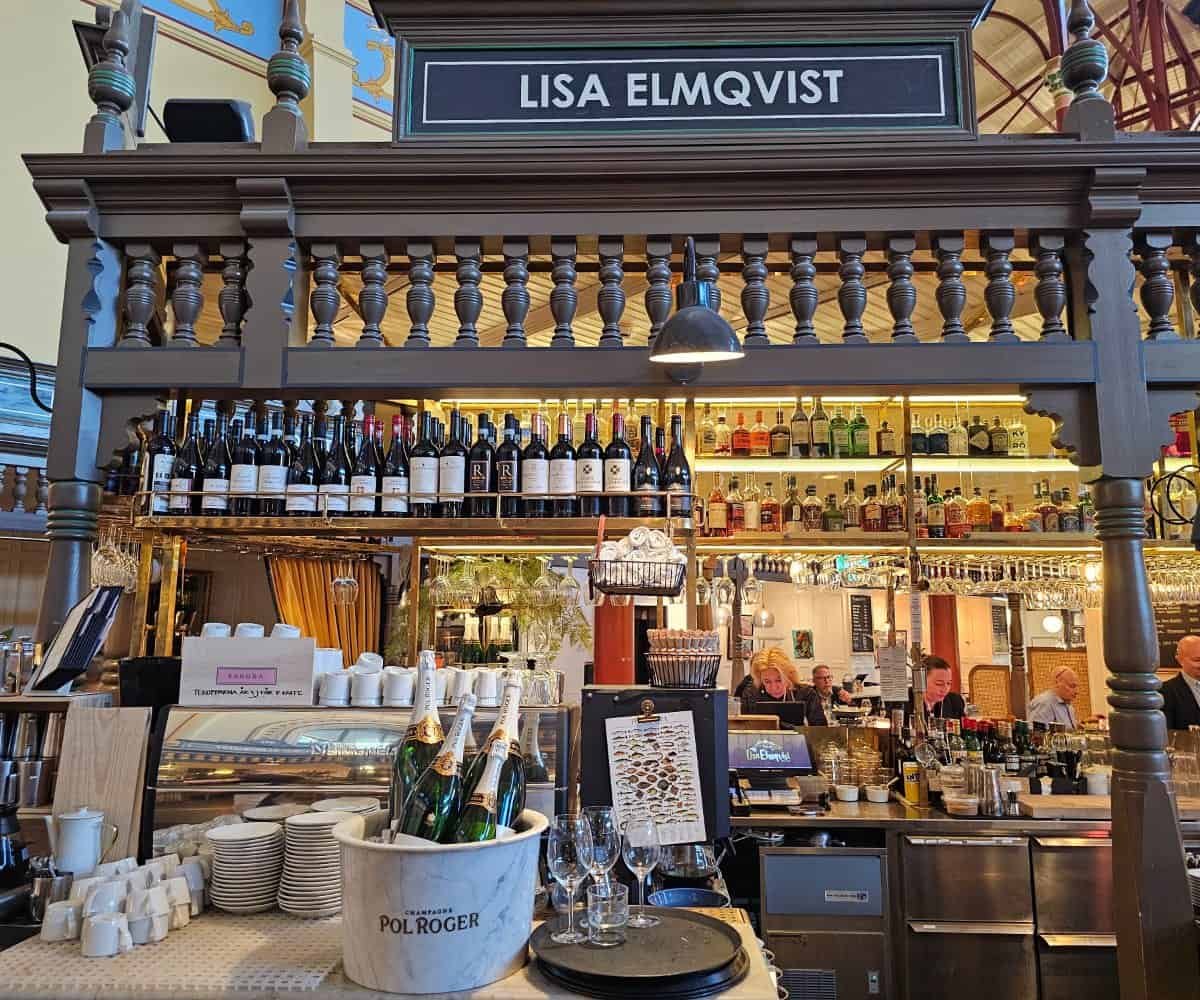
Inside the Hall: Where the Market and the Kitchen Meet
Östermalms Saluhall on Nybrogatan is one of the few European food markets where the architecture still disciplines the food. The red-brick hall, built in 1888, sets a tone of measured seriousness: high vaulted ceilings, butcher-tiled stalls, a cool ambient temperature that suits the produce rather than the customer. Lisa Elmqvist operates within that environment, and the environment matters. Dining at a counter inside a market hall is an exercise in transparency that most restaurant formats cannot replicate. The fish arrives from the same supply chain that stocks the retail display behind you. There is no curated distance between the ingredient and the plate.
Stockholm's seafood tradition runs deep and specific. Cold-water species from the Baltic and the Swedish west coast, including herring, Arctic char, pike-perch, and shrimp from Kosterfjord, carry different characteristics than Atlantic equivalents. The fat content, texture, and salinity of fish caught in these waters respond differently to classical European technique, and the kitchens that understand that difference produce something neither purely Nordic in character nor straightforwardly French. Lisa Elmqvist occupies that middle position, which is less a compromise than a distinct culinary register that has been refined over many decades of operation.
The Seafood Counter Tradition and Where This One Sits
Across Northern Europe, the market-hall seafood counter has followed two divergent paths. One has become casual and tourist-facing, trading on location and nostalgia rather than kitchen discipline. The other has maintained a professional standard that aligns it more closely with dedicated seafood restaurants than with market food stalls. Lisa Elmqvist belongs to the second category. That positioning is significant in Stockholm, where the fine-dining conversation is largely dominated by tasting-menu formats at venues such as Frantzén, AIRA, and Aloë, and where New Nordic frameworks have become the default critical lens. A seafood counter operating with classical European technique and a market-sourcing model sits in a different register entirely.
The comparison most useful for international visitors is to the great European fish brasseries: places where technique is classical, sourcing is provenance-specific, and the format is neither casual nor ceremonial. Le Bernardin in New York City represents the formal end of that spectrum. Lisa Elmqvist sits closer to the informal end, where the counter setting and market context keep the experience grounded without reducing the kitchen ambition. The lack of omakase pricing or chef's-table theatre does not signal a lesser standard; it signals a different set of priorities.
Local Ingredients, Classical Technique
Sweden's cold-water seafood is among the most ingredient-driven raw material available to any European kitchen. Kosterfjord shrimp, landed on the west coast, have a sweetness that resists heavy reduction-based sauces. Baltic herring, cured, smoked, or briefly marinated, operates within a flavour vocabulary entirely shaped by Swedish preservation traditions. Arctic char from northern rivers carries a delicacy that classical French poaching and butter-based sauces can support rather than overwhelm. The editorial question for any Stockholm seafood kitchen is how it applies technique to these ingredients: whether it imposes a method or allows the method to serve the product.
The broader Swedish restaurant scene has largely answered that question through New Nordic frameworks, with raw, fermented, and minimally processed presentations now standard across the tasting-menu tier. Venues such as Adam/Albin and Operakällaren each represent different inflections of that Swedish fine-dining tradition. A market counter applying classical European technique to the same local species is making a different argument: that the imported method and the indigenous product can coexist productively, with the product determining the pace and the technique providing the vocabulary.
This approach has precedent outside Stockholm. Regional Swedish kitchens have long navigated the tension between classical training and local sourcing. Vollmers in Malmö and VYN in Simrishamn both apply classical structures to Swedish coastal produce in ways that diverge from the New Nordic template without rejecting its sourcing ethics. ÄNG in Tvååker and Knystaforsen in Rydöbruk take similarly place-anchored approaches further from the capital. Lisa Elmqvist in central Stockholm represents the urban, market-embedded version of that wider Swedish conversation.
Timing and Planning
Östermalms Saluhall operates on market-hall hours, which differ meaningfully from restaurant scheduling. Lunch is the primary meal period; the hall does not support late dinner service in the way a standalone restaurant would. Visitors planning around Lisa Elmqvist should treat it as a midday destination. The strongest seasonal argument for visiting runs from late summer through autumn, when Swedish west-coast shrimp are at their most available and the Baltic catch is at peak quality ahead of the winter season. That window, roughly August through October, represents the point at which the local sourcing argument is easiest to verify on the plate.
Östermalms Saluhall sits in the Östermalm district, within walking distance of the city's luxury hotel and gallery quarter. For visitors building a broader Stockholm itinerary, the hall functions as a daytime anchor that pairs logically with afternoon gallery visits or evening reservations elsewhere in the city. Those seeking tasting-menu formats can refer to our full Stockholm restaurants guide for context on how Lisa Elmqvist sits within the wider scene, including comparisons with AIRA and Aloë. For those interested in the broader Swedish regional picture beyond Stockholm, Signum in Mölnlycke, Hoze in Gothenburg, PM & Vänner in Växjö, Claesgatan 8 in Malmö, Sydkustens at Pillehill in Skivarp, and Bistro Jarlen in Halmstad each offer a regional lens on similar ingredient conversations. For an international point of comparison in a format-adjacent register, Lazy Bear in San Francisco demonstrates how market-sourcing logic can operate within a more formal tasting structure.
Frequently asked questions
Is Lisa Elmqvist child-friendly?
The market-hall setting at Östermalms Saluhall on Nybrogatan keeps things informal enough that children are a practical fit at lunch, the primary meal period. Counter seating and a daytime-only schedule mean the environment is relaxed rather than formal. That said, the menu is seafood-focused, so younger guests with limited palates may find fewer alternatives than at a general-purpose restaurant.
What's the vibe at Lisa Elmqvist?
Lisa Elmqvist operates as a working seafood counter inside Östermalms Saluhall, a late-19th-century red-brick hall that sets a clear architectural tone. The atmosphere is market-paced and lunch-driven rather than table-service leisurely. Stockholmers with a regular habit of the hall mix with visitors navigating Nybrogatan for the first time, and the counter format keeps the energy transactional in the best sense.
Does Lisa Elmqvist reflect the classical Scandinavian seafood counter tradition, and what distinguishes it from tourist-facing fish bars in Stockholm?
Lisa Elmqvist sits inside Östermalms Saluhall at Nybrogatan 31, a market hall whose architecture and local clientele have historically kept it oriented toward Stockholm residents rather than passing tourist trade. The cold-water Swedish seafood tradition the counter draws from, including west-coast shrimp and Baltic catches, represents a classical technique-led approach that differs from the souvenir-adjacent fish offerings found closer to Stockholm's main waterfront.
What do people recommend at Lisa Elmqvist?
The venue's position inside Östermalms Saluhall and its alignment with Sweden's cold-water seafood tradition points to shellfish and cured or fresh fish preparations as the draw. Kosterfjord shrimp, a benchmark ingredient in Stockholm seafood culture, is representative of the raw material this counter format is built around. Specific dish recommendations are best confirmed directly at the counter, where the offering follows market availability.
How do I find Lisa Elmqvist?
Lisa Elmqvist is located at Östermalms Food Hall, Nybrogatan 31, 114 46 Stockholm, Sweden, Stockholm.
What's the best way to book Lisa Elmqvist?
Lisa Elmqvist operates within Östermalms Saluhall's market-hall hours, where walk-in counter dining is the standard format rather than advance reservation. Arriving at or before the lunch opening is the practical strategy, particularly on weekdays when the Östermalm neighbourhood draws a local professional crowd. Check current hall hours before visiting, as market scheduling differs from conventional restaurant hours.
Peers You’d Cross-Shop
| Venue | Cuisine | Price | Awards | Notes |
|---|---|---|---|---|
| Lisa ElmqvistThis venue — the venue you are viewing | Traditional Swedish Seafood | $30–50 | Star Wine List | Not listed |
| Operakällaren | Modern Scandinavian Fine Dining | $150–200 | 1 Michelin Star · World's 50 Best #27 | Swedish, Modern Cuisine |
| AIRA | Modern Nordic Seasonal Tasting Menu | $200–300 | 2 Michelin Stars · La Liste Top Restaurants | Modern European, Modern Cuisine |
| Adam / Albin | Modern Scandinavian Fine Dining | $100–150 | 1 Michelin Star · La Liste Top Restaurants | New Nordic |
| Ekstedt | Wood-Fire Nordic Fine Dining | $200–300 | 1 Michelin Star · La Liste Top Restaurants | Progressive Asador, Grills |
| Etoile | Creative International Fine Dining | $300–500 | 1 Michelin Star · Star Wine List | Contemporary French, Creative |
Recognition history
Dated appearances from independent guides and award organizations, with the underlying list record or original source where available.
Star Wine List
Star Wine List
Opinionated About Dining Casual in Europe Recommended
Opinionated About Dining
Full recognition history (5 entries)
Opinionated About Dining Casual in Europe Ranked #605
Opinionated About Dining
Opinionated About Dining Casual in Europe Ranked #516
Opinionated About Dining
Opinionated About Dining Casual in Europe Recommended
Opinionated About Dining
Continue exploring
More in Stockholm
Restaurants in Stockholm
Browse all →
Bars in Stockholm
Browse all →
Details
- Classic
- Elegant
- Lunch
- Dinner
- Historic Building
- Open Kitchen
- Extensive Wine List
- Sustainable Seafood
- A La Carte
- Gluten Free Options
Current opening hours
- Monday
- 9:30 AM–7 PM
- Tuesday
- 9:30 AM–10 PM
- Wednesday
- 9:30 AM–10 PM
- Thursday
- 9:30 AM–10 PM
- Friday
- 9:30 AM–11 PM
- Saturday
- 9:30 AM–11 PM
- Sunday
- Closed
Hours can change for holidays and private events. Last verified .
Relaxed and lively atmosphere within the bustling market hall, surrounded by food stalls and shoppers.